Independent software guides, verified deal paths, and buyer-safe checkout notes.
DB DealBestDaily Curated software deals and buyer paths
Best tools guide AI Chatbots And Agents

Best AI Chatbot and Agent Tools

Compare AI chatbot and agent tools by website deployment, knowledge-base setup, lead capture, support workflow, pricing path, and buyer cautions before choosing.

Published May 11, 2026Updated May 11, 2026AI Chatbots And Agents5 picks 5 shortlist picks 2 comparison paths
Affiliate disclosure. Some links on this page are affiliate links. We may earn a commission at no extra cost to you. Editorial guidance remains independent of commercial relationships. How we review →
Quick picks

Start with the shortlist, not the whole article

These cards turn the long “best tools” decision into practical routes. Pick the workflow first, then open the full mini-review or checkout path.

Best for no-code support agents

Chaindesk

1

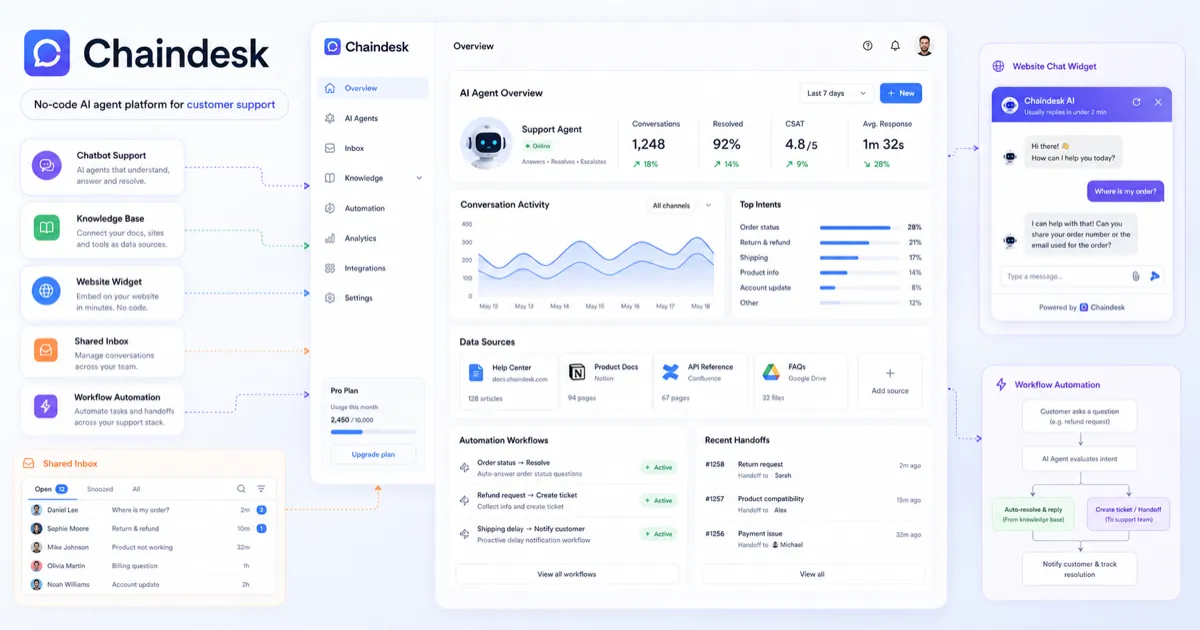
Chaindesk is the strongest starting point when you want a no-code AI agent trained on business content and deployed into a support or website workflow without a heavy engineering project.

Best forno-code website chatbot setup
Price pathFree path
Best for customer-service agent workflows

Chatbase

2

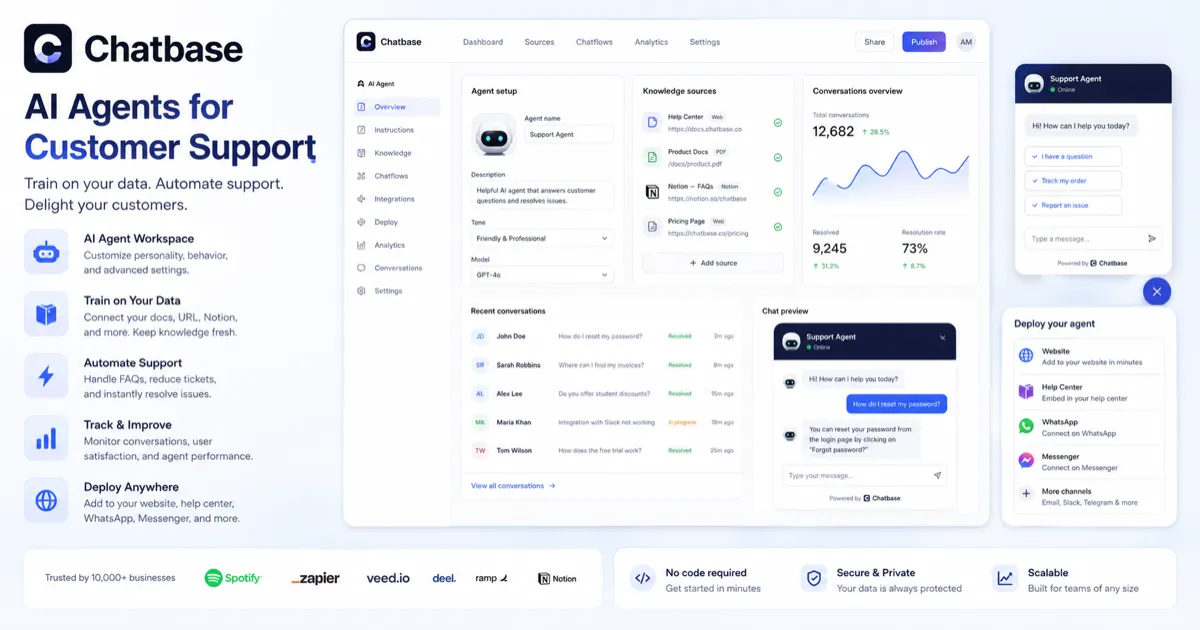
Chatbase is a strong pick for businesses that want a more structured customer-service AI agent platform with clear plan tiers and room to grow beyond a basic website widget.

Best forcustomer support and service-agent workflows
Price pathFree path
Best for sales-led website conversations

ChatSimple

3

ChatSimple is worth checking when the chatbot is meant to qualify visitors, guide buyers, and support sales conversations rather than only answer support questions.

Best forsales-focused website chat experiences
Price pathFree path
Best for knowledge-base assistants

CustomGPT.ai

4

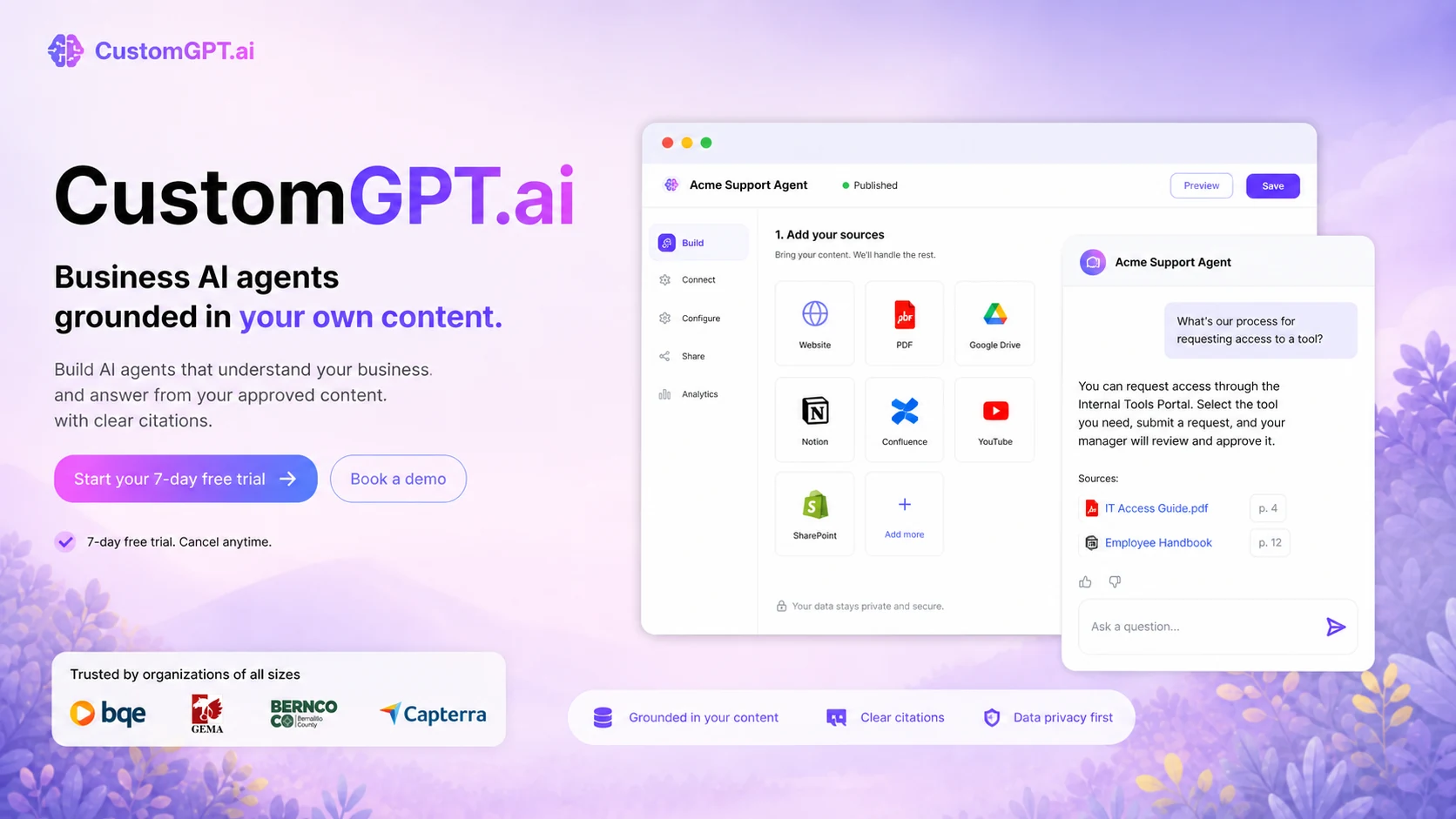
CustomGPT.ai is the better shortlist pick when the main job is turning business content, documents, or knowledge into a branded assistant with stronger control over source material.

Best forknowledge-base assistants built from business content
Price pathTrial path
Best for multi-channel agent rollout

Droxy

5

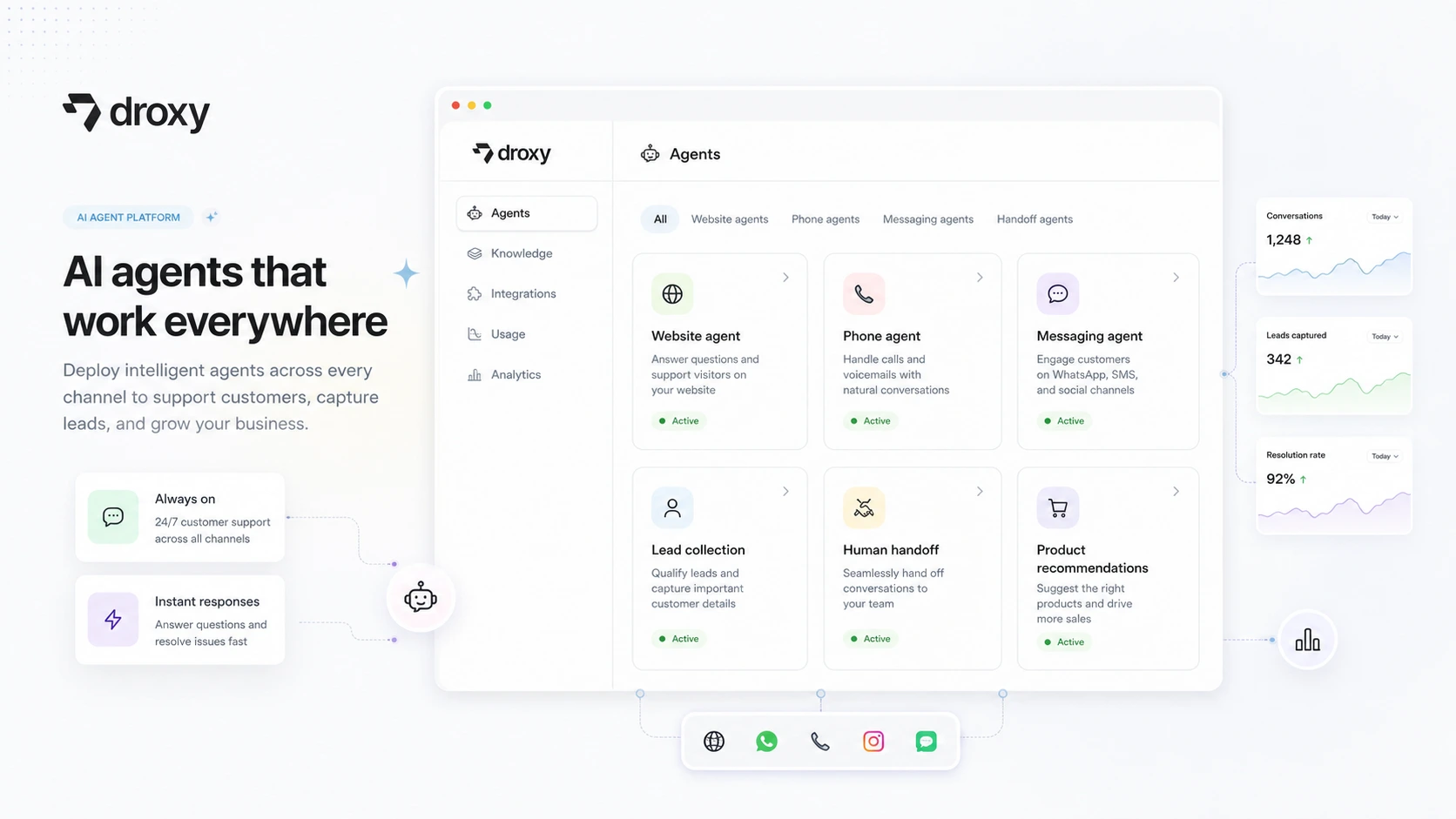
Droxy is a practical pick when the buyer wants an AI agent that can move beyond a single website widget and support broader channel deployment.

Best formulti-channel customer-facing AI agents
Price pathFree path
Compare before checkout

Shortlist comparison table

Use this table to narrow the list before opening review, coupon, or store pages. Price and discount paths still need live checkout verification.

ToolBest fitFree pathPricing signalMain cautionNext step
Chaindesk#1no-code website chatbot setupFree plan$0/moyou need a highly customized enterprise implementation from day one
Chatbase#2customer support and service-agent workflowsFree plan$0/moyou only need the cheapest possible website FAQ widget
ChatSimple#3sales-focused website chat experiencesFree plan$0/moyou mainly need a low-cost knowledge-base FAQ bot
CustomGPT.ai#4knowledge-base assistants built from business contentTrial · 7d$99/moyou only need a basic low-cost widget
Droxy#5multi-channel customer-facing AI agentsFree plan$0/moyou only need a simple site FAQ widget
How to choose

Use the shortlist like a buyer, not a browser

You do not need to inspect every tool equally. Start with the workflow you repeat most, check the tradeoff that could matter later, then use the store, review, coupon, or comparison route that matches your next decision.

1Pick the workflow

Choose the tool that matches the job you repeat most often.

2Check the tradeoff

Read the caution before treating a tool as the obvious winner.

3Verify the deal

Use coupon and store pages only after the product fit is clear.

Editorial context

How to use this shortlist

The best AI chatbots and agents tools are not all built for the same job. Some are better for support automation, some for customer-service agent workflows, some for lead capture, and others for turning business documents into a controlled knowledge assistant.

Use this shortlist as a decision map, not a popularity ranking. Start by deciding whether you need a support agent, a sales conversation assistant, a knowledge-base chatbot, or a multi-channel customer-facing agent. Then check whether the product’s pricing, usage limits, data-source workflow, and handoff options match the way your team will actually use it.

That matters because a chatbot that looks impressive in a demo can still be the wrong purchase if your help docs are messy, your traffic volume is unclear, or your team has no plan for human escalation.

How we picked these tools

We did not choose these tools only because they use AI chat. The shortlist was shaped around practical buyer checks: whether the product can be trained on business content, whether it has a clear deployment path, whether pricing and usage limits can be verified, and whether it fits a real customer-facing workflow.

The main selection factors were:

  1. Whether the tool supports a website, support, sales, or knowledge-base chatbot use case.
  2. Whether a buyer can understand the current public positioning before signing up.
  3. Whether pricing, usage limits, free paths, or trial terms can be checked before checkout.
  4. Whether the workflow includes enough control over data sources, handoff, and monitoring.
  5. Whether the tool has a useful next step through a store profile, review, coupon route, or comparison path.

This is also why the shortlist separates support-agent platforms from sales-focused chat tools and knowledge-base assistants. They may all sit in the same broad category, but they do not solve the same business problem.

What matters most in this category

AI chatbot buying decisions usually fail when teams focus only on the widget.

The bigger question is what happens before and after the chatbot answers a visitor. You need to know where the agent gets its knowledge, how often that content needs updating, whether a human can take over, how conversations are logged, and whether the pricing model still makes sense when message volume grows.

For a simple FAQ experience, setup speed and ease of embedding may matter most. For support automation, training sources, analytics, escalation, and answer quality matter more. For sales workflows, lead capture, qualification, integrations, and visitor routing can matter more than pure support coverage.

A good AI chatbot tool should make the next step clearer. It should not hide the real work: preparing clean knowledge sources, testing answers, setting escalation rules, and verifying plan limits before the chatbot becomes part of the customer experience.

Best AI chatbot and agent tool by use case

If you want a no-code support agent trained on company data, start with Chaindesk.

If you want a more structured customer-service AI agent platform with visible plan tiers, compare Chatbase next.

If your main goal is sales-led website conversations and visitor qualification, ChatSimple deserves a closer look, but verify the current product and pricing path because public positioning may appear under Expertise AI.

If your workflow depends on a controlled assistant built from business content and documents, CustomGPT.ai is the stronger knowledge-base route.

If you want broader customer-facing deployment across channels, Droxy is the more practical agent-rollout option, especially if your team is ready to think through usage limits.

How these picks are different

Chaindesk is the cleanest category anchor for teams that want to build and deploy a support-style AI agent without a custom engineering project.

Chatbase feels more appropriate when the buyer wants a customer-service platform path and needs to compare plan tiers, message usage, and workspace requirements before scaling.

ChatSimple is more sales-oriented. It makes more sense when the website chat experience is supposed to qualify visitors, support buyer questions, and push the conversation toward a lead or demo path.

CustomGPT.ai is better when the source content matters more than the widget. It belongs in the shortlist for teams that want a knowledge-grounded assistant rather than a general chat layer.

Droxy is the broader deployment pick. It is worth checking when customer-facing AI agents need to operate across more than one channel, but buyers should pay close attention to usage-based limits before scaling.

Pricing and deal path notes

Do not choose an AI chatbot only because the entry price looks low.

In this category, the real cost often depends on message volume, knowledge-base size, number of agents, seats, channels, branding controls, integrations, and whether advanced analytics or handoff features sit behind higher plans. A free plan or trial can be useful for testing setup, but it may not prove whether the tool works for real support volume.

Before paying, verify the current pricing page, billing interval, message or token limits, training-source limits, workspace seats, channel support, cancellation terms, and any current coupon or store route. Use coupon pages as a final checkout check after the workflow fit is clear, not as the first reason to choose a chatbot.

AI chatbot buyer checklist

Before you put a chatbot or AI agent on a live customer-facing page, check:

  • Can the tool train on the actual sources your customers need: help docs, website pages, files, or product information?
  • How easy is it to update those sources when your business changes?
  • Does the tool support human handoff when the answer should not be automated?
  • Are conversation logs, analytics, and monitoring clear enough for your support or sales team?
  • Are message, token, agent, or seat limits realistic for your expected traffic?
  • Does the chatbot fit your channel: website widget, support inbox, sales page, or multi-channel rollout?
  • Are privacy, data handling, and deletion terms acceptable for the type of customer questions you receive?
  • Is there a review process before the chatbot becomes part of your public customer experience?

A chatbot can answer faster than a human, but speed is not the only goal. The safer choice is the tool that gives your team enough control over knowledge, escalation, and usage before customers rely on it.

Final buyer note

For most teams, Chaindesk is the first tool to check if the goal is a no-code support agent trained on business content.

Choose Chatbase if you want a more structured customer-service agent platform and are ready to compare usage tiers. Choose ChatSimple if lead capture and sales conversations matter more than support automation alone. Choose CustomGPT.ai if controlled knowledge-base assistance is the priority. Choose Droxy if you are thinking beyond a single website widget and need broader customer-facing agent deployment.

The best purchase is not the chatbot with the most impressive demo. It is the one your team can train, monitor, afford, and safely route into a real customer workflow.
Full shortlist

The picks, with practical buying context

Each pick below works as a mini decision card. Open the direct deal only when the fit is already clear; otherwise use the review, store, or comparison route first.

#1 shortlist pick Best for no-code support agents

Chaindesk

Chaindesk is the strongest starting point when you want a no-code AI agent trained on business content and deployed into a support or website workflow without a heavy engineering project.

Chaindesk product view
Why it made the list

Chaindesk belongs in this shortlist because it focuses on the core job many buyers mean by “AI chatbot”: import company knowledge, shape the agent, deploy it to customer-facing channels, and monitor how it performs. That makes it a practical category anchor for small teams that want support automation before building a larger AI operations stack.

Good fit when

  • no-code website chatbot setup
  • support teams training agents on company data
  • buyers who want deployment and monitoring in one workflow

Be careful when

  • you need a highly customized enterprise implementation from day one
  • your team has not prepared help docs or knowledge sources yet
  • you want a simple chat widget without maintaining a knowledge base

Strengths

  • Clear fit for support-style AI agents trained on internal content
  • Practical deployment path for teams without heavy developer resources
  • Better category fit when monitoring and support workflow matter

Tradeoffs

  • Still depends on the quality of the data you provide
  • Buyers should verify current pricing and channel limits before scaling
  • May be more operational than teams that only need a lightweight FAQ bot
#2 shortlist pick Best for customer-service agent workflows

Chatbase

Chatbase is a strong pick for businesses that want a more structured customer-service AI agent platform with clear plan tiers and room to grow beyond a basic website widget.

Chatbase product view
Why it made the list

Chatbase stays near the top because it is positioned around customer experience and support-agent deployment rather than generic chatbot novelty. It is a better fit when the buyer needs workspace controls, message usage planning, and a more formal agent setup path.

Good fit when

  • customer support and service-agent workflows
  • teams comparing plan tiers before scaling usage
  • buyers who want a more structured chatbot platform

Be careful when

  • you only need the cheapest possible website FAQ widget
  • you are not ready to think through message credits or workspace limits
  • your chatbot use case is still too vague to justify a paid platform

Strengths

  • Clearer platform positioning for customer-service AI agents
  • Public pricing structure gives buyers a starting point for plan comparison
  • Useful when support workflow matters more than a simple chatbot embed

Tradeoffs

  • Usage and plan limits need careful verification before checkout
  • May feel heavier than a small team needs for early testing
  • Add-ons or advanced requirements should be checked against the live pricing page
#3 shortlist pick Best for sales-led website conversations

ChatSimple

ChatSimple is worth checking when the chatbot is meant to qualify visitors, guide buyers, and support sales conversations rather than only answer support questions.

ChatSimple product view
Why it made the list

ChatSimple fits this shortlist because not every chatbot buyer is building a support desk replacement. Some want a website conversation layer that helps capture leads, answer product questions, and route visitors toward a sales outcome. Current public positioning may appear under Expertise AI, so buyers should verify the live product and pricing path before choosing.

Good fit when

  • sales-focused website chat experiences
  • visitor qualification and lead capture flows
  • buyers comparing support chatbots against conversion assistants

Be careful when

  • you mainly need a low-cost knowledge-base FAQ bot
  • you do not have a clear lead-capture or sales workflow
  • the current product/pricing path feels unclear after verification

Strengths

  • Better fit when website conversations are tied to sales outcomes
  • Useful for teams that want more than passive support answers
  • Can make sense when visitor guidance matters as much as automation

Tradeoffs

  • Public branding and pricing should be verified carefully before checkout
  • May be too sales-oriented for simple support FAQ use cases
  • Buyers should confirm integrations, handoff, and response limits
#4 shortlist pick Best for knowledge-base assistants

CustomGPT.ai

CustomGPT.ai is the better shortlist pick when the main job is turning business content, documents, or knowledge into a branded assistant with stronger control over source material.

CustomGPT.ai product view
Why it made the list

CustomGPT.ai belongs here because many teams do not want a generic chatbot; they want a controlled assistant based on their own content. That makes it more relevant for knowledge-heavy businesses, documentation workflows, and buyers who care about content grounding before public deployment.

Good fit when

  • knowledge-base assistants built from business content
  • teams that want stronger content-source control
  • buyers comparing premium assistant platforms

Be careful when

  • you only need a basic low-cost widget
  • your content library is not ready to train an assistant
  • you are not prepared to verify plan limits and trial terms

Strengths

  • Stronger fit for content-grounded assistants
  • Useful when source control matters more than a quick chat embed
  • Public pricing and trial information give buyers a clearer evaluation path

Tradeoffs

  • Can feel expensive for small or casual chatbot projects
  • Buyers should verify current trial, billing, and cancellation terms
  • Not ideal if the team has not organized the content it wants the assistant to use
#5 shortlist pick Best for multi-channel agent rollout

Droxy

Droxy is a practical pick when the buyer wants an AI agent that can move beyond a single website widget and support broader channel deployment.

Droxy product view
Why it made the list

Droxy earns a place because its current public positioning leans toward customer-facing AI agents across channels, not just a narrow chatbot embedded on one page. That makes it useful for buyers thinking about deployment breadth, knowledge tokens, message usage, and channel fit before paying.

Good fit when

  • multi-channel customer-facing AI agents
  • teams comparing usage-based agent plans
  • buyers who want a broader deployment path

Be careful when

  • you only need a simple site FAQ widget
  • you do not understand your likely message or knowledge usage yet
  • you want to avoid token-style usage planning

Strengths

  • Useful for broader channel deployment beyond a simple widget
  • Public pricing structure gives buyers usage signals to verify
  • Good fit when customer-facing agent rollout matters

Tradeoffs

  • Token and usage limits need careful review before scaling
  • May be more platform than a small site needs at first
  • Buyers should confirm channel, call, and comment limits on the live plan page
Checkout safety

Best-page checkout checklist

Run this checklist before turning a shortlist recommendation into a paid checkout decision.

1

Start with the tool that fits your workflow, not the largest discount headline.

2

Open the store or review page when you still need feature, pricing, refund, or plan-limit context.

3

Use coupon pages only after the shortlist is narrow enough that the product already makes sense.

4

Verify free-plan, trial, credit, usage, and annual-billing limits on the live checkout page.

5

Compare at least two tools if the category fit is still unclear or the top pick feels too expensive.

Head-to-head paths

Compare finalists before you commit

When two tools look close, a direct comparison usually gives a cleaner answer than another broad roundup.

FAQ

Common questions

What is the best AI chatbot and agent tool overall?

Chaindesk is the strongest first shortlist pick if you want a no-code support agent trained on business content. Chatbase may fit better when customer-service platform structure matters more, while CustomGPT.ai is stronger for knowledge-base assistants.

Which AI chatbot tool is best for customer support?

Chaindesk and Chatbase are the first tools to compare for support workflows. Chaindesk is easier to frame as a no-code support-agent path, while Chatbase is stronger when plan tiers, message usage, and customer-service platform structure matter.

Which AI chatbot tool is best for lead capture?

ChatSimple is the more relevant pick when the chatbot is tied to sales conversations, visitor qualification, or lead capture. Buyers should verify the current product branding, pricing, and integration path before committing.

What should I check before paying for an AI chatbot tool?

Check training-source limits, message or token usage, handoff options, channel support, privacy terms, workspace seats, integrations, and whether the chatbot can use your actual help content safely.

Should I choose an AI chatbot based on coupons?

No. A coupon can reduce the final cost, but it should not decide the tool. First choose the chatbot that fits your support, lead capture, or knowledge-base workflow, then check the current coupon or store route before checkout.

Can an AI chatbot replace human support?

It can reduce repetitive questions and help visitors find answers faster, but it should not replace human review for sensitive issues, refunds, account problems, or complex customer decisions.

Steven
Author
Steven
Editorial reviewer

Practical affiliate editor focused on realistic reviews, store architecture, and offer-aware buying paths.

Related reading

Keep browsing

View top pick ↗