
Droxy Pricing, Plans & AI Agent Fit
Droxy is a no-code platform for building customer-facing AI agents across websites, messaging channels, social platforms, and phone workflows. It is best evaluated as a support and engagement layer, not as a generic AI writing tool. The buyer decision depends on how many customer conversations you expect, what knowledge sources the agent needs, whether voice or messaging channels matter, and whether plan limits around tokens, call minutes, storage, models, and integrations match the actual rollout.
Fit → price → checkout
Use these routes after the official-site check: coupon first, review for fit, compare if unsure.
Droxy pricing snapshot
Fast commercial checks before pricing, coupons, or a deeper review.
Droxy product tour
Watch this before buying if you need to understand whether Droxy is only a website chatbot or a broader customer-facing agent platform. The useful part is seeing how Droxy frames website, phone, messaging, and social workflows together, because that is what determines whether Basic is enough or whether the buyer should check Advanced or Enterprise limits before checkout.
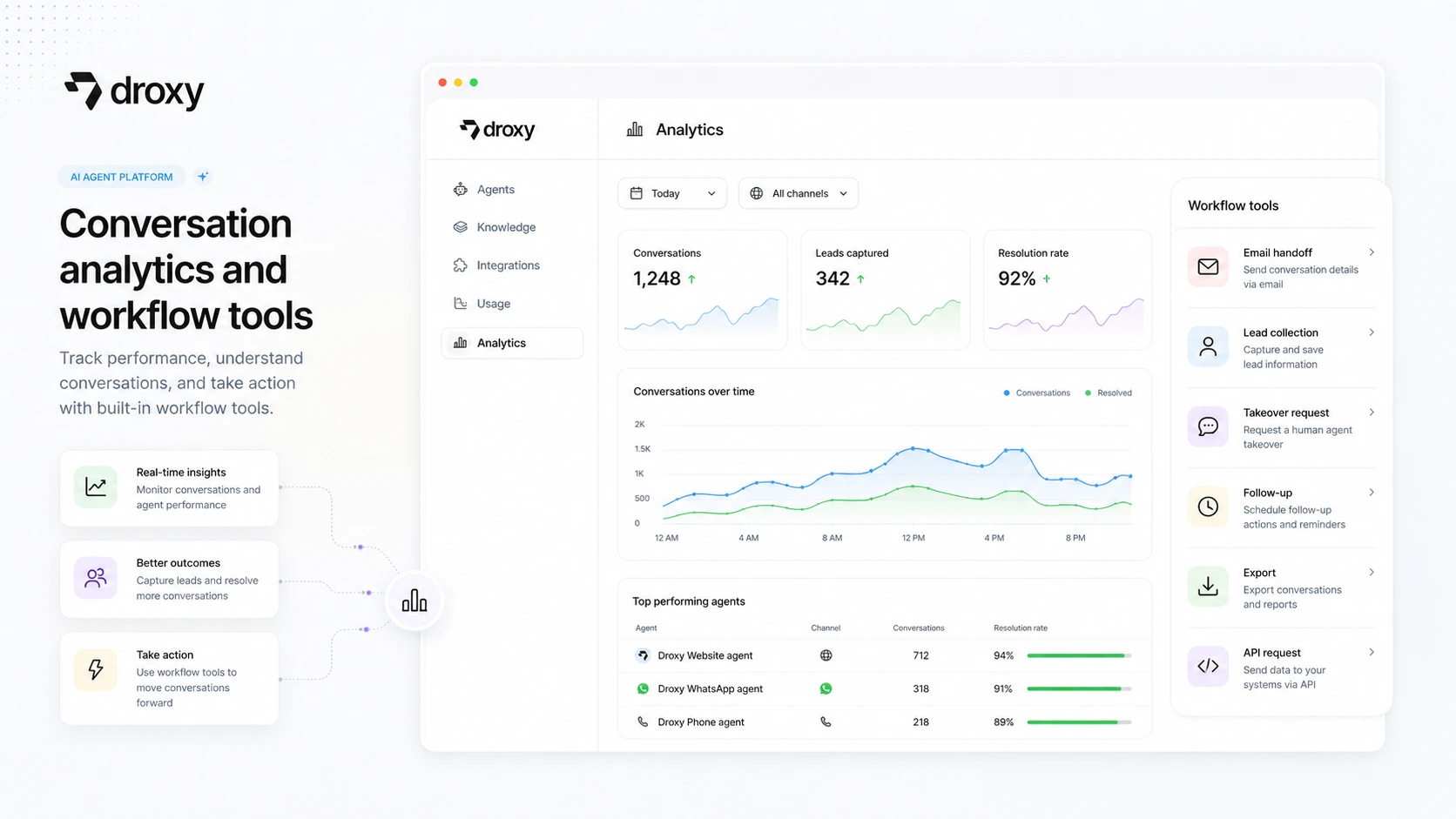
Droxy should be evaluated as a customer-facing AI agent platform for businesses that want to answer questions, take calls, collect leads, route conversations, recommend products, and connect agent behavior to real channels. The buyer risk is not that Droxy lacks ambition. The risk is choosing a plan before understanding token volume, call minutes, channel needs, knowledge quality, and refund limits.
What Droxy actually does
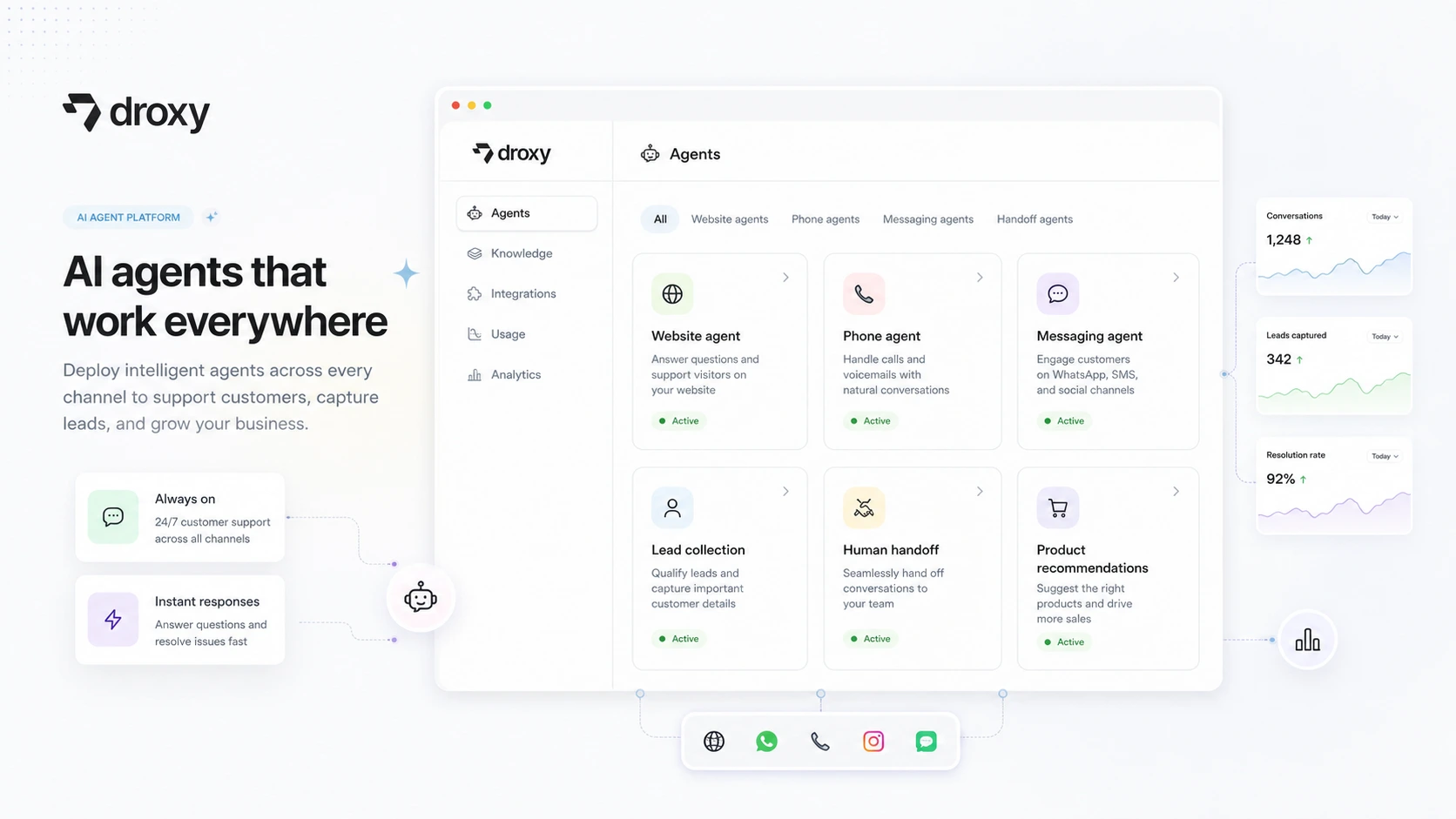
Droxy lets a business create AI agents that can be trained on company knowledge and deployed across customer-facing channels. The official site emphasizes website agents, phone agents, messaging agents, AI commenting, automated lead collection, human handoff, and product recommendations. That makes Droxy more of a customer interaction layer than a simple content-to-chatbot toy.
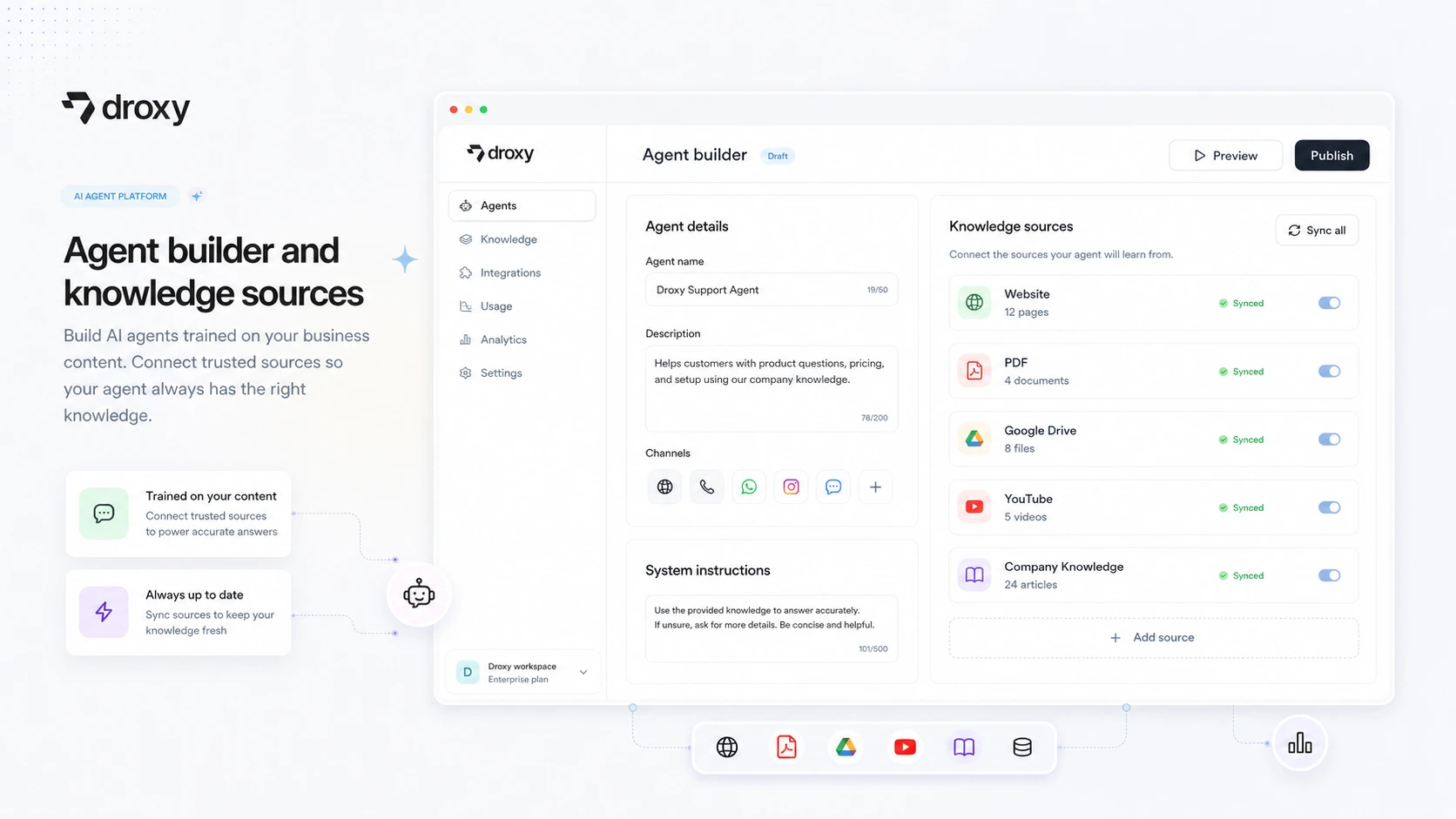
- Train agents on business knowledge instead of writing every answer manually.
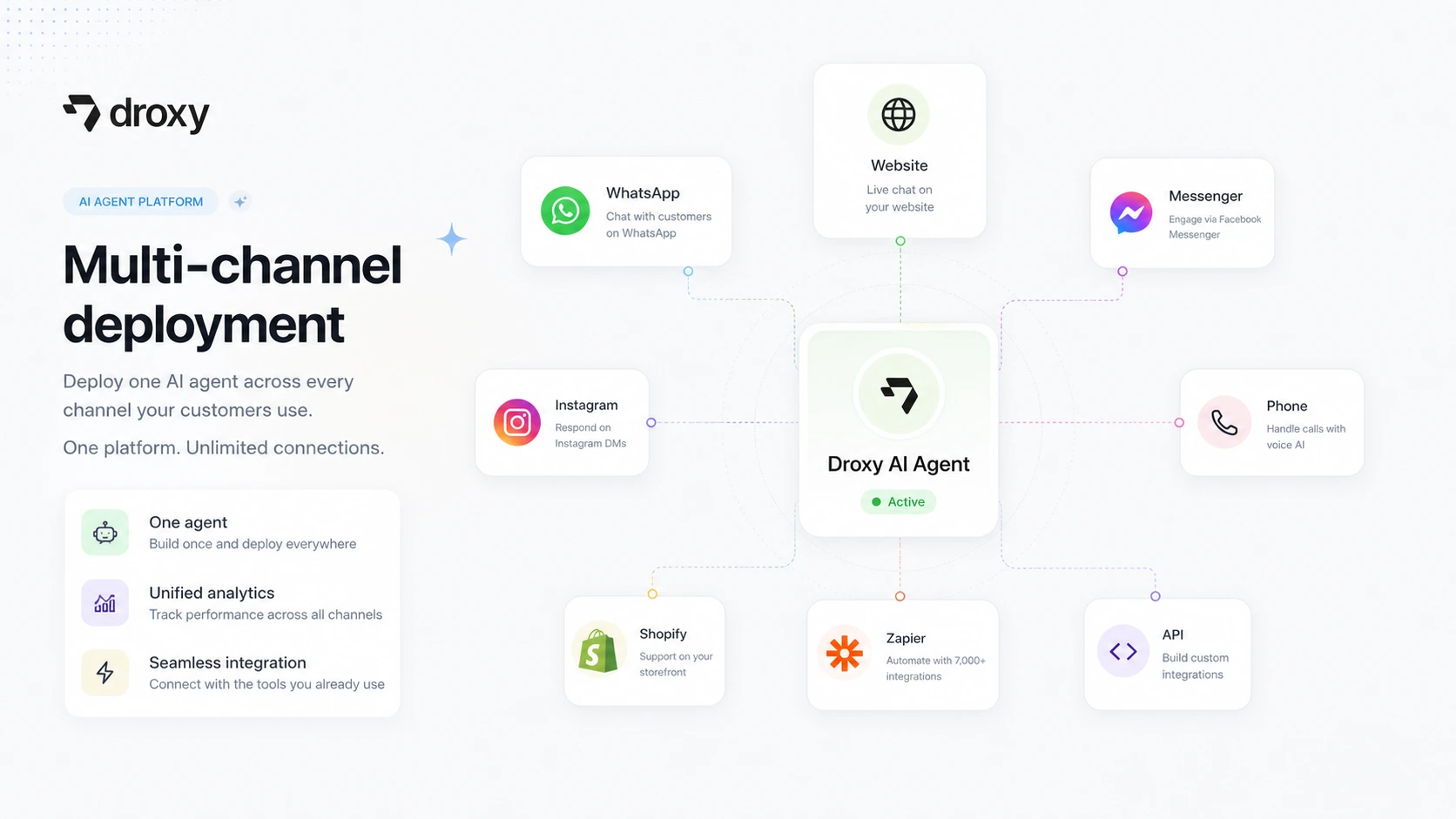
- Deploy agents across website, voice, social, messaging, and ecommerce workflows.
- Use human handoff, lead collection, and analytics when support quality matters.
Pricing is mostly a usage-limit decision
Droxy's paid pricing is easier to read when you focus on limits rather than names. Basic may be enough for small projects, but the practical ceiling depends on knowledge tokens, message tokens, knowledge items per agent, storage, call minutes, replies, model access, and channel requirements. Advanced and Enterprise become more relevant when customer volume, voice, or multichannel deployment is part of the business case.
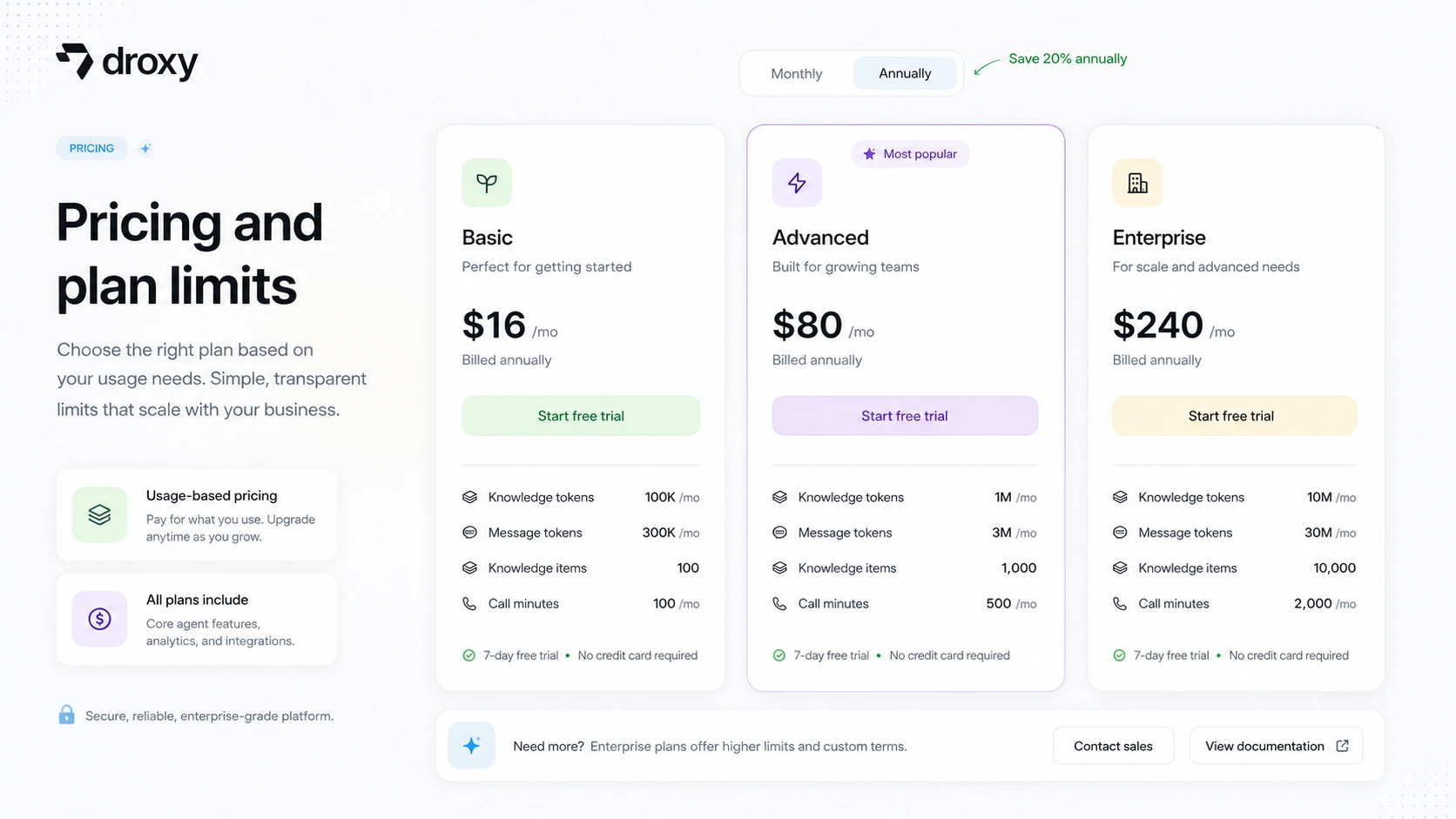
- Basic was shown at $16/month during this update.
- Advanced was shown at $80/month with larger token, knowledge, and call allowances.
- Enterprise was shown at $240/month with expanded limits and custom agent needs.
Channel fit is the key buyer question
Droxy is strongest when a buyer needs more than a website widget. The official docs mention websites, PDFs, Google Drive, YouTube, Facebook, Instagram, WhatsApp, Messenger, phone numbers, SIP trunks, Zapier, and custom API. That range is useful for real support and sales workflows, but it also means the buyer should list required channels before choosing a plan.
Refund and cancellation need a careful read
Droxy's Terms say that all purchases are non-refundable and that cancellation takes effect at the end of the current paid term. That does not mean a buyer should avoid Droxy, but it changes the safest buying order. Start free, build one real agent, test real questions, and check whether the plan limits match your expected workload before choosing annual billing.
Public deals should be treated as checkout tests
Third-party coupon sources report Droxy discount paths, but those are not the same as an official guaranteed discount. The safer editorial approach is to mention public coupon availability as a checkout-test route without exposing codes in store copy. Buyers should test any reported coupon path, compare it with annual billing, and only trust the final checkout price.
- Do not assume every public coupon works for every plan.
- Compare third-party reported savings with official annual savings.
- Check whether a discount changes renewal price or only the first billing period.
Safest next step
The safest next step is to open the free Starter path, train one agent on real business content, and test it against the exact customer questions that currently slow down the team. If the agent performs well, compare Basic, Advanced, and Enterprise by channel requirements, usage limits, API needs, and annual billing. If fit is still unclear, read the review before chasing a coupon path.
- Use the review route when you still need fit and limitation context.
- Use the pricing route when channel, token, and call-minute limits are the main decision.
- Use the coupon route only after the plan fit is already clear.
Best savings path from this store page
This is the clearest savings route to check once the product already looks like a fit.
Public deal directories report a free starter path for Droxy with limited tokens. Because the official pricing page emphasizes paid tiers, treat this as a signup-test path.
Monthly Basic path before annual commitment
Plan path for API and integrations
Use comparison routes when the category fit is still open
Use these comparison routes when the product still looks plausible, but the category fit is not fully settled.
Verification points worth checking before you click out
Where this store usually fits best in the workflow
Droxy can fit businesses that want a trained agent to answer repeat website questions, reduce wait time, capture leads, and escalate harder conversations to a human.
Droxy becomes more interesting when the buyer needs customer interaction across phone, WhatsApp, Messenger, Instagram, and the website rather than a single embedded chatbot.
Product recommendations, Shopify support, product Q&A, and lead collection can help ecommerce buyers if plan limits match traffic and catalog complexity.
Agencies and service businesses can use Droxy for appointment questions, quote intake, call coverage, and first-response automation, but they should test handoff quality before scaling.
Practical checkpoints before and after signup
- Build one free Starter agent with real customer questions and business knowledge.
- List the channels you need, then compare them against Basic, Advanced, and Enterprise limits.
- Read the non-refundable purchase language before choosing annual billing.
- Use clean knowledge sources such as current website pages, PDFs, Google Drive files, or approved support documents.
- Test edge cases, inaccurate answers, handoff behavior, and lead capture before public rollout.
- Check whether custom API, Zapier, Shopify, or phone workflows require a higher plan.
- Review conversations, exports, analysis, contact data, and handoff requests to improve the agent over time.
- Track usage against message tokens, call minutes, replies, and knowledge limits before traffic grows.
- Recheck renewal price and coupon path before upgrading or switching billing intervals.
Fast-read signals for workflow fit and buying friction
Questions readers usually ask before choosing this store
What does Droxy actually do?
Droxy helps businesses build customer-facing AI agents for websites, messaging apps, social channels, phone workflows, lead collection, product recommendations, and human handoff. It is better understood as an AI agent platform than a generic AI writing tool.
Does Droxy have a free plan?
Yes. The official docs describe Starter as a free tier, while the pricing page lists paid Basic, Advanced, and Enterprise tiers. Buyers should use the free path to test a real agent before comparing paid limits.
How much does Droxy cost?
During this update, the official pricing page showed Basic at $16/month, Advanced at $80/month, and Enterprise at $240/month with annual billing savings. Buyers should verify the live billing toggle and plan limits before checkout.
Is Droxy refundable?
Droxy's Terms of Service state that all purchases are non-refundable and that cancellation takes effect at the end of the current paid term. That makes free testing and pre-checkout plan validation important.
What should buyers check before choosing Droxy?
Buyers should check expected message volume, call minutes, knowledge sources, channel needs, API or Zapier requirements, model access, branding needs, coupon validity, renewal price, and whether human handoff works well enough for customer-facing use.
Choose the next route that matches what you still need to decide
The strongest next click depends on whether you still need product judgment, a savings route, or a broader category comparison.