Quick verdict
ElevenLabs is one of the first AI voice platforms I would check if voice quality genuinely matters to the workflow.
That does not mean every buyer should jump straight into a paid plan.
The product has moved well beyond a simple text-to-speech tool. The current public positioning covers creator voiceovers, speech-to-text, voice cloning, AI dubbing, sound effects, music, voice agents, and developer APIs. That breadth is a strength if you are building a repeatable audio workflow. It is also the reason buyers need to slow down before checkout.
The real question is not “does ElevenLabs sound realistic?” For many use cases, the answer may be yes enough to justify testing. The better question is whether the credits, commercial rights, cloning access, dubbing needs, API usage, and refund conditions match how much audio you actually plan to generate.
For my money, ElevenLabs makes the most sense for creators, marketers, agencies, educators, publishers, and product teams that create audio repeatedly. It is less convincing for someone who needs one short clip, wants a predictable flat-price tool, or is uncomfortable with the consent and disclosure responsibilities around synthetic voices.
The safest path is simple: test the Free plan first, judge the actual audio quality against your own content, estimate monthly usage, then choose a paid plan only if the workflow is real.
Next step: If ElevenLabs still fits your audio workflow, check the current plan route and credit details before moving from free testing to paid production.
Review snapshot
| Review point | Practical take |
|---|---|
| Best for | Creators, publishers, marketers, educators, agencies, product teams, and developers with repeat audio needs |
| Not ideal for | One-off users, buyers who dislike credit math, or teams that need guaranteed refund flexibility after using paid credits |
| Main use case | Realistic AI speech, creator voiceovers, dubbing, voice cloning, agents, and audio APIs |
| Free path | Free plan is useful for testing voice quality and workflow comfort |
| Paid path | Paid plans become relevant when commercial rights, credits, cloning, dubbing, API quality, or team seats matter |
| Main strength | Strong voice quality plus a broad audio platform, not only a basic voiceover widget |
| Main concern | Credit usage, renewal price, refund limits, voice-cloning responsibility, and plan complexity |
| Direct alternatives | Uberduck and Voicewave for voice-focused comparison checks |
| Adjacent routes | Fliki for voice-led video creation and AKOOL for broader avatar/video workflows |
| Best next step | Test one real voice project before choosing monthly, annual, creator, API, or team usage |
What is ElevenLabs?
ElevenLabs is an AI audio platform for generating, transforming, localizing, and deploying speech and other audio workflows.
The simple description is “AI voice generator,” but that is now too narrow. ElevenLabs covers text-to-speech, speech-to-text, voice cloning, voice changing, dubbing, sound effects, music, Studio-style production, conversational agents, and APIs for product teams. It also separates its public positioning into creator tools, agents, and API infrastructure.
That matters because the buyer path changes depending on the job.
A YouTuber comparing narration quality is not making the same decision as a developer building voice into an app. A course creator localizing videos is not making the same decision as a business testing support agents. A solo freelancer trying one client voiceover is not making the same decision as a team evaluating workspace seats, latency, and custom terms.
The common misunderstanding is judging ElevenLabs only by the best demo voice. A strong sample does not answer the whole buying question. You still need to know whether the voice fits your channel, whether the plan includes commercial use, whether your credit volume is realistic, whether cloning consent is clear, and whether the refund policy leaves enough room to test safely.
Our review approach compares public product pages, pricing details, help documentation, terms, privacy signals, buyer workflow fit, and nearby alternatives. A low first-month price or a strong demo voice is not enough by itself.
Who should use ElevenLabs?
ElevenLabs fits buyers who produce audio often enough that quality and workflow speed matter.
Creators with repeat narration needs are the obvious fit. If you publish YouTube videos, shorts, tutorials, explainers, ads, podcasts, audiobooks, or training content, a realistic voice tool can reduce recording friction. The condition is that the voice must match your audience and the plan must support the way you publish.
Marketers and agencies can also get value when voiceovers, localized campaign audio, branded narration, or multilingual assets appear repeatedly in client work. The buyer check here is commercial rights, review workflow, and whether voice cloning or dubbing creates consent issues that need client approval.
Educators and training teams may use ElevenLabs when lessons, internal training, onboarding, or course content needs consistent narration. The main thing to verify is whether the production volume justifies a paid plan and whether the organization is comfortable with synthetic voice usage.
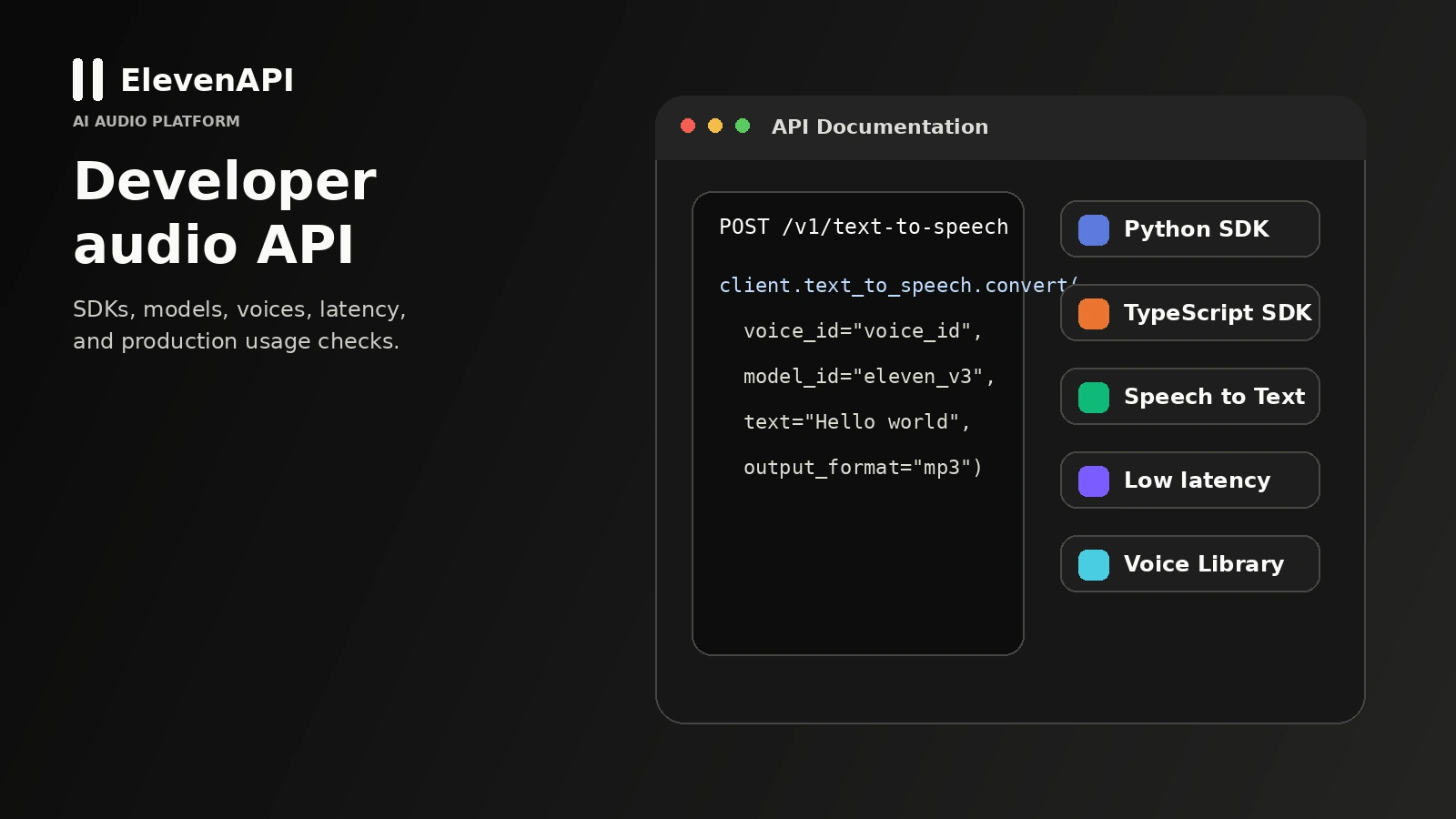
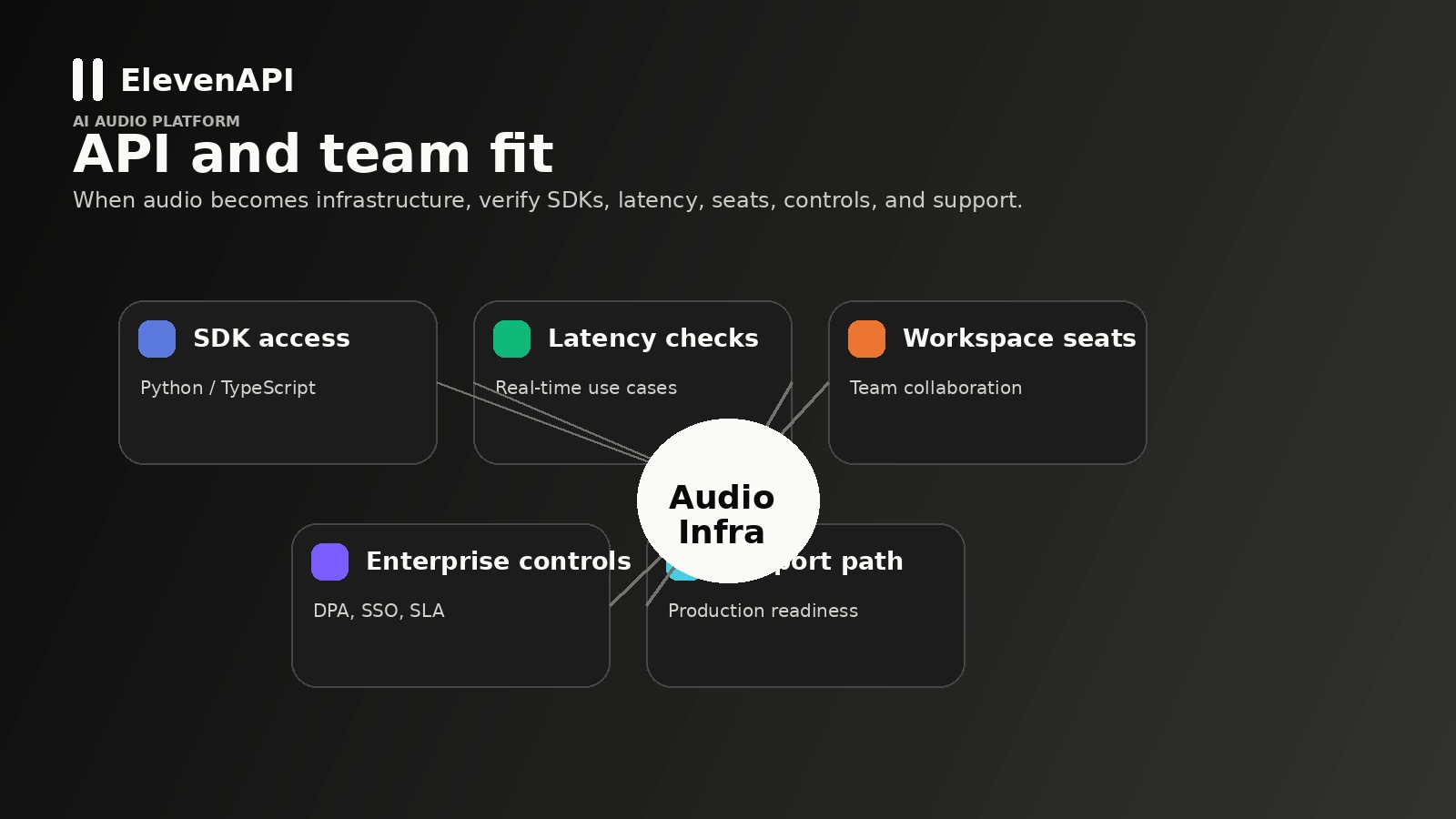
Developers and product teams have a different reason to care. ElevenLabs is not only a web app. The official docs describe REST API access, Python bindings, and Node.js libraries. That makes it credible for apps, voice agents, transcription workflows, and customer-facing audio features. The buyer check is cost, latency, model choice, safety, and implementation scope.
Localization teams and publishers should look at Dubbing Studio when translating video or audio into other languages is part of the plan. This is where ElevenLabs can become more than a narration tool, but it also means credit usage and editing control matter more.
Who should avoid ElevenLabs?
I would be careful with ElevenLabs if you only need one quick voice clip.
The product may still work, but the platform is broader than a simple one-time voiceover task. If your project is tiny, a lighter or cheaper tool may be easier to justify.
I would also slow down if you dislike credit-based pricing. ElevenLabs uses credits, and the real cost depends on what you generate, which model you use, how often you regenerate, and whether your workflow moves into dubbing, API usage, or higher quality output. Some buyers are comfortable with that. Others prefer a simpler content tool with fewer pricing variables.
Teams that need generous refund flexibility should also be cautious. The public refund policy says refund eligibility depends on requesting within 14 days and not using credit quota for the period being refunded. That means heavy paid testing can reduce flexibility.
Buyers who plan to clone voices without a clear consent process should not treat ElevenLabs casually. Voice cloning is powerful, but it comes with brand, legal, ethical, and disclosure responsibilities. The same caution applies to any business using synthetic voices in advertising, customer support, or public-facing content.
Finally, ElevenLabs may be too broad if your real need is video creation rather than audio. If you want text-to-video, templates, captions, avatars, or a full social video workflow, compare adjacent tools before assuming an audio-first platform is the best center of the workflow.
How ElevenLabs fits into a real workflow
A sensible ElevenLabs workflow starts with the content job, not the plan table.
For a creator, the workflow might look like this:
- Choose one real script, not a throwaway demo.
- Generate a few short voice samples on the Free plan.
- Compare voice tone against the channel, audience, and content type.
- Check whether the pronunciation, pacing, emotional style, and language support are strong enough.
- Estimate how many minutes or credits a normal month would require.
- Confirm commercial-use needs before using generated audio in monetized content.
- Move to paid only when the workflow repeats.
For a developer, the process is different. The first test should include API setup, model selection, latency, cost tracking, output quality, error handling, and whether the product experience depends on real-time speech. A good web demo does not prove that API economics will work inside a live product.
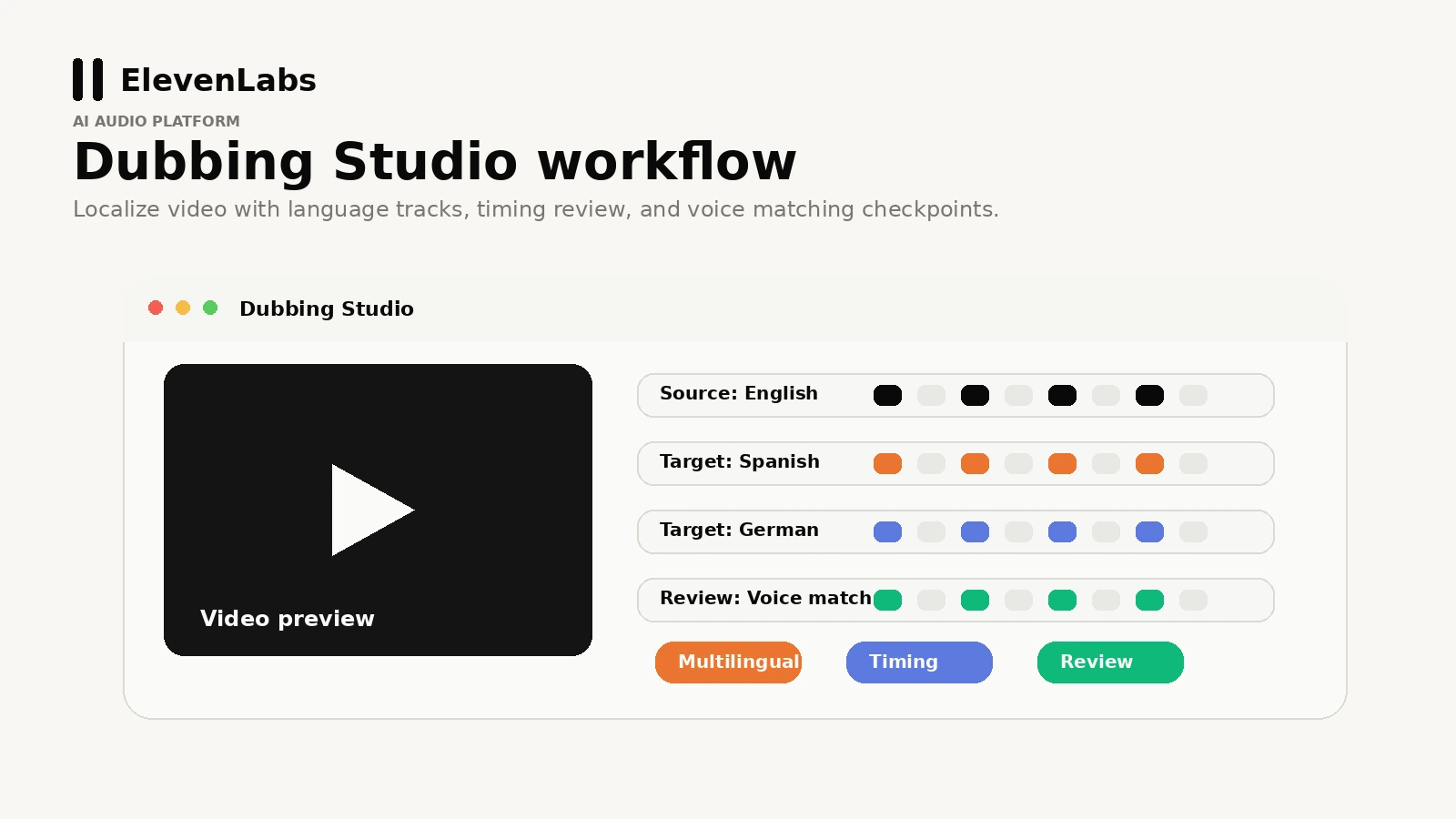
For a localization buyer, the key checkpoint is Dubbing Studio. Uploading or linking video, editing translations, preserving speaker style, managing clips, and checking sync are all more important than simply hearing a polished sample.
The mistake buyers often make is listening to one impressive voice sample and then choosing a plan too quickly. The better test is boring but safer: run a real project, measure credit use, and see whether the output still saves time after editing, review, and export.
Real-world buyer scenarios
A YouTube creator producing weekly narration
ElevenLabs can make sense if the creator needs consistent narration and does not want to record every script manually. The product is strongest when the creator cares about voice quality, emotional control, and repeat output.
Where it may fail is volume. A weekly channel with longer videos can burn through credits faster than expected. Before paying, I would estimate minutes per month and compare that against the current plan table.
An agency localizing client content
For an agency, ElevenLabs becomes interesting when the work includes multilingual campaigns, client video localization, explainer content, or training material. Dubbing Studio is more relevant here than basic text-to-speech.
The risk is approval. Client work involving cloned voices, translated audio, or branded narration needs a clear consent and review process. I would not treat this as a simple “generate and deliver” workflow.
A product team adding voice output to an app
A developer team should judge ElevenLabs by API access, model latency, quality, cost tracking, documentation, and whether the voice experience is core to the product. In this case, the web app is only part of the picture.
The risk is underestimating usage. If every user action generates speech, credit economics matter quickly. A small API prototype should come before any long-term commitment.
A business experimenting with voice agents
ElevenLabs also positions voice agents for customer-facing conversations. This can be valuable, but it is not a casual creator use case. Teams need to test guardrails, integrations, escalation, compliance expectations, and the cost of real conversations.
If the buyer only wants a simple chatbot or support widget, ElevenLabs may be more voice-focused than necessary.
Key features that actually matter
Text-to-speech quality
This is the feature most buyers will notice first. ElevenLabs is popular because the generated voices can sound more natural than many older text-to-speech systems.
The buyer note is to test the exact voice style you need. A cinematic sample voice may not work for a tutorial channel. A dramatic voice may not fit a training course. A voice that sounds good for thirty seconds may still need editing in a ten-minute script.
Voice cloning
Voice cloning can be useful for creators, educators, publishers, and brands that want a consistent voice. It can also be risky if consent is not handled properly.
The important check is not only whether cloning exists. Buyers should verify which plan includes instant or professional cloning, how approvals work, whether the voice can be used commercially, and what internal rules apply before using a cloned voice in public content.
Dubbing and localization
Dubbing Studio matters when the buyer wants to translate audio or video while preserving speaker tone and timing. This is valuable for YouTube channels, publishers, courses, and international content teams.
The limit is that dubbing is a workflow, not a button. You still need to review translations, timing, voice match, editing control, and credit usage before treating it as a full localization solution.
API and developer access
ElevenLabs is more credible for product teams because it offers API documentation and official libraries. That makes it more than a creator dashboard.
The buyer note is to test technical details directly. Cost tracking, latency, output quality, authentication, errors, and model selection matter more than homepage positioning when voice becomes part of a product.
Voice agents and business workflows
The ElevenAgents path is useful for buyers exploring phone, chat, support, or customer-facing conversations. This is not the same as generating a voiceover.
Before using agents in a business setting, I would check guardrails, analytics, workflows, integrations, escalation behavior, and plan-level access. A voice agent has more operational risk than a generated narration file.
Pricing and plan value
ElevenLabs pricing is not hard to understand at a glance, but it is easy to misjudge in practice.
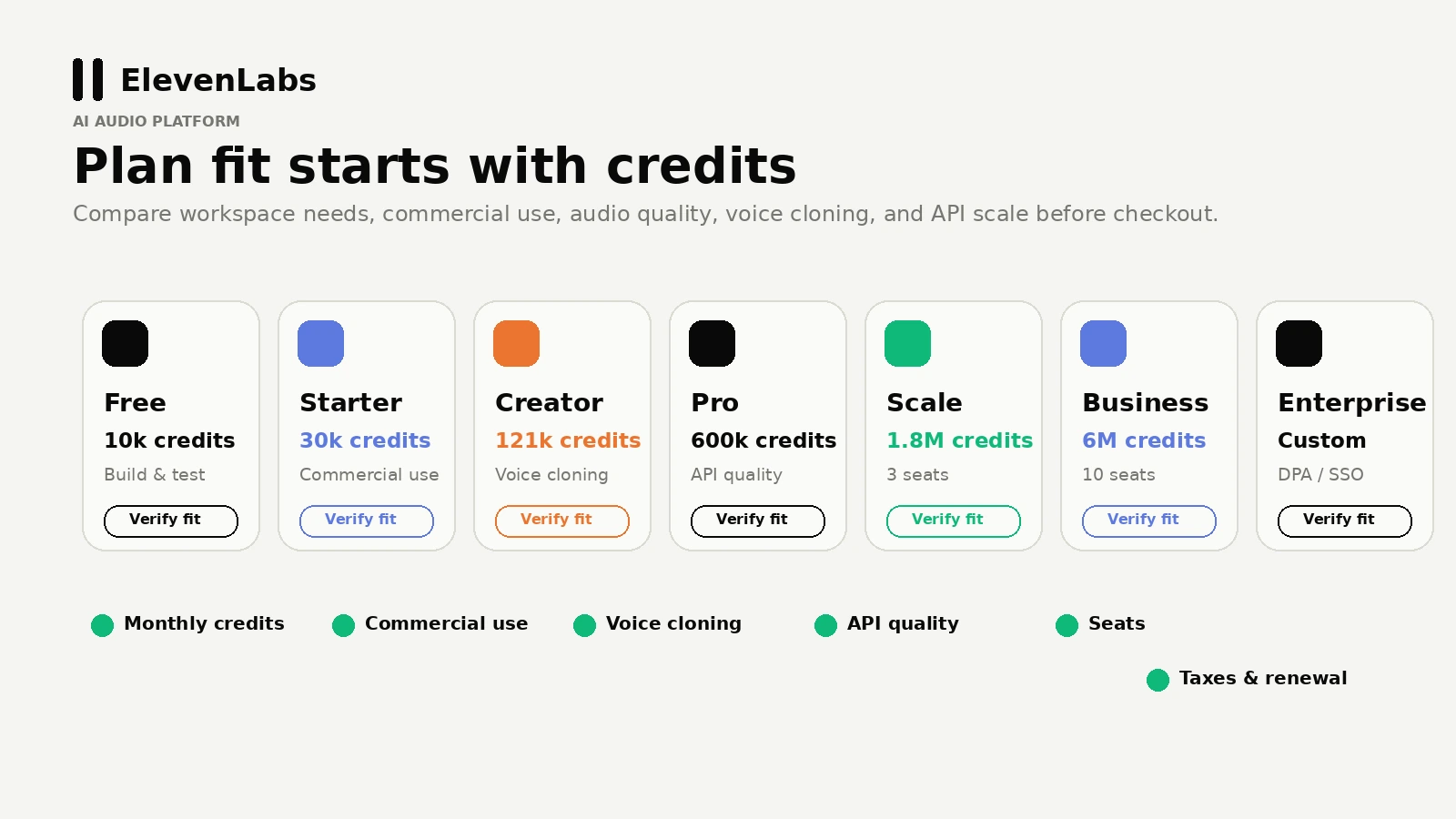
At the time of review, the public pricing page lists a Free plan at $0 per month with 10k credits. Starter is listed at $6 per month with commercial license, instant voice cloning, Dubbing Studio, and 30k credits. Creator is shown as a popular tier with a first-month 50% offer, displaying $11 per month against a $22 reference price and 121k credits. Pro is $99 per month with 600k credits and higher audio output options. Scale is $299 per month with 1.8M credits and 3 workspace seats. Business is $990 per month with 6M credits and 10 workspace seats. Enterprise is custom.
Those numbers are useful, but the headline price is not the whole decision.
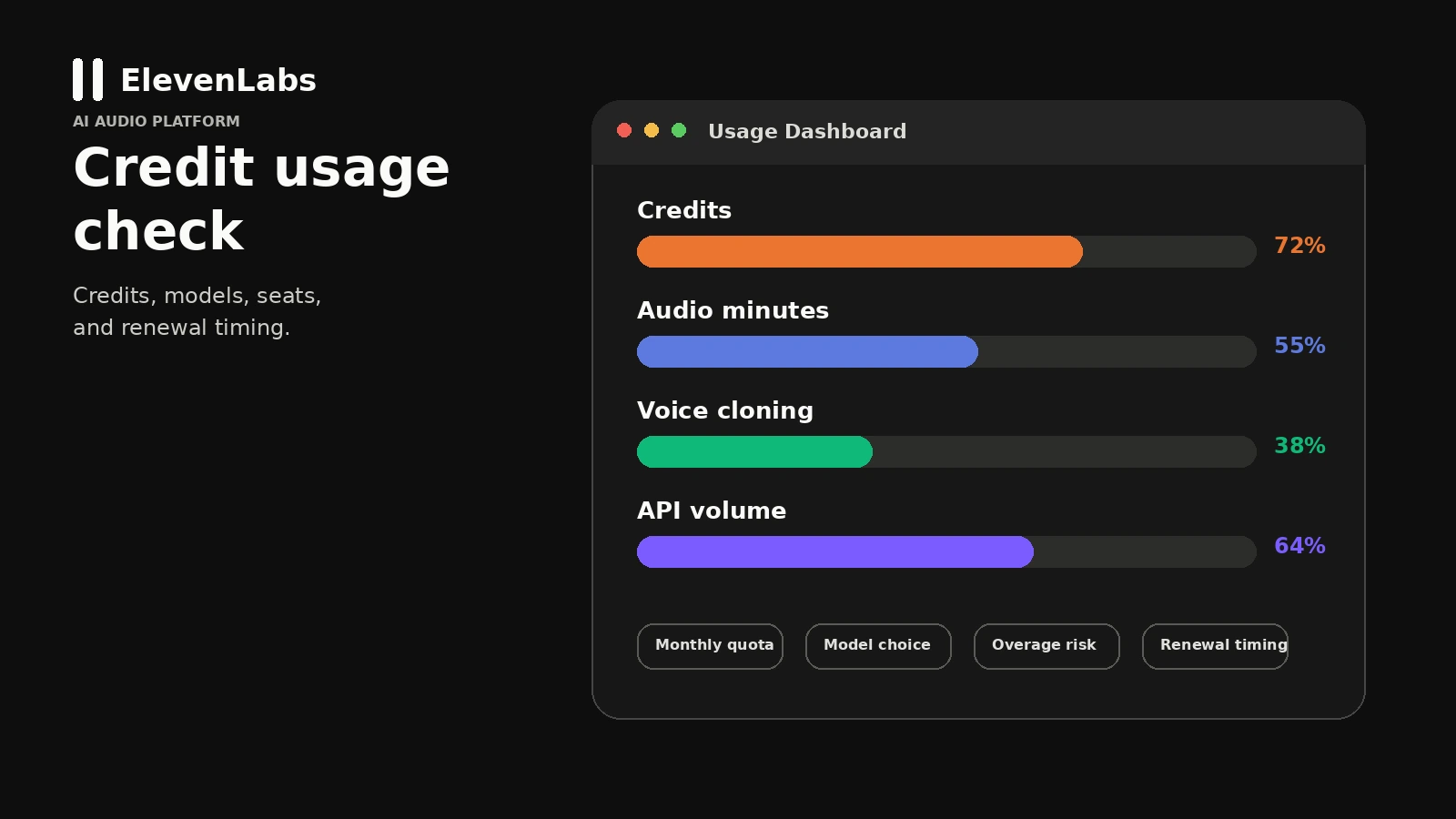
Credits are the real planning unit. The pricing FAQ explains that credits reset monthly, unused credits can roll over for up to two months on active paid subscriptions, and credits are charged per generation request rather than per download. It also notes that downgrade or cancellation can cause unused paid credits to expire after the subscription period.
That means the cheapest plan is not automatically the best deal. Starter may be fine for light commercial voiceovers. Creator may be a better fit when professional cloning or more credits matter. Pro and above start to make sense only when output volume, API quality, workspace seats, or business workflows justify the jump.
Pricing check: If the Free plan proves voice quality, compare the current credits, renewal amount, and paid features before choosing a creator, API, or team plan.
Check ElevenLabs pricing Read store guide Check current offers
Free plan, trial, coupon, and checkout notes
The Free plan is the safest starting point for most buyers. It lets you test voice quality, editor comfort, language fit, and whether ElevenLabs actually belongs in your workflow.
I would not treat the Free plan as proof that paid usage will be cheap enough. Free testing answers the quality question. Paid usage answers the volume question. Those are different questions.
A separate traditional free trial is not the main public path I would rely on. The visible entry route is the Free plan. Paid plans unlock different combinations of commercial use, voice cloning, more credits, Studio projects, Dubbing Studio, higher output quality, seats, API output, and business features.
On the savings side, I would treat coupons as secondary. ElevenLabs appears to rely more on official plan paths, free usage, first-month offers, grants, and enterprise negotiation than on stable public coupon codes. If a checkout code or deal path exists, trust it only when the discount appears in the live checkout summary.
Refunds need special caution. The Help Center states that refund eligibility requires a request within 14 days of payment and no credit quota used for the period being refunded. In plain English: do not burn through paid credits if you think you may ask for a refund.
Checkout caution: Use the coupon or offer route only after the voice workflow and credit needs are clear.
What I would check before buying ElevenLabs
If I were buying ElevenLabs for a real workflow, I would check these details before moving from free testing to paid production:
- Monthly credit use: Estimate credits or minutes from real scripts, not from one short demo.
- Commercial rights: Confirm whether your plan allows the intended commercial use.
- Voice cloning access: Check whether instant or professional cloning is included, and confirm consent requirements.
- Dubbing needs: Verify language support, editing control, and credit usage if localization matters.
- API requirements: Test SDKs, latency, output quality, error handling, and cost tracking before building around it.
- Refund flexibility: Read the refund policy before using paid credits.
- Renewal amount: Confirm the real post-promo price, taxes, and renewal terms at checkout.
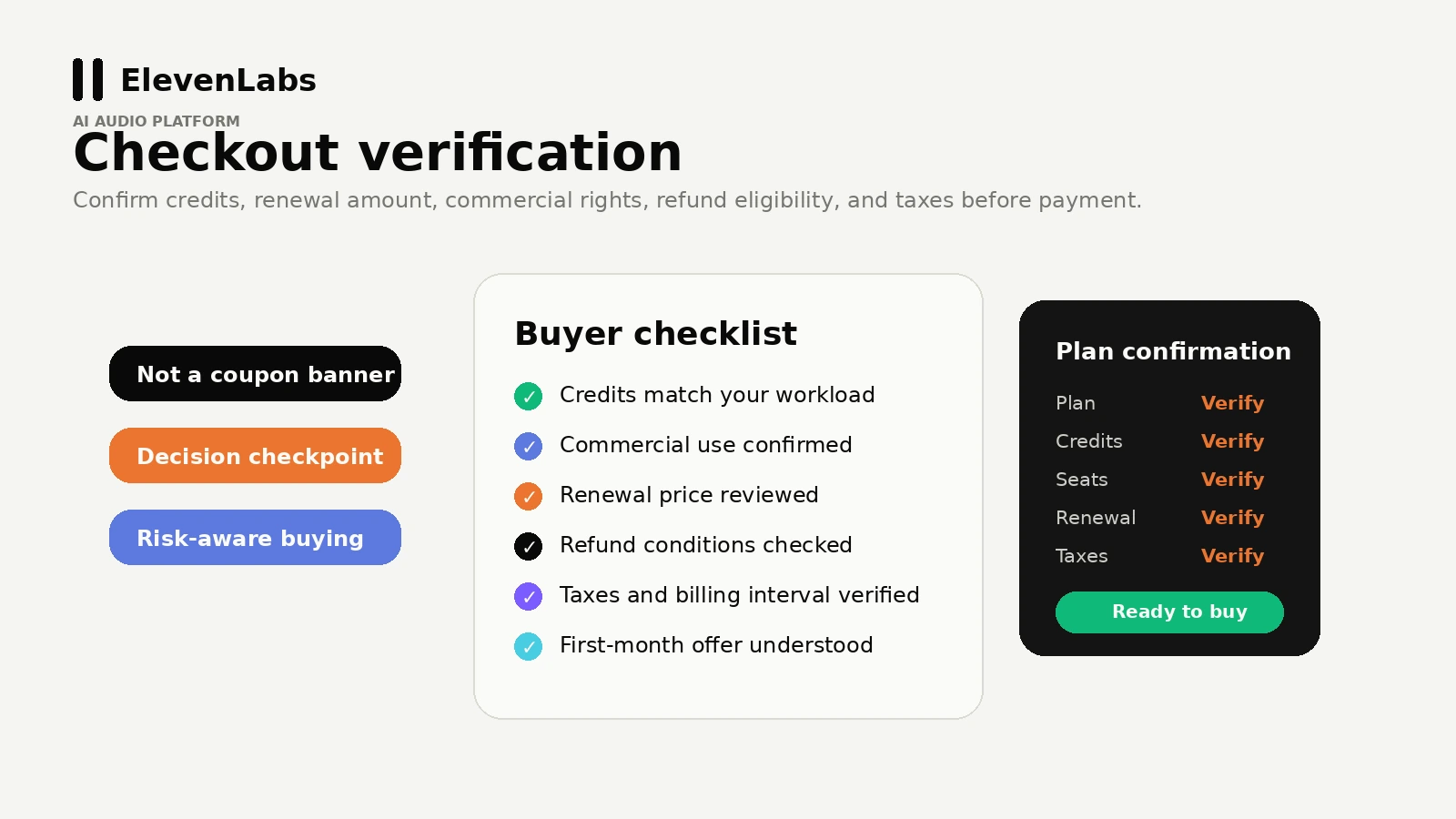
The first thing I would check is not the discount. It is whether the same project still looks affordable after you calculate full script length, revisions, regenerations, and publishing frequency.
A simple test before paying
Before paying, I would run a small test like this:
- Pick one real script from your actual workflow.
- Generate several short samples using the Free plan.
- Test at least two voice styles that could realistically fit your brand or channel.
- Listen for pronunciation, pacing, emotion, and audience fit.
- Estimate how many credits a full version would require.
- Check whether commercial use, cloning, dubbing, or API access changes the plan you need.
- Compare the expected monthly output against the current pricing page.
For developers, I would add one more step: build a tiny API prototype and track cost metadata before assuming web-app pricing maps cleanly to product usage.
For dubbing buyers, I would test one short clip with multiple speakers and edits. Localization quality is easier to judge when the source material resembles your real content.
Pros explained
The first major pro is voice quality. ElevenLabs has become a common reference point in AI voice because the output can feel natural enough for creator and business workflows. That does not remove the need for editing, but it does make the product worth testing before many smaller tools.
The second pro is breadth. ElevenLabs is not boxed into one small use case. Text-to-speech, speech-to-text, voice cloning, dubbing, music, sound effects, agents, and APIs give buyers multiple ways to grow from simple narration into deeper workflows.
The third pro is the Free plan. Free testing lowers the risk of checking voice quality before payment. I like that because audio quality is hard to judge from marketing copy alone.
The fourth pro is developer fit. The official docs make the API path more serious, with HTTP/WebSocket access and official Python and Node.js libraries. That matters for product teams that need voice infrastructure rather than a browser-only creative tool.
The fifth pro is scalability. Business and Enterprise paths exist for seats, custom terms, concurrency, support, and larger deployments. Small buyers may not need that, but it matters if the audio workflow becomes operational.
Cons explained
The biggest con is credit complexity. A plan can look affordable until you account for generation requests, regenerations, long scripts, dubbing minutes, API usage, and higher-quality output. Buyers who dislike variable usage math may find this frustrating.
The second con is refund limitation. A 14-day window sounds helpful, but the no-credit-quota-used condition matters. If you test heavily on a paid plan, refund flexibility may shrink fast.
The third con is responsibility around synthetic voice. Voice cloning, dubbing, and agent workflows require consent, disclosure, and brand safety. ElevenLabs has safety and moderation language, but the buyer still needs internal judgment.
The fourth con is platform breadth. ElevenLabs can be too much if all you want is a single voiceover or a lightweight video tool. The more features a platform has, the easier it is to buy the wrong plan for a simple job.
The fifth con is that not every buyer needs an audio-first platform. If the main outcome is social video, avatar-led marketing, or text-to-video content, tools like Fliki or AKOOL may be better adjacent comparisons.
Green flags and red flags
Green flags:
- You create voice content every week or month.
- You can test quality on a real script before paying.
- You understand your likely credit or minute usage.
- You need commercial voiceovers, dubbing, cloning, or API access.
- You have a consent process for cloned or branded voices.
- You know whether you are buying for creator work, localization, agents, or infrastructure.
Red flags:
- You are buying only because a first-month offer looks attractive.
- You cannot estimate monthly audio volume.
- You plan to use paid credits heavily and still expect an easy refund.
- You want to clone a voice without clear consent.
- You need video templates or avatar production more than audio generation.
- You are choosing annual billing before proving repeated value.
The easy mistake here is treating ElevenLabs as a “sounds good, therefore buy it” tool. The better way to judge it is to connect the voice output to a repeatable project.
ElevenLabs vs alternatives
Uberduck vs ElevenLabs
Uberduck is a more direct comparison when the buyer wants an AI voice or voice-cloning style tool without starting from ElevenLabs by default. It may be worth checking if voice character, pricing friction, or a different creative style matters.
ElevenLabs may still be stronger if the buyer needs broader platform depth: dubbing, agents, API infrastructure, higher-end voice quality, and larger production paths.
Voicewave vs ElevenLabs
Voicewave is another voice-focused comparison route. It may fit buyers who want a lighter narration workflow and do not need the full ElevenLabs platform.
ElevenLabs makes more sense when voice quality, cloning, API access, or multilingual production becomes a core part of the workflow.
Fliki vs ElevenLabs
Fliki is not a one-to-one replacement. It is more relevant when the buyer wants text-to-video or video creation around voiceovers.
If the goal is audio quality and voice infrastructure, ElevenLabs is the cleaner fit. If the goal is quick video creation with voice as one part of the workflow, Fliki may be the better comparison.
AKOOL vs ElevenLabs
AKOOL is an adjacent route for buyers comparing video, avatars, and broader creative production rather than audio-first generation.
ElevenLabs is the stronger check for voice, dubbing, agents, and APIs. AKOOL becomes more relevant when the buyer’s final output depends on avatar video or visual creative workflows.
Trust, refund, and buyer-risk notes
ElevenLabs is a serious platform, but serious platforms still need buyer discipline.
The first risk is usage planning. Credits reset monthly, and unused credits can roll over only under conditions tied to active paid subscriptions. If you downgrade or cancel, unused paid credits can expire after the subscription period. That makes output planning important.
The second risk is refund flexibility. The public Help Center says refund eligibility requires a request within 14 days of payment and no credit quota used for the period. This is not the same as a no-questions-asked “test everything and refund later” policy.
The third risk is data and voice processing. ElevenLabs’ privacy policy discusses services input and output, audio recordings, voice data, verification information, moderation, and model improvement. Teams with sensitive content should read the privacy policy and terms before uploading internal audio or using cloned voices.
The fourth risk is consent. A voice clone is not just an asset. It can represent a person, brand, employee, creator, narrator, or customer-facing identity. If consent and usage rights are unclear, do not use it commercially.
The fifth risk is buying too high too early. Scale, Business, and Enterprise paths may make sense for real teams, but they should follow usage evidence. Start smaller unless you already know output volume, workspace needs, support requirements, and API constraints.
Final verdict
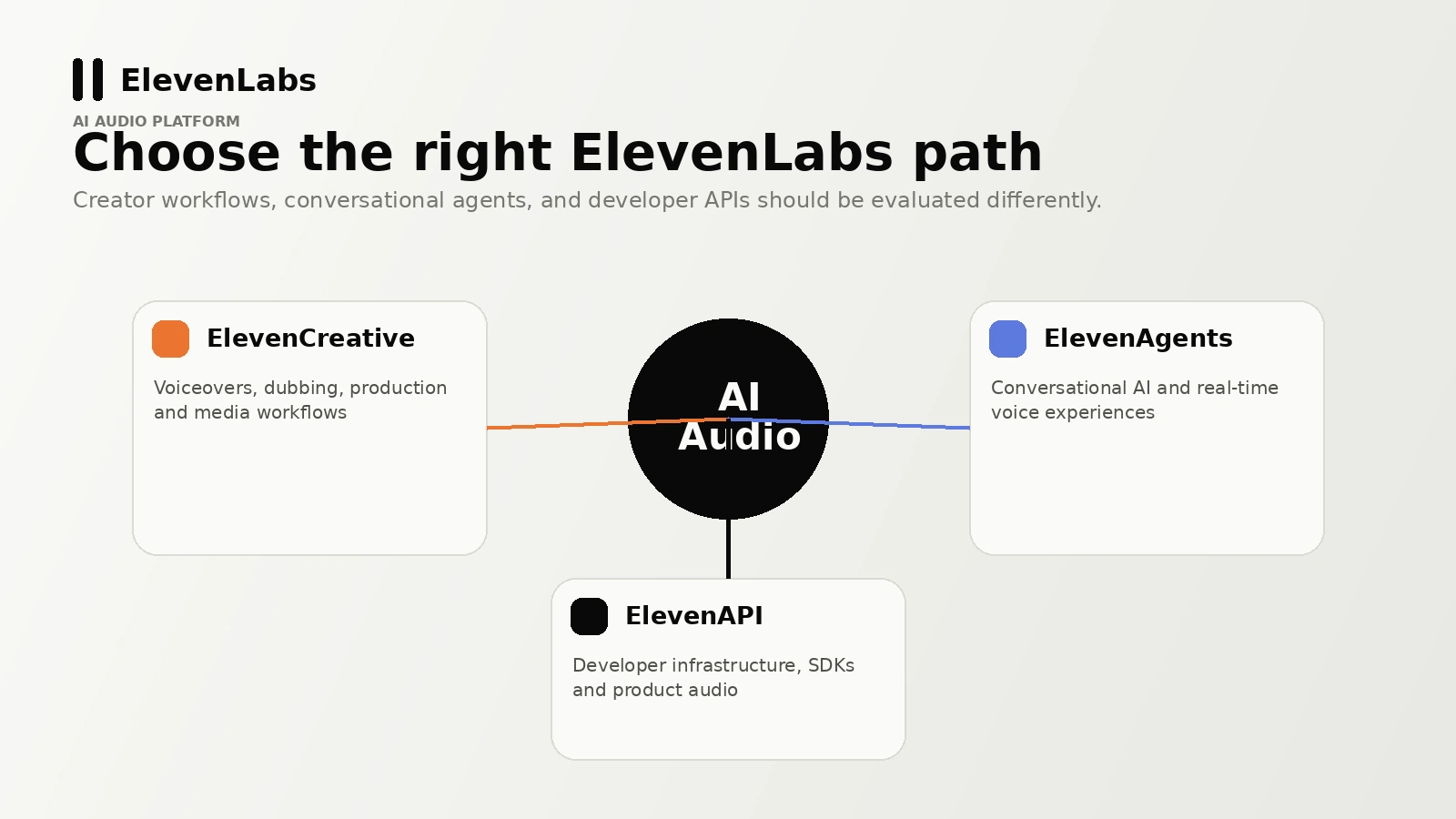
I would consider ElevenLabs if realistic AI voice, dubbing, cloning, agents, or audio APIs are part of a real workflow you expect to repeat.
I would start with the Free plan if the main question is voice quality. That is the safest place to judge whether the output fits your channel, product, course, campaign, or localization workflow.
I would move to a paid plan only after estimating monthly credits, confirming commercial rights, checking cloning or dubbing access, and reading the refund terms. The paid path can make sense, but it should be tied to real usage rather than curiosity.
I would compare alternatives first if your need is simpler voice generation, video creation, avatar content, or a lighter narration workflow. ElevenLabs is strong, but it is not automatically the simplest choice.
The practical verdict is this: ElevenLabs is one of the strongest AI audio platforms to evaluate, but it rewards buyers who test carefully. Use the free path to prove quality, use the pricing page to model credit reality, and treat coupons or first-month offers as a final checkout check—not the reason to buy.