Quick verdict
Clark Audio is worth considering if you are a producer who wants downloadable sounds, virtual instruments, audio plugins, or sample packs that live inside your DAW. It is not the kind of product I would judge like a normal AI SaaS subscription.
That distinction matters.
The real buyer question is not “does Clark Audio look useful?” The better question is: does the exact plugin, pack, or bundle fit your sound, your DAW, your operating system, your storage, and your refund comfort?
For lofi, nostalgic, boom bap, textured keys, vintage-inspired instruments, and one-time producer tools, Clark Audio has a clear role. The Lofi Panda line in particular is positioned around warm, imperfect, character-heavy instrument sounds rather than generic stock loops. That can be useful if you are building beats or scoring ideas and want something that feels more immediate than a giant technical synth.
The caution is also clear. Digital audio purchases are less forgiving than many web apps. Once you download a product, the refund path becomes restrictive. Pricing can also shift by product page, catalog listing, launch offer, bundle, or checkout discount. A coupon may help, but it should never be the reason you skip compatibility checks.
The safest next step is to start with the Clark Audio store guide if you want the pricing and route overview, then use the product page and refund policy as the final decision layer before downloading.
Next step: If Clark Audio still fits your production workflow, verify the current product price, plugin format, and refund terms before checkout.
Review snapshot
| Review point | Practical take |
|---|---|
| Best for | Producers, beatmakers, and DAW users who want downloadable plugins, sample packs, presets, and virtual instruments |
| Not ideal for | Buyers who want a browser-based AI music generator, licensed background music, a long trial, or easy post-download refunds |
| Main use case | Expanding a DAW sound palette with lofi, nostalgic, textured, or character-heavy sounds |
| Pricing model | Mostly one-time digital product purchases, with product-level and bundle-level pricing |
| Free plan or trial | No normal SaaS-style free plan or free trial found for the paid plugin catalog |
| Main strength | Focused producer tools with sound libraries, plugin formats, support docs, and no recurring subscription pressure |
| Main concern | Refund limits, DAW compatibility, installation friction, storage needs, and product-by-product pricing |
| Best comparison logic | Compare direct plugin and sample-library alternatives first; treat AI music and podcast tools as adjacent routes |
| Best next step | Pick one product, check the demos and formats, compare bundle value, then test any coupon at checkout |
What is Clark Audio?
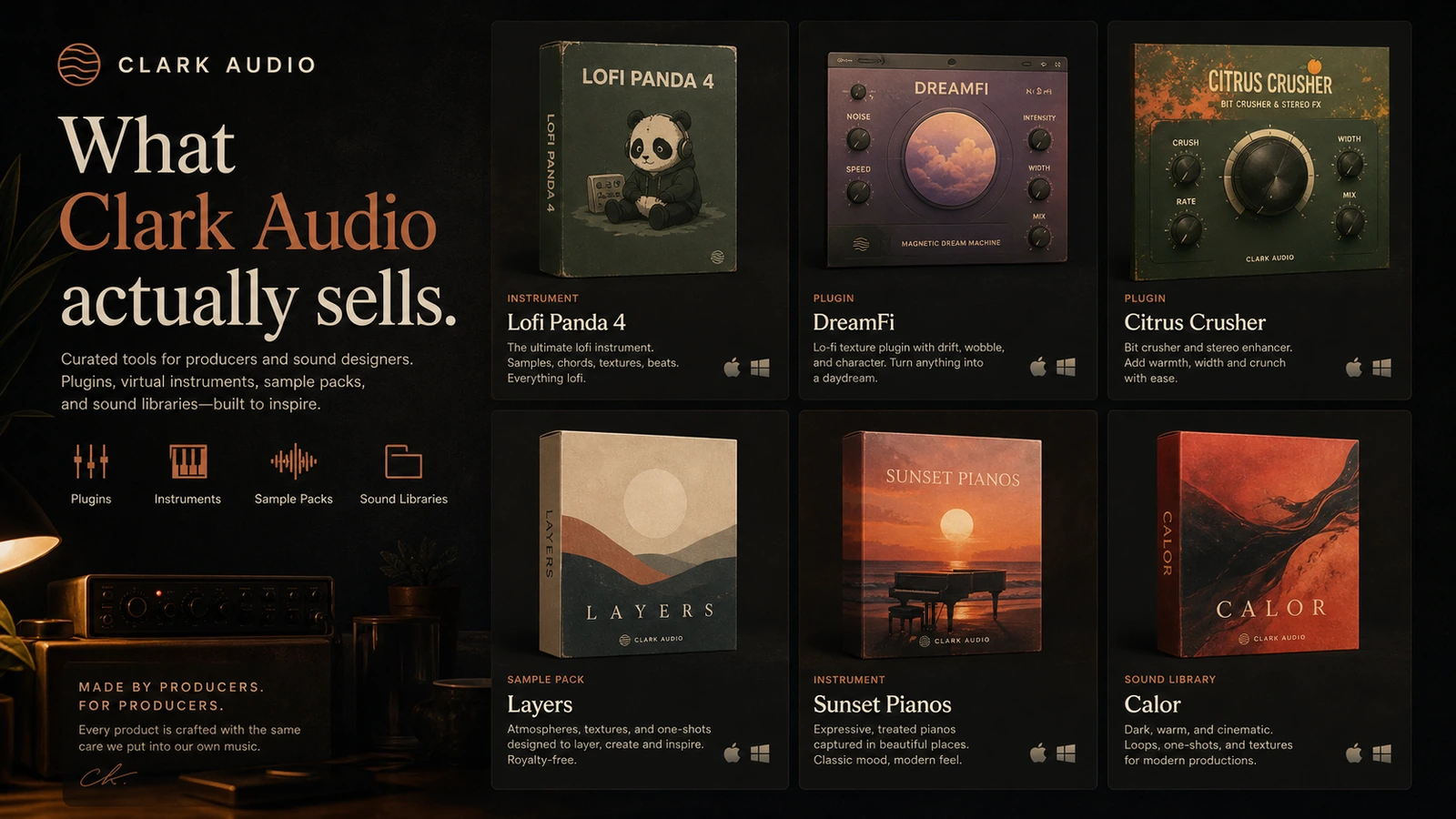
Clark Audio is best understood as a digital music production store for producers who want downloadable audio plugins, virtual instruments, sample packs, presets, MIDI content, and sound libraries.
It is not a general AI workspace. It is not mainly a podcast editor. It is not a licensed background-music marketplace. It is also not the same kind of product as a web-based AI music generator where you type a prompt and receive a finished track.
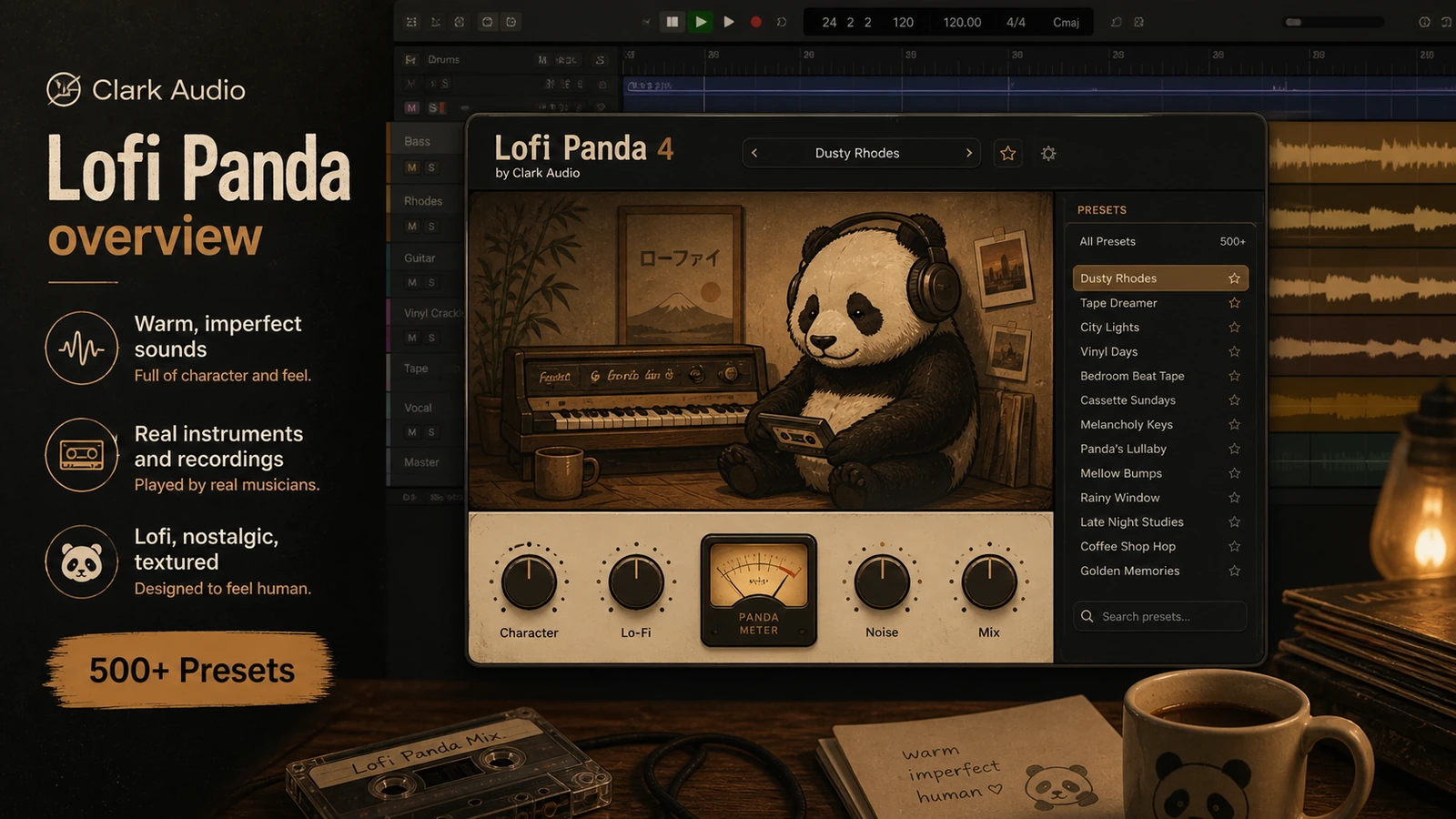
The homepage and product pages lean into a producer-first promise: real instruments, imperfect character, lofi texture, plugin workflows, and sounds that can be used inside a DAW. Lofi Panda 4 is the clearest example. The product page describes it as a no-subscription plugin with 500+ presets, multiple sound worlds, built-in effects, and versions that include different sound libraries and bundles.
That makes the buying decision narrower than a normal creator-tool review.
A good Clark Audio purchase starts with a specific production need. Maybe you want warmer piano textures. Maybe you want lofi guitars, nostalgic synths, field recordings, or quick tone-shaping controls. Maybe you want a one-time plugin instead of a monthly subscription.
Our review approach compares public product pages, pricing details, help documentation, refund terms, buyer workflow fit, and nearby alternatives. We do not treat a coupon, sale price, or bundle headline as proof that a downloadable plugin fits the buyer.
My confidence is strongest around Clark Audio’s product role: it is a producer sound and plugin store. I am more cautious around long-term value for any individual buyer because that depends heavily on DAW setup, sound taste, download behavior, and how often the sounds end up in finished work.
Who should use Clark Audio?
Clark Audio makes the most sense for producers who already know what kind of sound they want.
A lofi or boom bap beatmaker is the most obvious fit. If your workflow already involves textured keys, dusty chords, nostalgic basses, tape-like motion, or imperfect melodic layers, a Clark Audio plugin may give you faster starting points than building those sounds from scratch.
A DAW user who prefers one-time purchases may also like the buying model. Many creator tools push buyers into monthly billing, but Clark Audio’s catalog is closer to a traditional digital product store. You buy a plugin or pack, download it, install it, and use it in your production environment.
It can also fit producers who want a compact instrument rather than a massive sound ecosystem. Not every producer wants a giant sample subscription, a huge Kontakt library, or a broad marketplace. Sometimes the better purchase is one focused tool that gives you a particular mood quickly.
A bundle-focused buyer may also find value here, but only after checking the exact contents. Clark Audio’s value can change a lot depending on whether you buy a single plugin, an expanded version, or a complete bundle. More presets are not automatically better if the added worlds do not fit your genre.
Finally, Clark Audio can work for intermediate beginners who are ready to learn plugin installation. If you are comfortable with VST, VST3, AU, or selected AAX workflows, the learning curve may be manageable. If those terms are new to you, the support docs matter more than the sales page.
Who should avoid Clark Audio?
I would avoid Clark Audio if you want a web app that creates finished music for you. This is not the same buying job as an AI prompt-to-music tool. For generated background tracks, Mubert is a more relevant adjacent route.
I would also be careful if you are unsure about your DAW. Clark Audio products are made for music software workflows. If you do not know whether your DAW supports the required plugin format, or if you are not comfortable checking plugin folders and rescanning your DAW, slow down before buying.
The product is not ideal for buyers who need a soft refund path. Clark Audio’s refund policy treats digital product sales as final once the product has been downloaded. The company may review certain situations, but that is not the same as a standard refund window.
It is also not the right purchase if you mainly need licensed background music for YouTube or social video. In that case, Thematic is a more direct adjacent workflow because the buyer job is music licensing, not sound design or plugin use.
Podcast creators should be cautious too. If your real job is recording, editing, cleaning, and publishing spoken audio, Podcastle is closer to that workflow. Clark Audio is about producer sounds, not podcast production.
The easy mistake is buying because the product page sounds inspiring. The better move is to ask whether you can hear these sounds appearing in your own sessions and whether you are comfortable with the download and refund terms.
How Clark Audio fits into a real workflow
Clark Audio fits best after you already have a DAW-based production process.
A realistic workflow looks like this:
- You identify a sound gap in your current setup.
- You listen to product demos and walkthroughs.
- You check the exact plugin format and operating system support.
- You compare the single product against any bundle path.
- You test any coupon only after the product itself makes sense.
- You download and install the plugin or sample library.
- You test several presets or sounds inside a real project.
- You judge value by whether the product helps you finish more music, not by how many presets it includes.
That last point is where buyers can get honest with themselves. A plugin can sound impressive in a demo and still sit unused in your own setup. The value is not the number of sounds. The value is how quickly those sounds turn into tracks, beats, cues, or client-ready ideas.
Clark Audio becomes useful when it shortens a repeated creative step. If you often need warm keys, gritty textures, nostalgic pads, or quick lofi character, a focused plugin can save time. If you only like the idea of lofi sounds but do not actually use them in finished work, the purchase may become another dusty plugin folder.
Workflow check: Before comparing every bundle, open the current Clark Audio product page and make sure the sound, format, and installation path match how you actually produce.
Real-world buyer scenarios
A lofi beatmaker looking for fast melodic texture
This is probably the cleanest fit. A producer making lofi, chillhop, boom bap, or nostalgic hip hop may want warm keys, guitars, basses, pads, and imperfect textures without programming every sound from scratch.
Clark Audio can work here if the demos match the buyer’s taste. The risk is assuming “lofi” always means the same thing. Some producers want dusty and broken. Others want clean, soft, and cinematic. Listen before buying.
A producer who dislikes subscription tools
Clark Audio may appeal to buyers who are tired of monthly billing. One-time plugin purchases can feel cleaner, especially if you only need a few sounds.
The tradeoff is refund flexibility. A subscription can often be canceled after a month. A downloaded digital plugin may not be easy to unwind. That makes pre-checkout judgment more important.
A beginner who wants their first third-party instrument
A beginner can still use Clark Audio, but only if they are ready for plugin setup. The official docs cover installation, DAW loading, sample folder issues, serial numbers, and compatibility questions, which is helpful.
Still, I would not treat this as a no-friction browser tool. The buyer should be ready to install files, locate plugin folders, rescan a DAW, and troubleshoot if the instrument does not appear immediately.
A video creator who only needs background music
This is a mismatch unless the creator also produces music. If the job is simply finding safe tracks for video, Clark Audio is not the cleanest fit. A licensing platform such as Thematic or a generated-music route such as Mubert may be easier.
Key features that actually matter
Downloadable plugins and virtual instruments
The main value is not a dashboard. It is the actual sound product. Clark Audio sells plugins and instruments that can sit inside a DAW, which makes it more comparable to a producer sound library than a generic creator app.
Buyer note: judge the product by format, sound demos, system requirements, and whether you can imagine using it in your own sessions.
Lofi Panda and character-heavy sound design
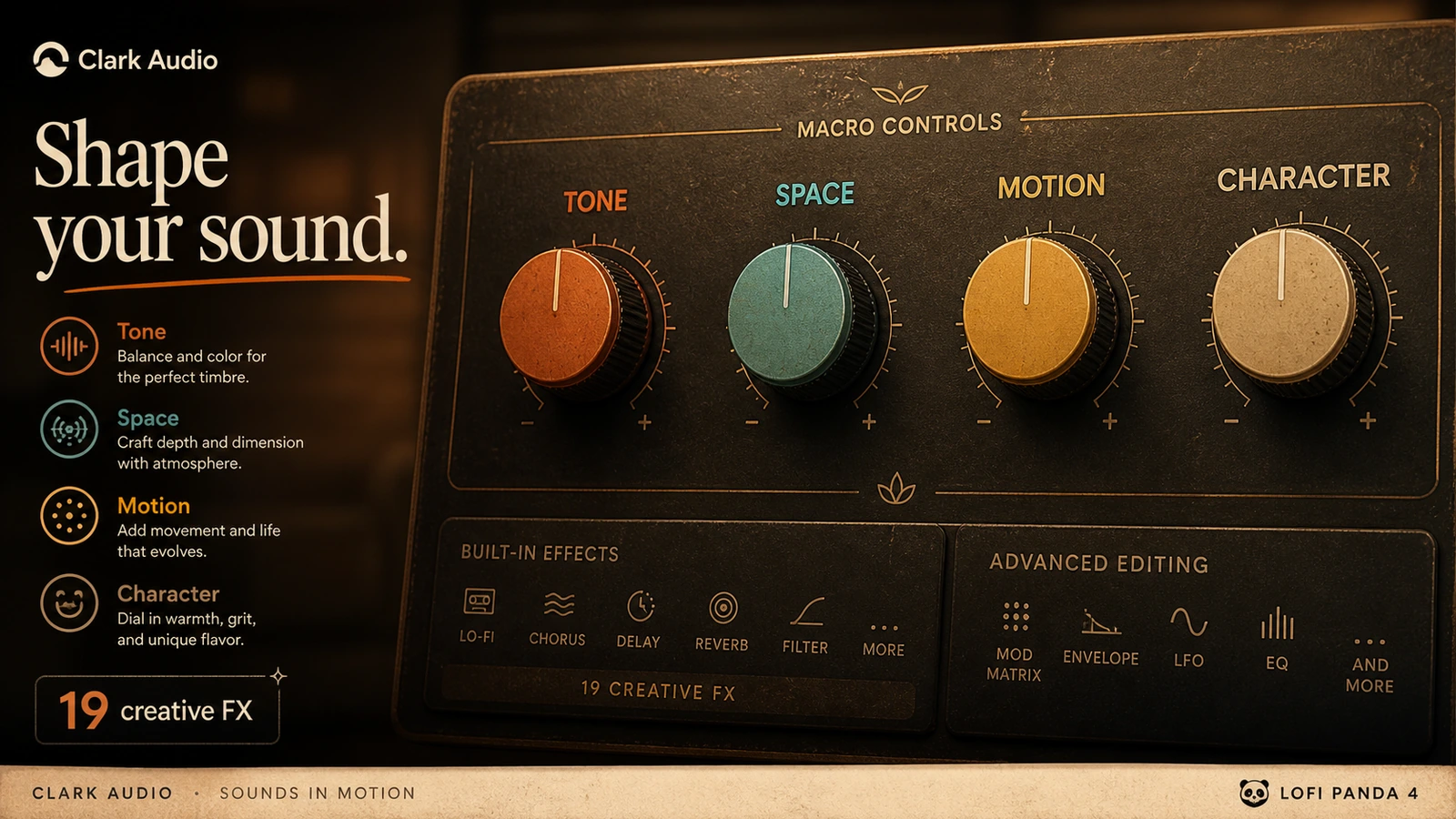
Lofi Panda is the most visible Clark Audio product line. The current product page emphasizes real instruments, vintage and acoustic sources, 500+ presets, multiple sound worlds, built-in effects, instant chords, and quick tone controls.
This is useful if you want fast mood and texture. It may disappoint if you want a deep synth engine, a giant orchestral library, or a precise sound-design workstation.
One-time catalog pricing
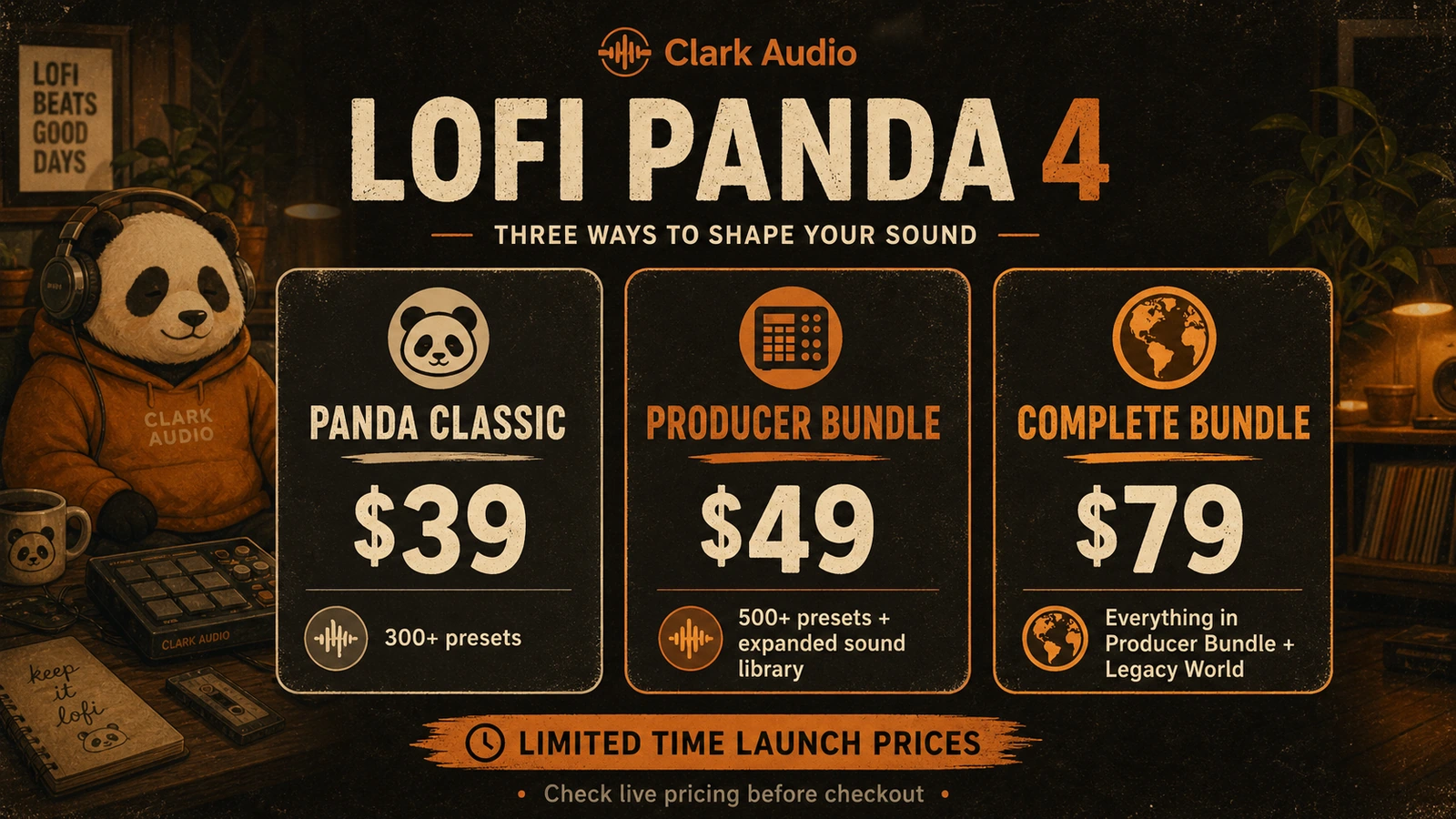
Clark Audio pricing is mostly product-based rather than subscription-based. The plugin catalog shows individual products and sale prices, while Lofi Panda 4 has version and bundle choices.
Buyer note: do not assume the lowest catalog price describes the whole store. Open the exact product, check current sale status, compare versions, and calculate whether a bundle actually saves money for your use case.
Compatibility and support docs
Clark Audio publishes help pages for DAW compatibility, plugin loading, download issues, sample folders, coupon entry, and installation problems. That is a meaningful trust signal because these are exactly the issues buyers run into with downloadable music tools.
The support docs also reveal the practical reality: this is software that may require storage, folder paths, DAW rescans, and troubleshooting. That is not a negative by itself, but it is part of the purchase.
Coupon field and sale paths
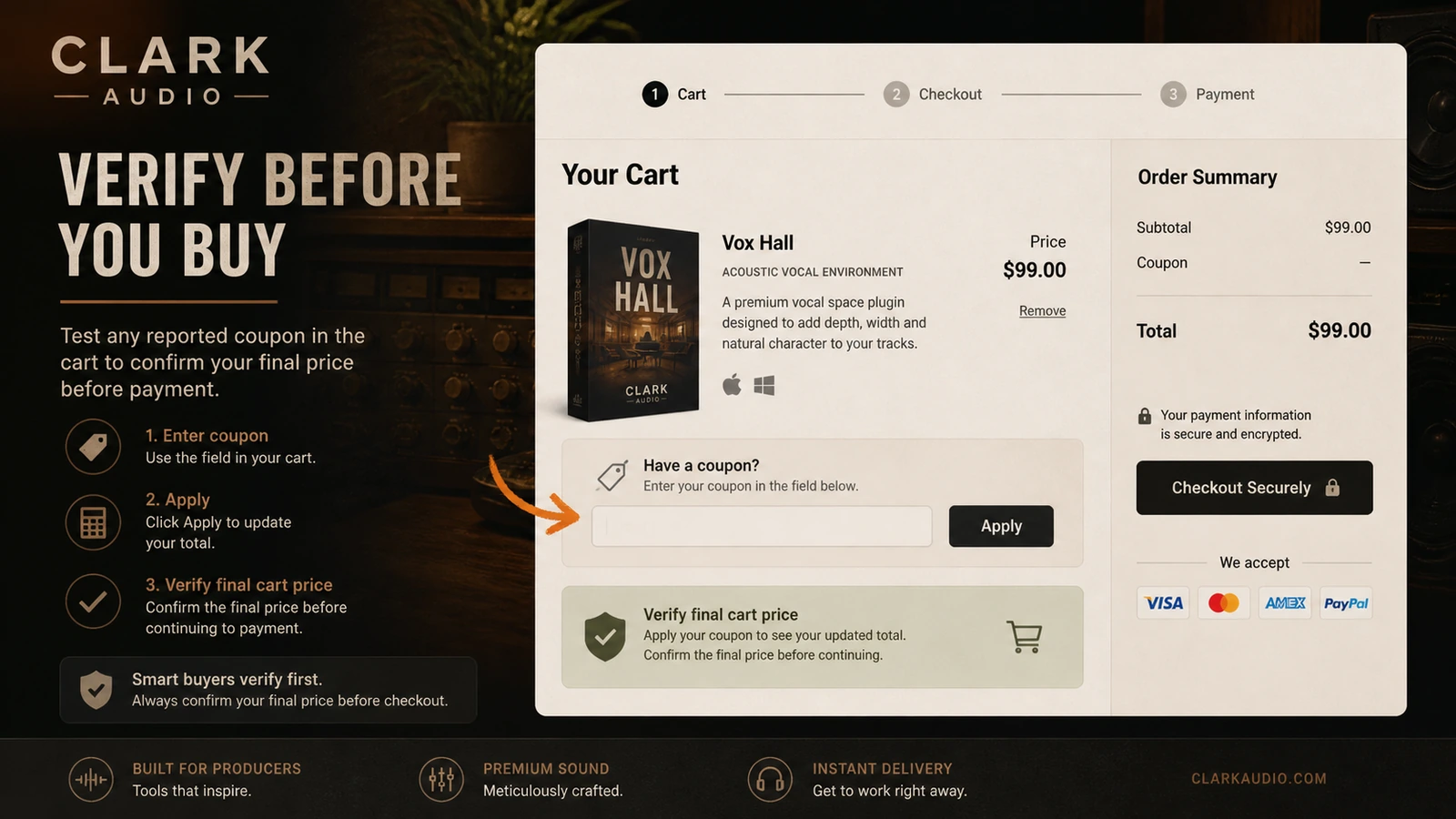
Clark Audio has an official help article showing where to enter a coupon at checkout. Public coupon directories may also report discount paths.
Buyer note: a reported coupon is not a buying argument. It only matters if the final cart confirms the discount and the product still fits your DAW and sound needs.
Pricing and plan value
Clark Audio pricing is not a single plan table. It is product-by-product.
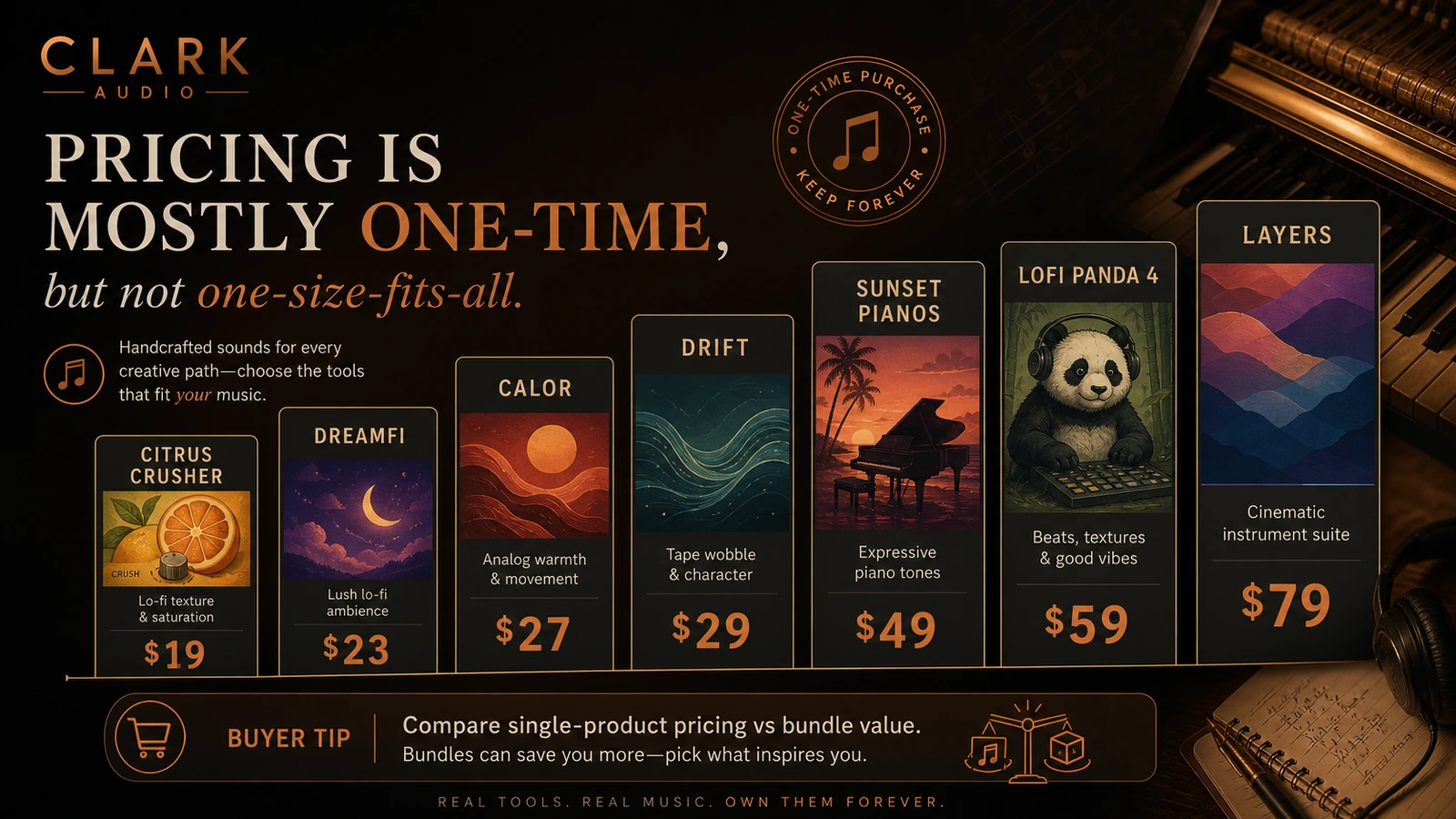
The public VST plugin catalog shows selected one-time purchases and sale pricing. At the time of this review, the catalog included lower-priced effects and instruments such as Citrus Crusher at $19, Drift at $29, and other products with sale prices. The Lofi Panda 4 product page also showed version paths and launch-style prices for different bundles.
This is where a buyer needs to slow down.
A low entry product can be a good way to test the Clark Audio ecosystem, but it may not represent the product you actually want. A larger bundle can be a better value if you will use the included sounds. It can also be overbuying if you only needed one mood, one instrument, or one effect.
For my money, the right order is:
- Choose the sound or workflow need first.
- Pick the exact Clark Audio product that matches it.
- Check format and DAW compatibility.
- Compare the single product with the bundle.
- Test the coupon field.
- Pay only if you are comfortable with the download and refund terms.
Annual billing is not the issue here. Overbuying is. A one-time purchase can still be wasteful if the product does not fit your workflow.
Pricing check: If Clark Audio still looks like the right sound source, compare the current product page against bundle pricing before using the coupon route.
Free plan, trial, coupon, and checkout notes
Clark Audio should not be evaluated like a free-trial SaaS product.
I did not find a normal free plan or standard trial path for the paid plugin catalog. The better evaluation path is demos, walkthroughs, product screenshots, specs, docs, and compatibility checks. That is less convenient than clicking around inside a free cloud app, but it is normal for many downloadable music products.
The coupon path does exist. Clark Audio publishes guidance for entering a coupon at checkout, and public coupon directories sometimes report codes or deal routes. That does not mean the best purchase is the one with the largest discount headline.
A safer checkout order looks like this:
- Confirm the product category first.
- Check whether it is a plugin, sample pack, preset pack, world expansion, or bundle.
- Confirm your DAW and operating system support the format.
- Compare current product and bundle pricing.
- Add the product to cart and test any active offer.
- Read the refund policy before downloading.
The refund step matters because once a digital product has been downloaded, Clark Audio says standard refunds are not offered. The company may review technical issues or unhappy purchases and potentially offer store credit, but that is discretionary.
So the coupon page should come late in the decision. Use the Clark Audio coupon page only after the product itself makes sense.
What I would check before buying Clark Audio
If I were buying Clark Audio for a real production workflow, I would check these items first:
- Exact product type: plugin, virtual instrument, sample pack, preset pack, expansion, or bundle.
- Plugin format: VST, VST3, AU, or selected AAX support depending on the product.
- DAW compatibility: Ableton Live, FL Studio, Logic Pro, GarageBand, Pro Tools, Reaper, Studio One, or whatever you actually use.
- Operating system: current macOS or Windows support, plus 64-bit requirements where relevant.
- Storage and download size: large sample libraries can require more space and a stable connection.
- Bundle value: whether the extra sounds are useful or just bigger.
- Refund comfort: whether you are comfortable with the post-download policy.
- Coupon result: whether the final cart price improves after testing the checkout field.
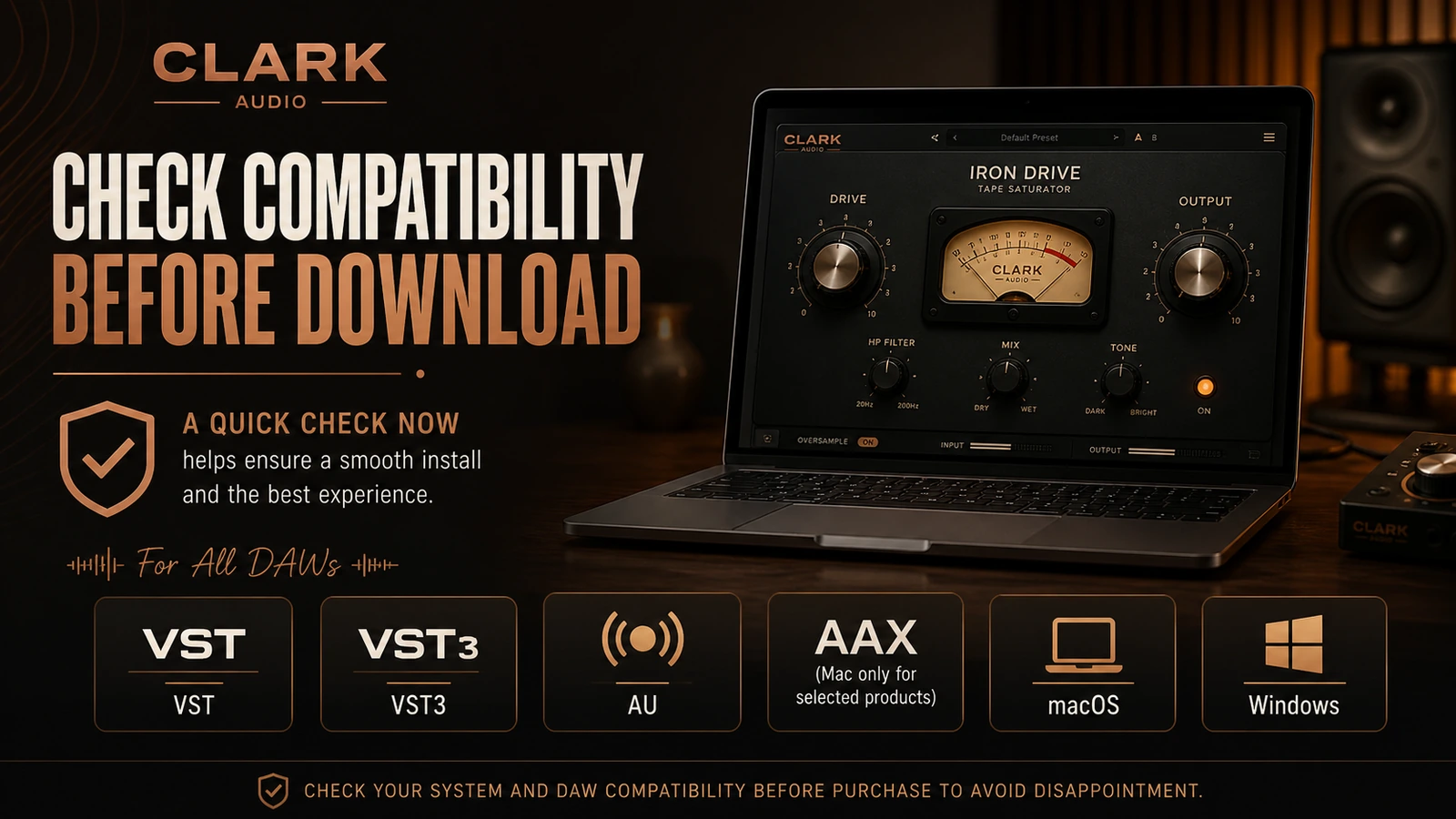
The biggest mistake is treating a sound product like an impulse purchase. A plugin is not just a file. It becomes part of your setup. If it does not load, does not fit your genre, or takes too much friction to manage, the discount will not matter.
A simple test before paying
Before paying, I would run a small test like this:
- Pick one real project you are working on.
- Identify the exact sound gap you want Clark Audio to fill.
- Watch a walkthrough or listen to demos for that specific product.
- Check format support for your DAW and operating system.
- Compare the single product against any bundle version.
- Read the refund policy before downloading.
- Decide whether the product would help finish the current project, not just expand your collection.
This test is intentionally narrow. It keeps you from buying because a bundle looks attractive or a coupon appears. If the product cannot help one real project, it may not deserve a place in your setup yet.
Pros explained
The first major pro is the one-time purchase model. For producers tired of monthly creative-tool subscriptions, Clark Audio can feel refreshing. You buy the product and use it inside your DAW instead of adding another recurring bill.
The second pro is product focus. Clark Audio is not trying to be everything for every creator. Its strongest identity is producer-ready sounds, lofi instruments, texture-heavy plugins, and downloadable audio assets.
The third pro is that the official support docs cover real friction points. Coupon entry, DAW compatibility, plugin loading, download problems, sample folder issues, and installation support are all practical topics. That is more useful than a sales page that only says the product is easy.
The fourth pro is bundle flexibility. If you already know you want multiple sounds from the same ecosystem, a bundle can be more logical than buying products one by one.
The limit is that none of these strengths remove the need for fit. A plugin can be well made and still be wrong for your sound, your DAW, or your workflow.
Cons explained
The main con is refund comfort. Clark Audio’s policy is strict once a digital product has been downloaded. That does not mean the company will never help, but it does mean buyers should treat the purchase as mostly final.
The second con is pricing complexity. Product catalog prices, individual product pages, launch prices, sale prices, and bundles can point buyers in different directions. That makes live checkout verification important.
The third con is installation friction. DAW plugins are not always as simple as web apps. You may need to manage installers, plugin folders, serial numbers, sample libraries, storage, browser download issues, and DAW rescans.
The fourth con is category mismatch. Clark Audio sits near creator-tool coverage, but it is not a broad AI music platform. If you want prompt-generated music, licensed tracks, or podcast editing, you should compare adjacent routes before buying.
The fifth con is taste risk. Lofi and nostalgic sound design can be very personal. A demo that inspires one producer may feel too wobbly, too gritty, too soft, or too specific for another.
Green flags and red flags
Green flags:
- You already work inside a compatible DAW.
- You want lofi, nostalgic, textured, or character-heavy sounds.
- You prefer one-time purchases over subscriptions.
- You can hear the product fitting into a current project.
- You are comfortable with installation, storage, and support docs.
Red flags:
- You are buying only because a coupon appears.
- You do not know whether your DAW supports the format.
- You expect a long free trial or easy post-download refund.
- You want generated background tracks rather than production tools.
- You are a beginner who does not want to manage plugins or sample folders.
The green flags are practical. The red flags are also practical. That is the right way to judge Clark Audio.
Clark Audio vs alternatives
Direct plugin and sample-library alternatives vs Clark Audio
The most direct comparisons are other plugin stores, sample-pack libraries, virtual instrument sellers, and producer marketplaces. Think in terms of sound library fit, plugin format, bundle depth, licensing, installation, and how often the sounds will be used in finished work.
Clark Audio may make more sense if you want its specific lofi, nostalgic, and textured sound palette. A broader marketplace may be better if you want a larger catalog, more genre variety, or a subscription-style sample discovery workflow.
Mubert vs Clark Audio
Mubert is an adjacent route, not a direct replacement. It fits buyers who want generated background music or AI-assisted track creation. Clark Audio fits producers who want to make and shape sounds inside a DAW.
Choose Mubert if you need finished background tracks faster. Choose Clark Audio if you want source sounds and instruments for your own production process.
Thematic vs Clark Audio
Thematic is also adjacent. It is more relevant for creators who need licensed music for videos, social content, or publishing. Clark Audio is better for producers who want to create the music themselves.
If your goal is “find a track I can use,” Thematic is cleaner. If your goal is “make a beat or cue with my own sound palette,” Clark Audio is closer.
Freebeat vs Clark Audio
Freebeat is more relevant if the buyer wants AI-assisted beat, video, or social-content workflows. Clark Audio is more traditional: plugins, sample packs, virtual instruments, and downloadable production assets.
Freebeat may be easier for content-first creators. Clark Audio is more useful for DAW-first producers.
Podcastle vs Clark Audio
Podcastle is not a direct alternative. It is a podcast recording and editing route. Compare it only if your real need is spoken audio production.
Clark Audio helps with music production sounds. Podcastle helps with voice recording, editing, and publishing workflows. Those are different buyer jobs.
Trust, refund, and buyer-risk notes
Clark Audio has several trust signals that are worth noticing. It publishes product pages, support documentation, a coupon help article, terms, a privacy policy, and a refund policy. That gives buyers more to inspect than a thin sales page.
But the risk layer still matters.
The refund policy is the biggest one. Digital product sales are considered final once downloaded, and standard refunds are not offered after download. Support may review certain cases, but the buyer should not rely on that as a normal cancellation path.
The terms also describe downloads as digital products transferred from Clark Audio’s servers to the buyer’s computer, and the license language frames the VST software as a non-exclusive, non-transferable single-user license that can be used royalty-free in personal and commercial projects. That is helpful, but it also means buyers should understand what they are allowed to do with the software and what they cannot redistribute.
Privacy is fairly normal for an ecommerce-style product store, but still worth reading. Clark Audio says it collects account, purchase, cart, site behavior, cookie, and marketing-related information. That is not unusual, but buyers who dislike remarketing should review the privacy page before creating an account.
Trustpilot feedback appears mixed: some producers praise Lofi Panda and the sound quality, while some complaints mention value, clipping, support, or product expectations. I would treat that as a reason to listen carefully and buy narrowly, not as a reason to dismiss the entire store.
The safest buyer posture is simple: verify before download, test coupon at checkout, keep order details, and start with the product most likely to be used in real sessions.
Final verdict
I would consider Clark Audio if you are a DAW-based producer who wants textured, lofi, nostalgic, or character-heavy sounds and you prefer one-time plugin or sample-pack purchases over subscriptions.
I would skip it if you want a browser-based AI music generator, a licensed background-music library, a podcast production tool, or a purchase with a more forgiving refund path.
I would compare it with direct plugin and sample-library alternatives first if your main question is sound quality or catalog depth. I would compare adjacent routes such as Mubert, Thematic, Freebeat, or Podcastle only if your buyer job is actually generated music, licensed music, content-first beat creation, or podcast editing.
The safest next step is not to chase the biggest coupon headline. Start with the exact product page, check your DAW and operating system, compare the bundle value, read the refund policy, and then use the Clark Audio store or coupon route only when the product itself already makes sense.
