Quick verdict
BrandWell is worth considering if you are buying a B2B growth system, not just another AI writing tool.
That is the first filter I would apply.
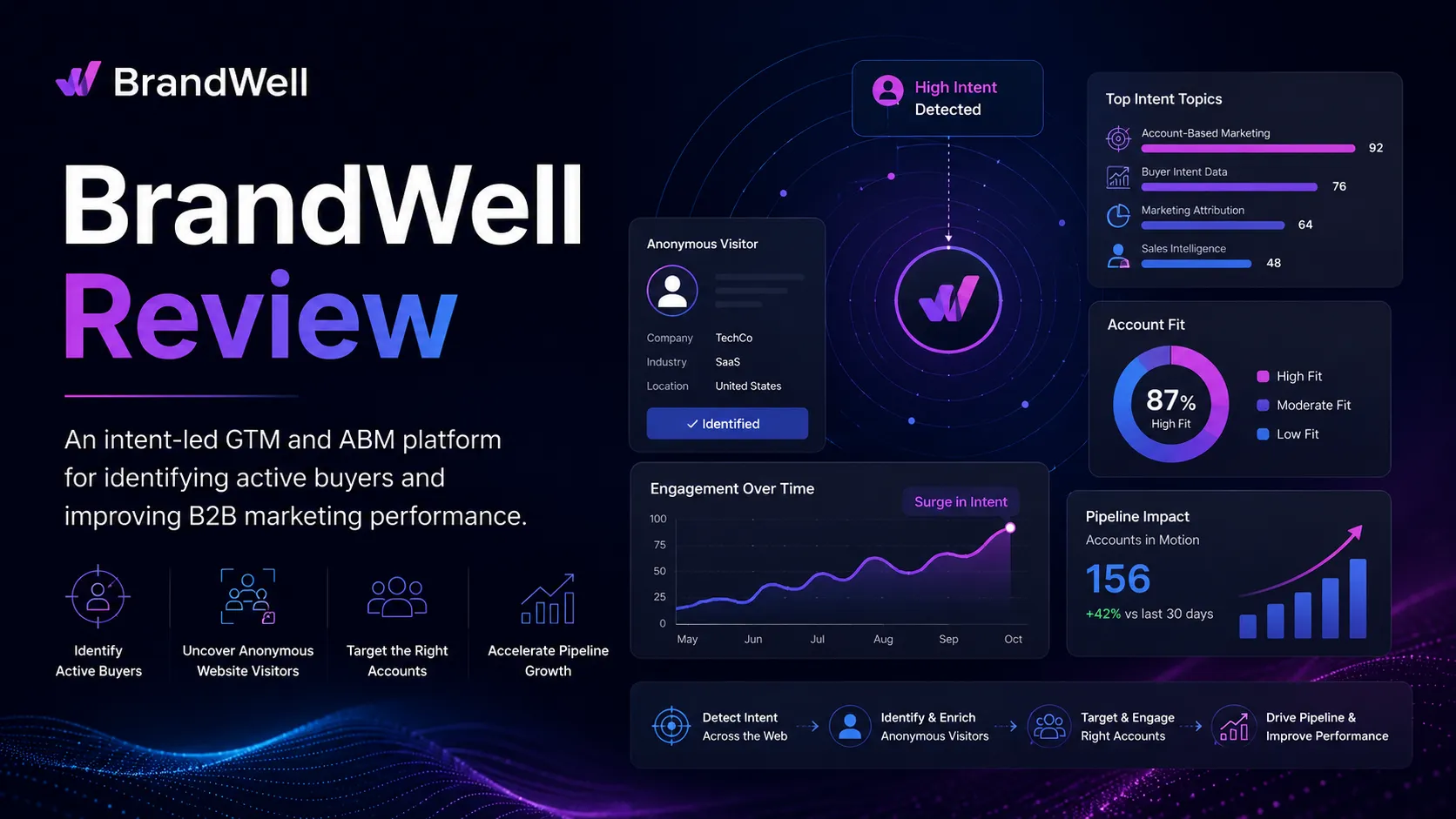
The current BrandWell pitch is built around intent-led GTM: TrafficID, intent data, stakeholder audiences, RankWell content, AIMEE, ad-platform sync, and reporting. That can make sense for a team that already knows how to act on buyer signals. It is a harder sell for a solo creator, small blog, or content buyer who only wants cheaper article production.
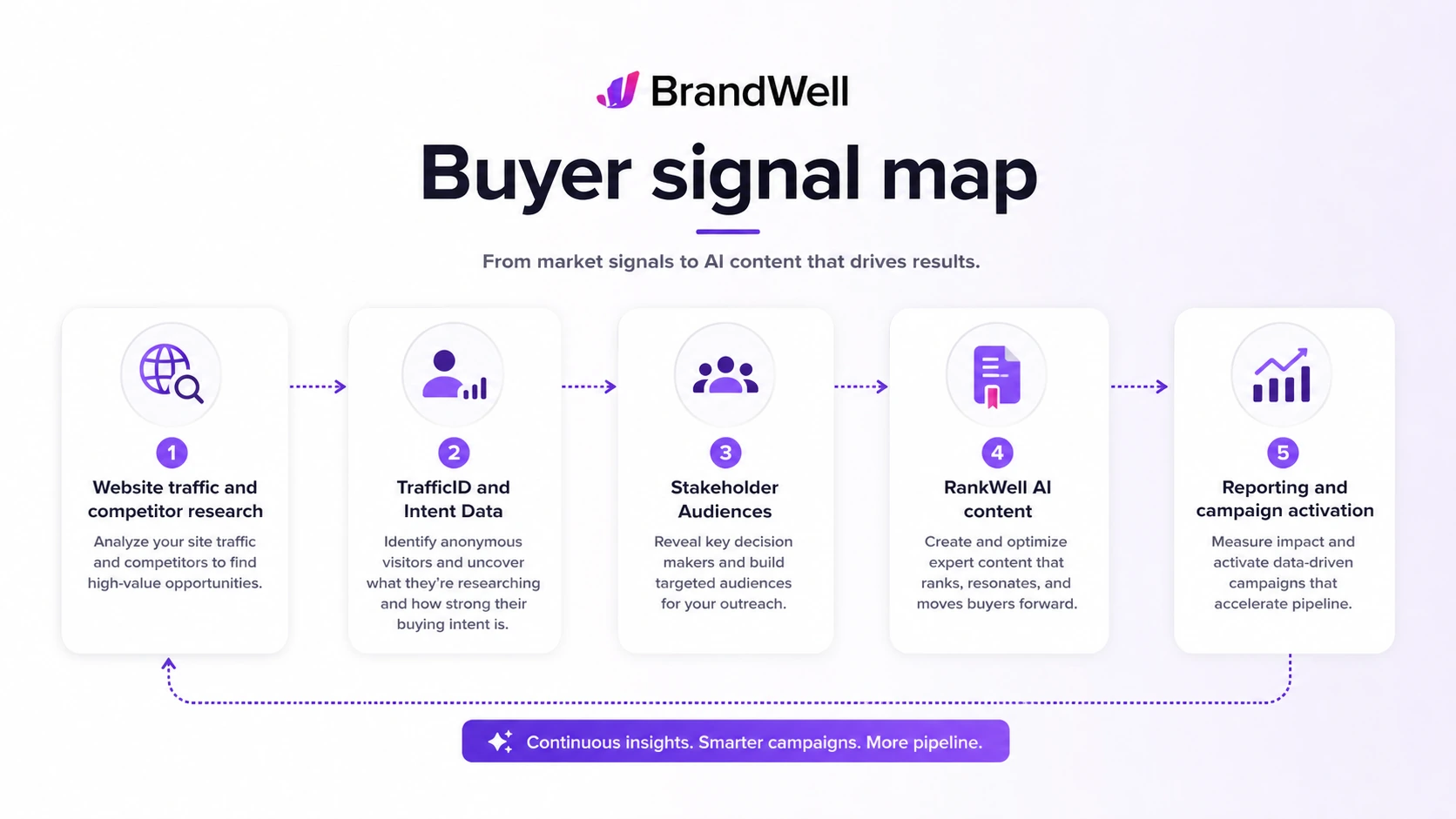
The strongest reason to consider BrandWell is the combined workflow. In theory, a team can identify visitor or competitor-research signals, map stakeholders, create content around those topics, activate audiences, and track the results in one place. That is a much bigger buying case than “write me a blog post.”
The main caution is pricing and commitment risk. Official pricing is premium, the 7-day trial needs to be used deliberately, and BrandWell’s billing and refund language is not something I would skim. A coupon or partner bonus might improve the purchase, but it should not be the reason you buy.
The safer next step is simple: test whether BrandWell can produce useful buyer signals and content workflow value for your market before judging the plan by the headline price.
Next step: If BrandWell still looks like a real GTM fit, check the current buyer route before choosing a plan.
Review snapshot
| Review point | Practical take |
|---|---|
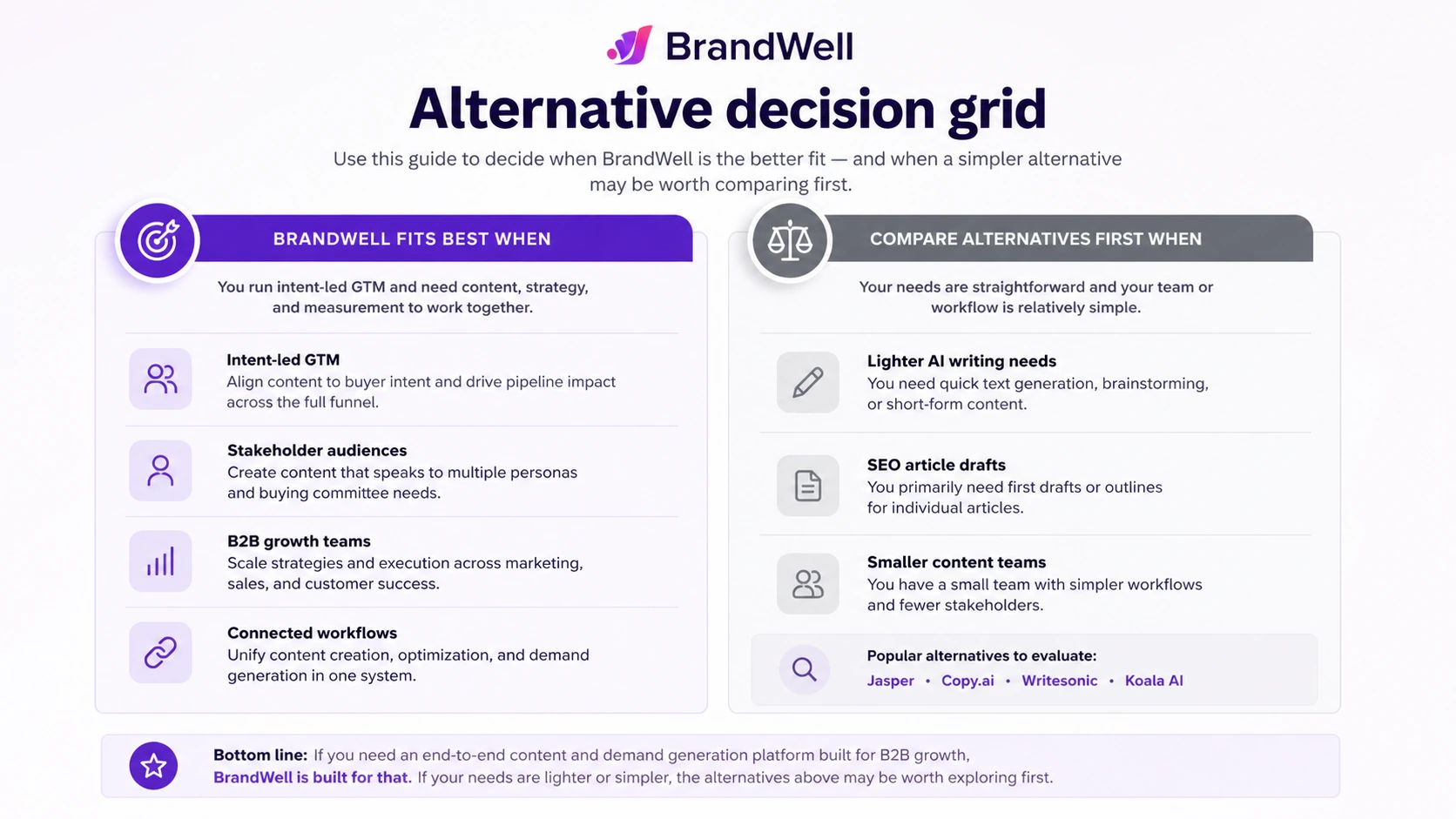
| Best for | B2B teams, agencies, and content-led growth teams that can use intent data and AI content together |
| Not ideal for | Solo creators, casual bloggers, or buyers who only need low-cost article generation |
| Main use case | Turning visitor and competitor-research signals into audiences, content, campaigns, and reporting |
| Pricing posture | Premium B2B pricing; verify the current monthly, commitment, or annual path before checkout |
| Free plan or trial | No ordinary free plan; BrandWell advertises a 7-day trial path |
| Main strength | Combines TrafficID, Intent Data, Audiences, RankWell, AIMEE, and reporting |
| Main concern | Value depends on market coverage, team execution, billing terms, and whether signals become pipeline activity |
| Best comparisons | Intent-data platforms for GTM depth; Jasper, Copy.ai, Writesonic, or Koala AI for content-only workflows |
| Best next step | Use the trial or demo with a written test plan before moving into paid commitment |
What is BrandWell?
BrandWell is best understood as an intent-led B2B GTM platform with an AI content engine inside it.
That wording matters.
If you judge BrandWell as a basic AI writer, the pricing can look heavy very quickly. If you judge it as an intent-data, visitor identification, stakeholder-audience, content-production, and campaign-support platform, the buying question becomes more serious: can it help your team find active buyers and act on them faster?
The official positioning centers on a few connected pieces. TrafficID helps identify website visitors. Intent Data and Audiences help surface and map people or companies researching relevant topics or competitors. RankWell supports AI-assisted content creation, SEO scoring, brand voice, and programmatic SEO workflows. AIMEE adds an AI marketing assistant layer with execution-style tools across content, research, advertising, and reporting.
That is a broad promise. It also raises the standard for evaluation.
A buyer should not ask only, “Can BrandWell write articles?” A better question is, “Can BrandWell help us identify demand, create the right content, activate the right audience, and measure enough value to justify the plan?”
Our review approach: we compare public product pages, pricing details, help documentation, terms, buyer workflow fit, and nearby alternatives. We do not treat a coupon, free trial, partner bonus, or low-looking monthly comparison as proof that the platform fits the buyer.
Who should use BrandWell?
BrandWell is most interesting for B2B teams that already have a clear demand-generation motion.
A team running content, paid media, and sales follow-up may benefit if the platform helps connect those activities. In that case, BrandWell is not just a writing tool. It becomes a way to notice who is showing interest, build stakeholder audiences, and create content around those signals.
Agencies are another realistic fit. If an agency serves B2B clients and needs content production, reporting, audience targeting, and intent-led campaign planning, BrandWell could reduce tool switching. The condition is client-account fit. The agency should verify projects, seats, article quotas, reporting needs, and whether the plan structure supports multiple clients without expensive add-ons.
SEO teams may also consider it if they publish frequently and need brand voice, real-time scoring, programmatic SEO, and content queue workflows. RankWell is more relevant when the team already has topics, editorial standards, and a publishing cadence. It is less compelling if the buyer simply wants a few cheap drafts.
Revenue teams may care about BrandWell when anonymous traffic, competitor research activity, and stakeholder mapping can change what sales or marketing does next. The product becomes more valuable when buyer signals are used for campaigns, outreach, retargeting, or account prioritization.
I would also put BrandWell on the shortlist for companies comparing expensive intent-data stacks. It may not replace every enterprise platform, but its pitch is attractive for teams that want content creation and buyer-signal workflows closer together.
Who should avoid BrandWell?
I would avoid BrandWell if your real need is a simple AI writer.
There are many cheaper ways to generate article drafts, landing page copy, emails, outlines, or blog posts. BrandWell can support content creation, but the current buying case is broader and more expensive than that. If you will not use TrafficID, intent categories, stakeholder audiences, ad sync, or reporting, the platform may be overbuilt for your situation.
Solo bloggers should be especially careful. A high monthly plan can make sense for a revenue team with clear pipeline value. It rarely makes sense for a small site that is still testing topics, monetization, and publishing consistency.
I would also slow down if your team does not have a process for acting on buyer signals. Intent data only matters when someone can do something with it. If identified visitors and stakeholder audiences just sit in a dashboard, you are paying for visibility without action.
Buyers who need refund flexibility should be cautious. BrandWell’s terms and help center language point toward limited refund protection, so the trial and cancellation timing matter more than usual.
Finally, content-only teams should compare BrandWell against simpler options first. If your main need is SEO article production, a tool like Koala AI may be easier to justify. If your main need is brand-safe marketing copy, Jasper or Copy.ai may be the cleaner first comparison.
How BrandWell fits into a real workflow
A realistic BrandWell workflow starts before you open the product.
The team should know the market it wants to track, the competitor set it cares about, the topics that indicate buying intent, and the content or campaign actions it can take. Without that preparation, the platform can become a collection of interesting dashboards instead of a working GTM system.
A serious evaluation might look like this:
- Define the target market, competitors, and intent categories.
- Connect or review visitor identification and audience workflows.
- Check whether the platform surfaces people, accounts, or stakeholder patterns that are useful.
- Use RankWell to create or optimize content around the validated topics.
- Review whether AIMEE helps with research, campaign tasks, content planning, or reporting.
- Decide whether identified activity can be handed to ads, sales, or content operations.
- Compare the resulting workflow against the monthly plan cost.
The point is not to paste a topic and wait for magic.
The point is to test whether BrandWell can help your team move from buyer signal to action. If that handoff is real, the product becomes more believable. If it is not, simpler content tools may deliver a better return with less operational pressure.
Workflow check: Before judging BrandWell by the pricing page alone, test whether the platform can surface useful buyer signals for your actual market.
Real-world buyer scenarios
B2B SaaS team with content and paid media
A B2B SaaS team publishing weekly content and running paid campaigns is one of the more believable BrandWell use cases. If the team can identify who is visiting, what competitors prospects are researching, and which stakeholder profiles matter, BrandWell may help prioritize content and audience targeting.
The risk is operational follow-through. If marketing cannot pass useful signals to sales or campaign execution, the platform may become expensive reporting.
Agency managing multiple client growth programs
A B2B agency may like BrandWell because it brings together content, pSEO, audiences, and reporting. The value is not just faster drafting. It is a client-facing growth workflow.
The checks are more serious here: project limits, seats, white-label needs, article volume, client separation, reporting depth, and whether the plan economics work across accounts.
Content team trying to scale SEO production
BrandWell can fit a team that already publishes at volume and needs structure around SEO scoring, brand voice, pSEO campaigns, and content schedules. The content engine is not the only reason to buy, but it can be part of the justification.
The risk is editing reality. If every article still needs heavy review, fact-checking, brand cleanup, and human rewriting, the team should recalculate the value.
Solo founder exploring AI content
A solo founder may be attracted to the “all-in-one” pitch. I would be careful here.
If the founder does not have enough traffic, sales motion, competitor tracking, or campaign process to use the GTM layer, BrandWell is probably more platform than they need. Starting with a simpler AI writing or SEO content tool may be safer.
Key features that actually matter
TrafficID and intent data
TrafficID and intent data are the reason BrandWell should not be judged as a normal writing tool. These features are meant to help identify people or companies showing relevant behavior, including site activity and competitor-research interest.
Buyer note: this is useful only if your market coverage is strong enough and your team can act on the signal. During the trial or demo, I would test whether the surfaced information is genuinely actionable for your niche.
Stakeholder audiences
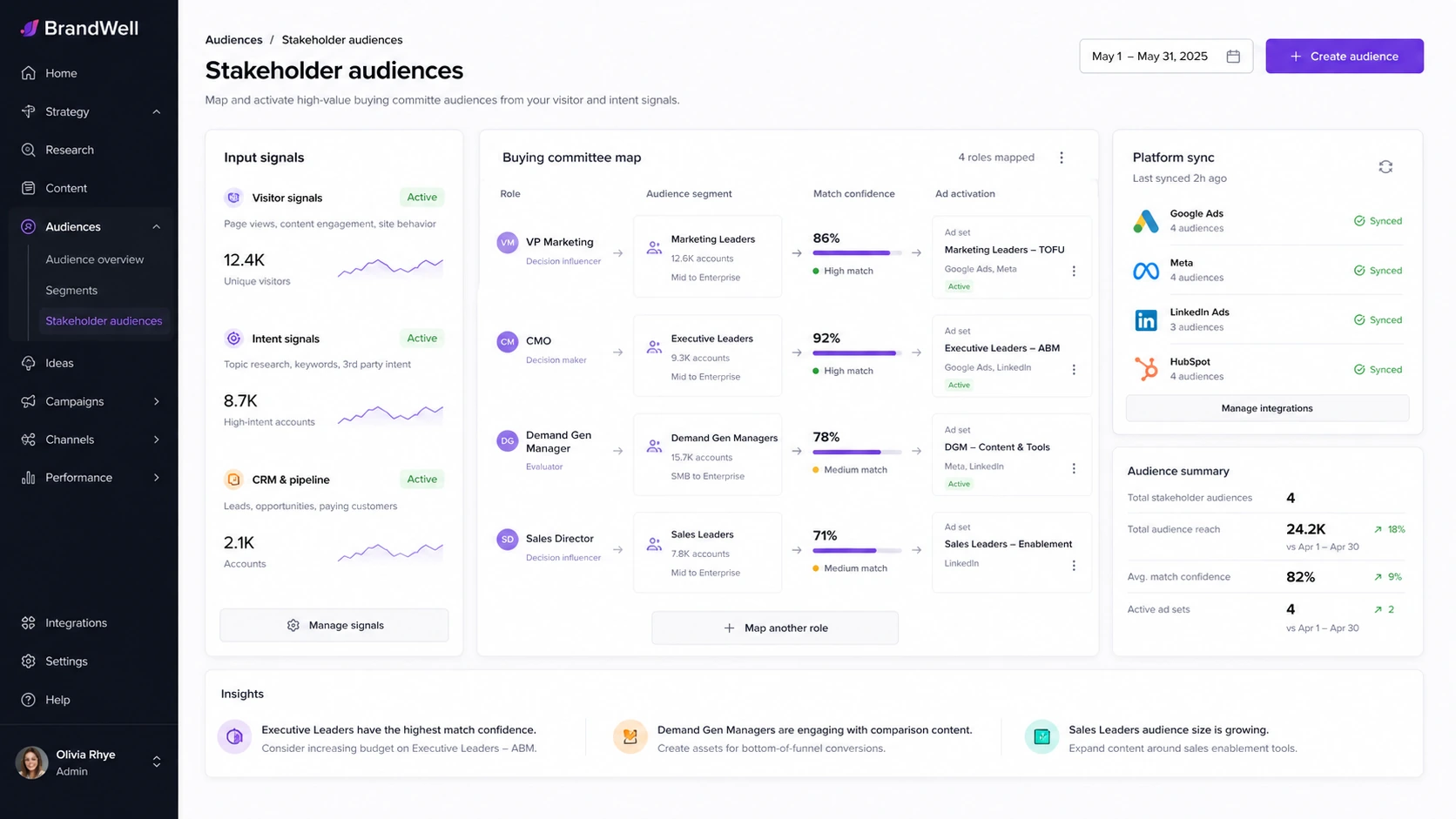
Stakeholder audiences are where BrandWell moves closer to account-based marketing. The product positions this layer around identifying decision makers, mapping buying committees, and activating audiences across ad platforms.
Buyer note: verify the audience workflow before paying. A dashboard that looks impressive is not the same as an audience your team can use confidently in campaigns.
RankWell content engine
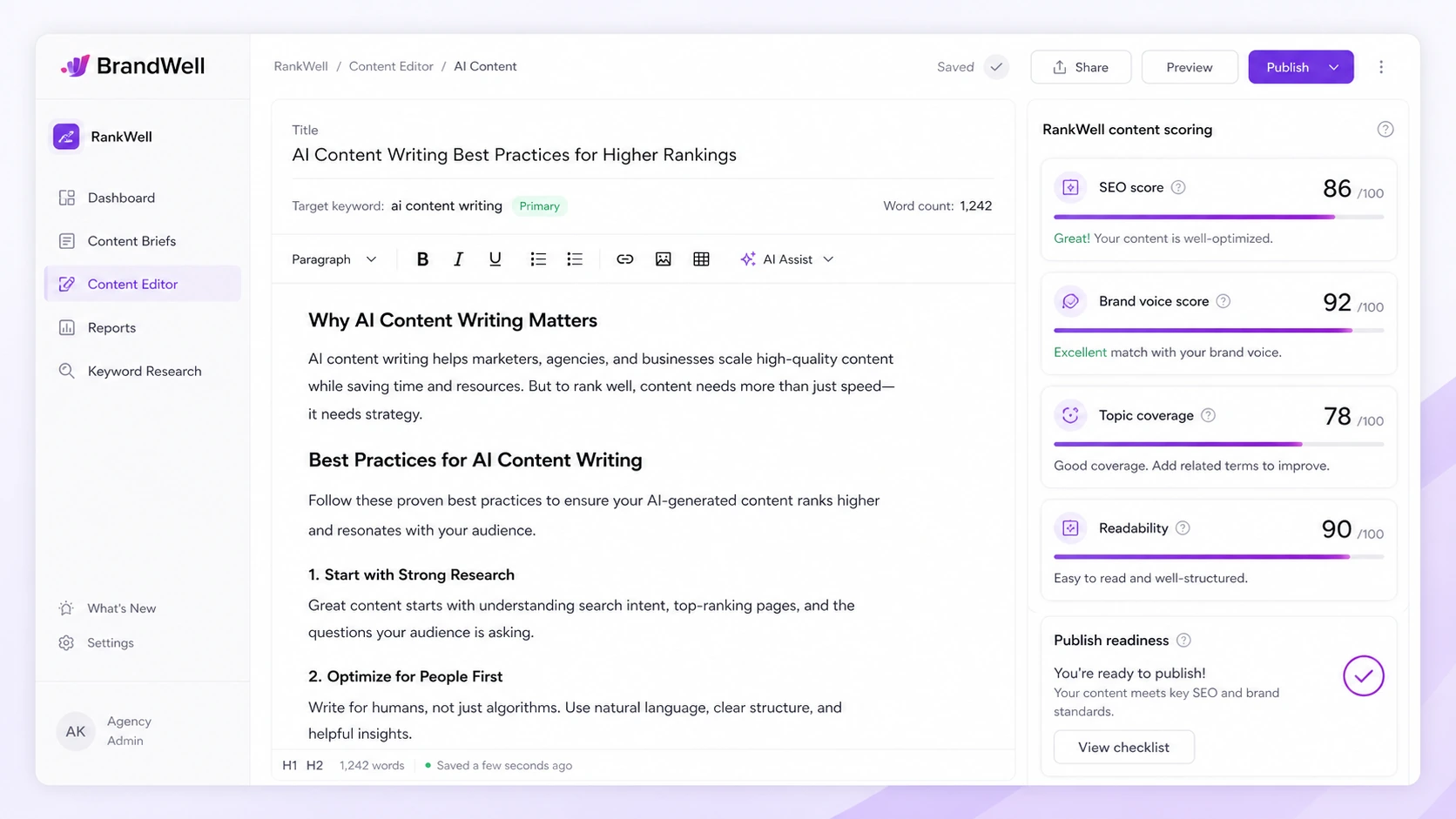
RankWell is BrandWell’s AI content and SEO workflow layer. Official product pages emphasize real-time SEO scoring, brand voice matching, content sources, pSEO campaigns, and publishing workflows.
Buyer note: test real editorial output, not just generation speed. A useful content engine should reduce planning and editing friction without lowering quality standards.
AIMEE AI assistant
AIMEE is positioned as an AI marketing assistant that knows the project context and can help execute across content, research, advertising, strategy, pSEO, and support-style tasks.
Buyer note: AIMEE is more interesting if it reduces context switching. It is less valuable if your team already has a clean workflow and only needs occasional copy support.
Reporting and campaign visibility
BrandWell’s reporting pitch matters because the platform asks buyers to connect content, audiences, and GTM activity. Reporting should help answer whether the system is actually improving lead quality, content performance, or campaign decisions.
Buyer note: before paying long-term, decide which metrics will prove value. Otherwise it is easy to confuse activity with progress.
Integrations and activation
BrandWell mentions ad sync and product workflows across platforms such as Google Ads, Meta, WordPress, Shopify, Webflow, and HubSpot in the broader product context. These matter only if they match your actual stack.
Buyer note: verify the specific integration path you need. Do not assume a listed platform means every workflow, permission, or automation step will work the way your team expects.
Pricing and plan value
The pricing question is less about the first number you see and more about whether the plan matches real GTM usage.
At the time of this editorial pass, BrandWell’s public pricing page shows a monthly Growth plan at $999/month on the month-to-month path, with other plans and commitment options available. Its audience comparison language also references annual pricing starting at $799/month. The practical takeaway is not that one number should be treated as permanent. The takeaway is that buyers must check the live pricing page, the billing path selected, and the commitment terms before starting.
BrandWell is premium software. That is not automatically bad. A tool that helps a B2B team identify active buyers, create better content, build audiences, and support campaigns can justify more than a simple writing app.
But the value bar is high.
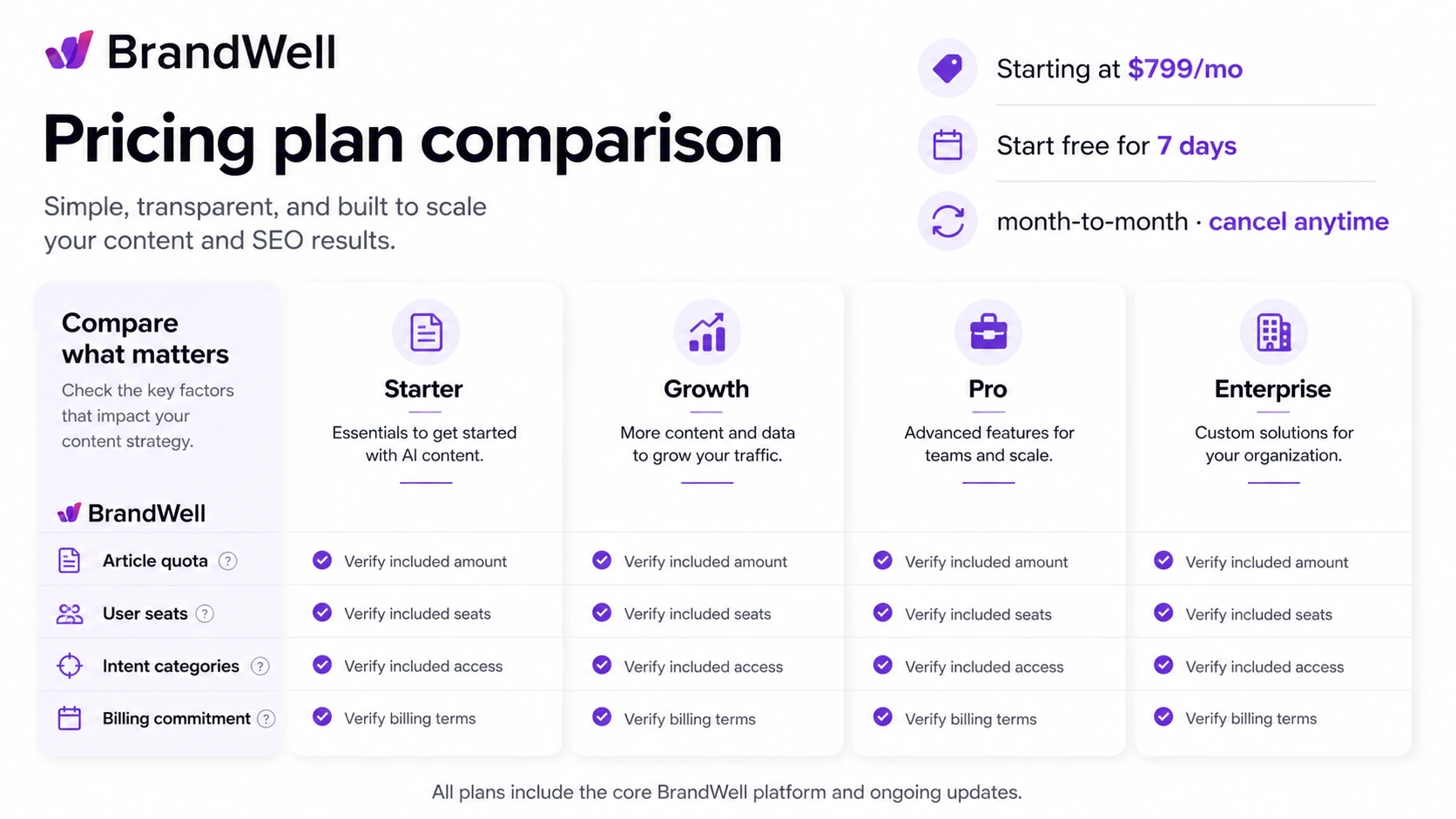
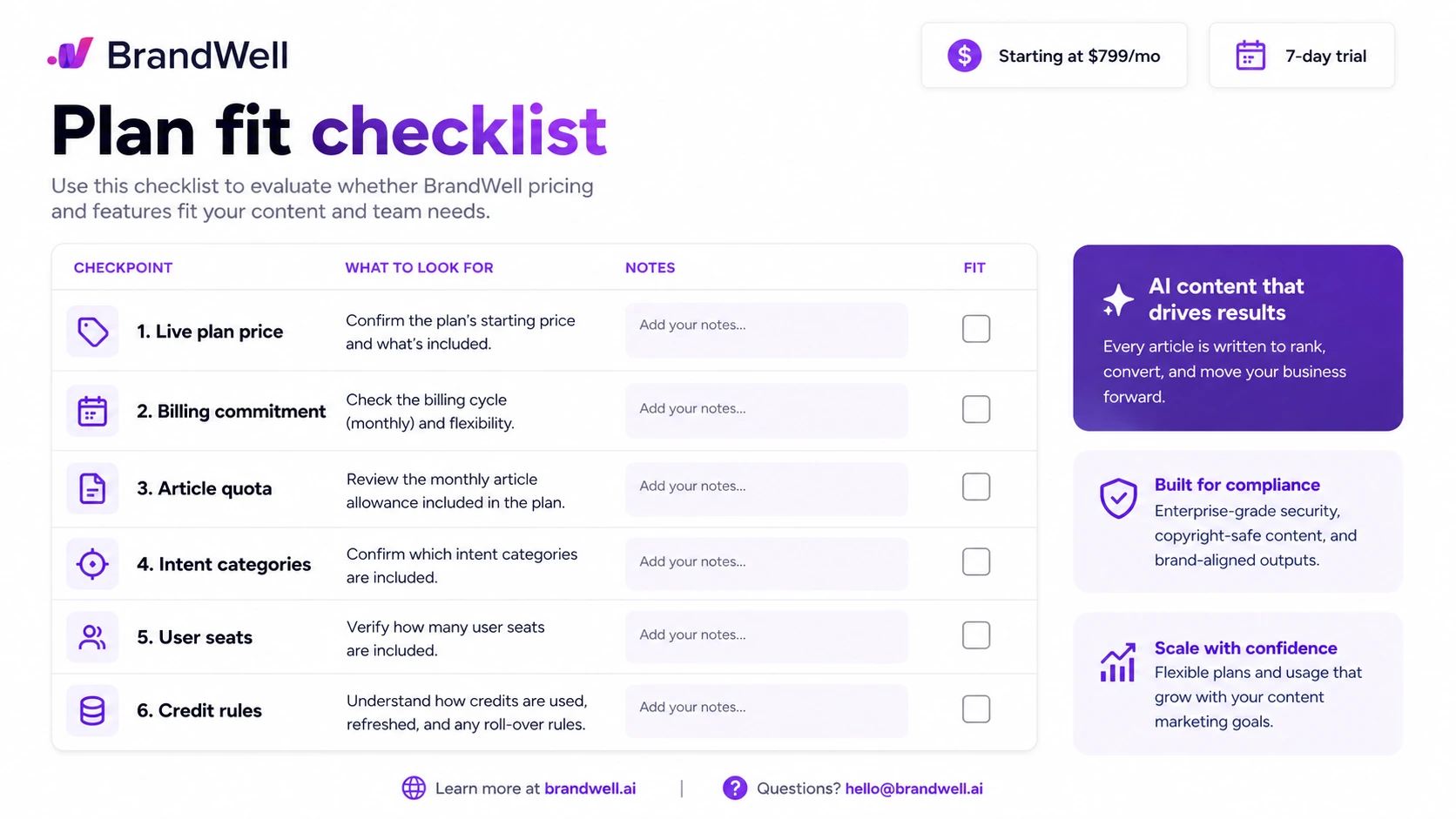
The plan details to check are article volume, intent categories, seats, project limits, support level, add-ons, and rollover rules. Intent categories are especially important because they shape the market signals you can track. User seats matter if sales, content, and paid media all need access. Article quotas matter if RankWell is part of the business case.
Annual or commitment pricing may reduce the monthly number, but it can also reduce flexibility. I would not choose a commitment path until the team has tested BrandWell with a real market, real audience, and real content workflow.
Pricing check: BrandWell only makes sense if the selected plan matches your articles, seats, intent categories, and campaign workflow.
Free plan, trial, coupon, and checkout notes
BrandWell does not look like a free-plan product. It is a trial-and-paid-plan buying decision.
The official pricing language currently promotes a 7-day trial. The terms say trial access requires valid payment details and converts to paid unless canceled before day 7. That makes the trial useful, but not casual. I would start it only after preparing a checklist.
The coupon angle should come later. BrandWell may have partner or affiliate routing, credit-bonus messaging, annual savings, or plan-selection savings. Those can matter. But they do not answer the main question: will your team use the platform deeply enough to justify the plan?
If you are checking live deal routing, use the BrandWell coupon page only after the product fit makes sense. For broader pricing context, the BrandWell store page is the safer starting point.
The refund posture is the part I would not ignore. BrandWell’s terms state that payments are generally non-refundable except where required by law. The help center also says there is no money-back guarantee, although it describes a post-credit return path if a post still misses the mark after rewrites and slight human editing. That is not the same as a broad refund window.
Checkout caution: Treat the trial as your main risk-control step, not as a refund guarantee after a paid plan starts.
What I would check before buying BrandWell
If I were buying BrandWell for a real B2B workflow, I would check these items before entering a paid commitment:
- Whether the trial shows enough useful visitor or intent activity in my actual market.
- Whether the stakeholder audience workflow produces targets my campaign or sales team can use.
- Whether RankWell output reduces editing time without weakening brand voice or factual quality.
- Whether the selected plan includes enough articles, seats, intent categories, and projects.
- Whether unused credits, article quotas, and rollover rules match the team’s publishing rhythm.
- Whether monthly, commitment, or annual pricing creates the right balance between savings and flexibility.
- Whether cancellation, non-refund, and auto-renewal terms are acceptable before the trial converts.
The easy mistake is to focus on the content engine because it is familiar.
The better way to judge BrandWell is to ask whether your team can move from identified demand to useful action. If that answer is weak, the content layer alone may not justify the subscription.
A simple test before paying
Before paying for BrandWell, I would run a focused 7-day test.
- Pick one market, one competitor set, and one campaign goal.
- Define what a useful buyer signal looks like before opening the dashboard.
- Review whether BrandWell surfaces people, accounts, or topics that are actually relevant.
- Create or optimize one content asset with RankWell and measure editing effort.
- Ask AIMEE to support a real marketing task, not a toy prompt.
- Check whether any audience or signal can move into your ad, sales, or content workflow.
- Decide whether the value is strong enough before the trial converts.
This test should not be vague. “Explore the tool” is not enough.
A good trial should answer a practical question: does BrandWell help this team identify demand and act on it better than its current stack?
Pros explained
The combined GTM workflow is the real selling point
BrandWell’s biggest advantage is not one feature. It is the attempt to combine buyer identification, intent monitoring, audiences, content creation, AI assistance, and reporting.
That matters when teams are tired of stitching together separate tools for demand, content, ads, and analytics. It stops being enough if your team cannot use those layers together.
RankWell is more structured than a generic AI writer
RankWell’s value is in structure: SEO scoring, brand voice checks, programmatic content options, content queues, and publishing-oriented workflows.
This matters for teams producing at volume. It matters less for buyers who only need occasional ideation or first drafts.
AIMEE can reduce context switching
AIMEE is interesting because it is positioned as an execution assistant inside the BrandWell environment. If it can help with research, content planning, campaign work, and reporting, it may reduce the number of tools a marketer has to juggle.
The limitation is adoption. AI assistants only become valuable when the team actually trusts them enough to use them repeatedly.
Trial access gives buyers a real evaluation window
The 7-day trial can help serious buyers test whether the market coverage and workflow fit are real.
But the trial should be planned. Because payment details and conversion timing matter, this is not a “sign up and forget it” situation.
Cons explained
Pricing can be hard to justify for content-only buyers
BrandWell is expensive if the only job is “write articles.” That is the clearest mismatch.
A team that needs GTM intelligence may see a different value equation. A buyer who only needs AI content should compare simpler options first.
Refund protection is limited
The terms and help center language make BrandWell a tool I would evaluate carefully before the paid period begins. A post-credit guarantee is not the same as a broad subscription refund.
Buyers should read the billing and cancellation language before starting the trial, not after being charged.
Value depends on actionability
Identified visitors and audiences are only useful when the team can act on them. If your sales, ad, and content workflows are not ready, BrandWell may expose opportunities without helping you convert them.
This is not purely a software problem. It is a process problem.
Commitment paths need caution
Lower annual or commitment pricing can look attractive. The risk is locking in before proving market coverage, article quality, and team adoption.
For my money, monthly flexibility is worth considering until BrandWell becomes part of a repeated operating rhythm.
Green flags and red flags
Green flags:
- Your team already runs B2B campaigns and knows how to act on intent data.
- You have enough website traffic, competitor activity, or target-market clarity to make visitor identification meaningful.
- You publish content frequently enough for RankWell and content scheduling to matter.
- Sales, content, and paid media can share the outputs.
- You have a clear trial plan before starting.
Red flags:
- You mainly want cheap AI blog drafts.
- You do not know what buyer signals your team would act on.
- You are considering an annual or commitment path only because the monthly number looks lower.
- You expect the software to replace editorial judgment, campaign strategy, or sales follow-up.
- You are relying on a coupon or partner bonus before proving workflow fit.
BrandWell vs alternatives
BrandWell sits in an unusual middle ground. It overlaps with intent-data platforms, AI writing tools, SEO content systems, and marketing workflow software. That means the “best alternative” depends on the job you are actually buying for.
Intent-data platforms vs BrandWell
If your main job is deep intent data, enterprise account intelligence, and mature ABM operations, platforms like 6sense, Demandbase, or Bombora may be more direct GTM comparisons.
BrandWell may still make sense if you want a lighter, more content-connected path that combines buyer signals with AI content production. The tradeoff is that enterprise-grade depth, procurement comfort, and mature governance may matter more for larger teams.
Jasper vs BrandWell
Jasper is the cleaner comparison when the buyer mainly wants brand voice, marketing copy, and content workflows without a full intent-data layer.
BrandWell is more relevant if visitor identification, stakeholder audiences, and GTM reporting are part of the buying reason. Jasper is easier to justify for content teams that do not need buyer-signal intelligence.
Copy.ai vs BrandWell
Copy.ai is a better comparison for teams focused on GTM copy, sales/marketing workflows, and AI-assisted execution without buying a full visitor-identification and intent platform.
BrandWell may still be stronger when B2B audience activation and content-led demand generation are the main goals.
Writesonic vs BrandWell
Writesonic is a lighter route for AI writing, SEO content, and chatbot-style content workflows. It is usually easier for smaller teams to evaluate.
BrandWell becomes the more serious option when content is only one part of a broader demand engine.
Koala AI vs BrandWell
Koala AI is closer if the buyer mainly wants SEO article production. It is likely easier to test and justify when the goal is publishing, not ABM.
BrandWell is the heavier platform for teams that want to connect SEO content to buyer signals, audiences, and reporting.
For broader discovery, buyers can also compare BrandWell inside the AI SEO hub or marketing growth hub when deciding whether the real need is content, GTM intelligence, or a combined workflow.
Trust, refund, and buyer-risk notes
My confidence is strongest around BrandWell’s category shift: it is no longer just a “write long articles” product. The public positioning clearly points toward an intent-led GTM platform with content creation built in.
I am more cautious around long-term value because that depends on buyer execution. A team that can act on intent data may see value. A team that only wants content will probably feel the pricing pressure quickly.
The refund and cancellation side deserves a careful read. BrandWell’s terms say trials require payment details and convert unless canceled before day 7. They also state payments are generally non-refundable except where required by law. The help center says canceled accounts remain active through the billing cycle, then projects, data, and unused credits may no longer be accessible. It also says monthly credits do not roll over.
Privacy and data handling also matter because BrandWell touches visitor identification, ad platforms, analytics, and marketing data. The privacy policy describes cookies, service providers, analytics, advertising partners, payment processors, and third-party ad platform integrations. For most B2B marketing teams, that may be normal. For privacy-sensitive industries, it deserves internal review before rollout.
The buyer-safe path is not complicated. Use the trial with a checklist, verify plan limits, read billing terms, avoid commitment pricing until value is proven, and compare simpler alternatives if content is the only real need.
Final verdict
I would consider BrandWell if your team already has a B2B growth motion and needs buyer signals, stakeholder audiences, AI content, campaign support, and reporting in one workflow.
I would skip it if you only need occasional blog drafts, simple copywriting, or a low-cost SEO content tool. BrandWell is too serious, and likely too expensive, to justify as a casual AI writer.
I would compare it with intent-data platforms if buyer intelligence is the core need. I would compare it with Jasper, Copy.ai, Writesonic, or Koala AI if the real need is content production.
The safest next step is to test BrandWell with one real market and one real GTM workflow before choosing a paid plan. If the platform surfaces actionable buyer signals and reduces content or campaign friction, it may deserve a closer look. If it only feels impressive on the surface, the better move is to step back and choose a narrower tool.