Copy.ai Pricing, Plans & GTM Workflow Fit
Copy.ai now fits better as a GTM AI and workflow platform than as a plain AI copywriter. The buying decision is less about finding a coupon code and more about whether your team needs shared Chat, workflow automation, API-connected actions, or a larger sales-led rollout.
Fit → price → checkout
Use these routes after the official-site check: coupon first, review for fit, compare if unsure.
Copy.ai pricing snapshot
Fast commercial checks before pricing, coupons, or a deeper review.
Copy.ai product tour for GTM workflow buyers
This video pass is useful when the buyer still thinks of Copy.ai as a simple copywriting app. Watch for how the demo frames Copy.ai around GTM execution, workflows, and repeatable sales or marketing processes. That distinction matters because the right buying path changes once the product becomes an automation platform rather than a one-person writing shortcut.
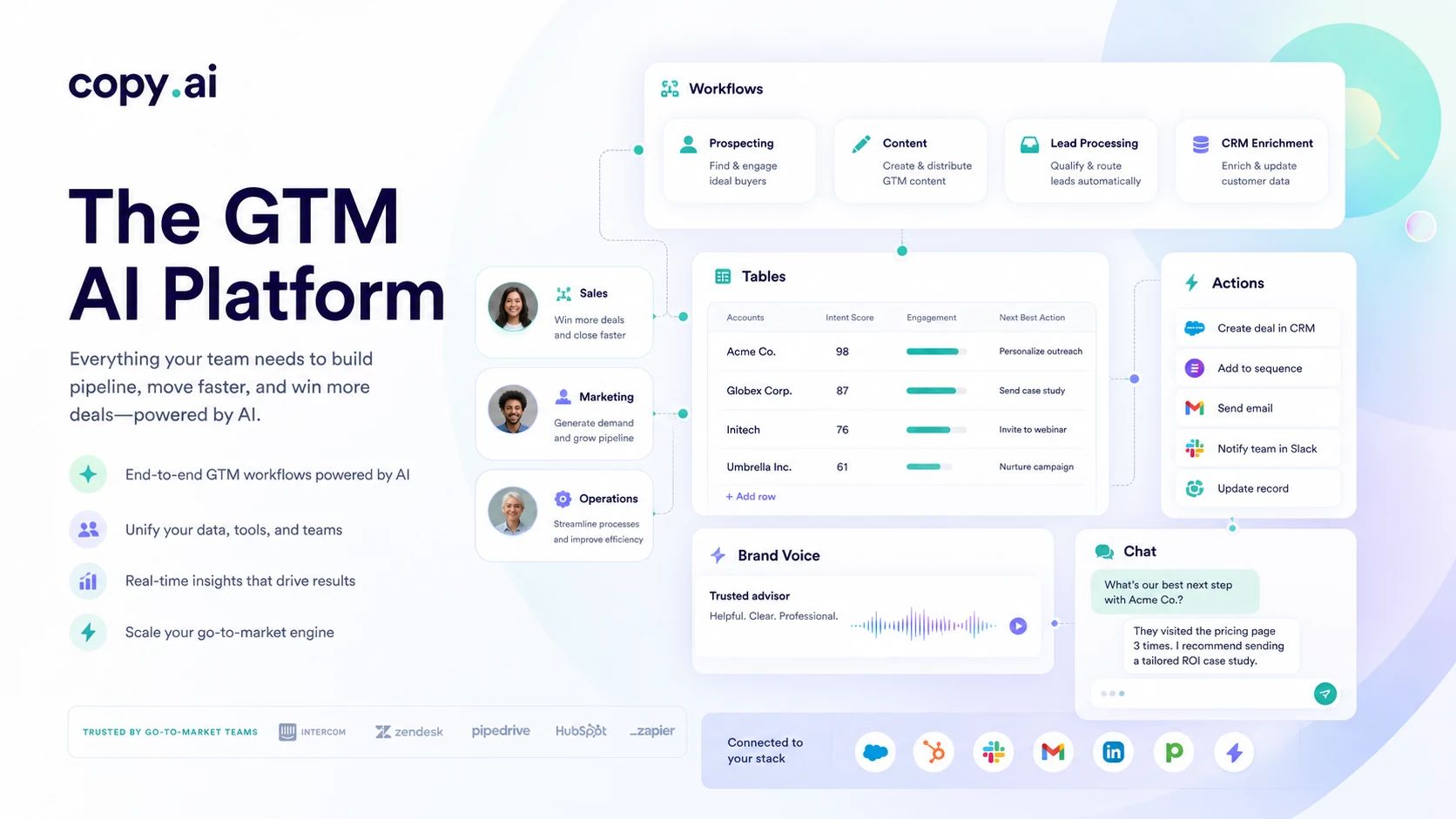
Copy.ai is no longer best evaluated as only an AI blog intro or ad-copy generator. The current buyer question is whether Copy.ai can remove repetitive GTM work across sales, marketing, operations, and content systems without creating another expensive app that nobody uses deeply.
That means the store page should route buyers through fit first, pricing second, and coupon or deal checks last. A low price does not help much if the team only needs occasional writing help. A higher workflow plan can make sense if the buyer has a repeatable GTM process, clear ownership, and enough volume to justify workflow credits.
What Copy.ai actually does now
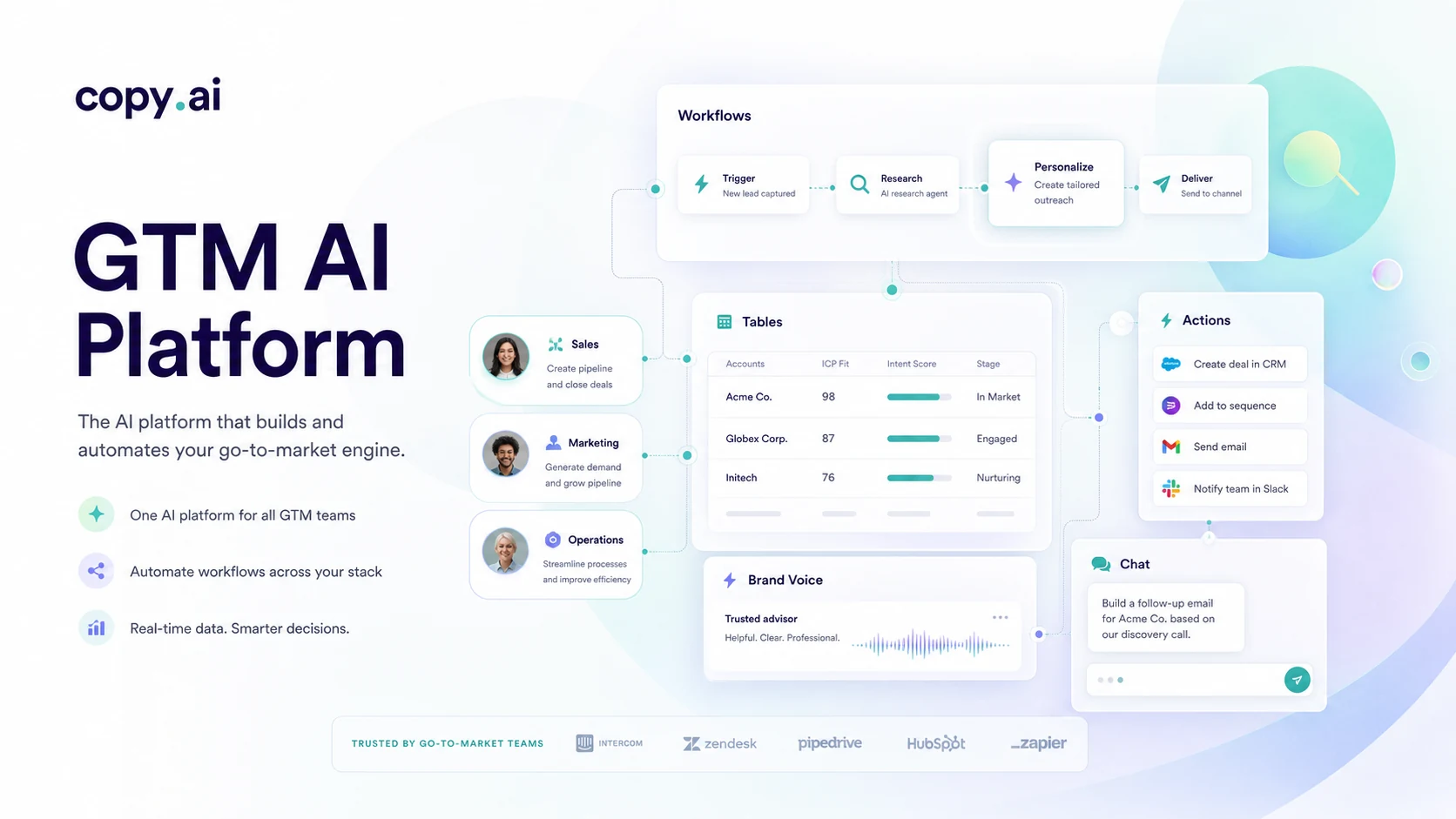
Copy.ai positions itself as a GTM AI platform. In practice, that means it is trying to help teams automate repeatable revenue tasks such as prospect research, content creation, account planning, sales enablement, and workflow-driven marketing operations.
The important buyer distinction is simple: Chat is the lighter self-serve path, while workflow automation is the deeper operational path. If you only want a quick paragraph rewrite, Copy.ai may feel heavier than needed. If your team wants to codify a recurring GTM process, it becomes more relevant.
- Use Chat for lighter writing and shared AI access.
- Use workflows when the team has a repeatable process worth automating.
- Treat larger plans as operational investments, not just upgraded writing seats.
Pricing and plan fit
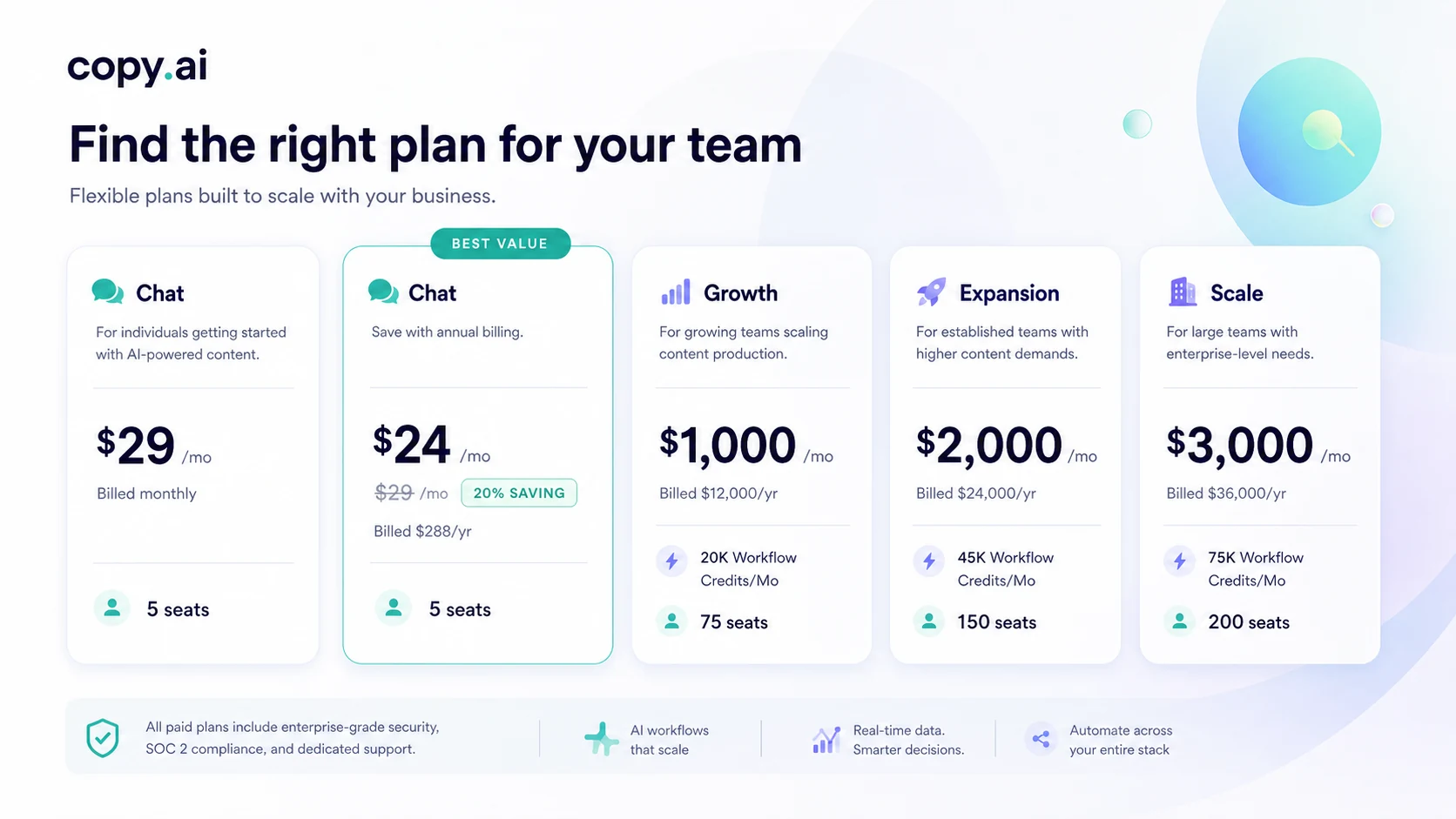
The official pricing page currently shows a self-serve Chat plan at $29/month, or $24/month when billed yearly. The larger Growth, Expansion, and Scale tiers move into much higher monthly prices and include seats plus workflow credits.
That creates two different buying decisions. A small team can evaluate Chat as a shared AI workspace. A GTM team considering workflows should estimate how many credits it will use, who will own implementation, and whether annual billing makes sense under the short refund window.
- Check whether the current free path is enough for first-pass evaluation.
- Compare monthly Chat against annual-equivalent Chat only after testing fit.
- Estimate workflow credits before treating larger plans as a simple upgrade.
Watch the workflow video before buying a workflow plan
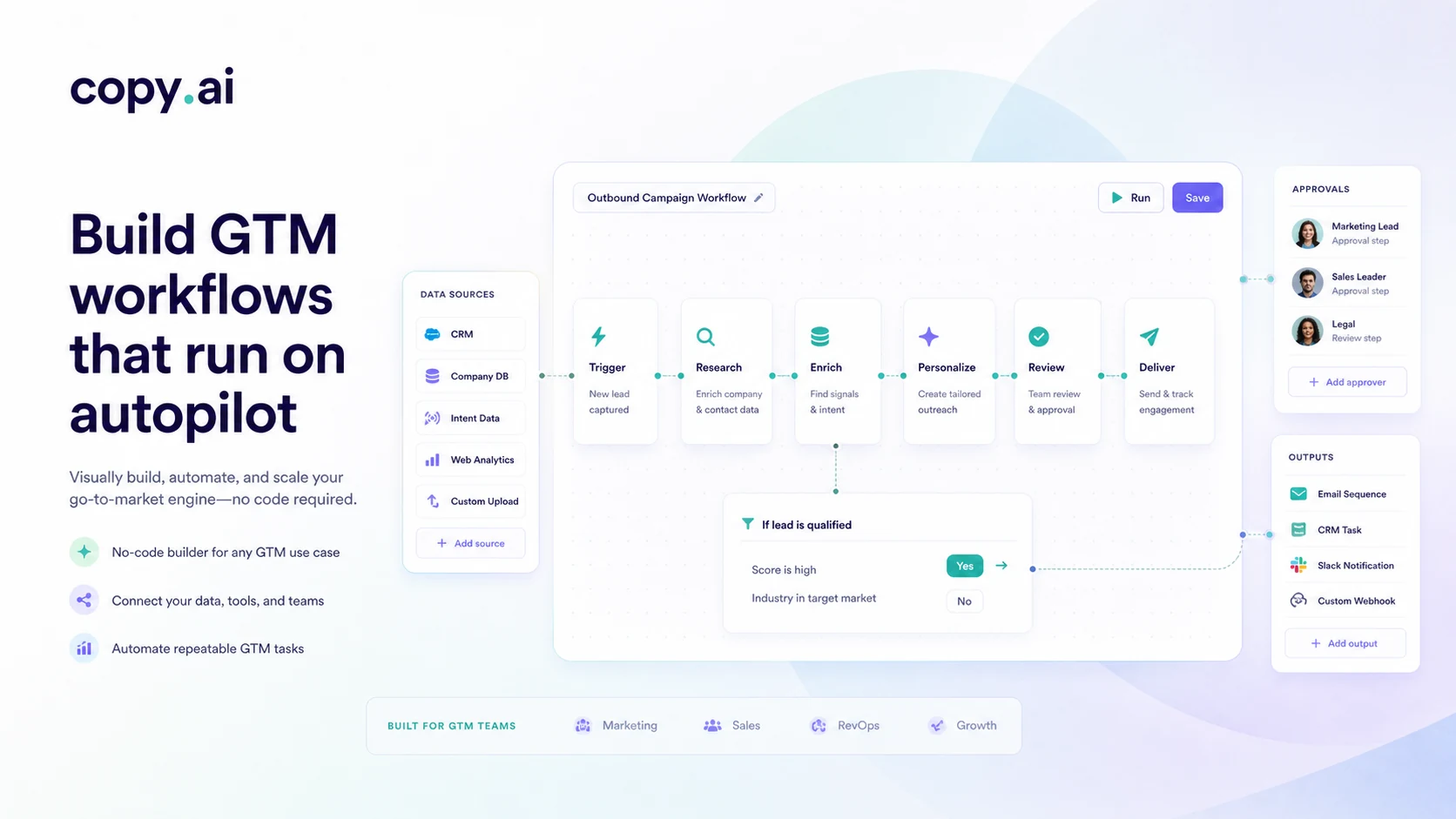
The related workflow video is useful because it shows how Copy.ai Tables can run a workflow at scale instead of only generating text in a chat window. Watch for the difference between a single prompt and a repeatable bulk process. That difference clarifies whether you need a basic Chat plan, a workflow-credit plan, or a more traditional writing tool.
This is the video that should help a buyer answer the practical question: can our team turn a real GTM process into a repeatable Copy.ai workflow, or are we just looking for a nicer AI writing interface?
Free plan, annual savings, and coupon reality
Copy.ai publishes free-plan messaging, and the pricing page shows annual savings for Chat. That gives buyers two real savings routes: test before paying, then reduce the effective monthly price only if annual commitment makes sense.
Public coupon-code hunting should come later. For Copy.ai, the more reliable buyer path is to confirm free access, compare monthly versus annual billing, and check whether DealBestDaily or the official checkout shows any live promotion at the moment of purchase.
- Start free when the main question is fit.
- Use annual pricing only when usage is already proven.
- Do not treat random coupon listings as confirmed savings.
Team, API, and rollout considerations
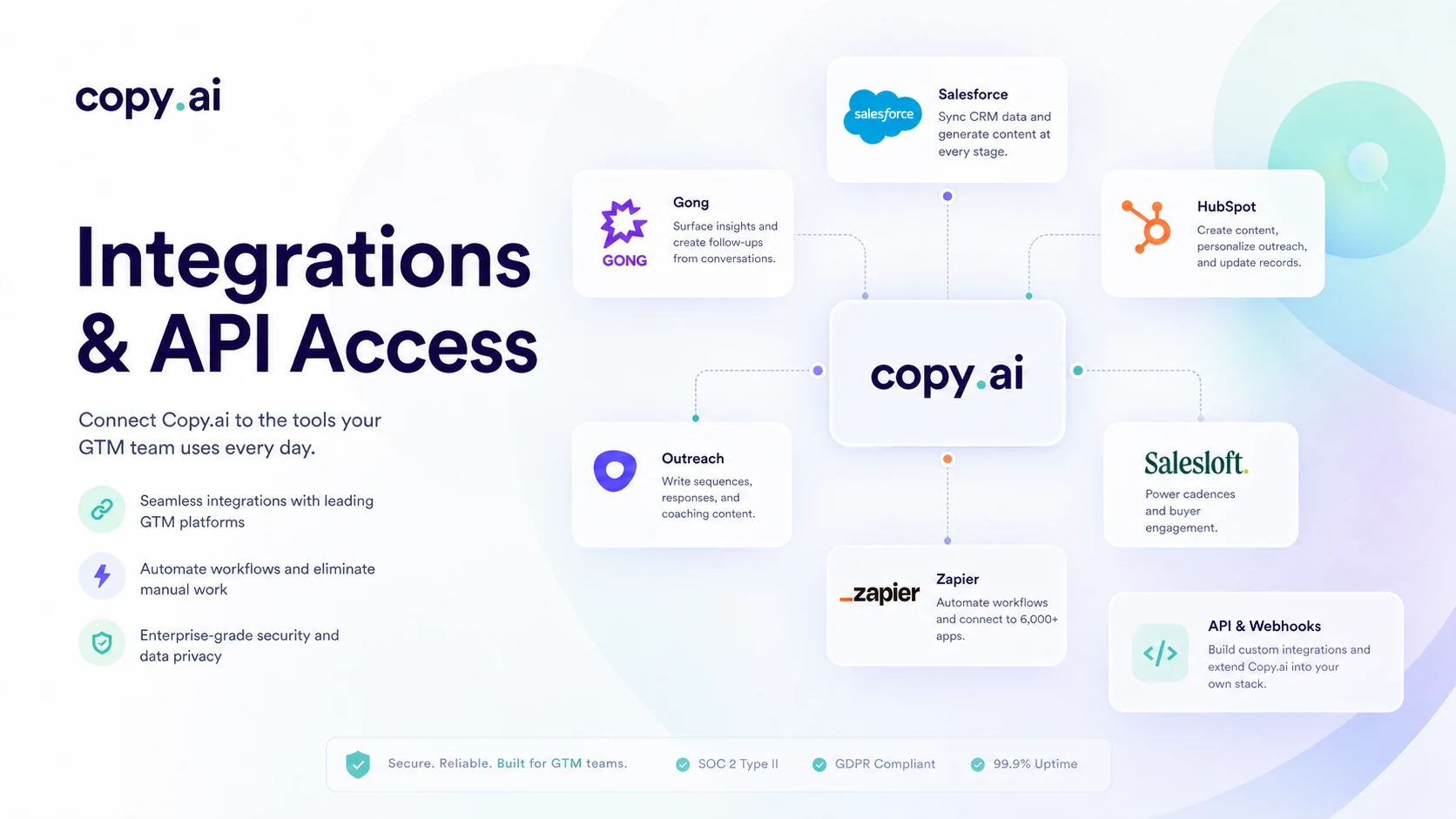
Copy.ai becomes more persuasive when the buyer needs team rollout, integrations, security review, and API or workflow-connected automation. The official platform material talks about API connections, integrations, actions, agents, and enterprise-grade security, which are stronger signals for business buyers than for casual writers.
Before a team buys into a larger plan, it should define the owner, the first workflow, the success metric, and the monthly usage estimate. Without that, the product can become another AI tool subscription that looks impressive but does not change day-to-day execution.
- Identify the first workflow before requesting a larger plan.
- Confirm integrations and API needs with the current docs or sales team.
- Ask whether security, SSO, or procurement review affects rollout timing.
Alternatives and safest next step
Compare Copy.ai against Jasper if the buyer wants a stronger brand-marketing and content-team workflow. Compare Writesonic if the buyer wants broader writing, SEO, or chatbot-style options. Compare GravityWrite if the priority is a simpler content-generation path with less GTM-platform weight.
The safest next step is to open the live Copy.ai pricing page, test the free path if available, and read the full review before paying. Only move to the coupon or deal page after the product fit is clear.
- Choose Copy.ai when GTM workflow automation is the real problem.
- Choose Jasper when brand marketing and content team workflows matter more.
- Choose Writesonic or GravityWrite when simpler content production is enough.
Best savings path from this store page
This is the clearest savings route to check once the product already looks like a fit.
Official pricing shows the Chat plan billed yearly at a lower monthly equivalent.
Custom pricing
$29/month official plan
Use comparison routes when the category fit is still open
Use these comparison routes when the product still looks plausible, but the category fit is not fully settled.
Jasper is often the closer comparison for brand marketing teams that want polished content workflows without making GTM automation the main buying reason.
Writesonic can be a better next tab when the buyer wants broader AI writing, SEO, and chatbot-style content options rather than a GTM workflow platform.
GravityWrite is worth comparing when the buyer wants a simpler content-generation workflow and does not need Copy.ai's heavier GTM automation angle.
Verification points worth checking before you click out
Where this store usually fits best in the workflow
Copy.ai fits teams that can name a repeatable GTM process, such as account research, outbound prep, sales enablement, or content production, and want to reduce manual work across that process.
The Chat plan makes sense when a team wants shared AI access, project context, and brand or knowledge support without immediately buying into a large workflow-credit rollout.
Copy.ai can support operations-heavy teams that want AI connected to GTM systems, but the team should confirm integrations, implementation effort, and credit needs before buying.
Larger teams should treat Copy.ai as a platform purchase with onboarding, process design, security review, and usage planning rather than a simple subscription upgrade.
Practical checkpoints before and after signup
- Define the first GTM process you want Copy.ai to improve.
- Check the live pricing page because Copy.ai packaging has changed over time.
- Use free access or a narrow Chat test before annual billing.
- Run one real workflow test instead of judging only sample copy quality.
- Estimate monthly workflow-credit usage if automation is the main value driver.
- Compare Jasper, Writesonic, and GravityWrite if the need is mostly content creation.
- Assign an owner for workflows, integrations, and adoption.
- Confirm API, integration, SSO, and security requirements with the current product or sales team.
- Save refund and cancellation details before choosing annual billing.
Fast-read signals for workflow fit and buying friction
Questions readers usually ask before choosing this store
Is Copy.ai still just an AI writing tool?
Not really. Copy.ai still has writing and chat use cases, but the current positioning is much more focused on GTM AI, workflows, actions, agents, tables, and repeatable sales or marketing processes. Buyers should evaluate it as a workflow platform first and a writing tool second.
Does Copy.ai have a free plan?
Copy.ai publishes free-plan messaging, but buyers should verify the current live account limits before relying on it. The practical role of the free path is evaluation: use it to test whether Copy.ai fits a real workflow before paying for Chat or a larger workflow-credit plan.
What is the main paid Copy.ai price to check?
The public pricing page currently lists Chat at $29/month when billed monthly or $24/month when billed yearly. Larger Growth, Expansion, and Scale plans are much higher and tied to seats plus monthly workflow credits, so they should be evaluated as team workflow plans.
Does Copy.ai usually have coupon codes?
Public coupon codes should not be the main assumption. Copy.ai's more reliable savings paths are the free entry route, annual Chat pricing, and properly scoped workflow or enterprise buying. Check the live DealBestDaily coupon page only after the product fit is clear.
What should I verify before paying for Copy.ai?
Verify the live pricing page, the refund window, whether the free route is enough for testing, and whether you need Chat, workflows, API access, or a larger team rollout. If your use case is only simple writing, compare lighter alternatives before choosing Copy.ai.
Choose the next route that matches what you still need to decide
The strongest next click depends on whether you still need product judgment, a savings route, or a broader category comparison.