Quick verdict
Be Your Best is worth a serious look if the player already has, or is genuinely ready to use, a compatible Meta Quest headset for football training.
That is the real buying fork.
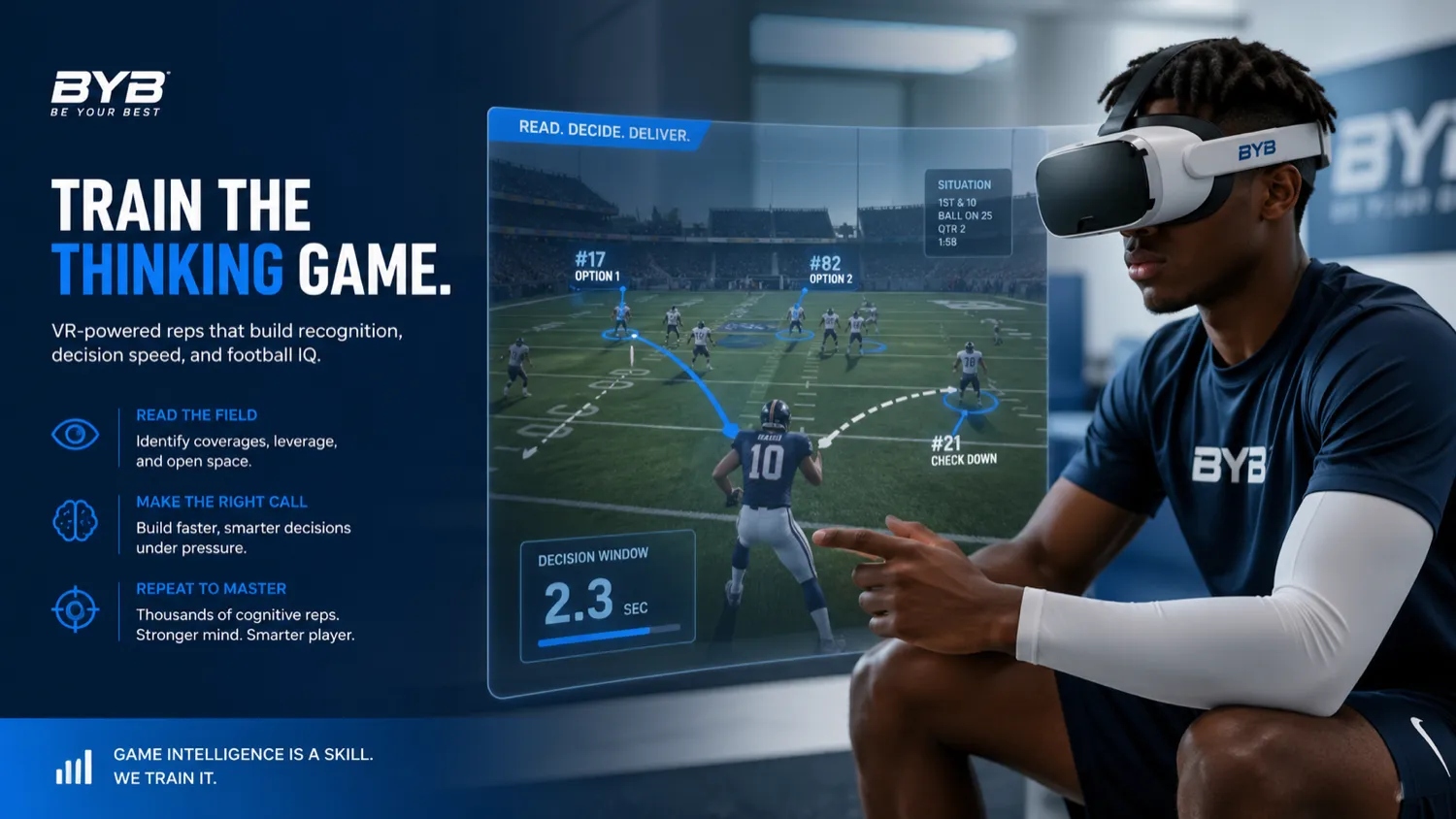
The product is not a normal AI video tool, even though it may sit near that category inside a broad software directory. It is closer to VR sports performance training: simulated football scenarios, scanning practice, awareness checks, decision-making reps, replay review, and progress tracking. The value is not in watching training content. The value is in getting extra cognitive reps without adding another physical session.
For a motivated player, that can make sense. For a parent buying supplemental training, it can also make sense if the player will actually put the headset on after the first week. For a club, the value is more about team-level insight, portal access, and structured cognitive development than a simple consumer subscription.
I would be careful, though, if the buyer is mainly reacting to the concept. VR football training sounds exciting, but a subscription only works when it becomes a habit. The common mistake is comparing the monthly price before checking headset access, VR comfort, training discipline, and renewal terms.
My safer take: Be Your Best is interesting for scanning and football intelligence practice, but it should be judged as a repeated training routine, not a novelty purchase.
Next step: If Be Your Best still fits the player’s training routine, verify headset compatibility and the current buyer route before choosing a plan.
Review snapshot
| Review point | Practical take |
|---|---|
| Best for | Motivated footballers, parents, academies, and clubs that want extra scanning and decision-making practice |
| Not ideal for | Buyers without a compatible Meta Quest headset or players unlikely to train consistently |
| Main use case | VR football scenarios for awareness, scanning, vision, memory, and match-like decision-making |
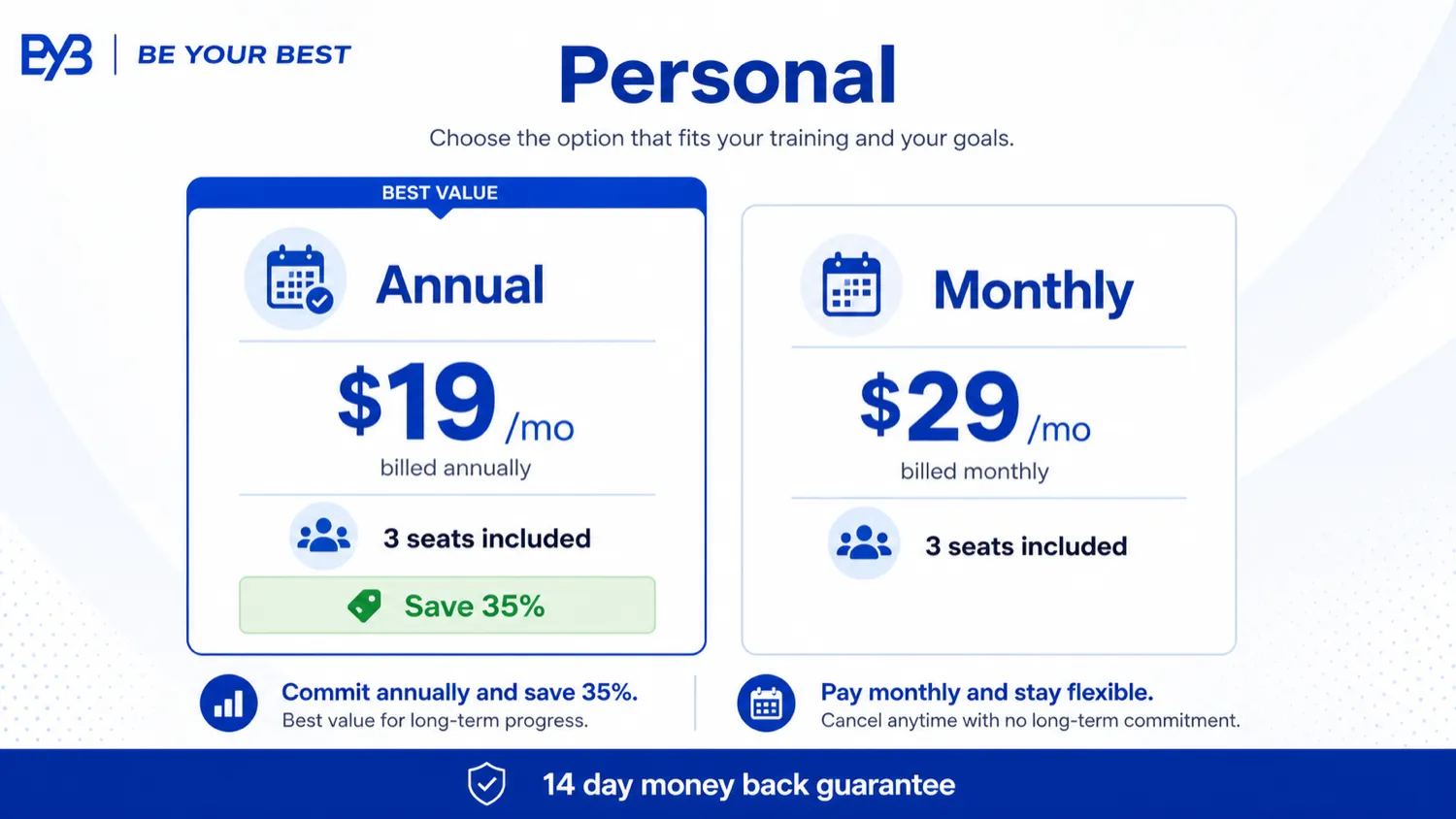
| Pricing note | Public Personal pricing shows monthly and annual options, with annual billing lowering the monthly equivalent |
| Free plan or trial | No public free plan or free trial was verified |
| Main strength | Football-specific cognitive training rather than generic video lessons |
| Main concern | Headset cost, renewal comfort, app consistency, and whether the player will use it after the novelty fades |
| Direct comparison | Rezzil is the closest sports-VR comparison to check outside the current internal route set |
| Adjacent internal routes | Mindstamp, Panda Video, Synthesia, and Pictory are training/video/content-adjacent, not direct football VR substitutes |
| Best next step | Test the monthly route first unless training consistency is already very likely |
What is Be Your Best?
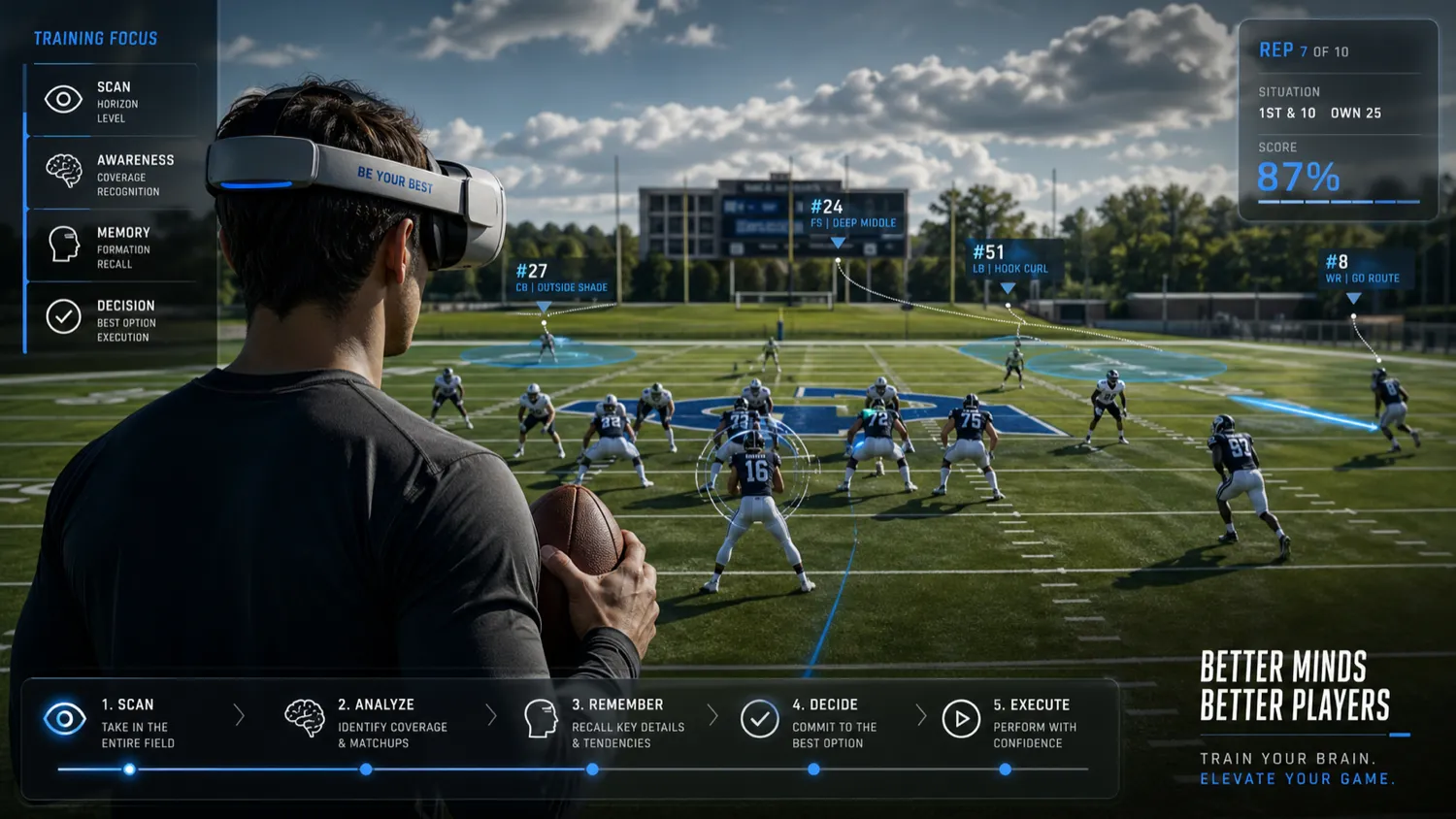
Be Your Best is a VR football and soccer training platform built around cognitive performance. In plain language, it puts the player into virtual football situations so they can practice scanning, timing, awareness, passing decisions, memory, and visual perception away from the pitch.
That makes it different from a coaching video library.
A video course explains ideas. Be Your Best asks the player to make decisions inside simulated 11-a-side scenarios. The player is not just watching a drill; they are looking around, reading space, waiting for the ball, choosing actions, and reviewing performance signals afterward.
The current public product pages describe training modes such as challenges, practice, matchplay, and career. The official VR training page also highlights scenario training from professional games, stats tracking, position-specific training, scanning and awareness work, replay analysis, and vision/decision-making practice.
That is why I would not judge Be Your Best as a general AI tool. It is a sports-training subscription with VR hardware dependency. The buyer question is not “does this look innovative?” It is narrower: will this player use VR cognitive reps often enough to support their real football development?
Our review approach compares the public product pages, pricing details, terms, user guidance, buyer workflow fit, and nearby alternatives. We do not treat a discount, annual saving, or impressive demo as proof that the product fits the player.
Who should use Be Your Best?
Be Your Best fits players and buyers who already understand the training problem.
Youth and academy players working on scanning
A player who already trains regularly may benefit from extra awareness and decision-making reps. This is especially true when the player’s technical skills are improving but match awareness still feels rushed.
The condition is consistency. A player who uses the headset twice and forgets about it will not get much from a subscription.
Parents buying supplemental soccer training
For parents, Be Your Best can be a more focused purchase than another generic training app. It gives the player a different kind of practice: cognitive repetition instead of more physical drills.
The first thing I would check is motivation. If the player is excited by VR and already takes training seriously, the monthly route can be a useful test. If the parent is more excited than the player, I would be slower to pay annually.
Injured or load-managed players
Be Your Best is interesting during injury periods because it can keep a player mentally engaged without adding the same physical load as another field session. The official team pages lean into this idea for clubs as well.
That does not make it a medical or rehab product. It simply means the format may help players stay connected to game situations when full physical training is limited.
Coaches, clubs, and academies
Clubs should look at Be Your Best differently from individual buyers. The public team path is not just “buy more seats.” It is positioned around player insights, club portal access, cognitive testing, and account support.
For that buyer, the right next step is a team conversation, not assuming the Personal plan can replace a club rollout.
Who should avoid Be Your Best?
Be Your Best is not the right fit for every player.
I would avoid it if the buyer does not own, or does not plan to buy, a compatible Meta Quest headset. The subscription cannot create value without the hardware.
I would also avoid it for players who mainly need technical ball work. Be Your Best can support perception and decision-making, but it will not replace passing technique, first touch, shooting mechanics, strength work, or in-person coaching.
It is also not ideal for casual buyers looking for a cheap mobile app. The product has a companion app, but the core training experience is VR. If the headset step feels annoying, the routine will probably break.
Families should be careful if they are uncomfortable with subscriptions. Public pricing includes monthly and annual options, and annual billing lowers the monthly equivalent, but prepaid savings are only helpful when the player keeps using the product.
I would also slow down if the buyer expects the app’s stats to perfectly map to on-field development. The stats may be useful, but they should not replace coach observation, match performance, and player feedback.
How Be Your Best fits into a real workflow
A realistic Be Your Best workflow starts before the first VR session.
First, the buyer confirms headset compatibility. Then the player downloads the app, signs in with the same Be Your Best account, completes the onboarding or bootcamp flow, and starts with short sessions rather than long VR blocks.
From there, the routine should be simple:
- Pick a training mode or scenario type.
- Complete a short VR session.
- Focus on scanning, timing, awareness, and decision-making.
- Review replay or stats inside the companion experience.
- Compare the training takeaway with real match situations.
- Repeat often enough for the habit to matter.
The product is strongest when it becomes a repeatable supplement. A player might use it between team sessions, during bad weather, when managing physical load, or when working on match awareness without needing a full pitch setup.
The weak point is follow-through. VR products often feel exciting at the start. The buying decision should ask what happens after week two.
Workflow check: Be Your Best is easier to judge after one real training routine, not after one exciting demo video.
Real-world buyer scenarios
A parent buying for a motivated academy player
This is one of the more believable use cases. The player already trains seriously, but the family wants extra cognitive reps that do not require another ride, pitch, or private session. Be Your Best may fit if the player repeats the routine after the first week; monthly billing is the safer first test.
A player returning from injury
Be Your Best can make sense when a player wants to stay mentally sharp without adding full physical load. It is not rehab guidance, but it can keep the player processing football-specific decisions. The buyer should still check VR comfort, session length, and dizziness risk.
A coach or club evaluating player awareness
For coaches, the value is a more concrete way to discuss scanning, timing, and awareness. For clubs, the Teams & Clubs route should be judged as a rollout decision, not a consumer-plan upgrade. Ask about onboarding, portal access, reporting, headset logistics, support, and cancellation terms before committing.
Key features that actually matter
VR match-like scenarios
The most important feature is the simulated football environment. Be Your Best places players into situations where they must look around, process space, and make decisions.
Buyer note: this matters only if the player wants cognitive training, not just entertainment or fitness.
Scanning and awareness training
Scanning is the product’s clearest training promise. The player practices checking surroundings before receiving the ball, then making a better decision under pressure.
Buyer note: do not expect the app alone to transform match awareness. The best use is to connect VR habits with real match review and coaching feedback.
Replay analysis and stats tracking
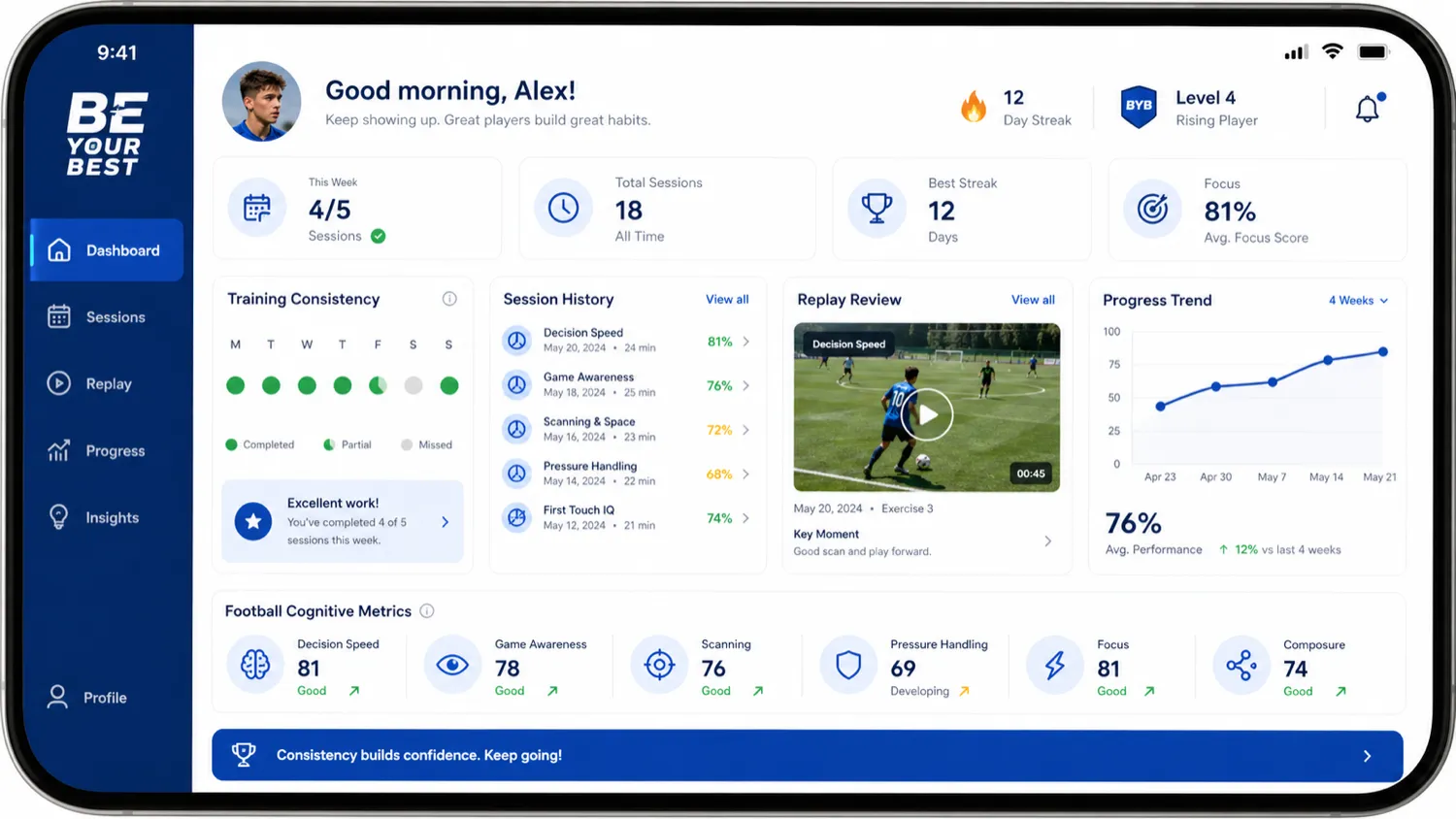
Replay and stats make the product easier to evaluate after the first few sessions. Parents and coaches can look for usage consistency instead of relying only on the player saying it felt helpful.
Buyer note: stats are useful signals, not final proof. If the data seems confusing or disconnected from real play, treat it as a discussion point rather than a verdict.
Position-specific training
Position-specific training is useful because a center back, winger, striker, and midfielder do not read the game in exactly the same way. Training from the player’s normal role can make the scenarios feel more relevant.
Buyer note: the more specific the training routine, the easier it is to judge whether Be Your Best supports the player’s real development needs.
Companion mobile app
The companion app adds follow-through: progress tracking, activity monitoring, leaderboards, replays, and account management. This matters because the subscription needs a habit loop.
Buyer note: if the player ignores the companion app and only uses VR casually, the long-term value becomes harder to defend.
Pricing and plan value
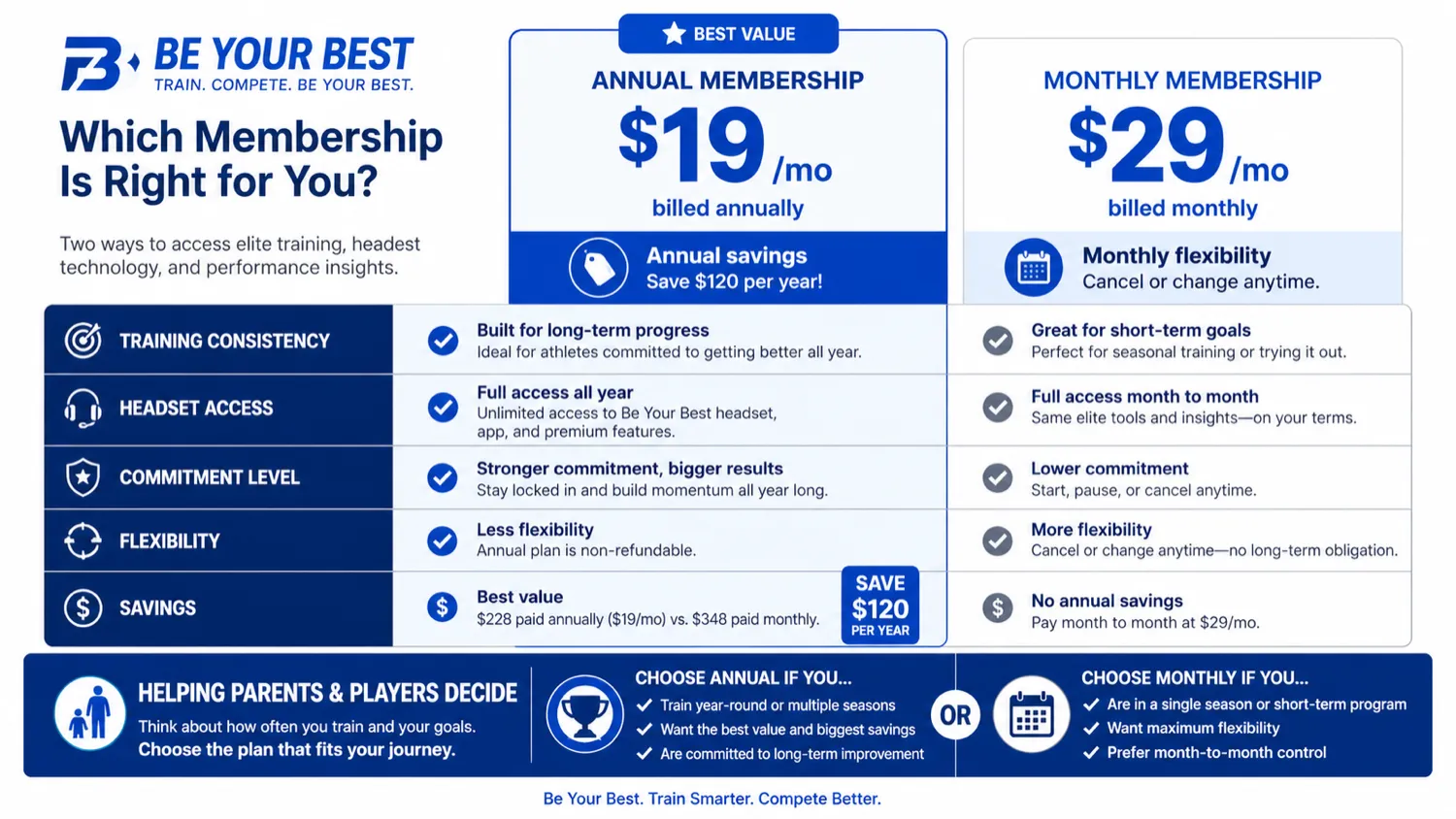
At the time of review, the public Be Your Best pricing page shows a Personal membership with annual and monthly options. The annual path is listed at a lower monthly equivalent, while the monthly plan is higher but more flexible. The public page also presents a Teams & Clubs path with unlimited seats, annual billing, club portal positioning, and a book-a-call route.
For individual buyers, I would not treat the annual saving as the automatic best deal.
The annual route makes sense only when three things are true:
- the player has a compatible headset;
- the player is comfortable training in VR;
- the player is likely to use the product consistently for months.
If any of those are uncertain, the monthly plan is the cleaner test. It costs more month to month, but it protects the buyer from overcommitting before the habit is proven.
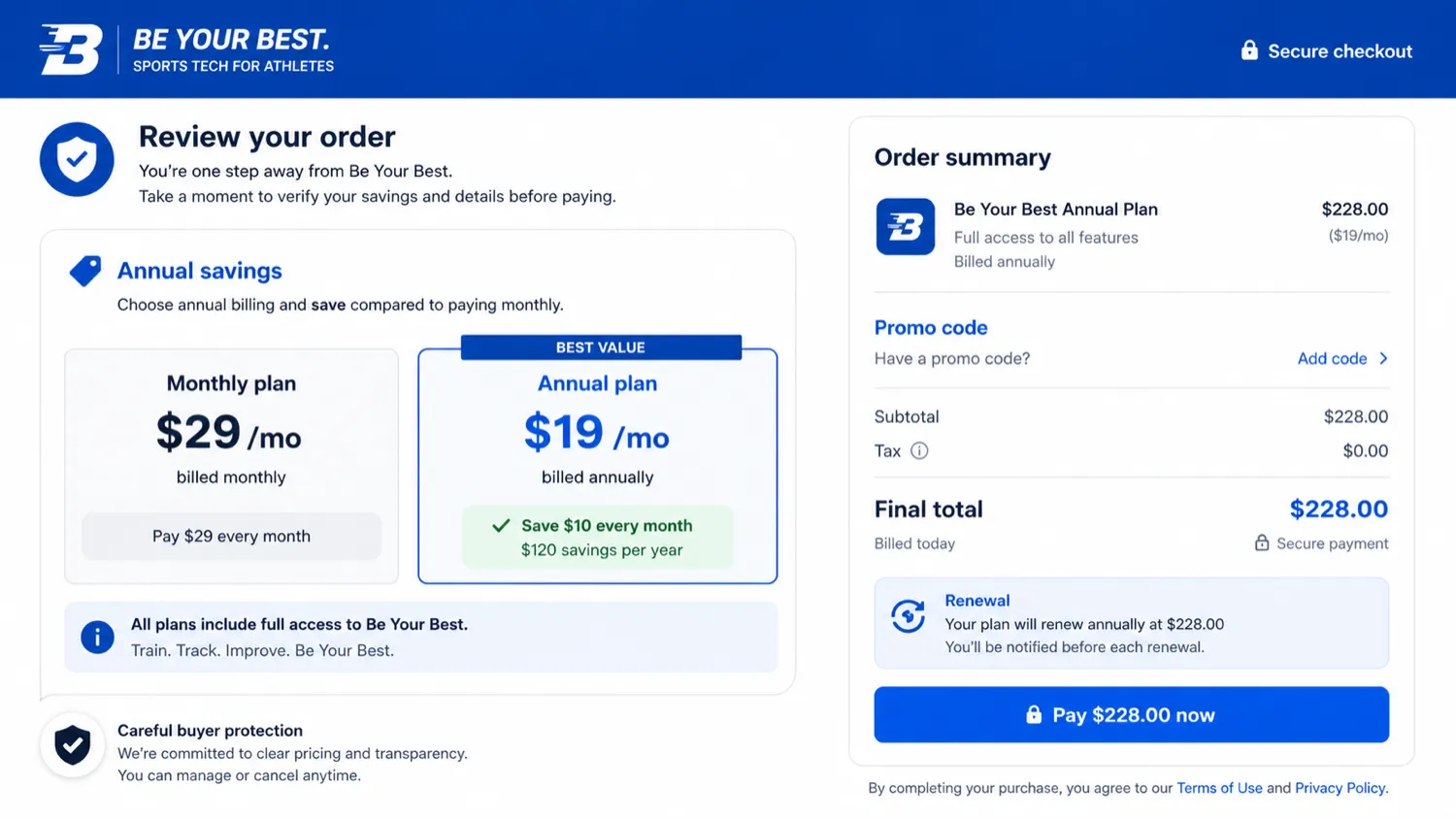
No public free plan or free trial was verified. That matters. A buyer cannot assume they will get a normal SaaS-style trial window before payment. The safer path is to use the lowest-commitment paid route, verify refund language, and check whether the player keeps using the training after the initial excitement fades.
For clubs, pricing is a different conversation. If a team needs portal access, cognitive testing, player insights, support, or rollout guidance, the public Personal membership is not enough context. The club route should be verified directly.
Pricing check: If the player has the right headset and a real training habit, compare monthly flexibility against annual savings before checkout.
Free plan, trial, coupon, and checkout notes
Be Your Best should not be bought in the wrong order.
The right order is headset first, usage fit second, plan choice third, coupon or offer path last.
The public information I reviewed did not confirm a free plan or free trial. That makes the monthly plan the more practical test path for many individual buyers. A 14-day money-back guarantee is promoted on public pricing pages, but the terms also warn that renewals need to be canceled before the renewal date and that refunds are not provided after an automatic renewal into a new period.
That does not mean the guarantee is useless. It means buyers should read the current terms before relying on it, especially before choosing annual billing.
A coupon can still help. The store has a coupon route, and third-party coupon pages may list reported codes or partner-style offers. I would treat those as checkout leads, not guaranteed savings. The only discount that matters is the one reflected in the final order summary.
For my money, a discount should improve an already sensible purchase. It should not be the reason a family buys a VR football subscription the player may not use.
What I would check before buying Be Your Best
If I were buying this for a real player, I would check these points before paying:
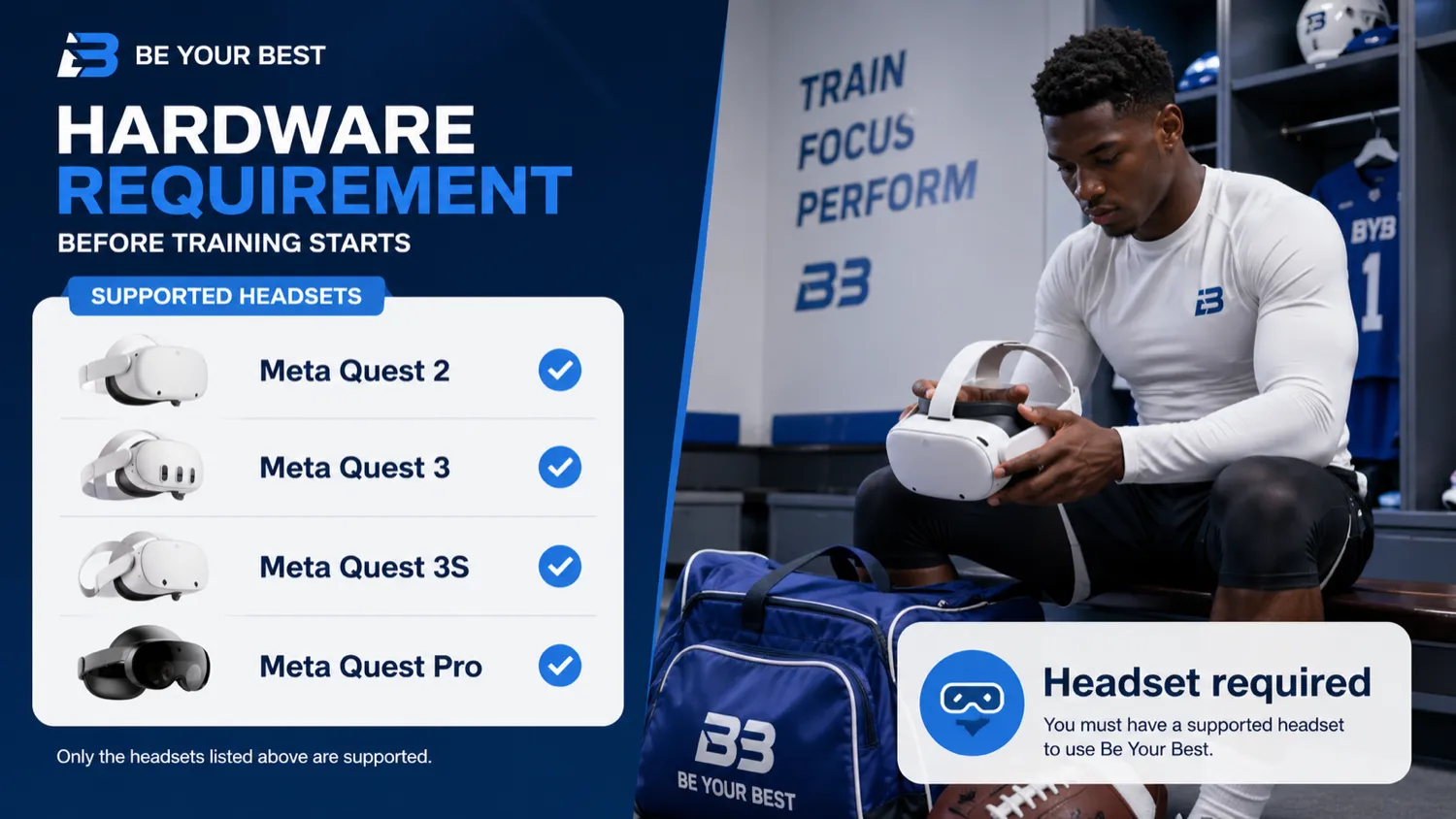
- Does the player have a supported Meta Quest headset?
- Is the player comfortable training in VR for short sessions?
- Is the goal scanning and decision-making, not ball technique or fitness?
- Is monthly billing enough to test the habit before annual billing?
- Does the current refund language match the buyer’s risk tolerance?
- Does any active offer actually reduce the checkout total?
- For clubs, does the team route include the portal, support, seats, and reporting needed for rollout?
The headset check comes first because it changes the whole buying decision. Without hardware access, pricing comparisons and coupon checks are premature.
A simple test before paying
Before committing to a longer subscription, I would run a small test like this:
- Confirm the headset model is supported.
- Let the player watch the official training flow and understand the routine.
- Choose the lowest-commitment route available at checkout.
- Set a simple target, such as three short sessions in the first week.
- Review companion app activity, replays, or training feedback after those sessions.
- Ask whether the player can name one thing they are noticing differently in real play.
- Move toward annual billing only if the player wants to keep training.
This is not a complicated test, but it protects the buyer from the most common mistake: buying the idea instead of testing the habit.
Pros explained
The first major pro is focus. Be Your Best is clearly centered on football intelligence: scanning, awareness, perception, and decision-making.
The second pro is low physical load. For players who already train hard, extra cognitive reps can be useful without adding another full field session.
The third pro is visible Personal pricing. Individual buyers can compare monthly flexibility against annual savings without starting with a sales call.
The fourth pro is the companion layer. Stats, replay review, activity tracking, and leaderboards can make the subscription easier to evaluate after the first few VR sessions.
The fifth pro is the club path. Teams and academies have a route for portal access, insights, and support rather than forcing a consumer plan into a team setting.
Cons explained
The biggest con is hardware dependency. A subscription does not mean much if the player lacks a compatible Meta Quest headset or dislikes training in VR.
The second con is the lack of a verified public free trial. Monthly billing becomes the practical test path, and buyers need to be careful before annual billing.
The third con is that stats need context. Performance data can be helpful, but coaches and parents should compare app signals with real-world play.
The fourth con is product specificity. If the buyer needs technical drills, strength programs, tactical classroom lessons, or video hosting, Be Your Best is not the cleanest tool for that job.
Green flags and red flags
Green flags:
- The player already owns a supported Meta Quest headset.
- The player enjoys structured self-training, not just games.
- The training goal is scanning, awareness, and decision-making.
- A parent or coach is willing to review progress signals, not just pay for access.
- A club wants a cognitive training layer with portal-style oversight.
Red flags:
- The buyer has not checked headset compatibility.
- The player dislikes VR or gets uncomfortable quickly.
- The purchase is driven mostly by a coupon or annual saving.
- The buyer expects Be Your Best to replace coaching or match experience.
- A club assumes Personal pricing is enough for team rollout.
The product becomes much more convincing when the buyer can point to a real routine. It becomes weaker when the decision is based only on the demo, the discount, or the idea that VR automatically means better training.
Be Your Best vs alternatives
Be Your Best is unusual because the closest comparisons are not necessarily inside a normal AI-tool directory.
Rezzil vs Be Your Best
Rezzil is one of the closer direct comparisons because it also sits in sports VR and cognitive athletic training. Be Your Best may still make sense for buyers who want a football-focused scanning and decision-making routine with clear individual pricing.
Sense Arena vs Be Your Best
Sense Arena is another sports VR comparison, but it is better known for hockey and tennis training routes. It is useful as a category reference, but it is not a one-to-one football replacement.
Mindstamp vs Be Your Best
Mindstamp is an adjacent route, not a direct replacement. It fits interactive training videos and learner engagement, while Be Your Best fits player-facing VR football scenarios.
Panda Video vs Be Your Best
Panda Video is also adjacent. It can fit coaches who need video hosting or lesson delivery, but it does not replace VR match scenarios.
Synthesia or Pictory vs Be Your Best
Synthesia and Pictory are content creation routes. They can help create training videos or explainers, but they are not direct alternatives for player training inside VR.
Trust, refund, and buyer-risk notes
The trust picture is mostly about expectations.
The official pages are clear enough on the core product role: Be Your Best is a VR football training tool for vision, scanning, awareness, decision-making, and cognitive performance. The pricing page also gives individual buyers visible Personal pricing and separates Teams & Clubs into a book-a-call route.
The first risk is hardware. Buyers should check supported Meta Quest devices before paying.
The second risk is renewal. The public pricing page promotes a money-back guarantee, while the terms explain that cancellations take effect at the end of the current billing period and that automatic renewals need to be canceled before the renewal date. I would read the current terms before relying on any refund expectation.
The third risk is consistency. Be Your Best can look impressive in a demo, but the subscription only becomes useful if the player keeps training.
The fourth risk is overreading stats. Progress tracking can help, but it should be interpreted beside real match performance, coach feedback, and player confidence.
The fifth risk is buying the wrong plan. A family should not jump to annual billing because it looks cheaper if the player has not proven the routine. A club should not assume the Personal route covers team needs.
A coupon or current offer can make sense after those checks. It should not come first.
Final verdict
Be Your Best is worth considering if the buyer wants football-specific cognitive training and already has the practical foundation: compatible headset access, a motivated player, and a clear reason to practice scanning and decision-making outside normal sessions.
I would consider it for a youth player who genuinely wants extra reps, a parent looking for structured supplemental training, an injured player trying to stay mentally sharp, or a club exploring cognitive development at team level.
I would skip it if the player does not want to train in VR, does not have a headset, mainly needs technical ball work, or is unlikely to use the product after the novelty fades.
I would compare it with Rezzil if the buyer wants another sports-VR reference point. I would compare it with Mindstamp, Panda Video, Synthesia, or Pictory only if the buyer’s real need is training content, video delivery, or educational media rather than player-facing VR scenarios.
The safest next step is simple: confirm the headset, test the training habit with the lowest sensible commitment, and only move toward annual billing when the player is actually using the product enough to make the subscription worthwhile.