Quick verdict
Platinumlist is worth a serious look if you are choosing an event-ticketing partner, not just trying to publish a quick ticket page.
That distinction matters more than it first appears.
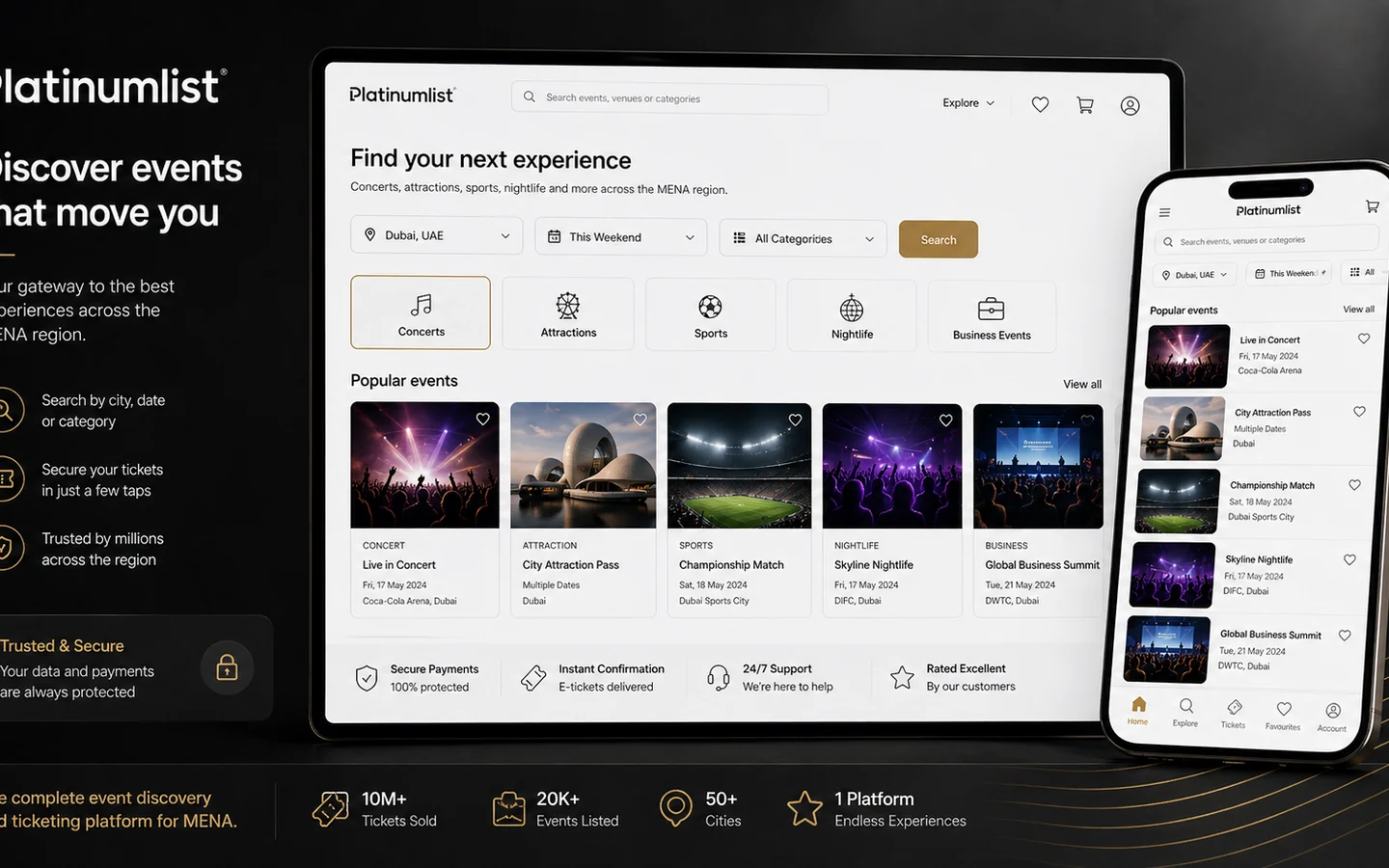
For a ticket buyer, Platinumlist is an event discovery and checkout route. You browse concerts, attractions, sports, nightlife, tours, shows, and local experiences, then decide whether the live event page, ticket category, price, app access, and refund terms make sense.
For an organiser, the decision is bigger. Platinumlist is closer to an event ticketing and operations platform: ticket sales, branded checkout, access control, scanning, event services, marketing support, and regional ticketing infrastructure. That can be valuable when the event has real crowd flow, venue pressure, fraud risk, payment complexity, or buyer-support expectations.
I would not judge it like a cheap SaaS tool with a clean monthly pricing table. The organiser-facing path is more contact-led, and the practical cost depends on the event, market, service scope, ticket volume, payout terms, refund handling, and operational support. The mistake buyers can make here is comparing only the checkout surface while ignoring the full event cycle.
Platinumlist makes the most sense for organisers who need regional reach and event operations. It is less compelling for a small workshop, community meetup, or one-off event that only needs a simple self-serve ticketing page.
Next step: If Platinumlist still looks like the right ticketing route, check the current organiser path or live event page before comparing alternatives.
Review snapshot
| Review point | Practical take |
|---|---|
| Best for | Event organisers, venues, attractions, festivals, concerts, and regional entertainment teams |
| Not ideal for | Small one-off events that only need a lightweight RSVP or simple ticket form |
| Main use case | Selling tickets, managing buyer discovery, branded checkout, access control, and event-day entry |
| Pricing visibility | Custom organiser path; ticket buyers see event-specific prices |
| Free plan or trial | No clear public SaaS-style organiser free plan or trial; access-control app is presented separately |
| Main strength | Combines marketplace reach with organiser-facing ticketing and operational support |
| Main concern | Organiser fees, payout timing, refunds, onsite support, and service scope need direct verification |
| Direct alternatives | Eventbrite, Ticketmaster, Ticket Tailor, Universe |
| Best next step | Separate ticket-buyer needs from organiser needs before requesting terms or buying tickets |
What is Platinumlist?
Platinumlist is an event ticketing and entertainment discovery platform. On the consumer side, it helps people find and buy tickets for events, attractions, tours, shows, sports, concerts, nightlife, and experiences. On the organiser side, it offers ticketing software, event services, white-label ticketing, access control, and support for running paid events.
The organiser-facing product is the part that deserves a deeper review.
A basic ticket tool helps you publish a page and collect payments. Platinumlist appears to target a wider job: run ticketing in a real event environment where seat mapping, inventory, branded checkout, entry validation, buyer support, fraud control, marketing, and local operating knowledge can matter.
That does not make it the right fit for every organiser.
Our review approach compares public product pages, organiser-facing feature pages, customer terms, refund guarantee language, privacy information, buyer feedback patterns, and nearby ticketing alternatives. I would not treat a public event listing or a coupon route as enough evidence that Platinumlist fits an organiser’s real workflow.
The common wrong expectation is thinking Platinumlist is just another event marketplace. It can be that for ticket buyers, but for organisers the better question is whether the platform solves enough of the operational ticketing problem to justify a more consultative commercial path.
Who should use Platinumlist?
Platinumlist fits organisers who need more than a basic payment page.
Regional event organisers in MENA or GCC markets should consider it when local buyer reach, payment expectations, city-specific event discovery, and regional support matter. A generic global ticketing tool may be easier to start with, but it may not bring the same local audience or event-service layer.
Venues and attractions may find it useful when ticketing is repeatable, branded, and operationally sensitive. Museums, tours, seasonal shows, sports venues, entertainment spaces, and long-running attractions often need more than a single event page. They need ticket categories, entry control, timing, reporting, and buyer communication.
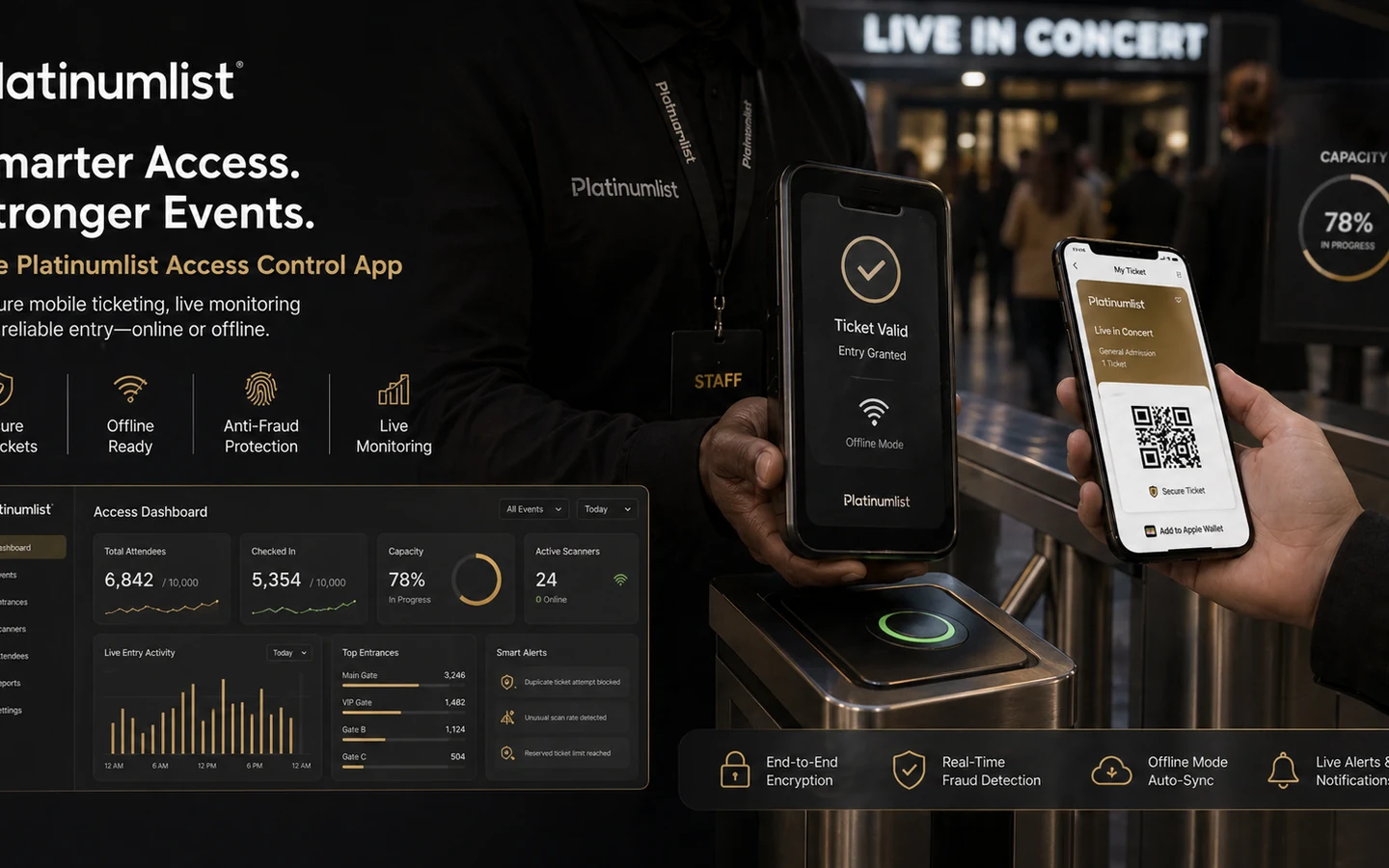
Concerts, festivals, and live entertainment teams should look at Platinumlist when crowd flow and entry validation are part of the risk. If the event has hundreds or thousands of guests, gate logic, QR validation, offline scanning, and support can matter more than a slightly cheaper software fee.
Brands that want a white-label ticketing experience may also have a reason to compare Platinumlist. If the checkout should feel like part of the event brand instead of a third-party marketplace handoff, white-label ticketing becomes a real buying factor.
Organisers that need service support should consider it when marketing, consultation, permits, equipment, staffing, or local event knowledge are part of the decision. This is where Platinumlist looks less like a pure software tool and more like a ticketing partner.
Who should avoid Platinumlist?
I would be careful with Platinumlist if your event is small, simple, and low-risk.
A one-room workshop, local class, informal meetup, or low-volume community event may not need a full event-ticketing partner. In that case, Eventbrite, Ticket Tailor, or a simpler form-and-payment setup may be easier to manage.
I would also be cautious if you need fully transparent public organiser pricing before talking to sales. Platinumlist’s public organiser pages explain the platform and services, but they do not read like a fixed self-serve SaaS pricing table. If you cannot move forward without a clear fee model, payout schedule, and service agreement, ask for those details early.
Teams outside Platinumlist’s stronger operating regions should slow down as well. The value of a ticketing partner often depends on local audience reach, support, payment methods, and event-day execution. If your market is not well supported, the platform’s strengths may not transfer cleanly.
Ticket buyers should also avoid buying too quickly if the event page is unclear. Event date, venue, ticket category, final checkout price, mobile ticket access, refund guarantee option, and official seller status all need a live check. A familiar ticketing brand does not remove the need to read the event-specific terms.
Finally, coupon-first buyers should not treat Platinumlist like a reusable promo-code product. Event-level offers may exist, but the real decision is ticket validity, event fit, refund conditions, and organiser terms.
How Platinumlist fits into a real workflow
For organisers, Platinumlist belongs in the full ticketing workflow, not only the checkout step.
A realistic workflow looks more like this:
- Define the event type, city, venue, expected audience, and ticket categories.
- Decide whether the event needs marketplace discovery, branded checkout, or both.
- Set ticket inventory, packages, pricing logic, promo paths, and buyer instructions.
- Confirm whether access control, scanning, offline validation, or onsite staffing is needed.
- Clarify payout timing, refunds, cancellations, chargebacks, and support responsibility.
- Launch ticket sales and monitor performance.
- Run event-day entry with QR validation, live stats, and exception handling.
- Review settlement, refunds, support issues, and reporting after the event.
That workflow explains why Platinumlist can be useful. It also explains why the buyer should not stop at “Can it sell tickets?” Most platforms can sell tickets. The harder question is whether the platform can support the event when something becomes operational: a gate queue, a duplicate ticket, a refund claim, a cancelled show, a last-minute ticket category change, or a buyer who cannot access the app.
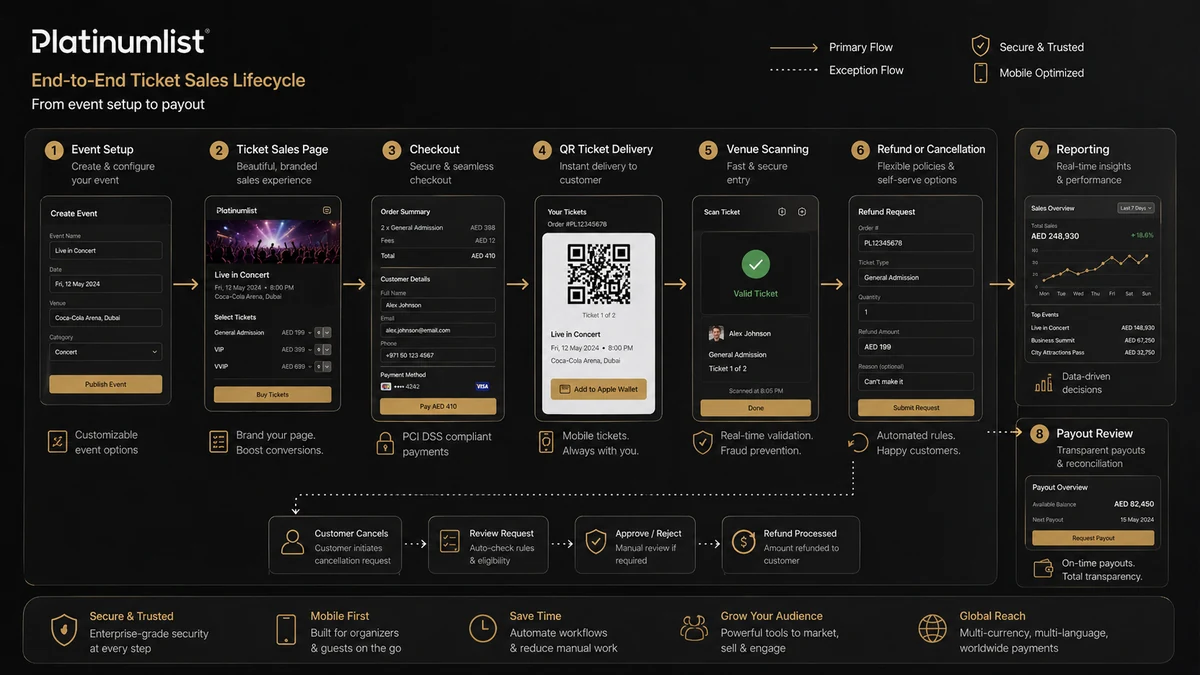
Workflow check: If your event needs access control, branded checkout, or regional support, verify Platinumlist against the full event workflow before choosing a lighter ticketing tool.
Real-world buyer scenarios
A small workshop organiser
If you are running a small workshop with a limited audience, Platinumlist may be more platform than you need. The value of regional discovery, access control, and white-label ticketing may not justify extra commercial review. A simpler self-serve tool may be better unless Platinumlist gives you a clear local audience advantage.
A venue with repeat events
A venue has a different problem. It may need branded checkout, multiple event pages, repeat ticket sales, seat or category logic, onsite validation, reporting, and buyer support. Platinumlist becomes more interesting here because the value is not just software. It is the combination of ticketing infrastructure and event operations.
A concert or festival team
For a high-volume live event, the buyer risk shifts from page design to event-day execution. Ticket scanning, offline mode, fraud prevention, refund rules, and crowd flow become business-critical. Platinumlist may fit if the organiser can confirm the exact access-control setup, staffing expectations, and support process.
A ticket buyer choosing an event
A ticket buyer should not think like an organiser. The practical job is narrower: confirm the event is real, the seller route is official, the ticket type matches the plan, the final price is acceptable, the app or mobile-ticket requirement is clear, and the refund guarantee or event policy is understood before checkout.
Key features that actually matter
Event discovery marketplace
Platinumlist’s consumer marketplace matters because ticketing is not only a payment workflow. If buyers already browse the platform for regional concerts, attractions, sports, shows, and experiences, organisers may benefit from discovery that a pure checkout tool does not provide.
Buyer note: audience reach is only valuable if Platinumlist is strong in your target city and event category. Ask for realistic discovery and marketing expectations, not only platform capability.
Organiser ticketing software
The organiser platform is the core reason to compare Platinumlist as a business tool. Public pages describe ticketing features such as inventory control, ticket types, live monitoring, packages, and event-management support.
Buyer note: verify the setup process, organiser dashboard access, user roles, reporting depth, settlement timing, and whether your event type needs custom configuration.
Access control and QR validation
Access control is one of the strongest practical reasons to look beyond a lightweight ticketing page. Platinumlist describes a free Access Control App, live entry data, ticket scanning, offline readiness, and validation for events ranging from small to very large crowds.
Buyer note: test the entry process before event day. Ask who provides devices, what happens when internet access drops, how duplicate tickets are handled, and whether onsite staff are included or optional.
White-label ticketing
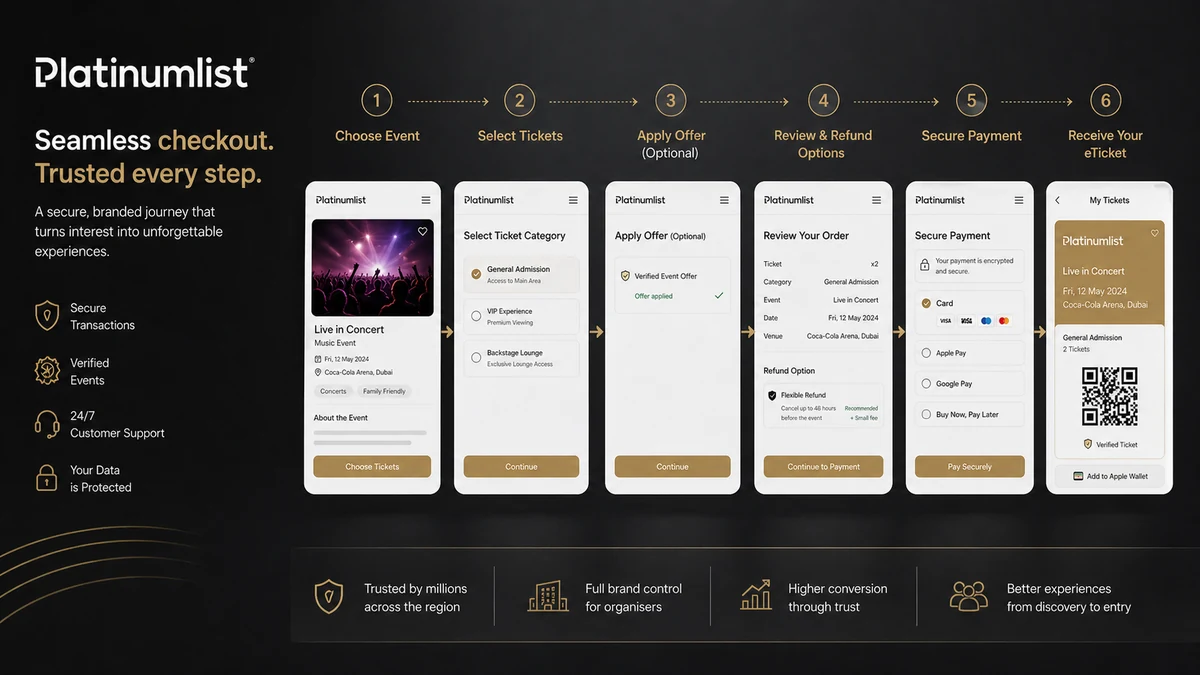
White-label ticketing matters when the buyer journey needs to stay close to the event brand. Platinumlist’s white-label page emphasizes branded journeys, mobile-first checkout, access control, seat maps, timed entry, group booking, and hosted backend support.
Buyer note: this is useful for venues, attractions, long-term shows, and branded experiences. It may be unnecessary for small events where third-party checkout is acceptable.
Event services and marketing support
Platinumlist also positions itself around event services, local know-how, and marketing support. For some organisers, that can matter more than a software feature list.
Buyer note: clarify what is included, what costs extra, and what performance expectations are realistic. Marketing support should be treated as a service scope discussion, not an automatic ticket-sales guarantee.
Pricing and plan value
The pricing question with Platinumlist is not “Which monthly plan should I pick?”
For organisers, public pricing is not presented like a simple self-serve SaaS table. The current public organiser path focuses on ticketing solutions, event services, access control, white-label ticketing, marketing, consultation, and contact-based conversations. That usually means the real buying decision depends on the event type, market, ticket volume, ticket value, venue complexity, support needs, and whether additional services are involved.
Ticket buyers see live prices per event. Those prices can vary by ticket category, city, date, seat, package, organiser conditions, and checkout options.
For an organiser, I would ask for written clarity on:
- platform fees or commission
- buyer-facing service fees
- payout timing and settlement process
- cancellation and refund handling
- chargeback responsibility
- access-control app and device support
- onsite staffing or equipment cost
- white-label setup cost
- marketing services and reporting
- tax, permit, and regional support assumptions
A cheaper-looking ticketing route is not automatically cheaper if refund responsibility, payout timing, or event-day support is unclear. On the other side, a more service-heavy platform can be worth paying for if it prevents gate problems, payment confusion, buyer-support overload, or weak regional discovery.
Pricing check: Before committing an event, verify the live commercial path, fee model, payout timing, and service responsibilities.
Free plan, trial, coupon, and checkout notes
Platinumlist is not best evaluated through a normal SaaS free-trial lens.
The access-control app is presented as free for ticket validation, but that does not equal a full public organiser free plan, a free event listing guarantee, or a complete no-cost ticketing setup. Organisers should verify which parts of the platform, services, support, marketing, equipment, and branded checkout are included in their commercial agreement.
The coupon angle is also different from a typical software coupon page. Ticket buyers may see event-level discounts, group offers, refund guarantee options, or category-specific pricing. Organisers may receive custom commercial terms. A reusable public coupon code is not the main reason to choose Platinumlist.
The safer order is:
- Confirm whether you are buying a ticket or choosing an organiser platform.
- Verify the live event page or organiser terms.
- Check refund and cancellation rules.
- Compare alternatives based on event complexity.
- Only then look at current offers or event-level savings.
A discount can improve a valid purchase. It should not be the reason you choose the wrong ticketing route.
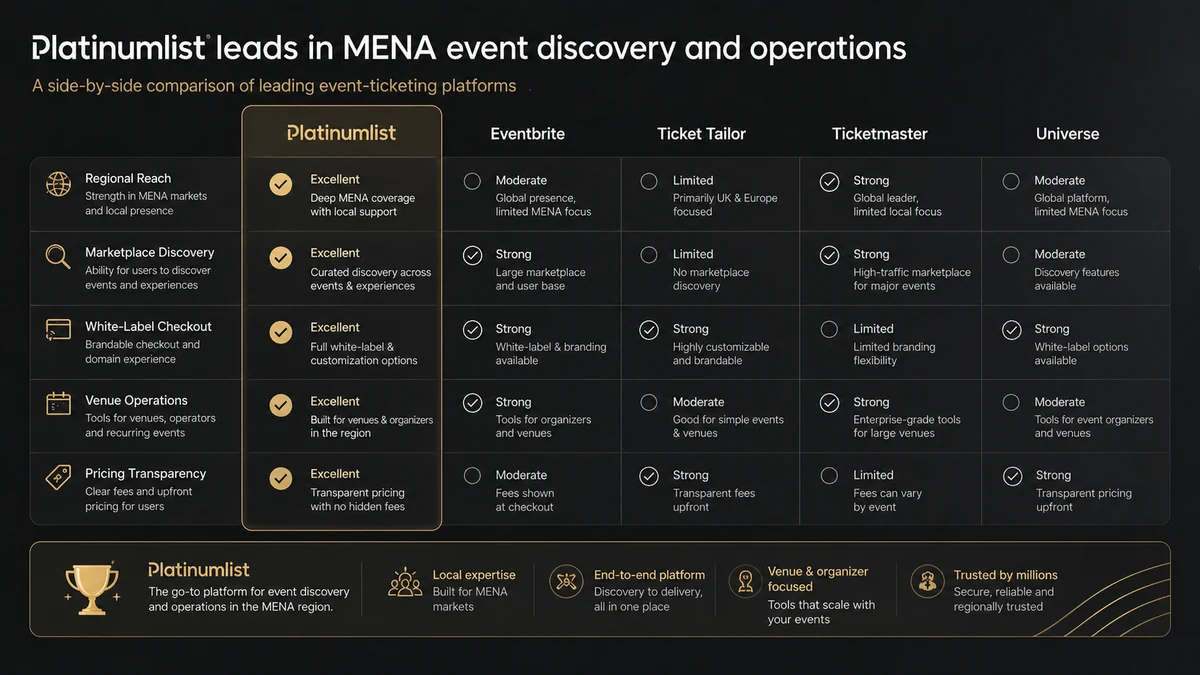
What I would check before buying Platinumlist
If I were evaluating Platinumlist for a real event, I would check these points before moving any paid ticket inventory onto the platform:
- Organiser fee model: commission, fixed fees, buyer-facing service fees, taxes, and any setup or service charges.
- Payout timing: when money is settled, what happens after cancellations, and how refunds or chargebacks affect payout.
- Access-control details: QR scanning, offline mode, device requirements, gate logic, fraud handling, and onsite staffing.
- White-label scope: whether branded checkout, seat maps, timed entry, promo codes, and reporting are included or custom.
- Refund responsibility: who decides refunds, who funds refunds, and how optional refund guarantee terms affect buyers.
- Support expectations: ticket-buyer support, organiser support, event-day response, and escalation process.
- Market fit: whether Platinumlist has meaningful audience reach in the city, category, and buyer segment you care about.
A simple test before paying
Before committing a serious event to Platinumlist, I would run a small evaluation like this:
- Pick one real event scenario, not a vague test project.
- Map the event’s ticket categories, expected volume, venue entry points, and refund risks.
- Ask Platinumlist for organiser terms based on that scenario.
- Compare the fee and service scope against Eventbrite, Ticket Tailor, Universe, or your current ticketing setup.
- Request a clear explanation of access-control workflow, offline scanning, and exception handling.
- Review the buyer checkout flow and ticket-delivery requirements.
- Only move forward if the platform saves operational stress, not just because it looks more professional.
For ticket buyers, the test is simpler: verify the event page, final checkout price, ticket category, refund guarantee option, app access, and venue rules before paying.
Pros explained
Platinumlist’s strongest advantage is that it combines ticket discovery and event operations. A pure ticket form does not bring marketplace visibility. A pure marketplace may not solve onsite entry. Platinumlist sits closer to the middle, which can be valuable for serious events.
The access-control layer is another real strength. QR validation, live entry monitoring, offline readiness, and fraud prevention are not cosmetic features when a crowd is waiting at the gate. For larger events, the entry workflow can make or break the buyer experience.
White-label ticketing is useful for brands, venues, attractions, and repeat-event operators. When checkout trust affects conversion, keeping the buyer journey aligned with the event brand can matter.
The regional focus is also meaningful. A ticketing tool that understands local markets, payment habits, audience discovery, and event-service expectations may be more useful than a globally known tool with weaker local support.
Finally, the service layer can be a strength for organisers who need more than software. Permits, consultation, equipment, marketing, staffing, and local operational support can be valuable if they are clearly scoped.
Cons explained
The main drawback is pricing visibility. Platinumlist does not behave like a simple SaaS tool where every organiser can quickly compare Starter, Pro, and Business plans. That makes sense for complex events, but it also means organisers need a direct commercial conversation before they can judge value.
Refund complexity is another serious issue. Event refunds are not the same as software refunds. They may depend on event cancellation, postponement, organiser policy, refund guarantee purchase, documentation, timing, wallet credits, or payment-provider processing. Buyers who assume “refund guarantee” means effortless money back may be disappointed.
The platform can also be too heavy for small events. If you only need to collect payments for a small class or meetup, a lighter ticketing tool may be faster and easier.
Technical and operational details need confirmation. Public pages describe ticketing and access-control capabilities, but organisers still need clarity on devices, gate workflows, staffing, reporting, integrations, data access, and support scope.
Finally, third-party reviews show mixed buyer sentiment. Many users describe easy booking or helpful support, but refund delays, app requirements, and support frustrations appear in some complaints. That does not mean the platform should be avoided, but it does mean refund-sensitive buyers should read the live terms carefully.
Green flags and red flags
Green flags:
- You run events in markets where Platinumlist has real audience reach.
- You need ticket sales plus access control, not just a payment page.
- Your event requires branded checkout, seat maps, timed entry, packages, or venue logic.
- You want local operational support instead of only software access.
- Platinumlist can explain fees, payouts, support, and refund responsibility clearly before launch.
Red flags:
- You cannot get a clear written fee model before committing.
- Your event is simple enough for a lightweight self-serve tool.
- You are choosing only because a ticket page looks familiar.
- Refund policy and cancellation handling are not clear.
- Your region, payment needs, or support expectations do not match Platinumlist’s operating strength.
- Ticket buyers are unclear about app requirements, venue entry rules, or refund guarantee conditions.
Platinumlist vs alternatives
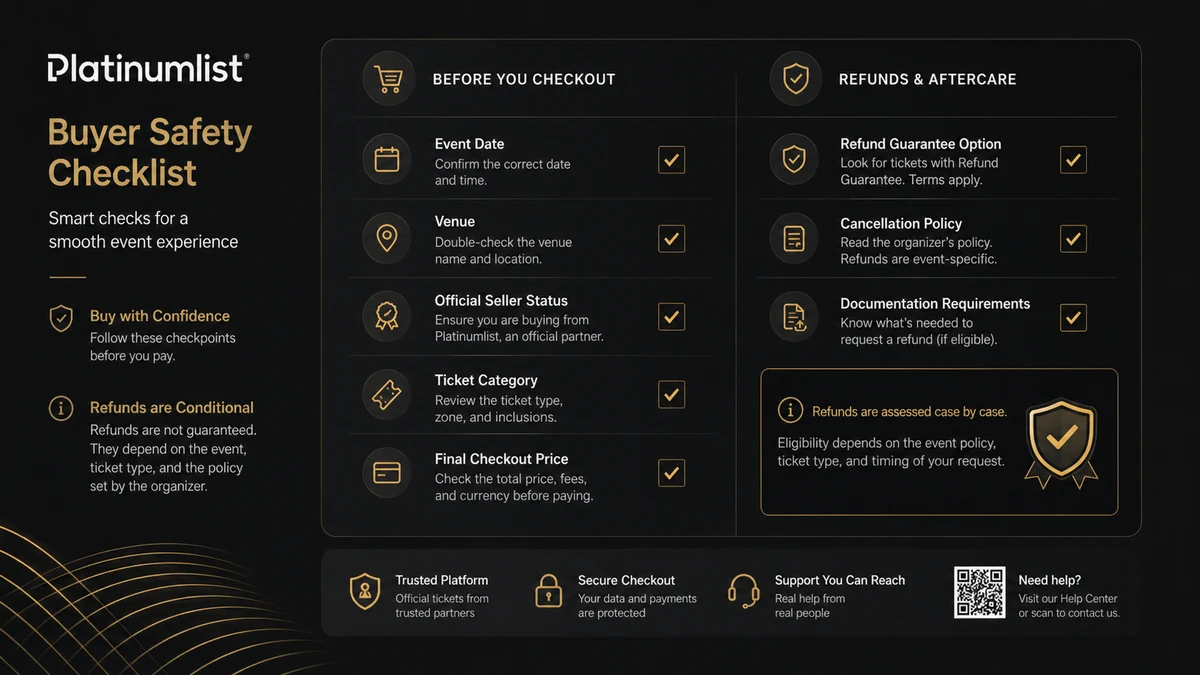
Eventbrite vs Platinumlist
Eventbrite is usually the better first comparison for small and mid-sized organisers who want a self-serve ticketing path with broad global familiarity. It may be easier to understand quickly, especially for simpler events.
Platinumlist may still make more sense if your event depends on regional MENA discovery, local support, access control, branded ticketing, or more operational involvement.
Ticketmaster vs Platinumlist
Ticketmaster is the stronger comparison for major venues, large entertainment inventory, and enterprise-scale ticketing relationships. If your event sits in that world, the decision may depend on venue partnerships and market expectations.
Platinumlist may be more relevant for organisers that want a regional ticketing partner with a stronger focus on GCC/MENA event discovery and support services.
Ticket Tailor vs Platinumlist
Ticket Tailor is usually worth comparing when you want simpler pricing visibility and a lighter self-serve ticketing workflow. For many small events, that may be enough.
Platinumlist becomes more compelling when you need marketplace exposure, access-control depth, branded checkout, and operational services that a lighter tool may not provide.
Universe vs Platinumlist
Universe can make sense when marketplace exposure, social discovery, and online ticketing are the key needs. It may fit organisers who want a broad event-discovery path without needing the same regional support layer.
Platinumlist may be the stronger option when local operating region, access control, and event services are central to the decision.
Trust, refund, and buyer-risk notes
Trust with Platinumlist should be judged at two levels: buyer trust and organiser trust.
For ticket buyers, the practical risks are event-specific. The current customer terms say refund eligibility may depend on cancelled or postponed events and require written application within a defined window. They also say Platinumlist does not offer refunds when a customer is refused entry or ejected. Refund guarantee terms add another layer: the guarantee must be purchased at checkout, applies only to eligible tickets and named persons, requires documentation, and may normally be credited to a wallet unless another method is requested.
That is not a simple “always refundable” promise.
For organisers, the risk is commercial clarity. You should not launch a paid event until you understand service fees, payout timing, refund liability, cancellation process, chargeback handling, scanning support, onsite staffing, equipment, and buyer-support responsibility. If those are unclear, the platform may still be good, but the buying decision is not ready.
Privacy and data handling also deserve attention. Event ticketing involves names, contact details, payment-related data, attendance records, communication preferences, and sometimes venue or identity checks. Buyers and organisers should read the current privacy policy and event-specific terms before relying on Platinumlist for sensitive or high-volume events.
I would also treat public reviews as mixed evidence. Positive comments often mention easy booking and helpful support. Negative comments tend to cluster around refunds, app access, support delays, or event-day confusion. That pattern is common in ticketing, but it is still relevant. A ticketing platform is judged hardest when something goes wrong.
Final verdict
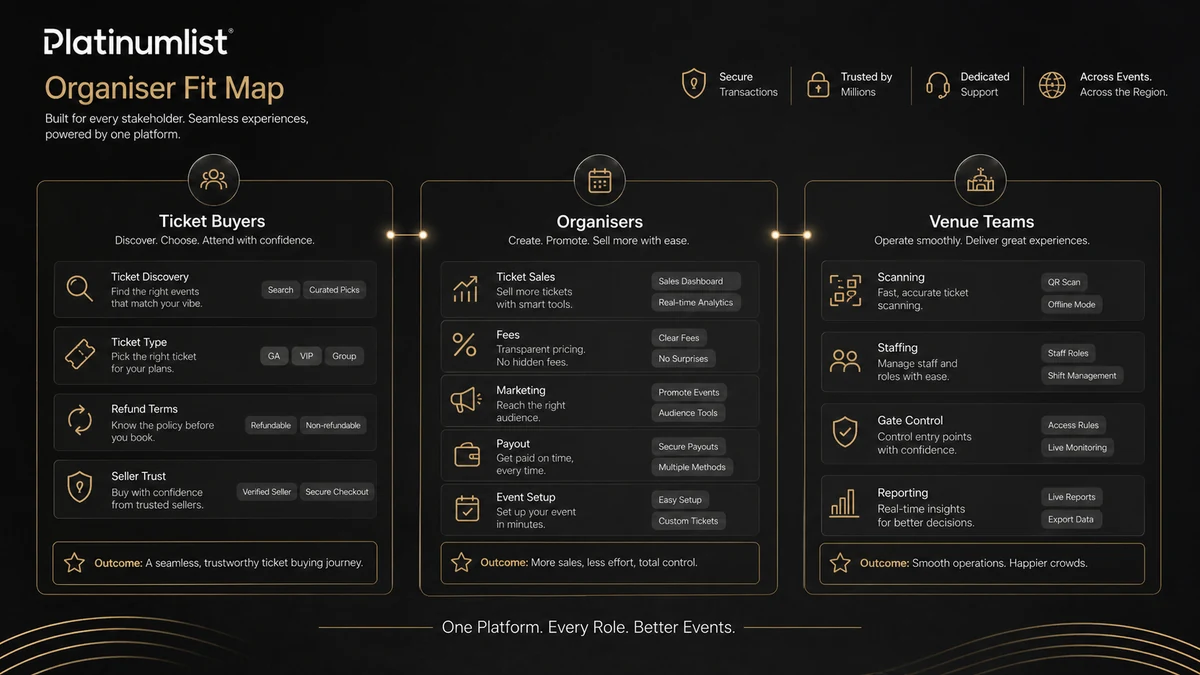
I would consider Platinumlist if I were organising a regional event where ticket discovery, branded checkout, access control, local support, and event-day operations genuinely matter.
I would be more cautious if the event is small, simple, outside Platinumlist’s strongest markets, or easy to run with a cheaper self-serve ticketing tool. I would also slow down if refund handling, payout timing, service fees, or onsite support are not explained clearly in writing.
For ticket buyers, Platinumlist can be a convenient event-discovery and ticketing route, but the safe move is to check the live event page, ticket category, venue, app requirements, final checkout price, and refund guarantee terms before paying.
For organisers, the safest next step is not to ask whether Platinumlist can sell tickets. It can. The better question is whether its marketplace reach, access-control workflow, white-label options, and regional support are valuable enough for your specific event to justify the commercial terms.