Quick verdict
JotURL is worth a closer look if links are already part of your marketing machine, not just something you shorten once and forget.
That distinction matters.
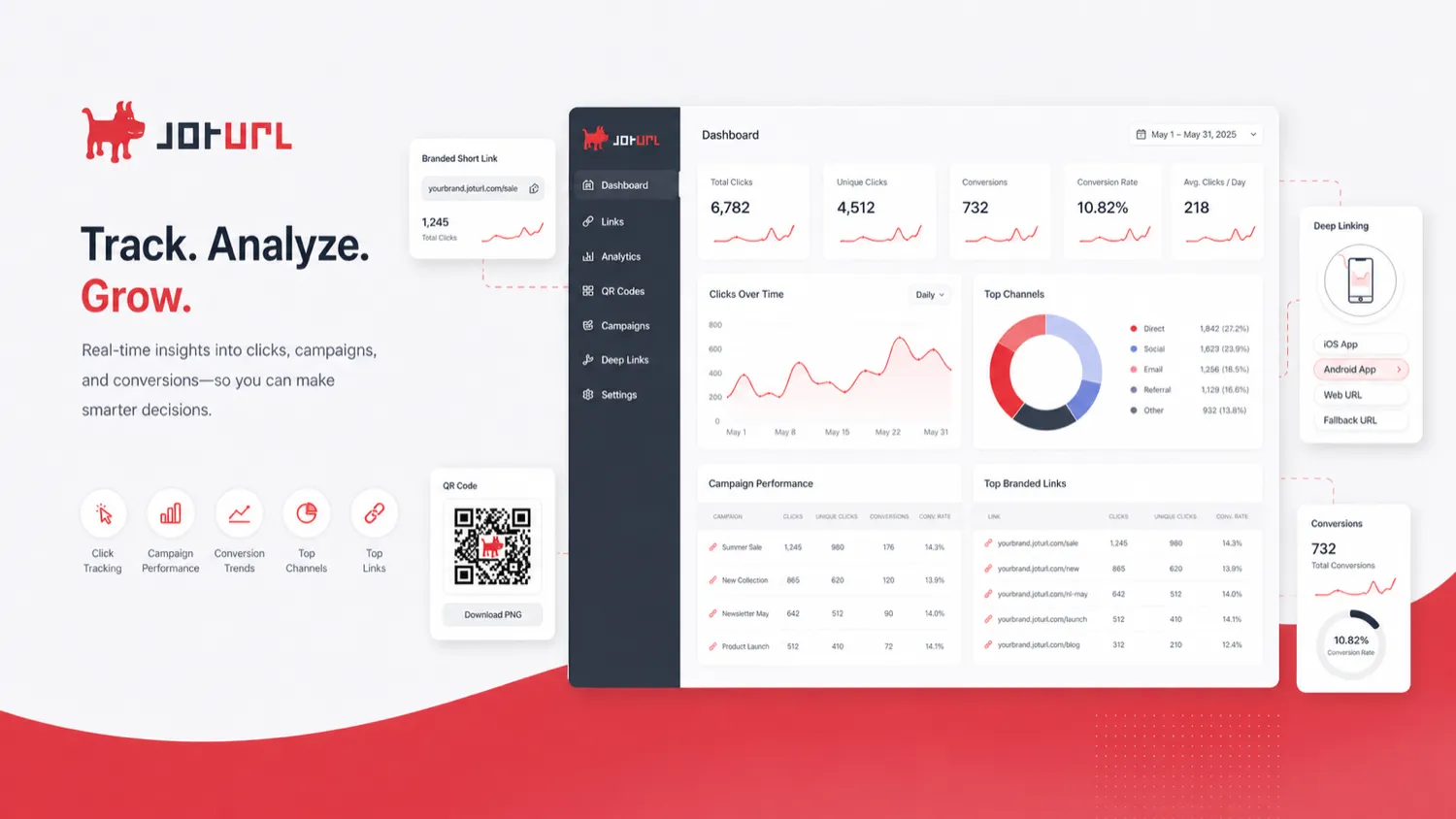
The product looks like a link shortener at first glance, but the real value is broader: branded links, QR codes, tracking, retargeting pixels, CTAs, deep links, conversion data, API access, monitoring, and team workflows. If your campaigns depend on knowing which links drive clicks, leads, app opens, affiliate activity, or client reports, JotURL can make sense as a serious link management layer.
I would be more cautious if you only need a clean short URL or a basic branded link. In that case, JotURL may feel like buying a campaign operating system when all you needed was a small redirect tool.
The buyer mistake here is choosing by headline price alone. JotURL’s plans are shaped by event volume, branded link counts, users, custom domains, analytics storage, and advanced features. A low entry price can be useful for testing, but the right question is whether the plan matches your real campaign volume and reporting needs.
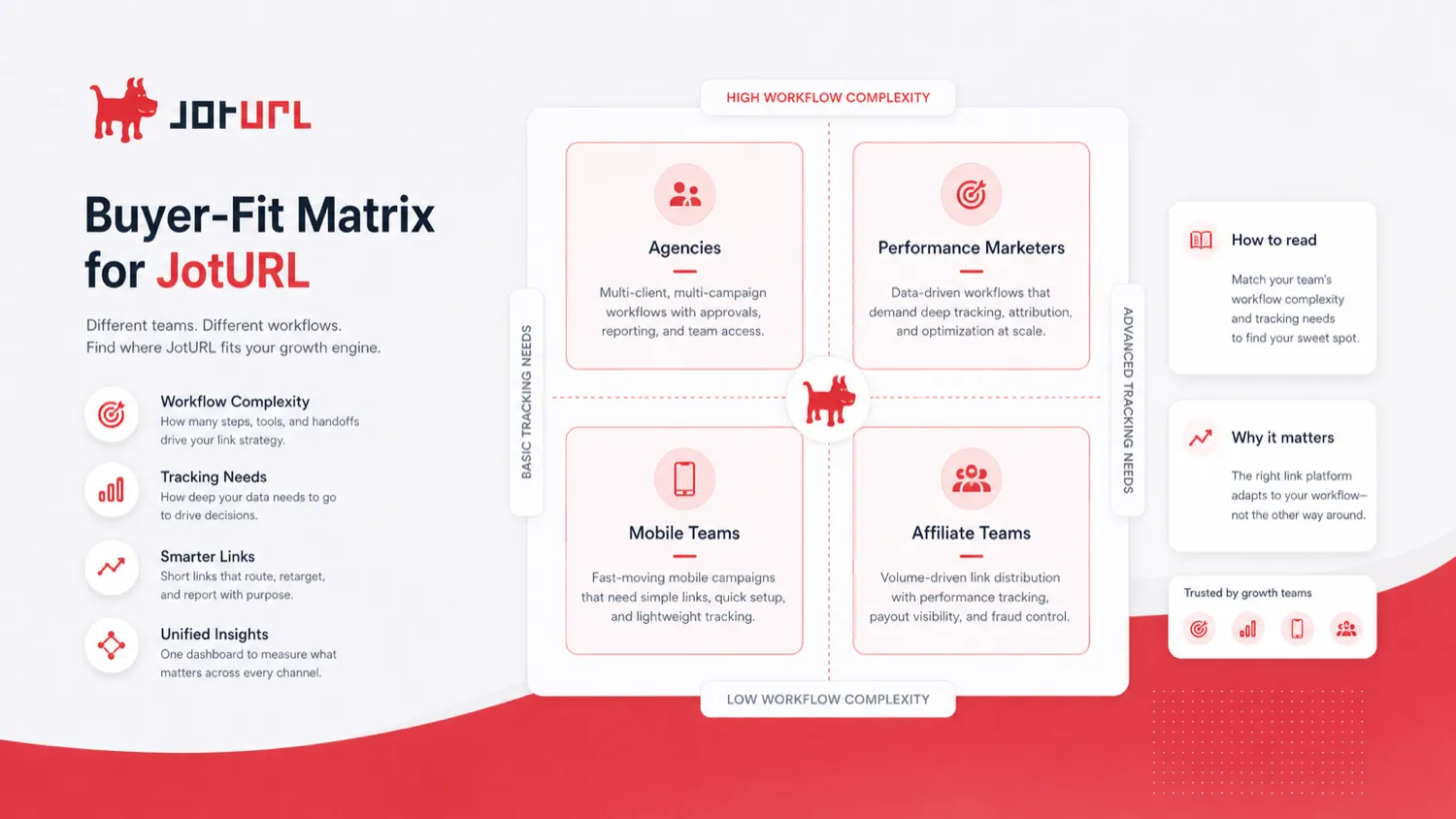
For my money, JotURL makes the most sense for agencies, performance marketers, affiliate operators, and mobile teams that can name the campaigns they want to track. If you cannot yet explain why you need retargeting, deep links, QR workflows, or conversion tracking, I would compare simpler alternatives first.
Next step: If JotURL still fits your campaign workflow, verify the current pricing, event limits, and buyer route before checkout.
Review snapshot
| Review point | Practical take |
|---|---|
| Best for | Agencies, performance marketers, affiliates, mobile marketers, and growth teams with repeatable campaign-link workflows |
| Not ideal for | Casual users who only need simple short links, tiny social links, or one-off redirects |
| Main use case | Creating branded tracking links and connecting them to analytics, retargeting, QR campaigns, deep links, and conversion data |
| Trial path | Public pricing FAQ describes a 14-day trial path when starting from the pricing page |
| Pricing note | Plans are shown in euros, with Growth, PRO, Business, and XL paths; buyers should verify yearly vs monthly billing and plan limits |
| Main strength | Broad link management suite in one platform instead of separate tools for links, QR codes, CTAs, retargeting, and deep links |
| Main concern | Event limits, custom domains, users, analytics storage, and setup complexity can change the real cost-benefit picture |
| Direct alternatives | Bitly, Rebrandly, Switchy, Linkly |
| Best next step | Test one real campaign workflow before committing to annual billing or a higher-volume tier |
What is JotURL?
JotURL is an all-in-one link management platform for marketers who want links to do more than redirect.
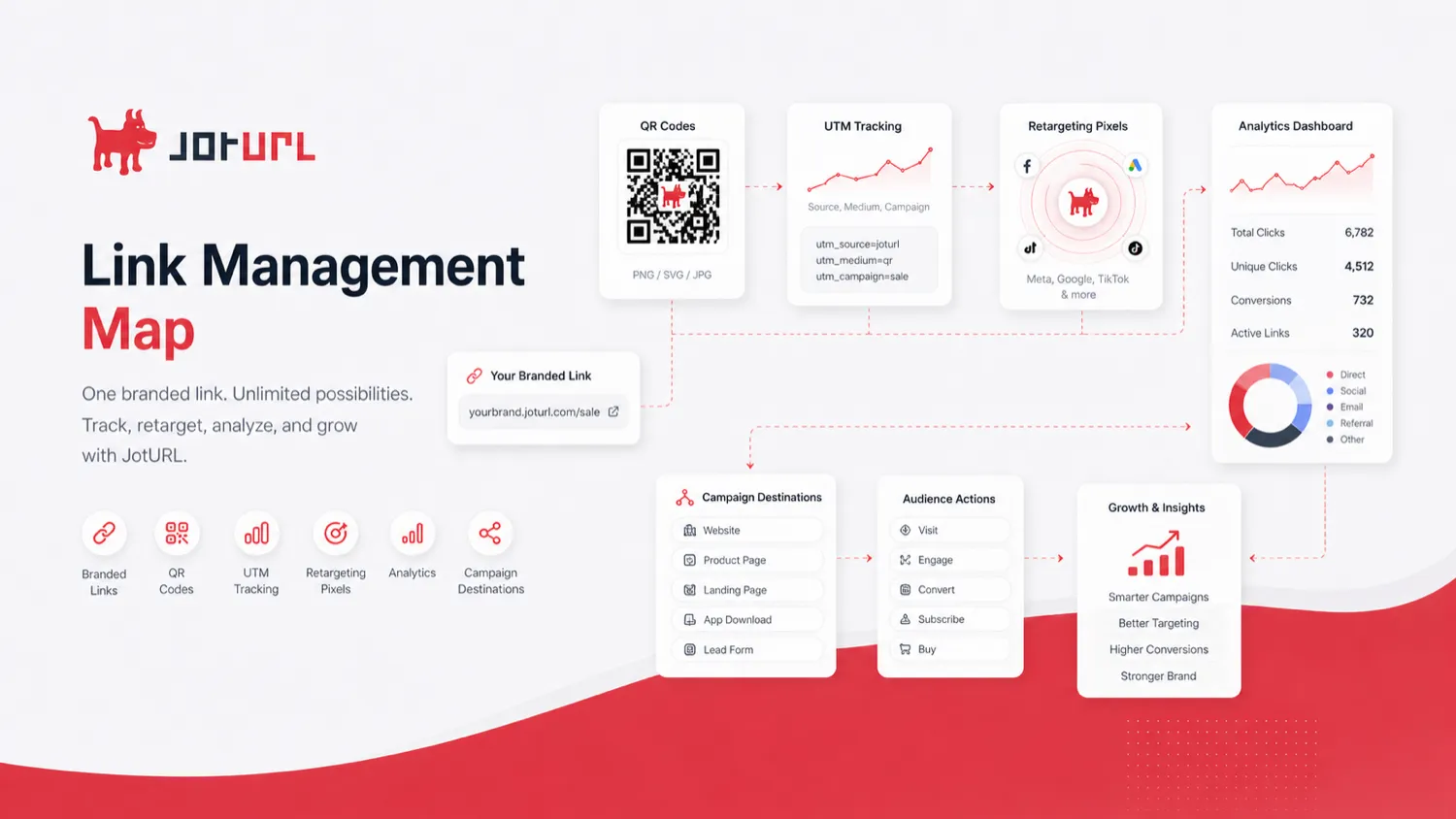
The simple version is this: JotURL lets you create branded tracking links. The more useful version is that those links can become part of a broader marketing system, with QR codes, custom link previews, calls-to-action, retargeting pixels, conversion tracking, deep links, analytics, monitoring, team permissions, and API-based operations.
That is why I would not judge it as a basic URL shortener.
A basic shortener helps you make a long URL look cleaner. JotURL is trying to help a marketer answer deeper questions: which link drove the visit, which campaign source performed better, whether mobile users reached the right app destination, whether QR scans turned into measurable traffic, and whether a team can manage branded links across projects without losing control.
Our review approach compares public product pages, pricing details, help documentation, deal terms, buyer workflow fit, and nearby alternatives. We do not treat a coupon, low monthly price, or older lifetime-deal reference as proof that the product fits the buyer.
The common wrong expectation is thinking JotURL is only about shortening URLs. It is closer to link infrastructure for campaigns. That is more valuable for the right buyer, but it also means the buying decision needs more care.
Who should use JotURL?
JotURL fits buyers who already treat links as campaign assets.
Performance marketers are the cleanest fit. If every campaign needs branded links, UTM discipline, click data, conversion tracking, and retargeting audiences, JotURL can reduce the number of separate tools you stitch together. The condition is that your team must actually use the reporting and tracking layer, not just create prettier links.
Agencies should consider it when they manage multiple clients, brands, domains, campaigns, and reports. JotURL’s value increases when one dashboard can support repeatable workflows across different client contexts. Before buying, an agency should count users, brands, custom domains, event volume, and client reporting expectations.
Affiliate marketers and partner marketers may also benefit. JotURL’s deep-linking and tracking approach can be useful when affiliate URLs, mobile destinations, campaign parameters, and source comparison matter. The buyer check is whether the platform supports the destinations and affiliate workflows you actually use.
Mobile app marketers should look at it if app routing matters. JotURL’s deep-linking documentation points to app-aware routing and third-party app support, which is more relevant when users may need to land in an app instead of a generic web page.
Technical marketing teams may care about the API. JotURL publicly presents a large API surface, but API fit should be verified against the current plan, rate limits, and engineering capacity before it becomes a buying reason.
Who should avoid JotURL?
JotURL is not the first tool I would recommend to someone who only needs one or two clean short links.
A solo creator who occasionally shares links on social media may not need retargeting pixels, conversion tracking, API endpoints, team controls, or deep linking. The product may still work, but the mental overhead can be higher than the benefit.
Beginners who do not track campaigns yet should also slow down. JotURL can provide a lot of data, but data is useful only when you know what decision it supports. If you do not yet have clear campaign goals, a simpler branded-link tool may be enough while your process matures.
Teams that want only a social bio page should compare lighter tools first. JotURL can support broader marketing journeys, but a buyer whose main need is a simple link-in-bio page may not need the full suite.
I would also be careful if your team cannot estimate monthly events. JotURL’s plan value depends heavily on traffic and usage limits. Guessing too low can create friction later; guessing too high can lead to overbuying.
Finally, do not buy JotURL just because you saw an old lifetime deal, coupon mention, or third-party pricing page. Current checkout terms, live pricing, and plan limits matter more than old deal references.
How JotURL fits into a real workflow
A practical JotURL workflow starts before anyone creates a short link.
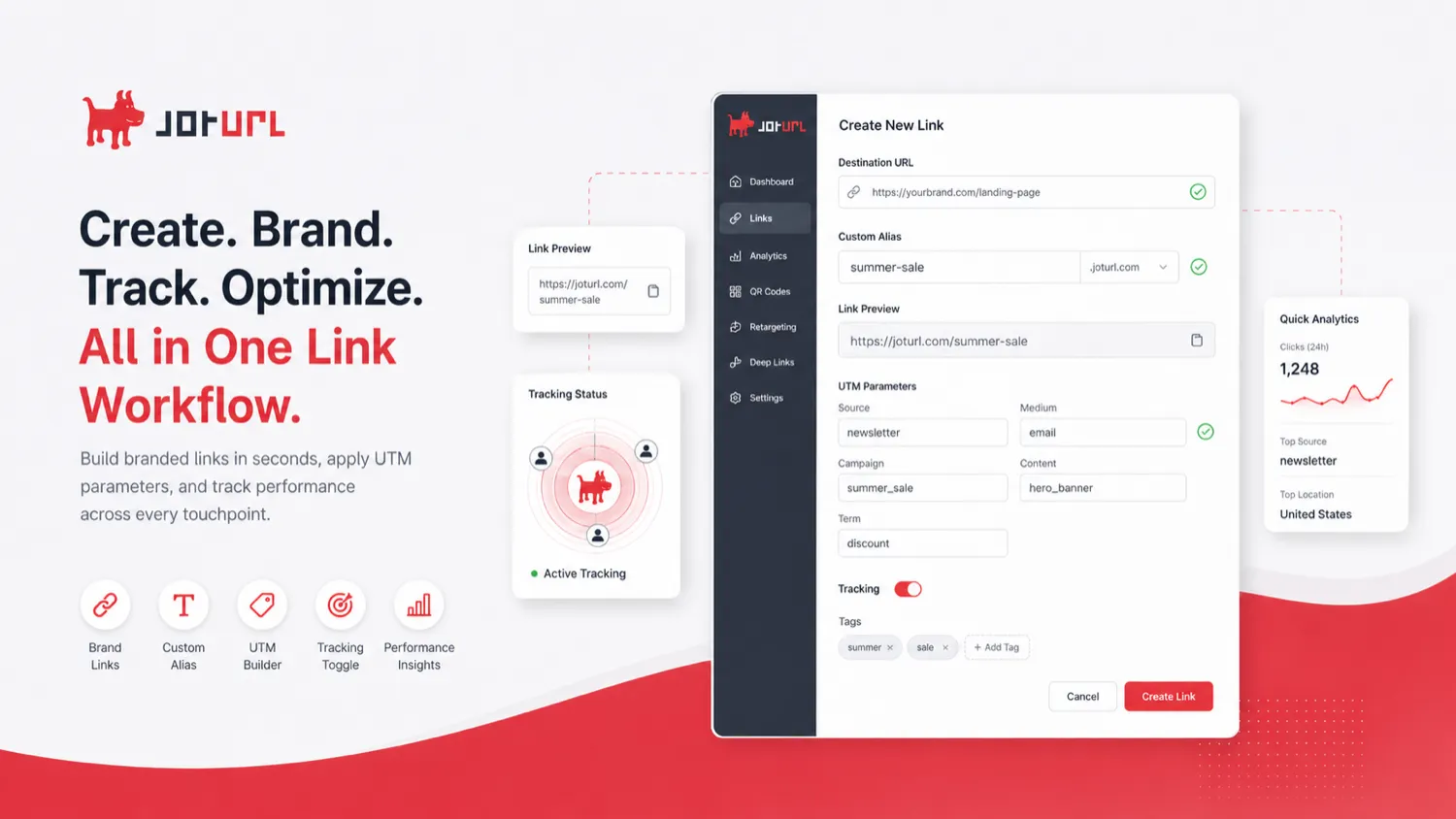
First, the marketer decides what the campaign needs to measure: clicks, conversions, QR scans, app opens, affiliate traffic, UTM sources, retargeting audiences, or client reporting. Then the team creates a branded tracking link, adds the right destination and parameters, applies the correct domain, configures any retargeting or deep-link behavior, and uses the link consistently across channels.
After that, the real work is not just sharing the link. It is reading what happens next.
A team should review click activity, events, conversion data, device context, source performance, and whether the link helped answer a campaign question. If JotURL only creates a cleaner URL but nobody looks at the analytics, the platform is being underused.
This is where JotURL becomes useful inside a repeatable process:
- Plan campaign and tracking goal.
- Create branded tracking link.
- Add UTM logic, retargeting, QR code, or deep-link behavior when needed.
- Share the link across channels.
- Review events, clicks, conversions, and routing performance.
- Adjust campaign, destination, or audience strategy.
- Reuse the workflow for the next campaign.
The tool saves time when this loop repeats. It becomes weaker when links are created casually without measurement or follow-up.
Real-world buyer scenarios
A small agency might use JotURL to manage campaign links across several clients. The fit is strong if the agency needs branded domains, client-specific projects, tracking links, and reporting. It may fail if the team only needs simple redirects and does not want to train staff on a deeper dashboard.
A paid media marketer may use JotURL when campaign links need UTMs, retargeting pixels, QR codes, and conversion tracking. The value is strongest when link data changes budget decisions. The risk is paying for advanced link infrastructure but still measuring campaign performance elsewhere.
An affiliate marketer may use JotURL for cleaner links, source comparison, mobile-friendly destinations, and campaign routing. This is useful when affiliate traffic comes from several channels. Before paying, I would verify the deep-link workflow, affiliate-link handling, branded domain setup, and whether the plan limits match traffic volume.
A mobile growth team may care about deep linking and deferred routing. JotURL can be relevant when users need to land in a specific app context from an ad, QR code, social post, or affiliate link. The buyer check is technical: confirm supported apps, implementation steps, API needs, and whether someone on the team can maintain the setup.
Key features that actually matter
Branded tracking links
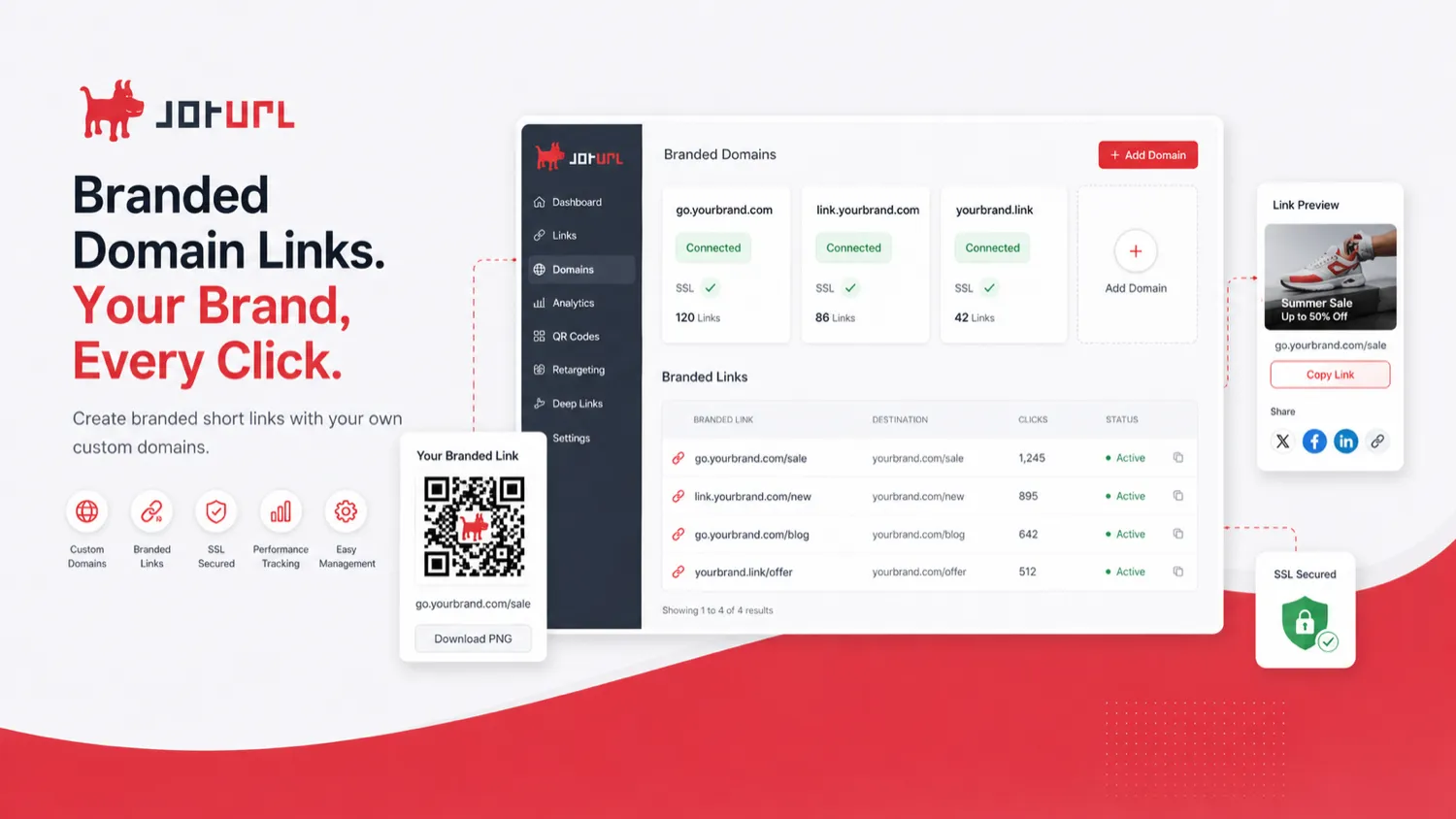
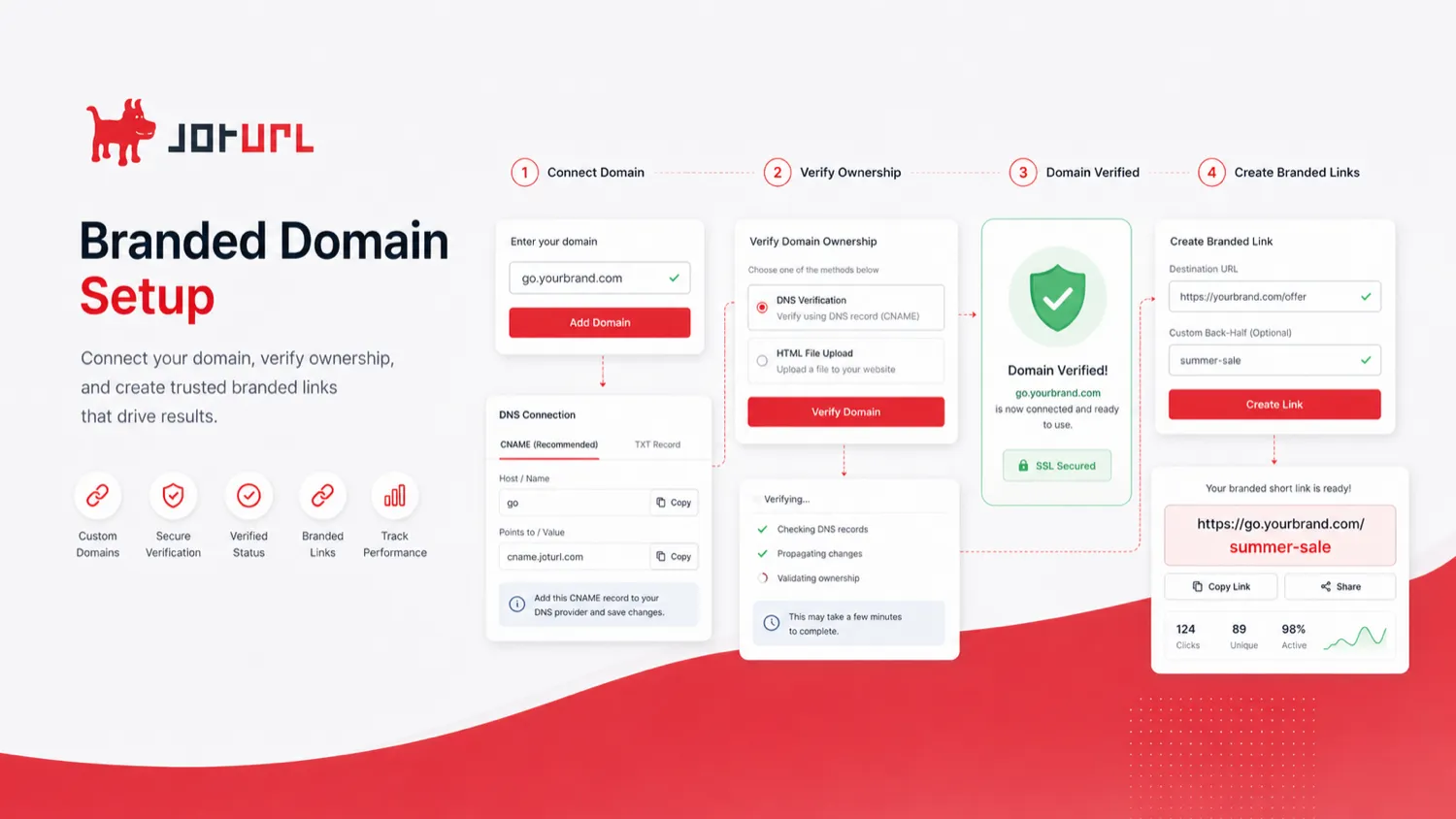
Branded links are the core reason to consider JotURL. They help campaigns look more trustworthy and organized than random short links.
The buyer value is not only brand polish. A branded tracking link can carry analytics, campaign context, and reporting logic. That matters when links are part of a measurable marketing funnel.
Buyer note: check how many branded links and custom domains your plan includes before assuming the entry tier is enough.
QR codes and offline-to-online tracking
QR codes matter when links move from screens into physical or mixed-channel campaigns: events, print material, packaging, local promotions, cards, or in-store touchpoints.
JotURL is more interesting when QR scans are tied back into campaign reporting. A QR code by itself is easy to generate elsewhere. A QR code connected to branded links and analytics is the stronger use case.
Buyer note: verify whether your plan gives enough tracking volume for QR campaigns before pushing a large offline campaign live.
Retargeting pixels and CTAs
Retargeting pixels and CTAs are advanced features that can make a link more commercially useful. They can help a marketer build audiences or guide users after a click.
This is valuable only when the campaign has a strategy behind it. If you are not running paid media, retargeting, or conversion-oriented campaigns, this layer may not justify the extra complexity.
Buyer note: confirm pixel behavior, privacy obligations, and campaign rules before using retargeting links at scale.
Deep links and mobile routing
Deep linking is one of the areas where JotURL can be more than a branded-link tool. Official help content describes Easy Deep Linking for many third-party apps and multiple creation routes, including dashboard, Chrome extension, and API Lab.
This matters for affiliate creators, mobile campaigns, app marketers, and teams trying to reduce mobile friction. It is less important if most of your traffic lands on normal web pages.
Buyer note: test your most important destination before assuming every app or affiliate workflow will behave the way you expect.
API and team operations
JotURL’s API positioning makes it relevant for teams that need automated link creation, large campaign operations, or internal tools. The official API page presents a broad endpoint surface and plan-specific rate limits.
This is useful only if your team has technical capacity. API access is not a magic shortcut; it adds implementation work.
Buyer note: verify API availability, rate limits, authentication, and plan requirements before choosing JotURL for service-critical workflows.
Pricing and plan value
JotURL pricing needs to be judged by limits, not only by the monthly number.
The public pricing page presents Growth, PRO, Business, and larger XL paths. Pricing is shown in euros, and buyers should check the live monthly versus yearly toggle before treating any displayed monthly-equivalent number as final.
The more important detail is what each plan includes. JotURL uses limits such as events per month, branded links, users, custom domains, analytics storage, CDN resources, media library size, and support level. The official pricing FAQ also explains that events are metrics recorded by your links. If you exceed event limits, links may keep redirecting, but access to features such as analytics, CTAs, conversion tracking, deep linking, monitoring, retargeting, and parts of the dashboard can be restricted until renewal or upgrade.
That is a meaningful buyer risk.
A Growth-style entry tier may be fine for testing a small number of campaigns. A PRO or Business path may make more sense if your team has higher event volume, multiple users, more domains, deeper tracking needs, or client reporting. The mistake would be choosing the cheapest tier and discovering later that your real campaign volume lives one or two levels higher.
JotURL also presents a trial path and a first-order money-back guarantee in public FAQ language, which helps reduce initial risk. Still, I would verify the current checkout terms before annual billing, enterprise invoicing, or any nonstandard promo route.
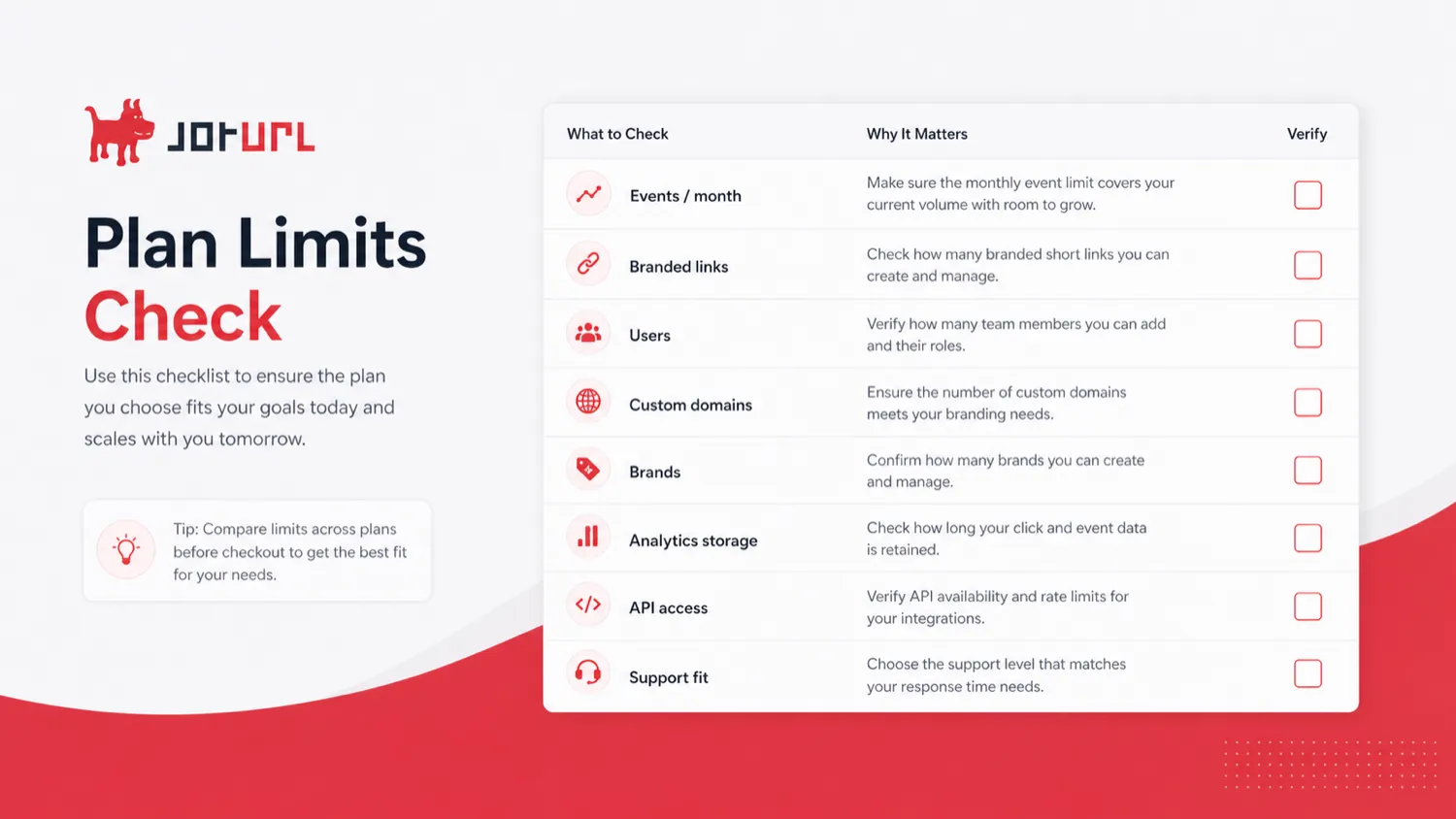
Pricing check: Before choosing a JotURL tier, compare the current pricing table against your expected events, domains, users, and reporting needs.
Free trial, coupon, and checkout notes
JotURL’s public pricing FAQ describes a 14-day trial path when a buyer clicks Get Started. That is the route I would use first if the workflow is still unproven.
A trial is especially useful for a product like this because the question is not whether JotURL has many features. It clearly does. The question is whether your team will use those features in a repeated campaign workflow.
For coupon and deal paths, I would be careful. Older lifetime-deal pages and third-party mentions can still appear around JotURL, but they may not reflect the current buying path. The safer order is:
- Confirm you need JotURL’s link management depth.
- Check the current pricing table and plan limits.
- Test one campaign if a trial route is available.
- Review the JotURL coupon page only after fit is clear.
- Verify final checkout terms before paying.
A discount can improve a good purchase. It should not be the reason you buy a platform you do not have a process for.
What I would check before buying JotURL
If I were buying JotURL for a real marketing workflow, I would check these points before paying:
- Monthly event volume: Estimate real campaign traffic, not best-case traffic.
- Branded link count: Check whether your expected number of campaign links fits the plan.
- Custom domains: Count brands, clients, campaigns, and domain needs before choosing a tier.
- User seats and permissions: Agencies should verify whether the plan supports the people who need access.
- Analytics storage: Confirm how long data needs to be retained for reporting or client review.
- Deep-linking needs: Test the apps or destinations that matter most before assuming full fit.
- API rate limits: Technical buyers should confirm plan-level API access and rate limits.
- Refund and cancellation terms: Check the live checkout path, especially for annual billing or enterprise payment.
The first buyer check is not “can JotURL create links?” It can. The better question is whether the plan supports the way your team will actually use those links after launch.
A simple test before paying
Before paying for JotURL, I would run a small test like this:
- Pick one real campaign that already matters.
- Create one branded tracking link for that campaign.
- Add the UTM logic, QR code, retargeting, or deep-link behavior you actually need.
- Share it in one or two real channels.
- Review click and event data after traffic comes in.
- Check whether the report helps you make a better campaign decision.
- Estimate what would happen if you repeated the same workflow across all campaigns.
This test is simple, but it tells you more than a feature list. If the link data changes your decisions, JotURL becomes easier to justify. If the data sits unused, a lighter alternative may be better.
Pros explained
The first real pro is depth. JotURL combines branded links, QR codes, CTAs, retargeting, conversion tracking, deep links, monitoring, and analytics in one platform. That can reduce tool sprawl for marketers who were already trying to connect these pieces manually.
The second pro is campaign seriousness. JotURL is built for buyers who care about what happens after the click. That makes it more useful for agencies, affiliates, and performance teams than a tool that only shortens URLs.
The third pro is technical headroom. API positioning, team workflows, custom domains, and security certifications make it feel more credible for serious marketing operations. This matters when link management becomes part of an internal system or client workflow.
The fourth pro is risk reduction at the entry point. A public trial path and first-order guarantee make it easier to test before fully committing, as long as buyers verify the current checkout terms.
These advantages matter most when the buyer has a repeatable campaign workflow. They matter less when the buyer only needs cleaner links.
Cons explained
The biggest con is complexity for simple users. JotURL may be more platform than a casual creator, beginner, or one-off link user needs.
The second con is plan-limit pressure. Events, branded links, domains, users, analytics storage, and support level can all affect the correct plan. This is not a tool I would buy casually without estimating usage.
The third con is deal confusion. Older third-party lifetime-deal references and public coupon chatter can distract buyers from the current official pricing path. For a product tied to business-critical campaign links, live checkout terms matter more than old promos.
The fourth con is setup discipline. Deep links, branded domains, retargeting pixels, API workflows, and campaign reporting require thoughtful setup. JotURL gives buyers more control, but control also means more decisions.
None of these cons make JotURL weak. They just mean the buyer needs a real use case before paying.
Green flags and red flags
Green flags:
- You run repeatable campaigns where links need tracking and reporting.
- You manage multiple brands, clients, or domains.
- You need QR codes, retargeting, CTAs, or deep links connected to campaign links.
- You can estimate event volume and reporting needs before buying.
- You have someone responsible for keeping campaign links organized.
Red flags:
- You only need occasional short links.
- You are buying mainly because of a discount or old lifetime-deal reference.
- You cannot explain what reports you need from link tracking.
- Your team has no process for reading campaign data after links go live.
- You need deep links or API workflows but have not checked technical setup and plan limits.
The simplest way to judge JotURL is this: if better links create better campaign decisions, it belongs on your shortlist. If links are just cosmetic, it may be too much.
JotURL vs alternatives
JotURL’s direct alternatives depend on what job the buyer actually needs.
Bitly vs JotURL
Bitly is usually the easier comparison if your team wants broad short-link adoption, recognizable branded links, and simpler link management. It may be the better fit for companies that need clean branded URLs without going deep into retargeting, deep links, or campaign infrastructure.
JotURL makes more sense if you want a broader marketing link suite with QR workflows, retargeting, CTAs, conversion tracking, and deeper campaign routing.
Rebrandly vs JotURL
Rebrandly is a natural comparison for buyers focused on branded links and custom domains. If domain control and link branding are the main decision points, Rebrandly may feel cleaner.
JotURL becomes more attractive when link branding is only one part of the workflow and the buyer also needs analytics, deep links, QR codes, retargeting, or growth-oriented campaign tools.
Switchy vs JotURL
Switchy is worth comparing if retargeting links, smart pages, and social-friendly previews are the main need. It can be a strong fit for creators and marketers who want links to support audience-building and social campaigns.
JotURL is broader for agencies and teams that also need link monitoring, conversion tracking, API use, deep links, custom domains, and larger campaign infrastructure.
Linkly vs JotURL
Linkly can be a lighter route for buyers who mainly want tracking links, redirects, and practical link analytics. It may feel faster to evaluate if you do not need the full JotURL suite.
JotURL is stronger when the buyer needs multiple marketing-link jobs in one place: QR codes, branded domains, CTAs, retargeting pixels, deep links, API access, and team workflows.
Trust, refund, and buyer-risk notes
JotURL has several positive trust signals, but buyers should still verify terms before paying.
The official FAQ states a 30-day money-back guarantee on first orders and says there is no minimum term or cancellation fee. It also states that users can upgrade, downgrade, or cancel at any time. That is helpful, especially for a product with a deeper setup curve.
The API page also references ISO 27001 and CSA STAR certifications, which adds trust weight for teams managing campaign links and data. I would still avoid turning that into a blanket security guarantee. Teams with strict compliance needs should review the current policy pages and their own requirements.
The biggest operational risk is plan mismatch. If event volume exceeds plan limits, the official pricing FAQ says links continue redirecting, but some platform features and dashboard areas can be denied until renewal or upgrade. That makes plan selection more important than it might look at first.
The second risk is overbuying. JotURL can do a lot. That does not mean every buyer needs all of it.
The third risk is relying on old deal pages. If you see a lifetime-deal reference, old coupon, or third-party pricing table, treat it as historical context. The live pricing page and checkout route should be the final source.
Final verdict
I would consider JotURL if links are already part of your growth system.
That means you run campaigns, manage branded domains, care about attribution, need QR or mobile routing, use retargeting, report results to clients, or want an API-backed link workflow. In that situation, JotURL’s depth is a strength, not a distraction.
I would skip JotURL if you only need occasional short links or a simple social profile link. A lighter tool will probably feel easier and cheaper.
I would compare it with Bitly if broad short-link adoption matters most, Rebrandly if branded domains are the central need, Switchy if retargeting and social previews are the focus, and Linkly if you want a simpler tracking-link workflow.
The safest next step is not to chase a coupon first. Map one real campaign, estimate your event volume and domain needs, test the workflow if the trial path is available, and only then decide whether JotURL’s advanced link platform is the right fit.