
Tickeron Pricing, Trading Agents & Buyer Fit
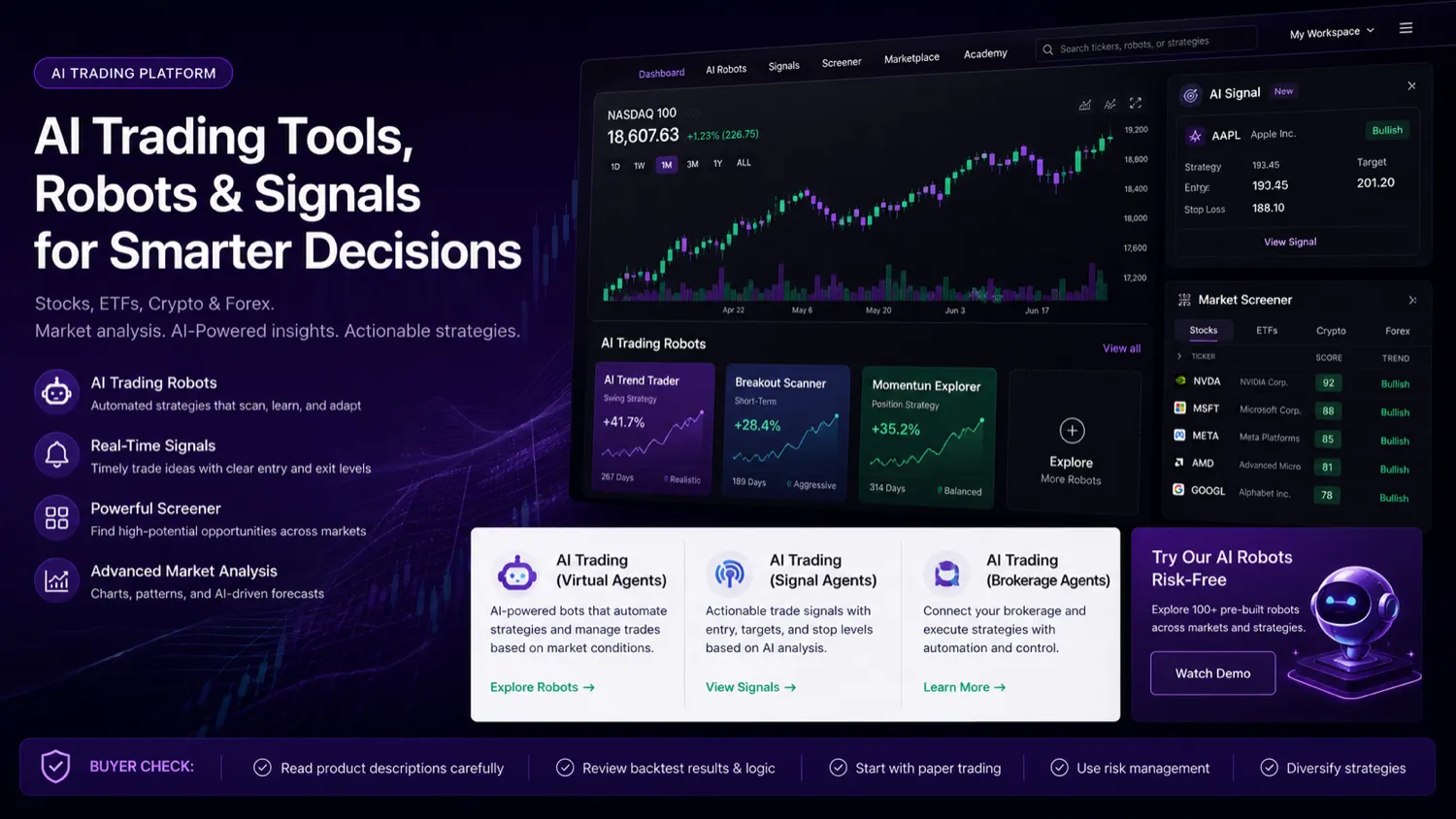
Tickeron is best understood as an AI trading and market-analysis platform, not a general chatbot product. Its public pages revolve around AI trading robots, stock and ETF forecasts, buy/sell signals, pattern recognition, trend prediction, screeners, paper-trade style robot statistics, and trading education. That makes the buying decision more serious than a normal SaaS tool because the buyer is not just buying convenience. They are buying market signals, analysis workflows, and a subscription that can influence real trading behavior.
Fit → price → checkout
Use these routes after the official-site check: coupon first, review for fit, compare if unsure.
Tickeron pricing snapshot
Fast commercial checks before pricing, coupons, or a deeper review.
Tickeron product tour
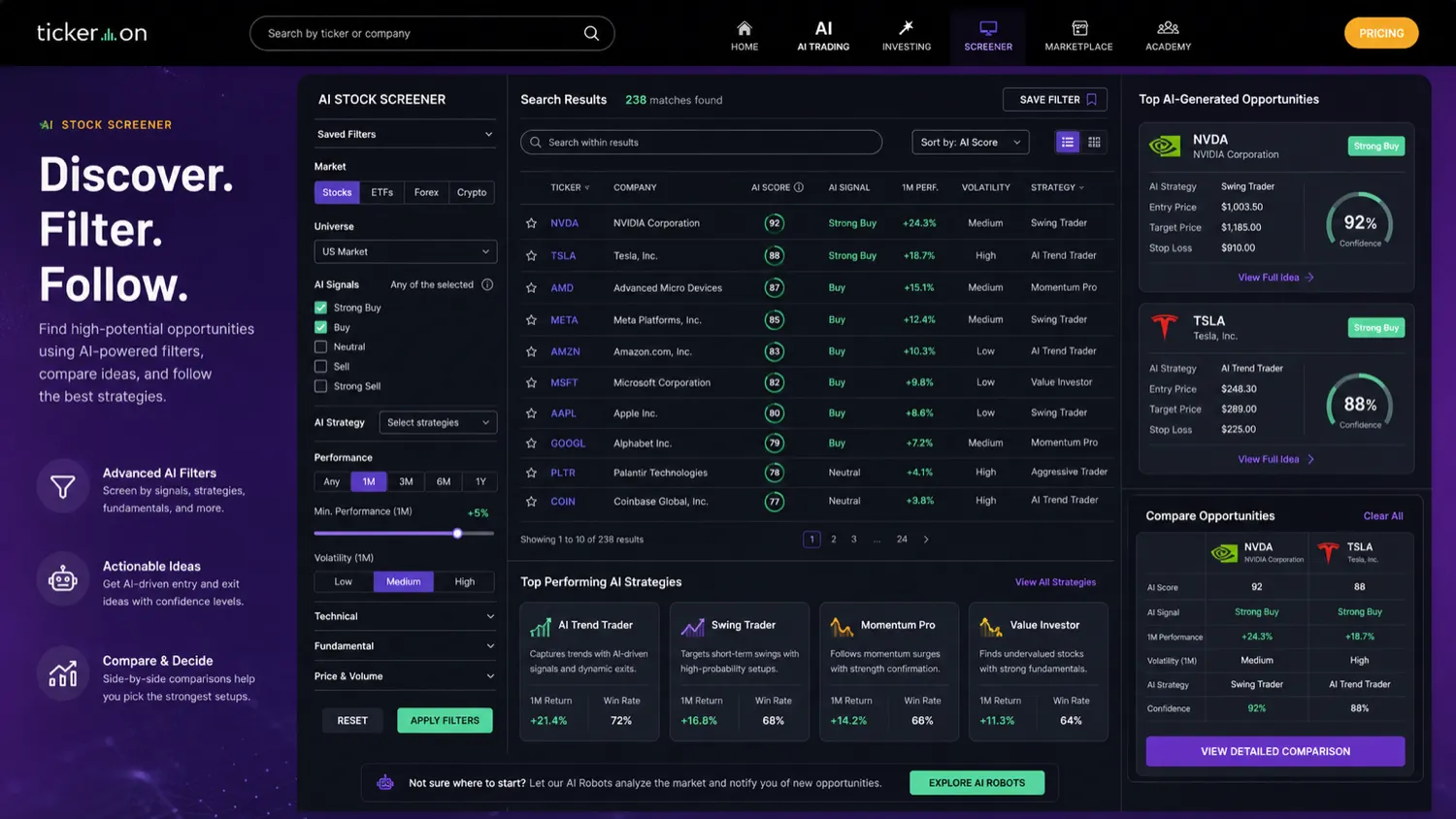
The main video is useful because it shows Tickeron's AI Robots rather than only describing performance claims in text. A buyer should watch how robot statistics, trade views, and signal logic are presented, then ask whether that workflow feels understandable enough to test with small, non-critical decisions before paying for a larger plan. The second video inside the body focuses on the AI-powered screener, which helps users compare whether they need a full robot product or a more research-oriented stock-discovery workflow.
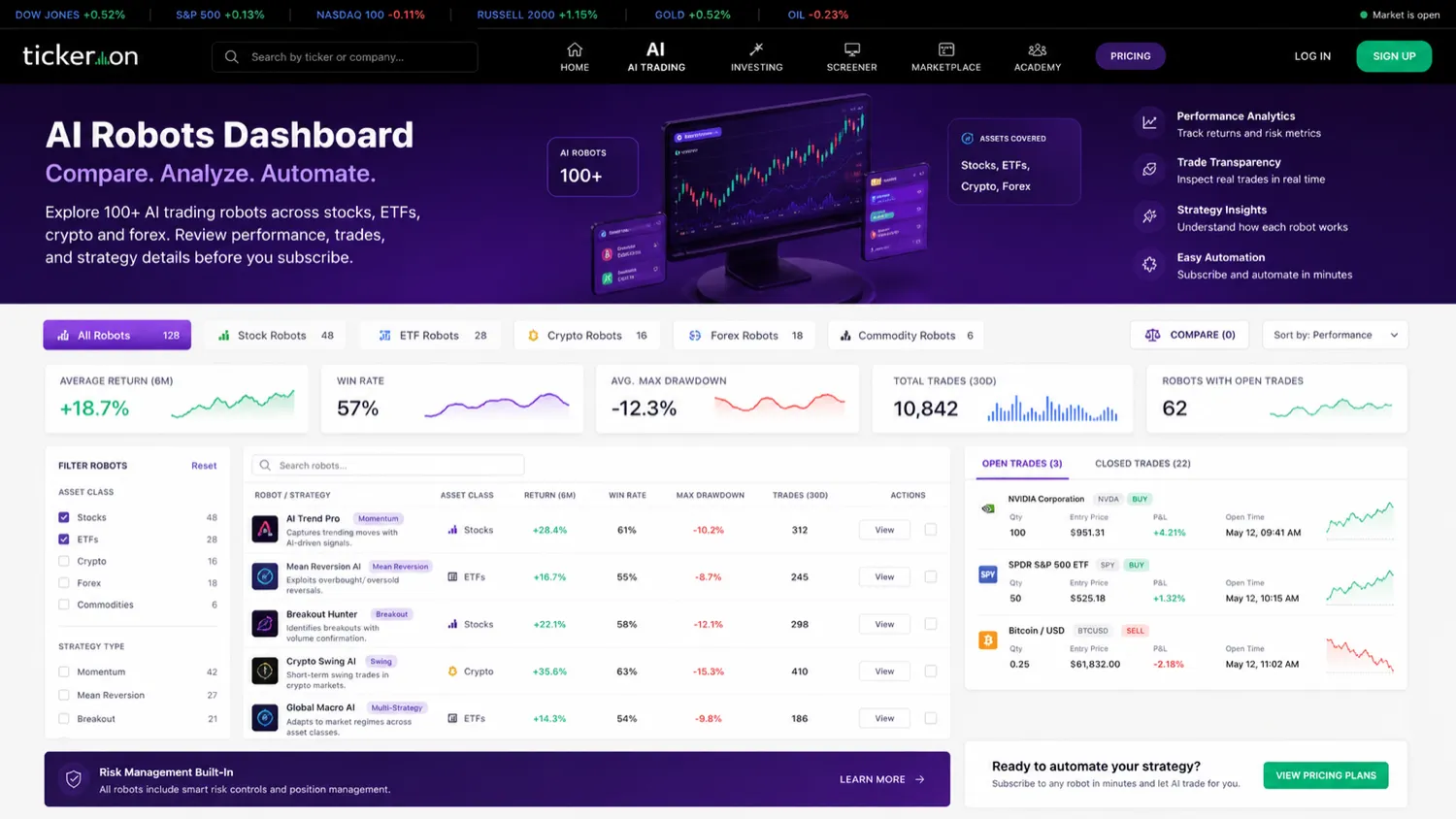
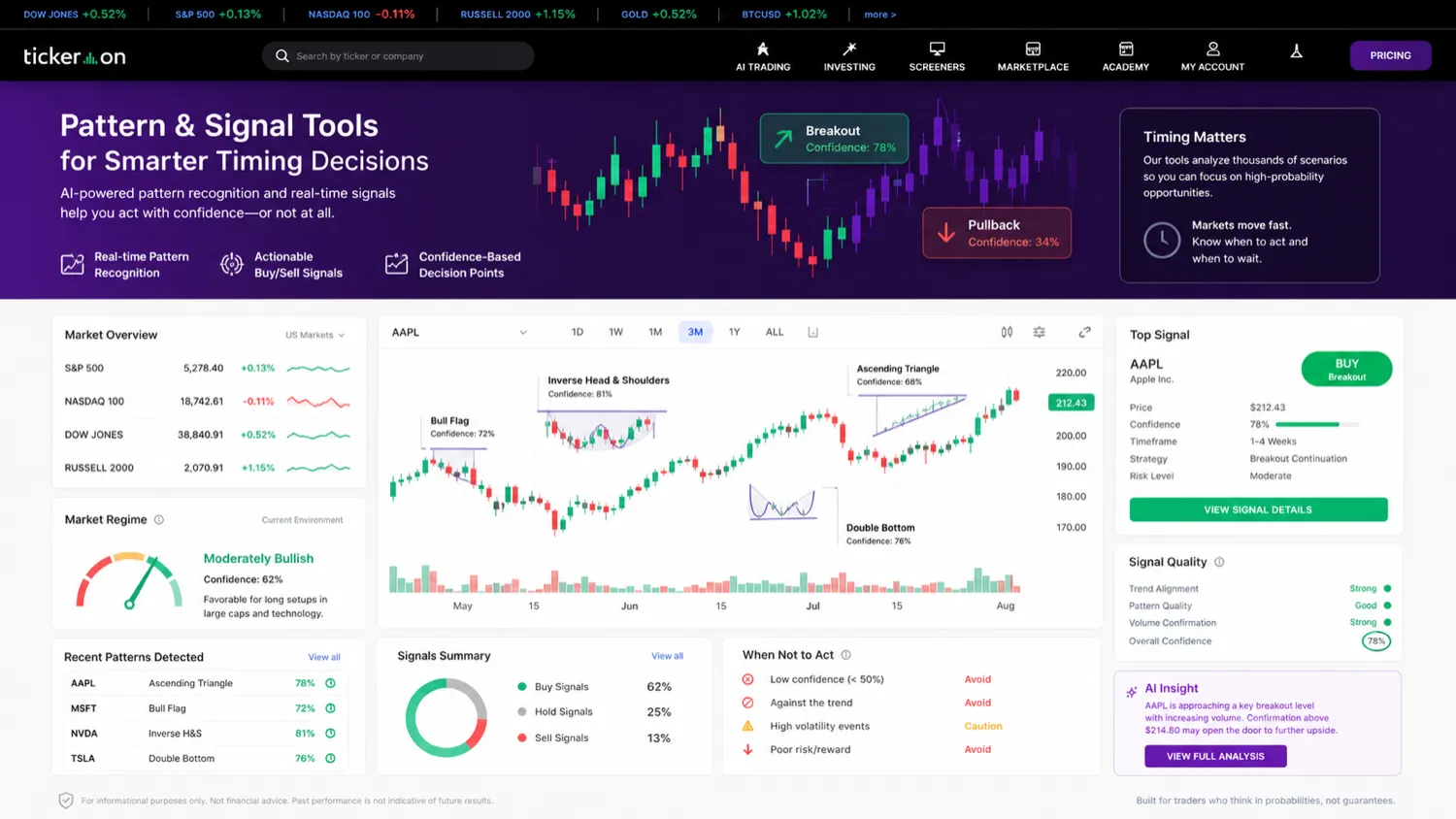
Tickeron needs a different kind of store page than a normal AI writing or chatbot tool. The product sits closer to AI-assisted trading infrastructure: robots, signals, screeners, pattern detection, trend prediction, watchlists, education, and market dashboards. That means the buying question is not just whether the interface looks smart. The buyer needs to know which trading workflow is being improved, what the plan actually includes, and how much risk they are willing to take before trusting any signal.
What Tickeron actually does
Tickeron uses AI and machine-learning language around stock forecasts, price predictions, trading robots, buy/sell signals, pattern search, trend prediction, real-time pattern detection, and screeners. The platform is built for people comparing trading ideas across stocks, ETFs, crypto, forex, and other markets rather than for teams building a customer-support chatbot. The useful way to read Tickeron is as an AI trading research and signal platform with multiple product paths, not as one simple app.
- AI Robots and trading agents for different trading styles.
- AI Pattern Search Engine and Trend Prediction Engine for trade setup discovery.
- AI Screener, Time Machine, real-time patterns, and daily buy/sell signals.
- Education through academy content, videos, articles, webcasts, and lessons.
Who Tickeron fits best
Tickeron is most relevant for active traders who already know the difference between research, signals, paper testing, and live trading decisions. Beginners can still explore free tools, but they should be careful with performance-heavy copy and robot statistics. The strongest buyer fit is a user who wants AI-generated trade ideas, but still plans to verify signals, review statistics, and make independent decisions.
- Active traders who already track stocks, ETFs, or crypto regularly.
- Swing traders comparing end-of-day signals and trend tools.
- Technical-analysis users who want pattern discovery and probability-style support.
- Users willing to test ideas before applying any signal to real capital.
Pricing and trial path need a careful read
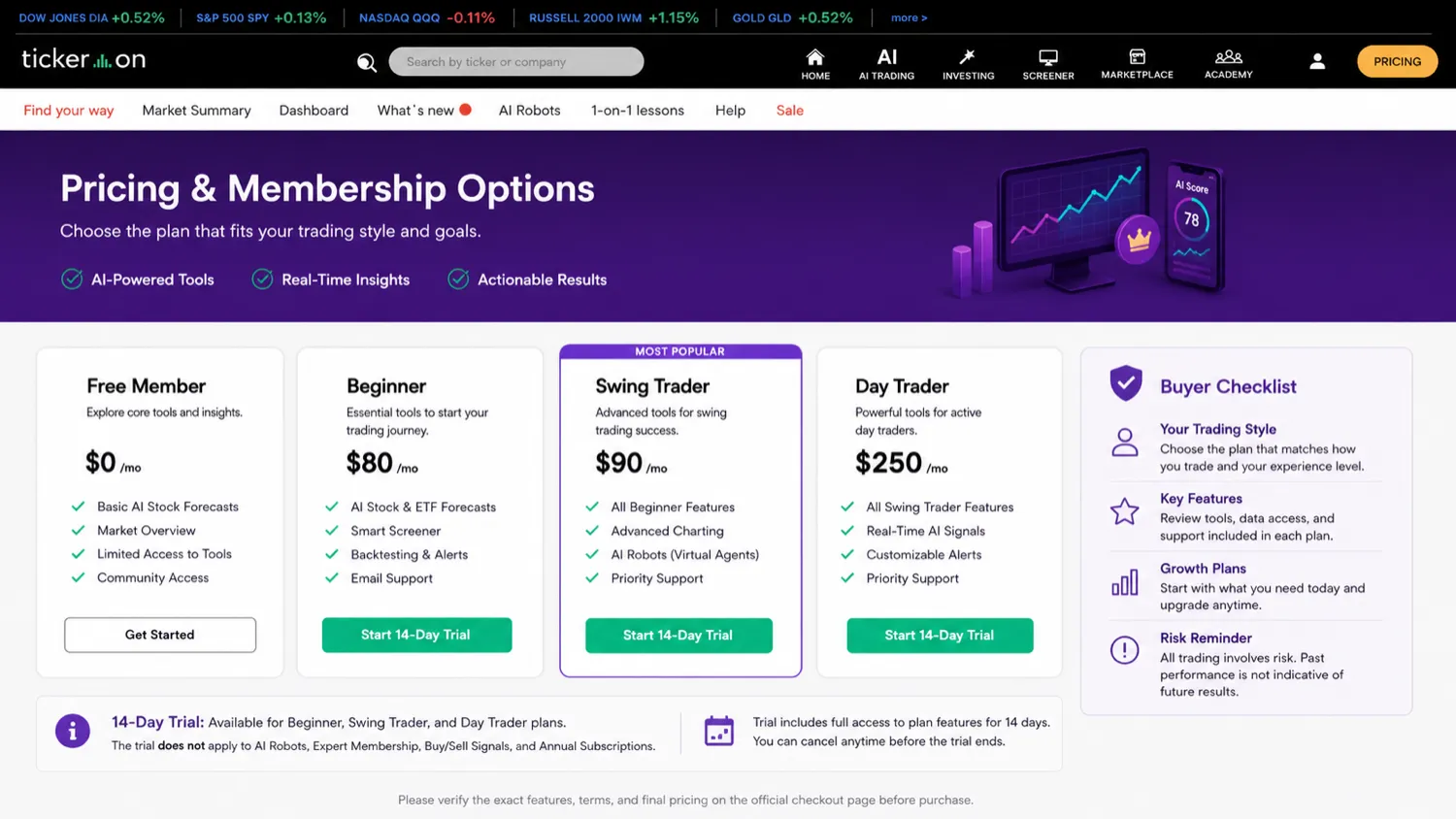
Tickeron's public pricing is modular. The page shows a free member option, membership examples, individual AI tools, robot access, annual subscriptions, promotional rows, and a 14-day trial message. It also states that the trial does not apply to some categories, including AI Robots, Expert membership, buy/sell signals, and annual subscriptions. For buyers, this means the headline trial message is useful but not enough. The exact checkout page matters.
- Free member access can be a safer first step than a paid plan.
- The visible paid examples include Beginner, Swing Trader, and Day Trader membership tiers.
- Individual tools such as screeners, pattern search, and trend prediction may have separate prices.
- Trial eligibility must be checked for the exact product selected.
Video guide: use the screener before buying a robot
The video below is useful because it explains the AI-powered screener workflow rather than jumping straight into robot promises. A cautious buyer should watch how the screener filters stock ideas, what kind of data it highlights, and whether the interface supports their decision process. If the screener feels too complex, a paid robot plan may feel even harder to evaluate.
- Watch how filters narrow a large market into fewer trade ideas.
- Pay attention to whether the workflow explains why a ticker appears.
- Use this video to decide whether research tools are enough before subscribing to robots.
Refund and cancellation risk
Tickeron's public refund FAQ is blunt: there is no refund once payment is processed. The cancellation FAQ says users can schedule an unsubscribe from the subscriptions area, and that the cancellation takes effect on the last day of the billing cycle. For a trading tool with many paid paths, this makes pre-checkout verification especially important. The buyer should not rely on a later refund as the safety net.
- Read refund terms before choosing a paid plan.
- Cancel before renewal if the tool does not fit.
- Do not assume promotional or annual plans have flexible refund treatment.
- Keep a record of the selected plan and cancellation timing.
Alternatives and comparison path
Tickeron should be compared against trading and market-analysis tools first, not only against generic AI agents. If the buyer wants AI chat over internal documents, the workbook alternatives such as Chaindesk and Chatbase belong in a separate chatbot comparison. If the buyer wants stock-market signals, the comparison should focus on robot transparency, pricing clarity, mobile access, trial terms, historical statistics, and how much responsibility remains with the trader.
- Compare Tickeron with trading research platforms if the use case is market analysis.
- Compare it with chatbot tools only if the site architecture still routes the product through AI agent categories.
- Use the review page for deeper positioning before the coupon route.
Safest next step
The safest next step is to open Tickeron's live pricing page, confirm the exact tool category, and start with the lowest-risk path that still answers the buyer's question. For many people that means free member access, an eligible trial, or a narrow tool check before subscribing to a larger robot or annual plan. Only use the coupon path after the buyer already understands the trading workflow and accepts the refund rules.
- Start with free access or a narrowly scoped tool.
- Verify trial eligibility and cancellation timing before entering card details.
- Read the review page before relying on any performance claim.
- Use the DealBestDaily coupon route only as the final commercial check.
Best savings path from this store page
This is the clearest savings route to check once the product already looks like a fit.
A public coupon directory lists a checkout coupon path for Tickeron. Treat it as a researched savings route and verify the discount inside checkout before relying on it.
Try Tickeron for 14 days
Save up to 50% with annual billing
Use comparison routes when the category fit is still open
Use these comparison routes when the product still looks plausible, but the category fit is not fully settled.
Chaindesk is a better comparison if the buyer actually wants a knowledge-base chatbot or support agent; Tickeron is the relevant path when the buyer wants market signals, trading robots, and stock research.
Chatbase is closer to website chatbot automation, while Tickeron is closer to AI-assisted trading research. The category overlap is mostly architectural, not buyer-intent overlap.
TradingView is a stronger comparison for charting and community-driven technical analysis, while Tickeron leans harder into AI robots, pattern engines, and stock-signal workflows.
Trade Ideas is a closer trading-software comparison for active traders who want stock scanning and AI-assisted market ideas, while Tickeron adds a broader mix of robots, signals, and academy content.
Verification points worth checking before you click out
Where this store usually fits best in the workflow
Tickeron can help active traders generate stock or ETF ideas through screeners, trend tools, pattern engines, and market probabilities. The buyer still needs to verify each idea and should not treat tool output as personalized financial advice.
Users interested in AI Robots can review statistics, closed trades, open trade behavior, alerts, and performance-style metrics before deciding whether to follow a robot. This is strongest for buyers who know how to evaluate trading-system claims.
Pattern Search Engine and Real Time Patterns can help users find setups faster than manual scanning. The value depends on whether the trader understands the pattern, timeframe, and risk before acting.
Tickeron's academy, videos, webcasts, and lessons can support buyers who need to learn how the tools fit together before choosing a paid plan.
Practical checkpoints before and after signup
- Decide whether the real need is a screener, trend tool, pattern tool, buy/sell signal, AI robot, or education path.
- Confirm whether the 14-day trial applies to the selected product and billing interval.
- Read the no-refund FAQ before entering payment details.
- Use free member access, demos, and visible robot statistics to understand how Tickeron frames trade ideas.
- Test whether the tool explains enough context for your trading process, not just whether it produces many signals.
- Avoid moving to a larger plan until the workflow is clear.
- Track whether the subscription improves your research process, alert timing, or decision discipline.
- Do not judge value only by individual winning trade examples.
- Schedule cancellation before renewal if the paid path does not justify the cost.
- Re-check whether annual billing, robot bundles, or additional tools are still needed.
- Compare the plan's cost against actual usage and the buyer's risk controls.
- Avoid upgrading because of promotional urgency alone.
Fast-read signals for workflow fit and buying friction
Questions readers usually ask before choosing this store
What is Tickeron used for?
Tickeron is used for AI-assisted trading and market research. Its public pages emphasize AI Robots, stock and ETF forecasts, trading signals, AI screeners, pattern search, trend prediction, real-time patterns, watchlists, education, and trading ideas. It should not be treated as a normal chatbot product.
Does Tickeron have a free plan or trial?
Tickeron shows a free member option and public trial messaging. Its AI platform page says there is a 14-day free trial subscription, but the pricing page also says the trial excludes some categories such as AI Robots, Expert membership, buy/sell signals, and annual subscriptions. Buyers should verify the exact checkout item before relying on trial access.
How much does Tickeron cost?
Tickeron pricing is modular. The public pricing page shows a $0 member option, paid membership examples such as Beginner at $80/month, Swing Trader at $90/month, Day Trader at $250/month, and many separate tools or robot paths. The exact cost depends on the selected trading workflow, billing interval, promotion, and product category.
Does Tickeron offer refunds?
Tickeron's public refund FAQ says there is no refund as soon as the payment is processed. Its cancellation FAQ says users can schedule an unsubscribe and that cancellation takes effect at the end of the billing cycle. Buyers should not assume a flexible refund path unless the live checkout states something different for the exact plan.
Is Tickeron safe for beginner traders?
Tickeron can be useful for learning and research, but beginners should be careful with AI robot performance claims and signal-driven workflows. It is safer to start with free access, education, and small workflow tests before relying on any trading signal. The tool can support decisions, but it cannot remove market risk.
Choose the next route that matches what you still need to decide
The strongest next click depends on whether you still need product judgment, a savings route, or a broader category comparison.