SciSpace Pricing, Plans & Research Fit
SciSpace is best understood as an AI research workspace rather than a simple AI detector. It helps researchers search papers, read and question PDFs, summarize academic content, use Copilot-style explanations, run AI detection checks, and work with agent-based research tasks. The store page should help buyers decide whether they need this full academic workflow, or whether a narrower detector, plagiarism checker, or writing assistant would be a cleaner fit.
Fit → price → checkout
Use these routes after the official-site check: coupon first, review for fit, compare if unsure.
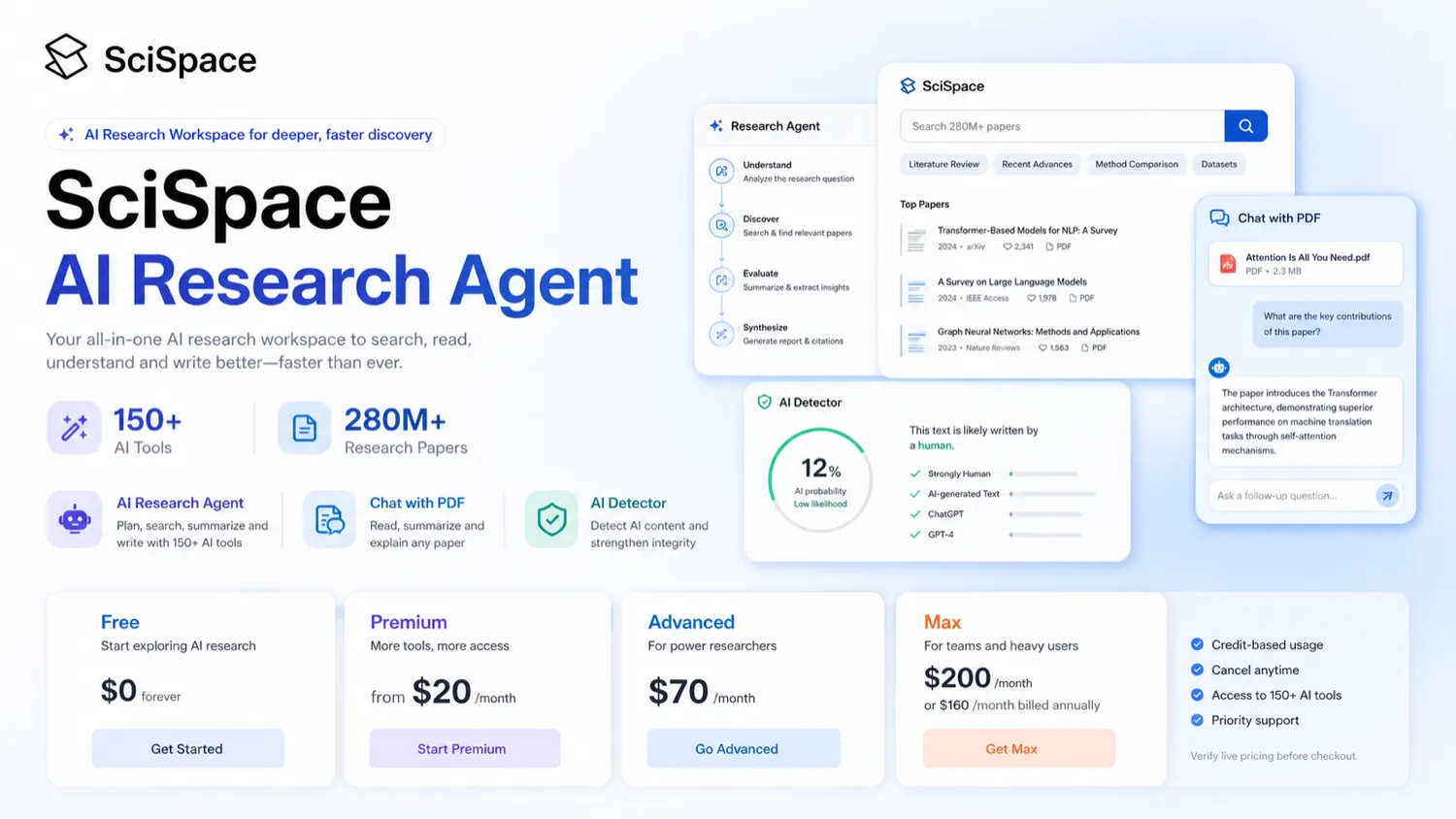
SciSpace pricing snapshot
Fast commercial checks before pricing, coupons, or a deeper review.
SciSpace product tour
This tour should help buyers understand SciSpace as a research workflow product, not only as a detector. The most useful parts to watch are how the platform moves from paper discovery to PDF understanding, Copilot explanations, research-agent tasks, and plan limits. That matters because a paid plan only makes sense when these steps are part of the buyer's real weekly research routine.
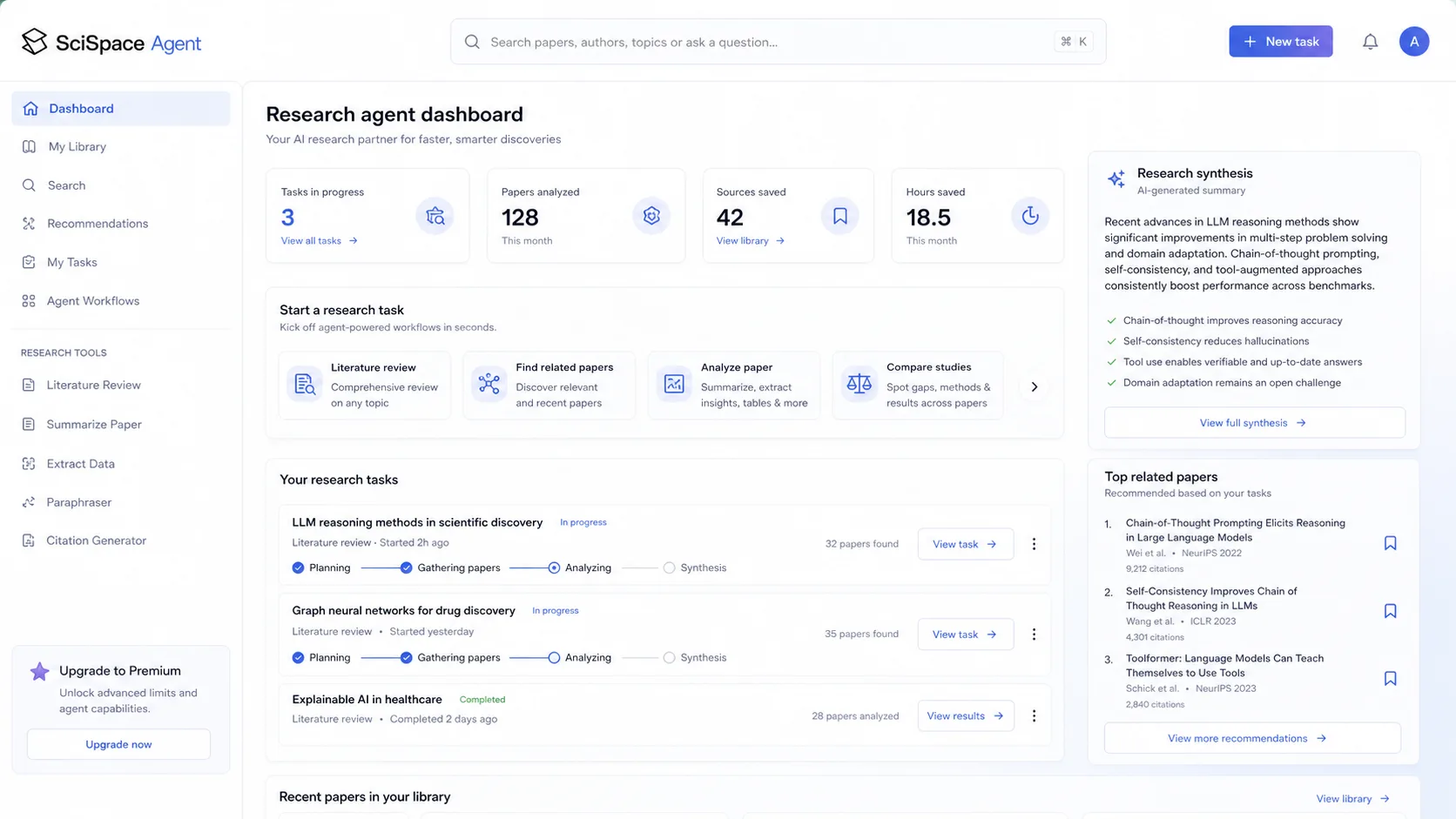
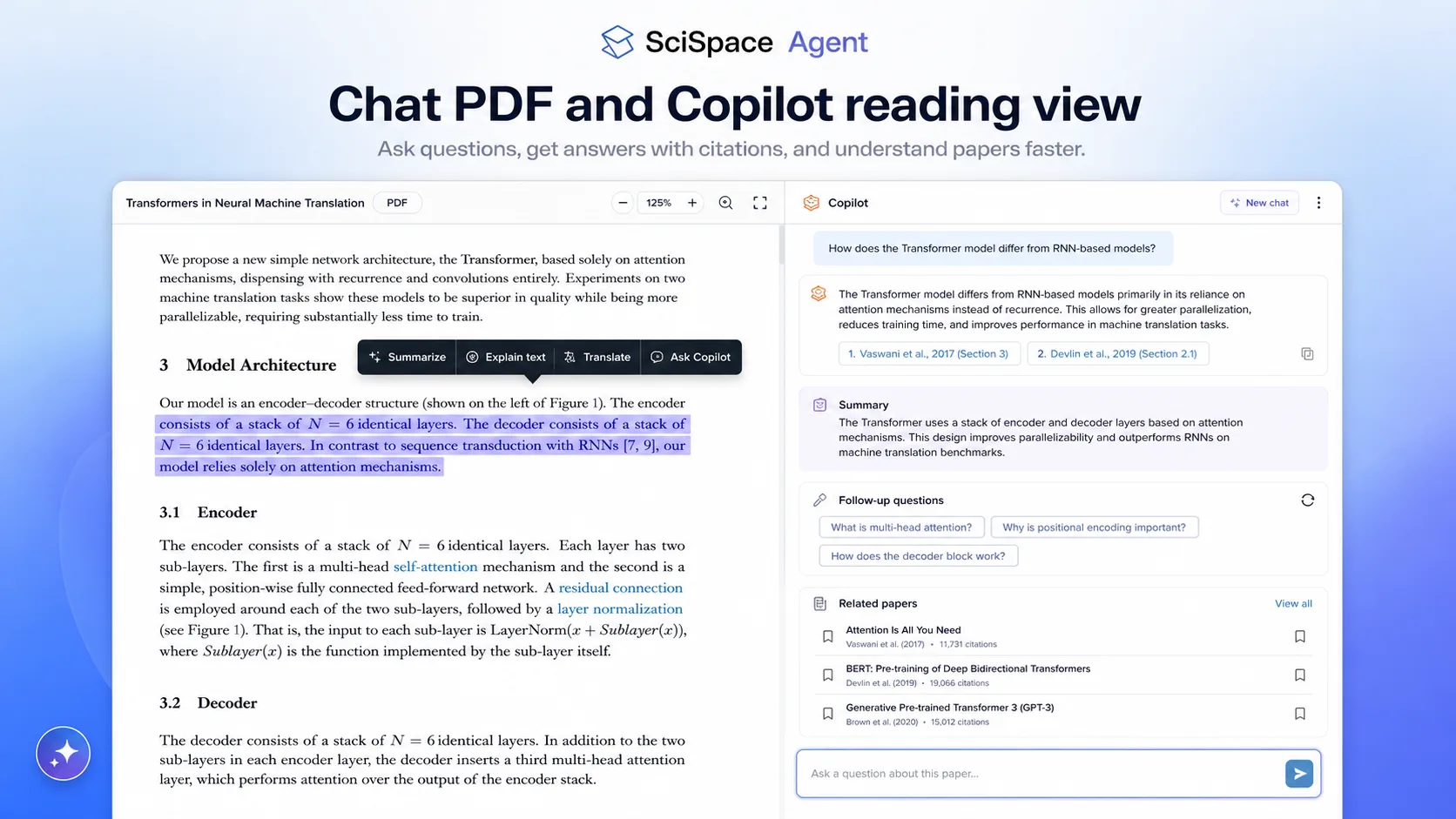
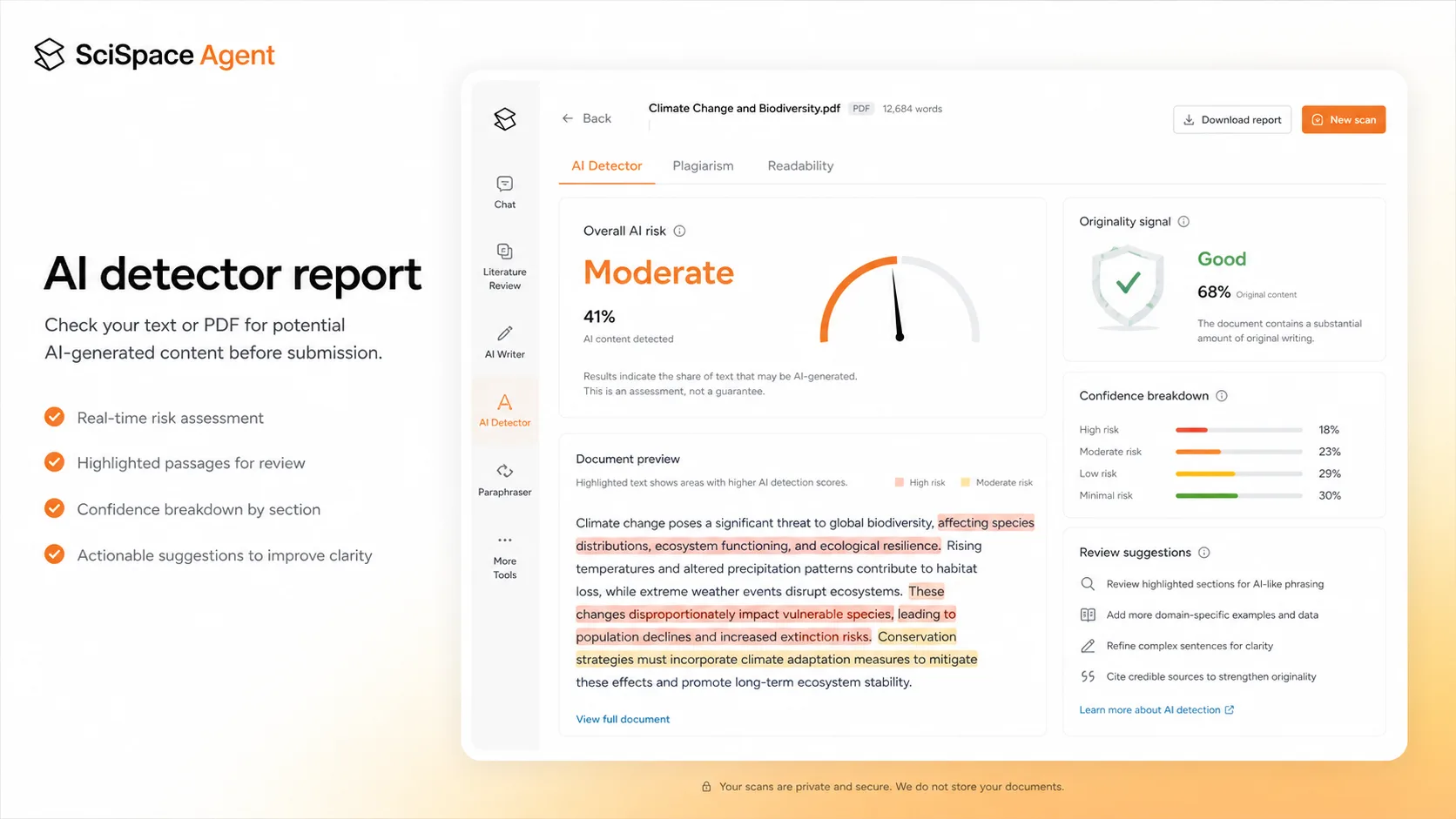
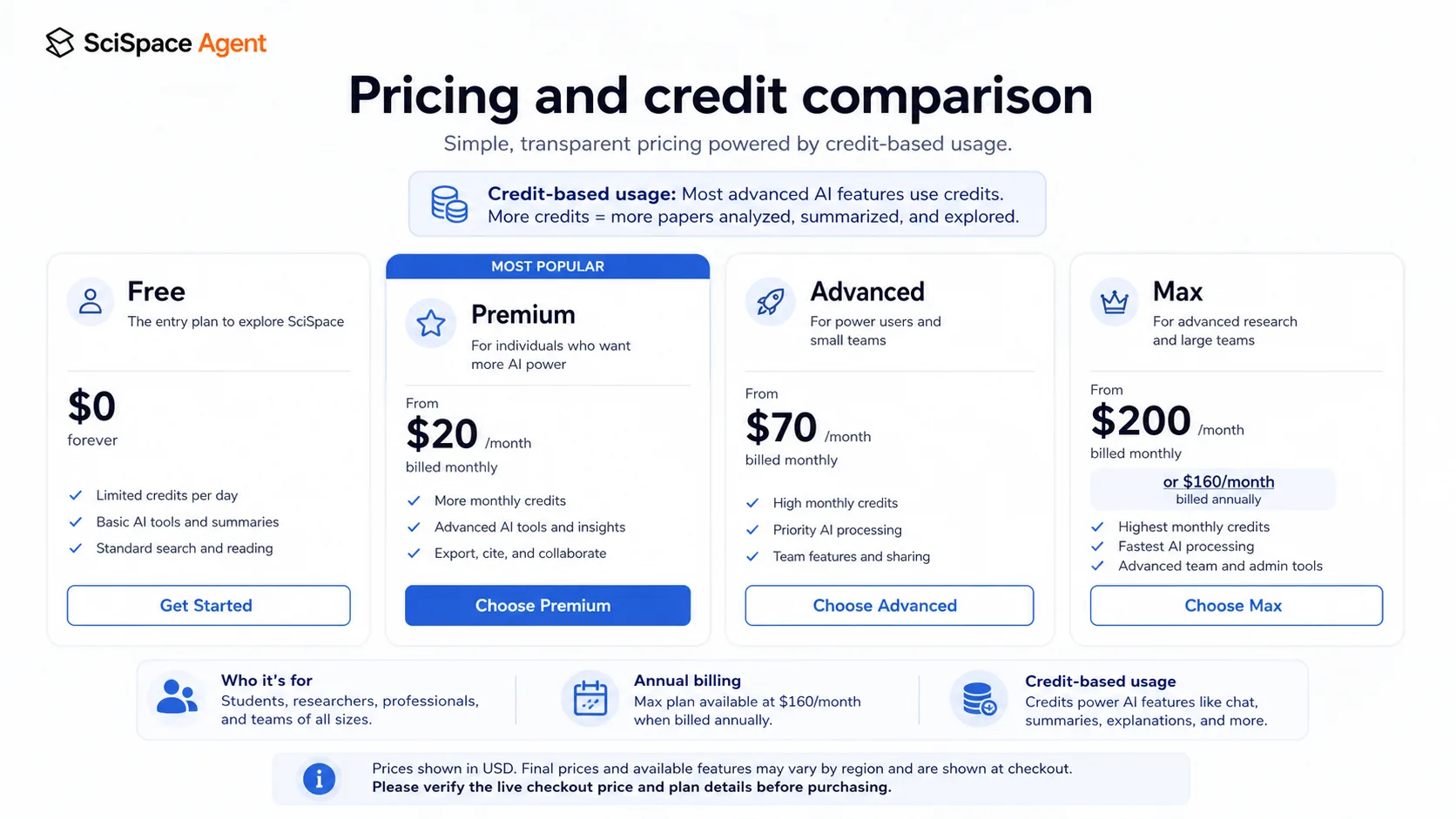
SciSpace should be evaluated as a research workflow store page. It overlaps with AI detection, but the broader buying decision is about academic reading, literature review, Chat PDF, Copilot explanations, research-agent credits, and whether the paid plan saves enough time to justify the billing commitment. A buyer who only wants one detector score may be better served by a narrower tool.
What SciSpace actually does
SciSpace helps researchers move through paper discovery, PDF reading, citation-supported understanding, academic writing support, AI detection checks, and agent-based research tasks. That mix is useful when the buyer has a repeat research process. It is less compelling when the buyer only needs a one-off paraphrase, plagiarism check, or detector result.
- Search and understand academic papers with AI-assisted research workflows.
- Ask questions about PDFs and use Copilot-style explanations while reading.
- Run AI detection checks when originality risk matters before submission.
- Use agent credits for heavier literature review, synthesis, and drafting tasks.
Who SciSpace fits best
SciSpace fits students, researchers, academic writers, and teams who repeatedly work with papers. The best buyer is not someone casually testing AI tools. It is someone who loses time reading dense PDFs, extracting evidence, summarizing findings, comparing papers, or preparing research-heavy drafts.
- Good fit for research-heavy reading and literature review workflows.
- Useful when Chat PDF and Copilot explanations reduce time spent decoding papers.
- More compelling for repeated weekly use than occasional curiosity.
Pricing, credits, and refund risk
The pricing decision is more complex than the headline monthly amount. Buyers need to compare the free entry path, Premium, Advanced, Max, annual savings, agent-credit limits, and renewal behavior. The refund policy also deserves attention because the published terms limit refunds to a short initial window and low credit use.
- Check whether the free tier gives enough credits for a real test.
- Compare paid plans by monthly credits and parallel task limits, not only price.
- Treat annual billing as a larger commitment, even when the monthly equivalent looks cheaper.
- Read the refund policy before using paid credits.
Watch the research-agent workflow before choosing a plan
This second video is included inside the article content because it supports a different decision than the product tour. Instead of only showing where things are, it helps buyers understand what the research agent is supposed to do for serious workflows: move from a research task to paper analysis, extraction, and synthesis. Watch for whether the workflow feels useful enough to justify credit-based paid usage.
AI detection is useful, but not the whole product
SciSpace includes an AI detector path for checking text or PDFs, which can help researchers review originality risk before submission. That is useful, but the result should not be treated as final proof. The stronger use case is a pre-submission checkpoint: flag suspicious passages, revise responsibly, and make sure the final draft reflects human judgment and source control.
- Use detector feedback as a signal before submission, not a final verdict.
- Review flagged lines manually instead of chasing a perfect score.
- Compare SciSpace with dedicated detection platforms if detection is the only buying need.
Alternatives and safest next step
The safest next step depends on the buyer's main problem. Choose SciSpace when research reading, paper search, Chat PDF, and agent workflows matter. Compare Originality.ai if originality checking and publishing workflows are the priority. Compare Copyleaks when institution, LMS, or enterprise detection workflows matter. Compare GPTZero when the buyer wants a simpler AI-detection-first path.
- Start with SciSpace if the real pain is research reading and synthesis.
- Compare Originality.ai when publisher-style originality checks matter more.
- Compare Copyleaks for institutional detection and LMS-style needs.
- Compare GPTZero for a simpler detection-centered buying path.
Best savings path from this store page
This is the clearest savings route to check once the product already looks like a fit.
SciSpace lists an official checkout coupon for yearly plans. This should be the first savings path to test before relying on third-party coupon listings.
Official SciSpace help says this is one of the available yearly-plan discount paths. Monthly subscriptions are excluded.
30% off yearly billing
Save up to 40%
Use comparison routes when the category fit is still open
Use these comparison routes when the product still looks plausible, but the category fit is not fully settled.
Originality.ai is the stronger comparison when the buyer mainly cares about publishing workflows, plagiarism-style checks, and originality confidence rather than academic research assistance.
Copyleaks deserves the next tab when the buyer needs institutional detection, LMS or enterprise workflows, and a broader compliance-style checking path.
GPTZero is easier to compare when the buyer wants a detection-first product with less emphasis on research-agent credits and academic paper workflows.
Verification points worth checking before you click out
Where this store usually fits best in the workflow
SciSpace is useful when a buyer needs to search papers, understand dense academic writing, extract findings, and organize early literature review notes before drafting.
Chat PDF and Copilot-style reading support help users ask questions about papers, clarify jargon, and get context without opening multiple browser tabs for every difficult section.
The AI detector path can help researchers check whether a draft contains risky AI-sounding passages before submission, but it should be paired with human review.
Paid value improves when the buyer repeatedly uses agent tasks for search, synthesis, summaries, drafting, or structured research outputs that justify credit consumption.
Practical checkpoints before and after signup
- List the research task you actually want SciSpace to improve.
- Start with the free path and test a representative paper or research question.
- Compare SciSpace against narrower detector tools if originality checking is the only need.
- Compare plan tiers by monthly credits, agent depth, and parallel task limits.
- Calculate annual billing as a full upfront commitment, not only a lower monthly equivalent.
- Read the refund policy before consuming paid credits.
- Track how quickly credits are consumed across real research tasks.
- Save the plan and renewal date so the account does not renew unnoticed.
- Re-check whether the paid tier still fits before adding team users or moving to heavier agent work.
Fast-read signals for workflow fit and buying friction
Questions readers usually ask before choosing this store
Is SciSpace only an AI detector?
No. SciSpace includes AI detection, but the broader product is an AI research workspace for paper search, Chat PDF, Copilot-style explanations, academic writing support, and research-agent tasks. If detection is your only need, compare dedicated detector tools before paying.
Does SciSpace have a free plan?
Yes, SciSpace has a free entry path. The important question is whether the free limits are enough to test your real workflow. Buyers should use the free path to check paper reading, Copilot-style explanations, and detector fit before choosing a paid plan.
How should I read SciSpace pricing?
Read SciSpace pricing through credits and use case, not only the monthly price. Premium, Advanced, and Max plans make more sense when you expect repeated research-agent tasks, heavier literature review work, or team usage. Casual users should be cautious with annual billing.
Are there SciSpace coupon codes?
Public SciSpace codes and partner discounts may appear, but they should be verified live before being treated as active. The safer savings path is to compare annual billing, the current coupon page, and the final checkout total before paying.
What should I verify before checkout?
Verify the current plan price, monthly credit limit, annual billing total, refund terms, and whether your main need is research assistance or AI detection. If the workflow is still unclear, read the review page or compare alternatives before going to checkout.
Choose the next route that matches what you still need to decide
The strongest next click depends on whether you still need product judgment, a savings route, or a broader category comparison.