
FlyingWeb Store, FlyingPress Pricing & Fit
FlyingWeb should be treated as the company/store layer for FlyingPress, not as a generic AI productivity app. The public product is a WordPress performance plugin focused on caching, page optimization, image optimization, Core Web Vitals, lazy loading, font optimization, database cleanup, compatibility, and support. That makes the buyer question very specific: do you need a paid WordPress speed stack that reduces plugin clutter, improves real-user performance, and is worth a yearly license for your number of sites?
Fit → price → checkout
Use these routes after the official-site check: coupon first, review for fit, compare if unsure.
FlyingWeb pricing snapshot
Fast commercial checks before pricing, coupons, or a deeper review.
FlyingWeb and FlyingPress product tour
Use the main tour video to see the first setup path before judging the yearly license price. A buyer should watch how FlyingPress is installed, activated, and configured inside WordPress, then ask whether the plugin fits the site's cache, image, script, font, and Core Web Vitals problems. The second video inside the content focuses on built-in image optimization, which helps buyers decide whether FlyingPress can replace a separate image optimization plugin or reduce tool overlap.
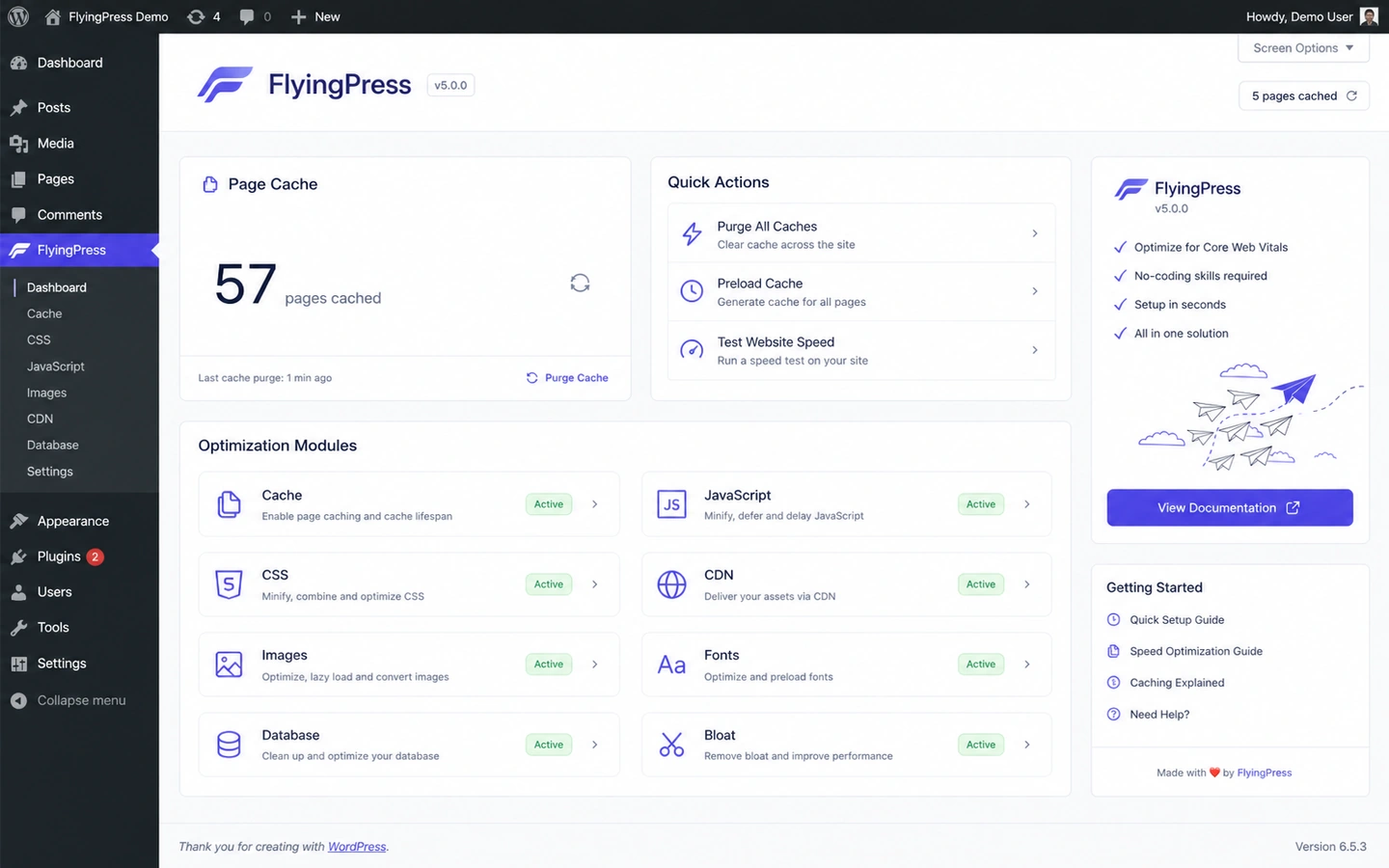
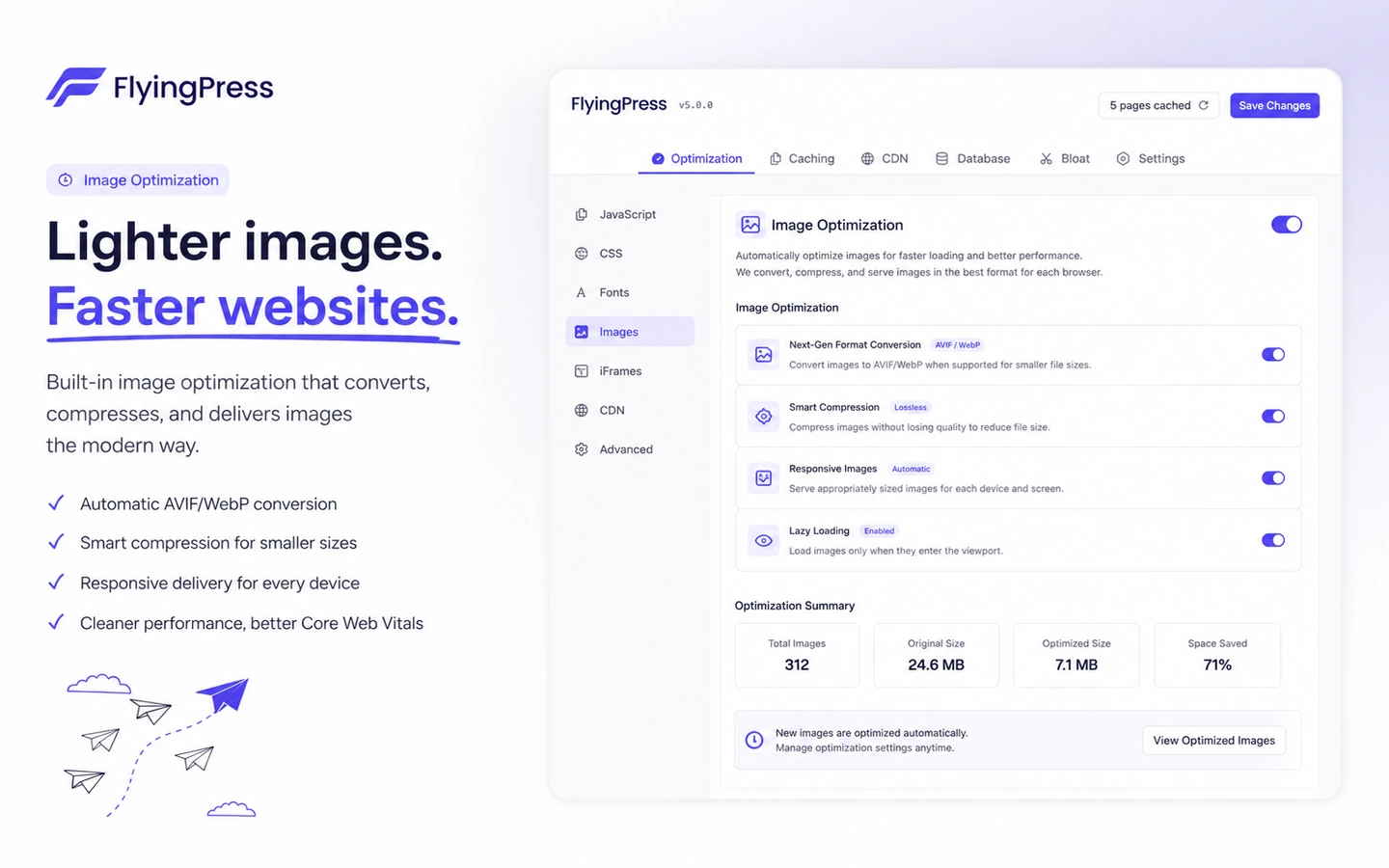
FlyingWeb should be evaluated through FlyingPress, its public WordPress performance product. That changes the page angle completely. This is not a broad AI productivity assistant. It is a store hub for a WordPress speed plugin, so the buyer should focus on performance fit, license count, trial timing, site safety, and whether the plugin can replace part of an existing optimization stack.
What FlyingWeb actually represents
Public sources connect FlyingWeb with FlyingPress, a WordPress performance plugin. The official FlyingPress site describes a lightweight speed optimization tool built for Core Web Vitals, caching, page optimization, image optimization, lazy loading, font handling, and compatibility across common WordPress setups. That makes this store page useful for WordPress buyers, not for people comparing general AI assistants.
- Company/store layer: FlyingWeb LLC
- Product path: FlyingPress for WordPress speed optimization
- Main buyer problem: better real-world site performance without a messy plugin stack
Pricing depends on site count
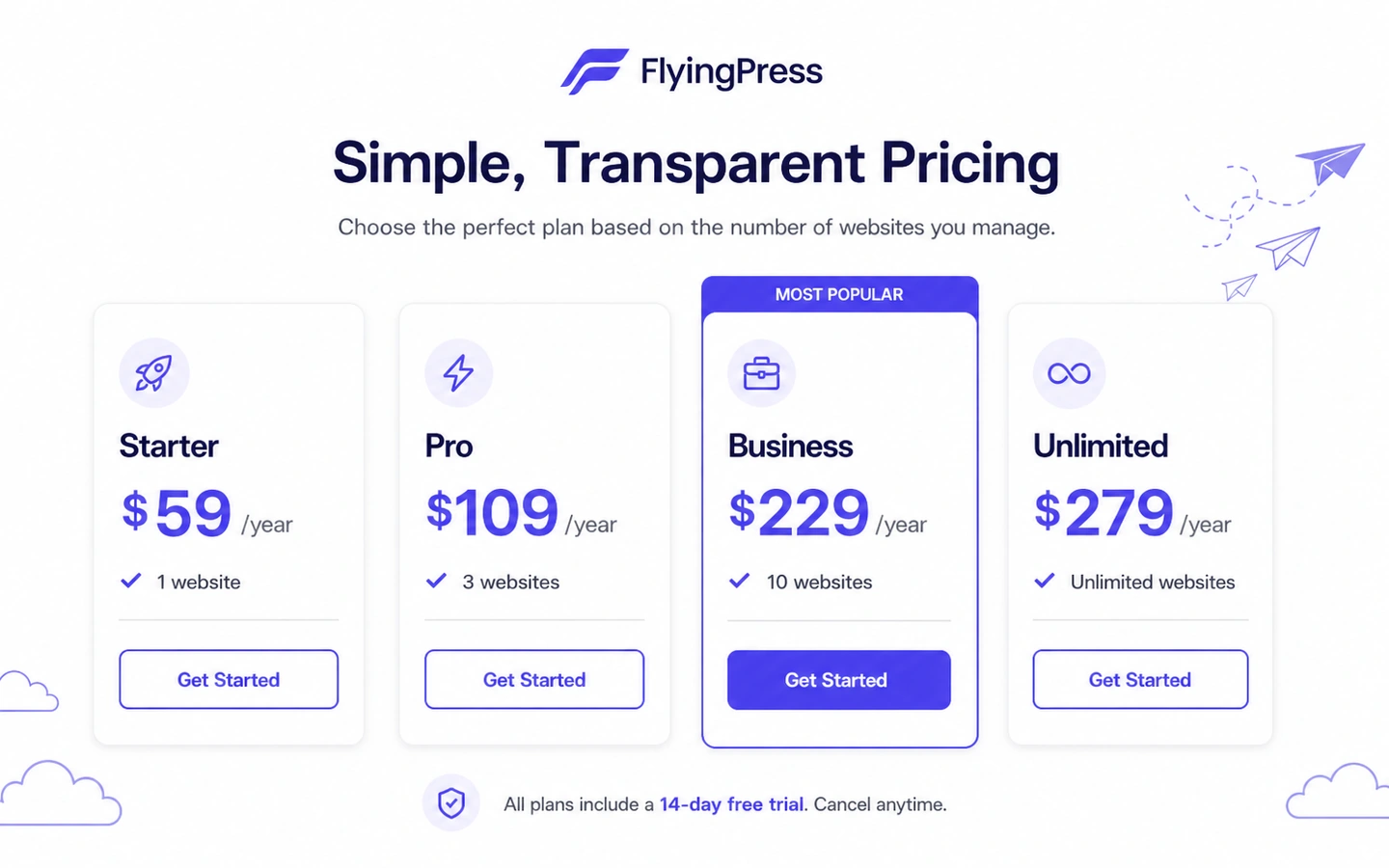
FlyingPress pricing is easier to understand than many SaaS tools because it is organized around yearly licenses and website count. Starter covers one website, Pro covers three, Business covers ten, and Unlimited covers unlimited websites. The lowest price can be attractive for one site, but agencies should calculate the plan against active client sites, renewal plans, and whether every site actually needs the same optimization layer.
- Starter: one website
- Pro: three websites
- Business: ten websites
- Unlimited: unlimited websites
Trial and refund terms matter more than coupons
The official buyer protection path is the 14-day free trial. The refund policy is helpful but narrow after a charge: a forgotten cancellation can receive a full refund within 24 hours, a refund minus a processing fee from 24 hours to 7 days, and no refund after 7 days. That means the safest buyer behavior is to install, test, benchmark, and decide before the trial ends.
- Start the trial only when you have time to test.
- Set a cancellation reminder before the charge date.
- Keep a short before-and-after performance note for your own decision.
Where the performance value comes from
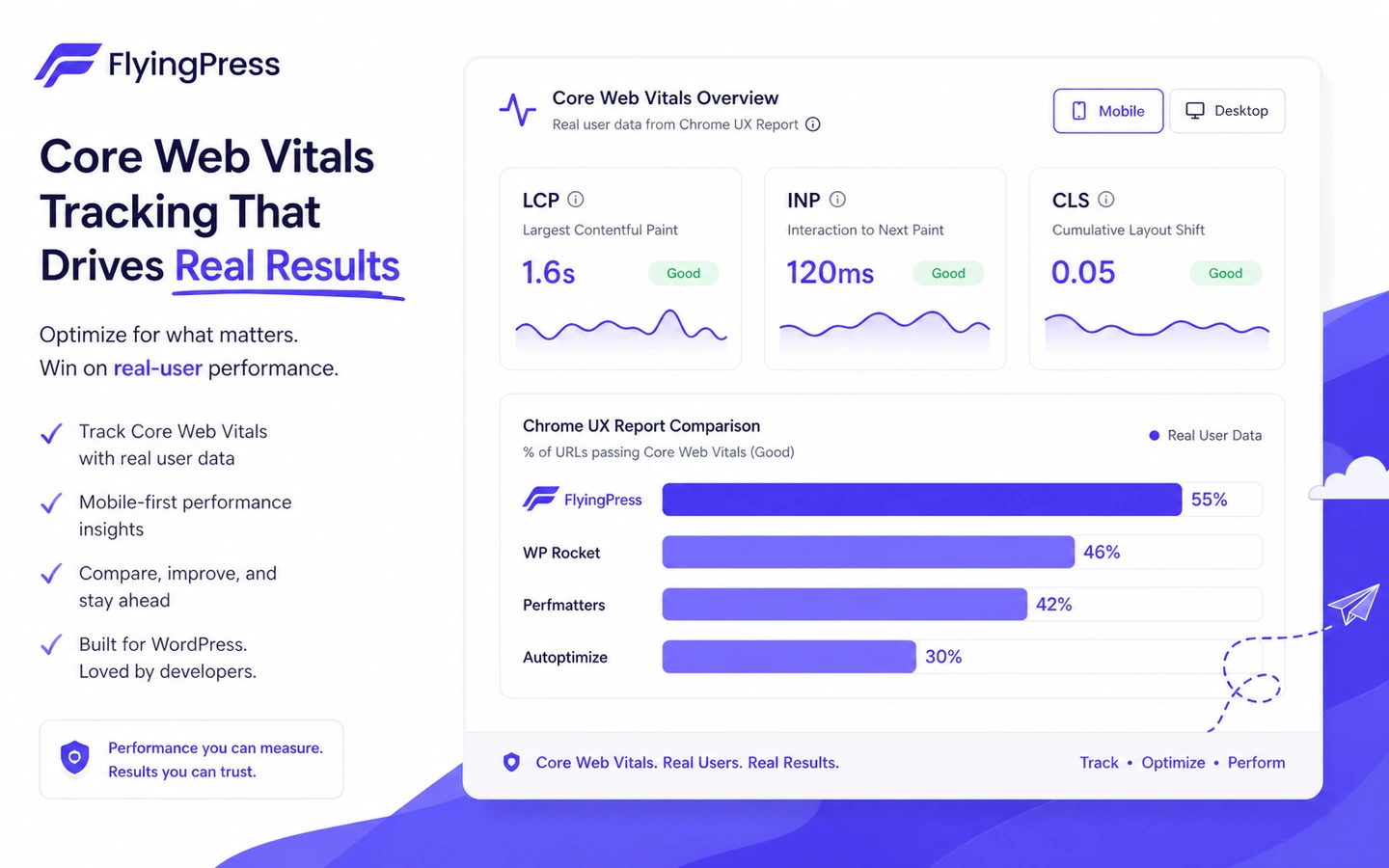
FlyingPress combines several performance jobs that buyers often handle with separate tools: page caching, cache preloading, CSS and JavaScript optimization, lazy loading, Google Fonts optimization, database cleanup, image optimization, and Core Web Vitals tracking. The user should watch the setup walkthrough to see whether the interface feels manageable, then watch the image optimization walkthrough to judge whether the newer media features reduce the need for an extra image plugin.
- Useful when multiple performance plugins are creating clutter.
- Worth testing when Core Web Vitals problems are tied to caching, images, scripts, fonts, or layout shifts.
- Less useful if the site's bottleneck is poor hosting, bad theme architecture, or heavy third-party scripts that still need manual work.
What buyers should verify before checkout
A performance plugin is not a safe blind purchase. Buyers should test cache behavior, mobile layout, page builder compatibility, checkout or form flows, logged-in user behavior, analytics scripts, ads, embeds, and any pages that should never be cached. FlyingPress looks strongest when it improves performance without breaking important user journeys.
- Check product pages, checkout pages, forms, memberships, and logged-in areas.
- Compare lab scores with real-user Core Web Vitals where possible.
- Confirm whether hosting-level cache or CDN features overlap with FlyingPress.
Relevant alternatives and safest next step
The most direct alternatives are WordPress performance tools such as WP Rocket, Perfmatters, LiteSpeed Cache, NitroPack, hosting-level caching, and CDN/image optimization services. The workbook also links FlyingWeb to broader internal software alternatives, but those are not direct replacements for FlyingPress. The safest next step is to open the official pricing page, start the trial only when testing time is available, and keep the review and coupon pages as routing support rather than the first decision point.
- Compare against WordPress performance tools, not broad AI apps.
- Use the store page to qualify fit, then use the review page for deeper context.
- Check any coupon or offer path only after the trial and license tier make sense.
Best savings path from this store page
This is the clearest savings route to check once the product already looks like a fit.
The Starter license is the lowest official paid path for one WordPress website that needs FlyingPress speed optimization.
Unlimited-site yearly license
Trial and refund safety path
Use comparison routes when the category fit is still open
Use these comparison routes when the product still looks plausible, but the category fit is not fully settled.
This is a broad internal alternative, not a direct WordPress performance replacement. FlyingWeb fits site-speed buyers, while 1min.AI fits buyers comparing general AI productivity tasks.
This is also an indirect software comparison. FlyingWeb is about WordPress speed optimization, while Aikeedo is a different software-building path and should not be treated as a plugin substitute.
Verification points worth checking before you click out
Where this store usually fits best in the workflow
A solo site owner can use the trial to test caching, image optimization, lazy loading, font handling, and Core Web Vitals improvements before paying for the one-site license.
A freelancer can compare Pro or Business against a real client list, then standardize a repeatable setup process only after confirming compatibility across page builders, forms, and ecommerce flows.
An agency can evaluate whether FlyingPress replaces several smaller performance plugins across multiple sites, but should still define cache-exclusion rules and handoff notes before scaling.
Store owners can test whether speed improves without disturbing cart, checkout, account pages, payment scripts, tracking, and customer sessions.
Practical checkpoints before and after signup
- Confirm the site is WordPress and that plugin-level optimization is the right layer to test.
- Record current speed metrics, Core Web Vitals issues, and business-critical pages.
- Choose a test window when you can monitor layout, scripts, forms, and checkout behavior.
- Install FlyingPress, enable settings carefully, and test one group of optimizations at a time.
- Check mobile pages, logged-in areas, ecommerce flows, embeds, analytics, and forms before judging success.
- Compare performance gains with the yearly license tier you would actually keep.
- Pick the plan by active site count, not vague future expansion.
- Set a reminder before the trial ends if results are mixed.
- Check the DealBestDaily coupon path only after the product and license count are already sensible.
- Document cache exclusions, tested settings, and rollback steps.
- Re-check performance after theme, plugin, or WooCommerce changes.
- Review the license before renewal if the number of active sites changes.
Fast-read signals for workflow fit and buying friction
Questions readers usually ask before choosing this store
Is FlyingWeb the same as FlyingPress?
For this store page, FlyingWeb should be treated as the company/store layer and FlyingPress as the public product buyers are evaluating. The official FlyingPress terms identify FlyingPress as developed, owned, and provided by FlyingWeb, LLC, so the useful buyer facts come from the FlyingPress product, pricing, documentation, trial, and refund pages.
What does FlyingPress actually do?
FlyingPress is a WordPress performance plugin. It focuses on caching, page optimization, image optimization, lazy loading, font optimization, database cleanup, Core Web Vitals tracking, and related speed features that help WordPress sites load faster when configured correctly.
Does FlyingWeb or FlyingPress have a free plan?
The public FlyingPress pricing page does not present a permanent free plan. It presents a 14-day free trial with full access, and the buyer is charged only after the trial ends if the subscription is not canceled.
What should I verify before paying?
Verify the live yearly price, the site count you need, the trial end date, refund timing, cache behavior, mobile layout, forms, checkout pages, logged-in areas, analytics, ads, and any pages that must be excluded from caching. Performance gains are only useful if the site still works correctly.
What is the safest next step?
Open the official pricing page, start the 14-day trial only when you have time to test, benchmark one real WordPress site, and choose the smallest license tier that fits your actual site count. Use the review page for deeper evaluation and the coupon page only after the product already fits.
Choose the next route that matches what you still need to decide
The strongest next click depends on whether you still need product judgment, a savings route, or a broader category comparison.