AutoCaption Pricing, Plans & Creator Fit
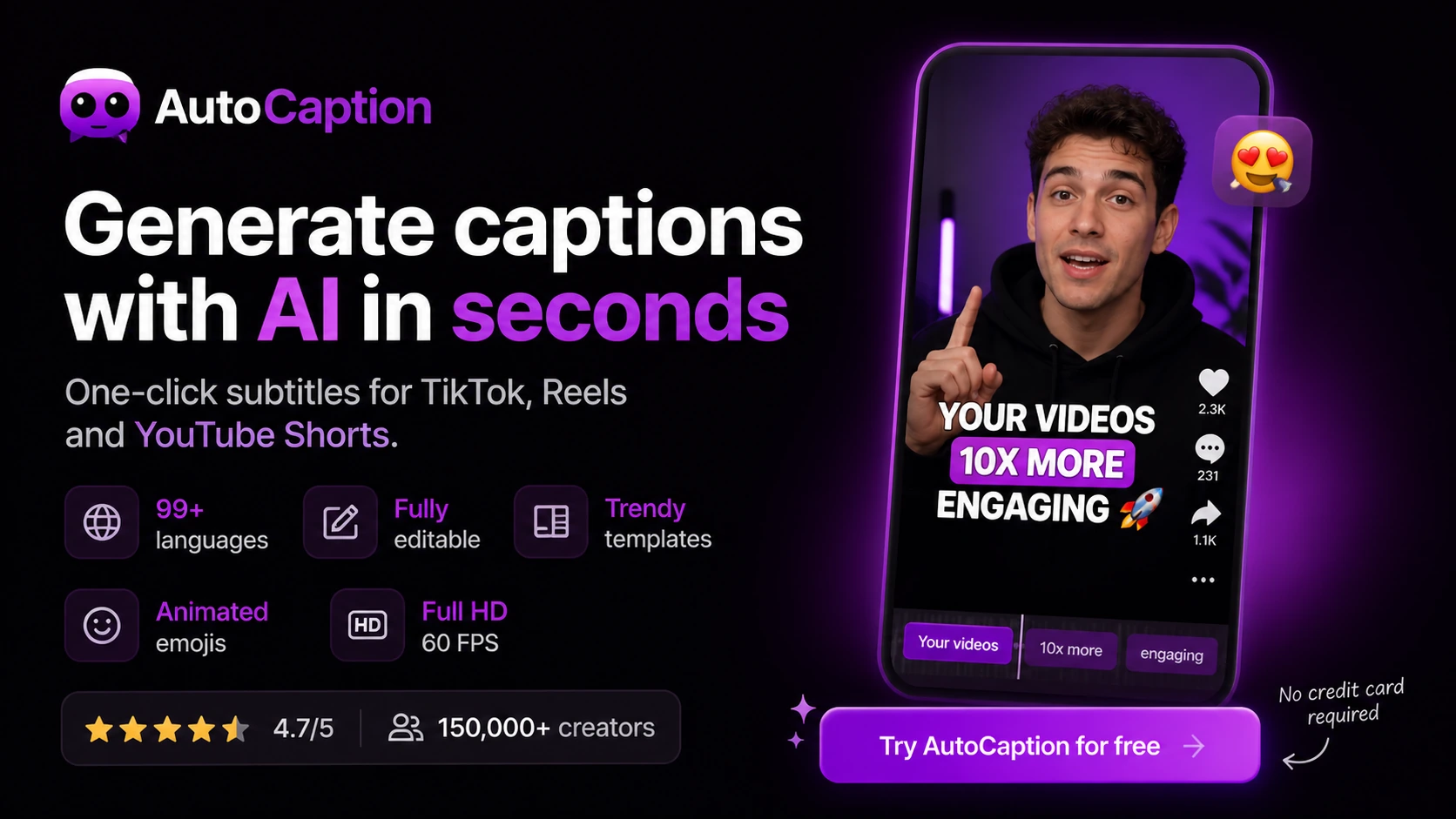
AutoCaption is a short-form video captioning tool for creators who want animated captions, subtitles, templates, emojis, and faster exports for TikTok, Instagram Reels, and YouTube Shorts. The store page should treat it as a workflow-fit decision: useful when captions are a repeat publishing bottleneck, weaker when the buyer needs a full AI editing suite or long-form repurposing engine.
Fit → price → checkout
Use these routes after the official-site check: coupon first, review for fit, compare if unsure.
AutoCaption pricing snapshot
Fast commercial checks before pricing, coupons, or a deeper review.
AutoCaption product tour for caption workflow fit
Watch the tour as a practical upload-to-export check. The useful question is not whether animated captions look fun, but whether AutoCaption can reduce repetitive subtitle work without forcing you to fix timing, styling, or export limits after every clip. Pay attention to the upload step, caption editing, template control, and whether the final workflow would save time for your actual posting schedule.
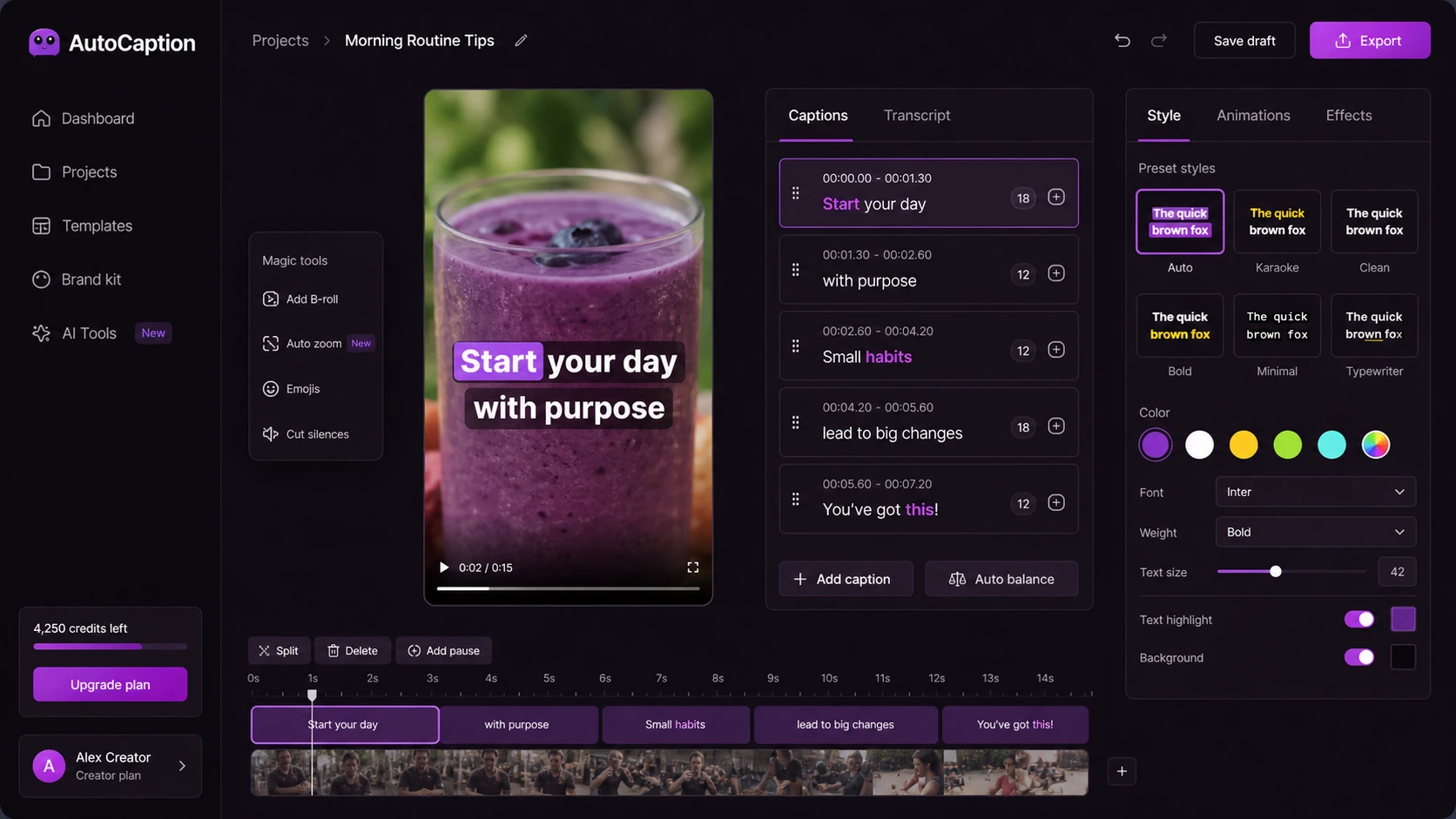
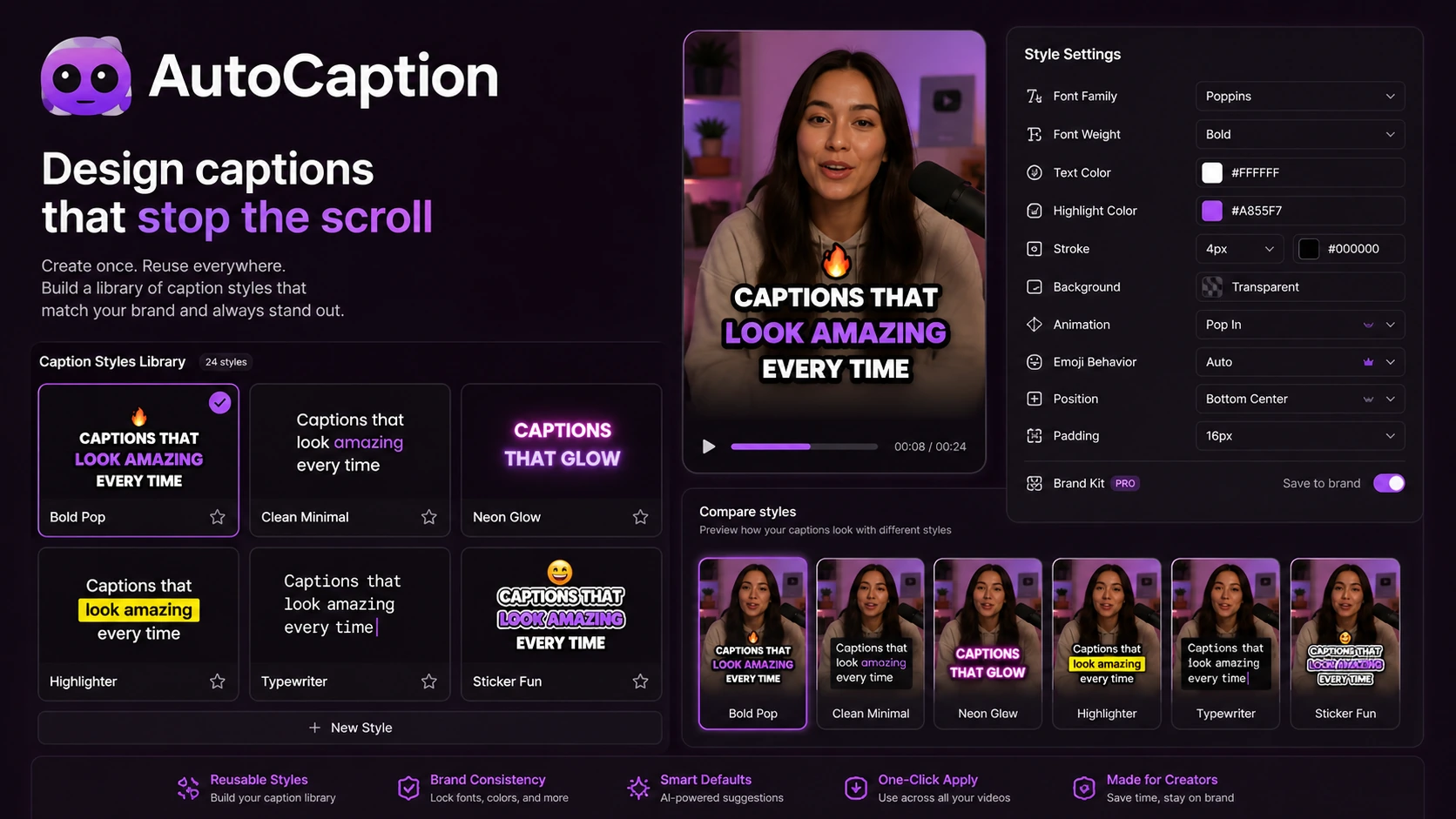
AutoCaption should be evaluated as a caption workflow tool, not as a generic video editor. The strongest buying case is simple: you already publish short-form videos often, captions take too much time, and you need a repeatable way to generate, style, review, and export subtitle-heavy clips.
What AutoCaption actually does
AutoCaption generates AI subtitles for social videos and gives creators editing controls for caption text, animations, fonts, colors, templates, and emojis. Its homepage frames the product around one-click caption generation for Instagram, TikTok, and YouTube, which means the buyer should judge it by speed, subtitle control, and export readiness rather than by broad video-suite depth.
- Use it when captions are slowing down a repeat social video workflow.
- Judge the tool by subtitle accuracy, editing comfort, template quality, and export constraints.
- Compare it against fuller video repurposing tools if you also need clipping, scheduling, or heavy editing.
Pricing path and plan fit
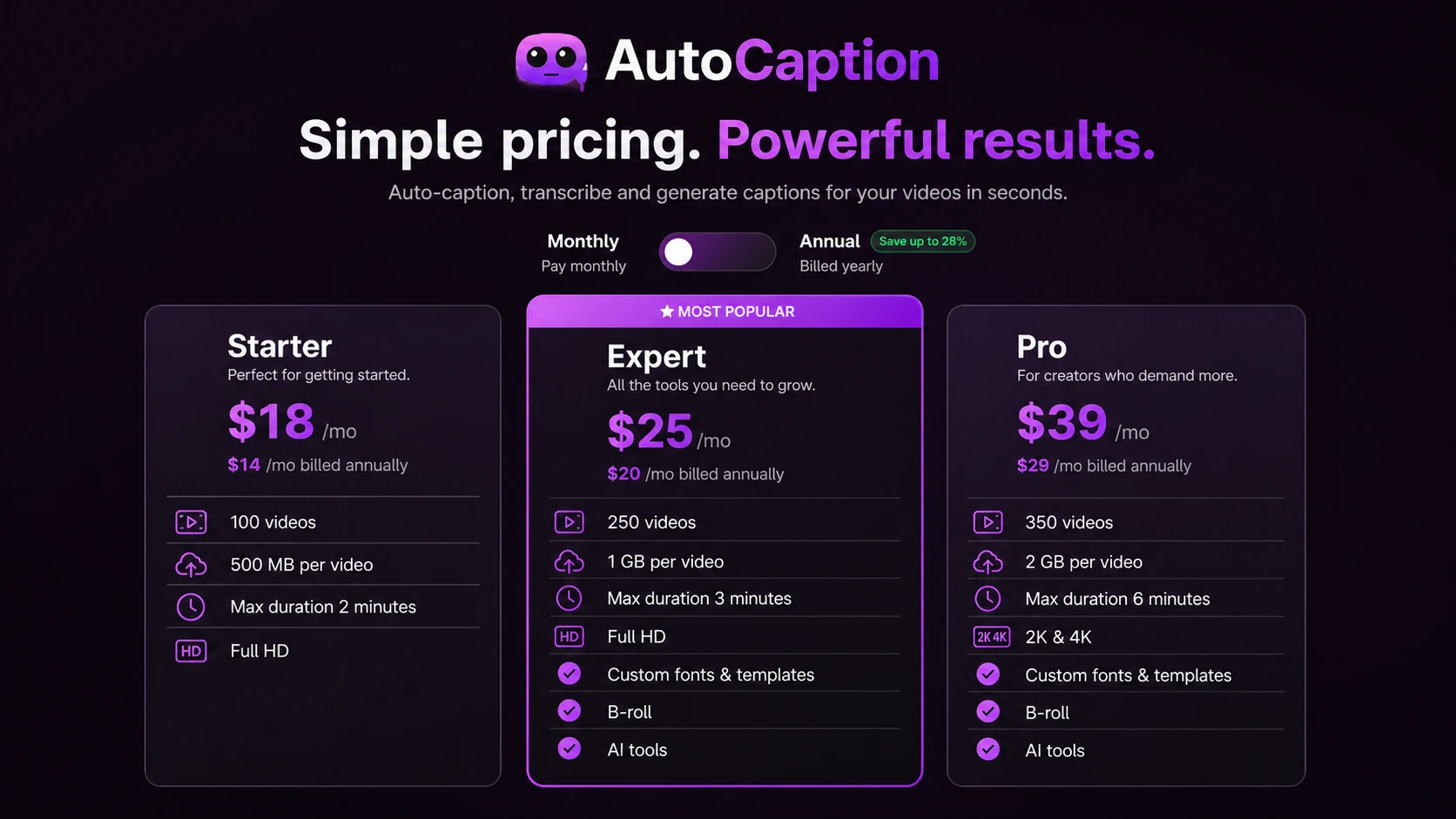
The pricing decision is mostly about volume and constraints. The public pricing page shows Starter, Expert, and Pro tiers, with monthly billing and annual savings. The core differences include video count, upload size, maximum video duration, support level, custom fonts and templates, B-roll, AI tools, and higher-resolution output on Pro. Buyers should not choose only by the lowest visible price if their clips regularly exceed the lower-tier limits.
- Starter is the safer first paid check for personal use and short videos.
- Expert makes more sense when templates, B-roll, and AI tools are part of the workflow.
- Pro is mainly a fit when longer uploads, larger files, or higher-resolution output matter.
Video guide worth watching before checkout
Use this video as a buyer-safety check if you are still deciding whether an AI caption workflow will save time for Shorts, Reels, or TikTok. Watch for the practical steps: how a video is prepared, how captions are generated, and how much correction is still needed. That will tell you more than a pricing table about whether AutoCaption belongs in your publishing routine.
Where AutoCaption is strong
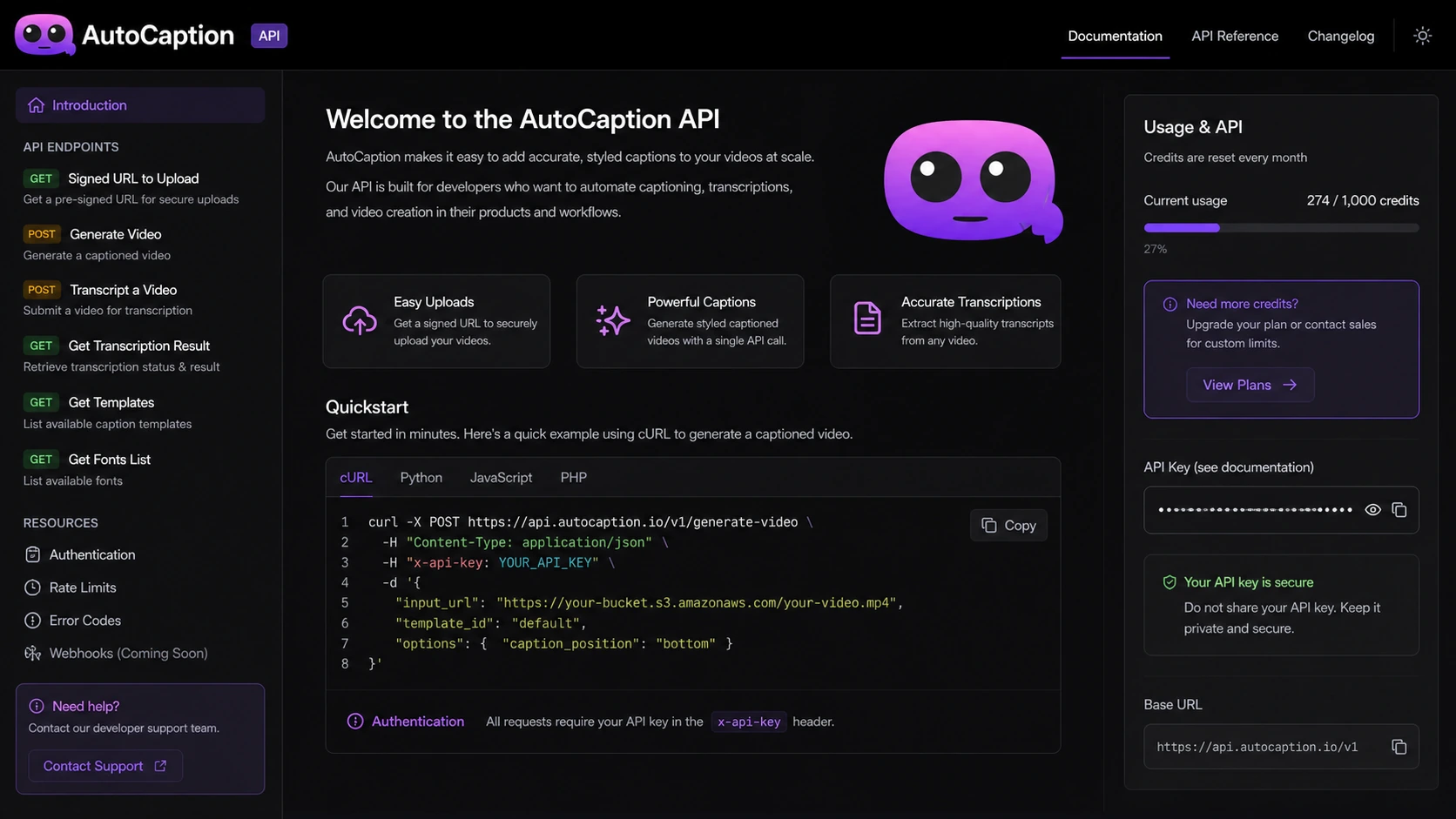
AutoCaption is strongest when the buyer wants captioned vertical content to look more polished without spending the whole editing session on subtitle styling. Editable captions, templates, animated emojis, and full HD vertical output are practical advantages for creators who produce frequent short-form content. API documentation also makes it more credible for buyers who want to inspect automation potential rather than relying only on the visual editor.
- Good for caption-first social videos where readability and style matter.
- Useful when reusable templates reduce repetitive design decisions.
- Worth checking for API-aware teams that want more than manual uploads.
Where buyers should be careful
The biggest risk is buying before testing the exact limits. AutoCaption is not positioned as a full content repurposing platform like tools that find clips, rewrite posts, or manage a large publishing calendar. It is also worth checking refund language carefully because the app pricing page mentions a 7-day money-back guarantee and unused-credit condition, while the public Terms page says subscription fees are non-refundable. That mismatch makes live checkout verification important.
- Confirm refund eligibility before using credits or exporting paid work.
- Check whether your usual clips fit the max duration and upload-size limits.
- Compare alternatives if you need automated clipping, scheduling, or team review flows.
Best next step for AutoCaption buyers
The safest next step is to start free, upload a real clip, test caption accuracy, edit the subtitles, apply a template, and compare the export against your usual publishing standard. If that test saves time, then compare Starter, Expert, and Pro by video volume, clip duration, upload size, and resolution needs. If the test feels like another editing layer, compare Submagic or broader AI video tools before paying.
- Start with a real clip, not a perfect sample.
- Time the review and correction step because that is where caption tools win or lose.
- Choose the plan only after you know your upload and duration limits.
Best savings path from this store page
This is the clearest savings route to check once the product already looks like a fit.
The Expert annual path is marked as a best-value creator tier on AutoCaption's pricing page. It can make sense when the Starter video cap is too tight.
Start free before choosing a paid plan
Reported annual discount path
Use comparison routes when the category fit is still open
Use these comparison routes when the product still looks plausible, but the category fit is not fully settled.
Often a closer alternative when the buyer wants social-ready captions, styling, and creator-focused short-form output.
Better to compare when the real need is turning longer content into videos rather than only styling captions.
Worth checking when the buyer wants broader short-form repurposing and publishing support around clips.
A stronger comparison when the buyer wants AI video creation beyond caption generation and subtitle styling.
Verification points worth checking before you click out
Where this store usually fits best in the workflow
Use AutoCaption when the main bottleneck is turning frequent speaking clips into readable, styled, vertical videos for social platforms.
Use reusable templates when you want captions to look familiar across a series instead of designing each video manually.
AutoCaption can fit teams publishing quick educational, product, or founder-led videos where subtitle clarity affects watch time.
Technical buyers can review the developer documentation before deciding whether AutoCaption belongs inside a larger automation workflow.
Practical checkpoints before and after signup
- Choose one real video that represents your usual audio quality, length, and publishing format.
- Check whether the free-start path lets you inspect caption accuracy before paying.
- Review how much manual correction is needed after captions are generated.
- Test templates, animated emojis, and export quality against your normal brand style.
- Compare monthly versus annual price, video limits, upload size, and max duration.
- Verify refund wording, credit usage rules, and any seasonal discount in the live checkout path.
- Track how many videos you actually export each month so you can downgrade or upgrade based on usage, not optimism.
Fast-read signals for workflow fit and buying friction
Questions readers usually ask before choosing this store
What does AutoCaption do?
AutoCaption generates and styles AI subtitles for short-form videos. It is most useful when you publish talking-head, educational, product, or social clips and need faster captions with templates, animations, and editable text.
Does AutoCaption have a free plan or free trial?
The official site shows a free-start path and the Terms mention a free trial period for new users. Buyers should still confirm the current trial or free usage limits inside the live app before assuming it is enough for real publishing.
How much does AutoCaption cost?
The public pricing page lists Starter at $18/month on monthly billing and $14/month when billed annually, with higher Expert and Pro tiers for larger limits and additional tools. Check the live checkout because app pricing, annual savings, and seasonal banners may change.
Are AutoCaption refunds guaranteed?
Do not treat refunds as guaranteed without checking checkout terms. The app pricing page mentions a 7-day money-back guarantee and refunds if credits are unused, while the public Terms page says fees are non-refundable, so buyers should verify before using credits.
What is the safest next step before buying AutoCaption?
Start with a real clip, generate captions, edit the output, test a template, and compare the export quality against your normal posting standard. Upgrade only if the workflow saves enough time and the plan limits match your content volume.
Choose the next route that matches what you still need to decide
The strongest next click depends on whether you still need product judgment, a savings route, or a broader category comparison.