Quick verdict
Paraphraser.io is useful if you need a fast rewrite checkpoint, but I would not judge it only by the fact that it has a free tool.
The real question is narrower: does it reduce the editing work you already do, or does it simply create another version of text you still need to fix?
That distinction matters a lot with paraphrasing tools. A clean-looking rewrite can still lose nuance, soften an important claim, change the meaning of a source sentence, or make academic writing look more polished without making it more responsible. For my money, Paraphraser.io makes the most sense as a drafting aid for students, bloggers, marketers, researchers, freelancers, and content editors who already know how they will review the output afterward.
The strongest reason to consider it is accessibility. You can test the main paraphrasing workflow in the browser, then decide whether paid access is justified by higher limits, fewer interruptions, extra modes, plagiarism-checking capacity, or API access. The biggest caution is commercial: plan limits, API availability, renewal behavior, and refund terms should be checked before paying, especially if you are considering annual access.
I would start free, test real writing samples, then only upgrade if the tool saves repeatable editing time. A coupon path can make the purchase cheaper, but it should not be the reason you buy.
Next step: If Paraphraser.io fits your rewrite workflow, verify the current pricing and offer route before choosing a paid plan.
Review snapshot
| Review point | Practical take |
|---|---|
| Best for | Students, bloggers, SEO editors, freelancers, marketers, and light technical buyers who need repeated rewriting support |
| Not ideal for | Buyers expecting final publish-ready copy, deep collaboration, flexible refunds, or a full originality-governance system |
| Main use case | Rephrasing draft text while keeping a human review step for meaning, citation, tone, and accuracy |
| Free path | Free web paraphrasing is available and should be the first test for most buyers |
| Paid path | Paid tiers make more sense when word limits, paraphrase limits, ad-free use, or API access matter |
| Pricing note | The official pricing page lists weekly, monthly, and annual paths, but live checkout should still be verified |
| Main strength | Low-friction rewriting workflow with adjacent writing tools around it |
| Main concern | Strict refund language and plan-limit fit make pre-purchase testing important |
| Direct comparison | Scribbr for academic writing support |
| Adjacent routes | Originality.ai and Copyleaks for originality checking; Copy.ai and AI Writer for content generation |
| Best next step | Test the free workflow on real text before choosing a paid tier |
What is Paraphraser.io?
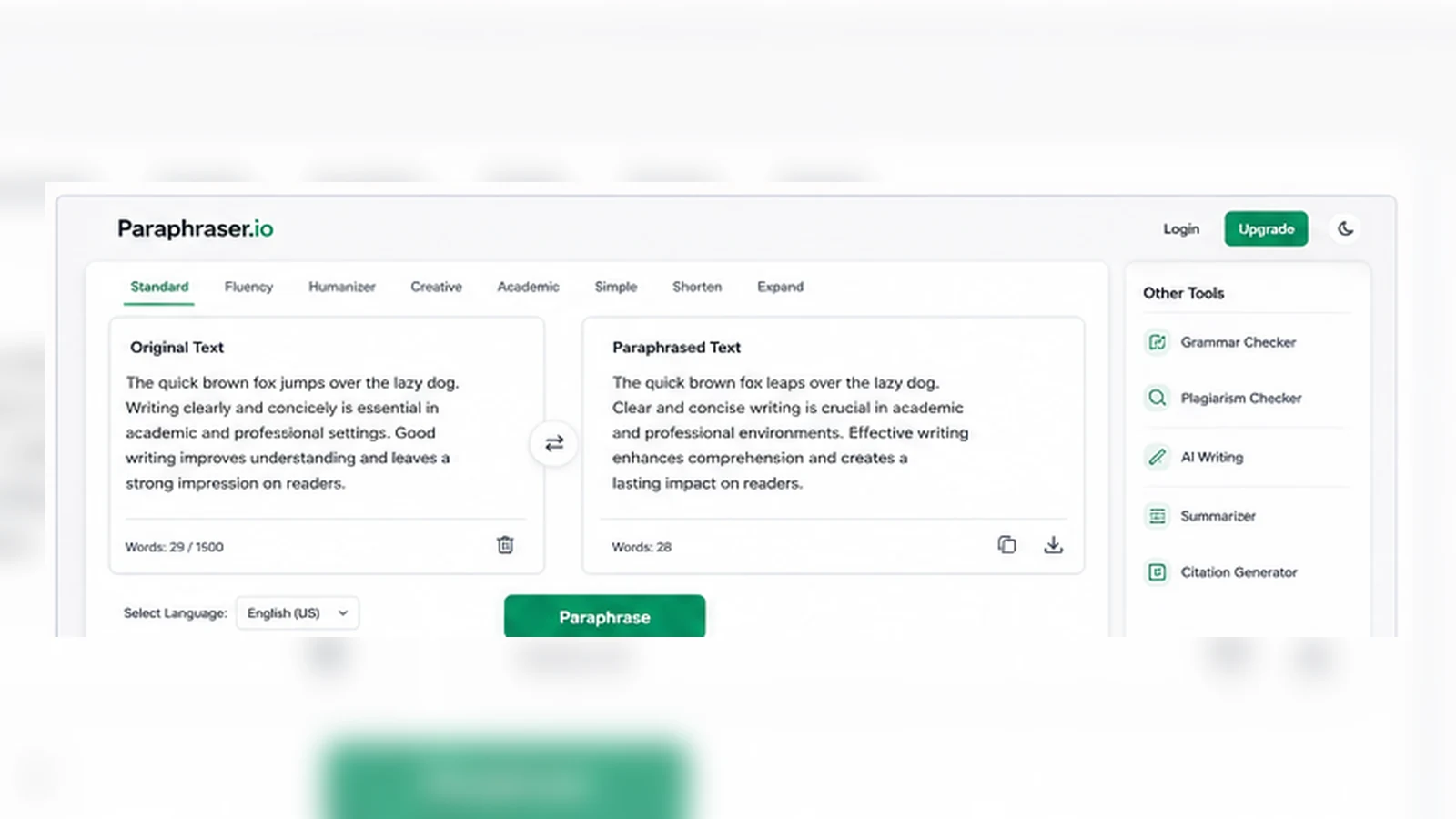
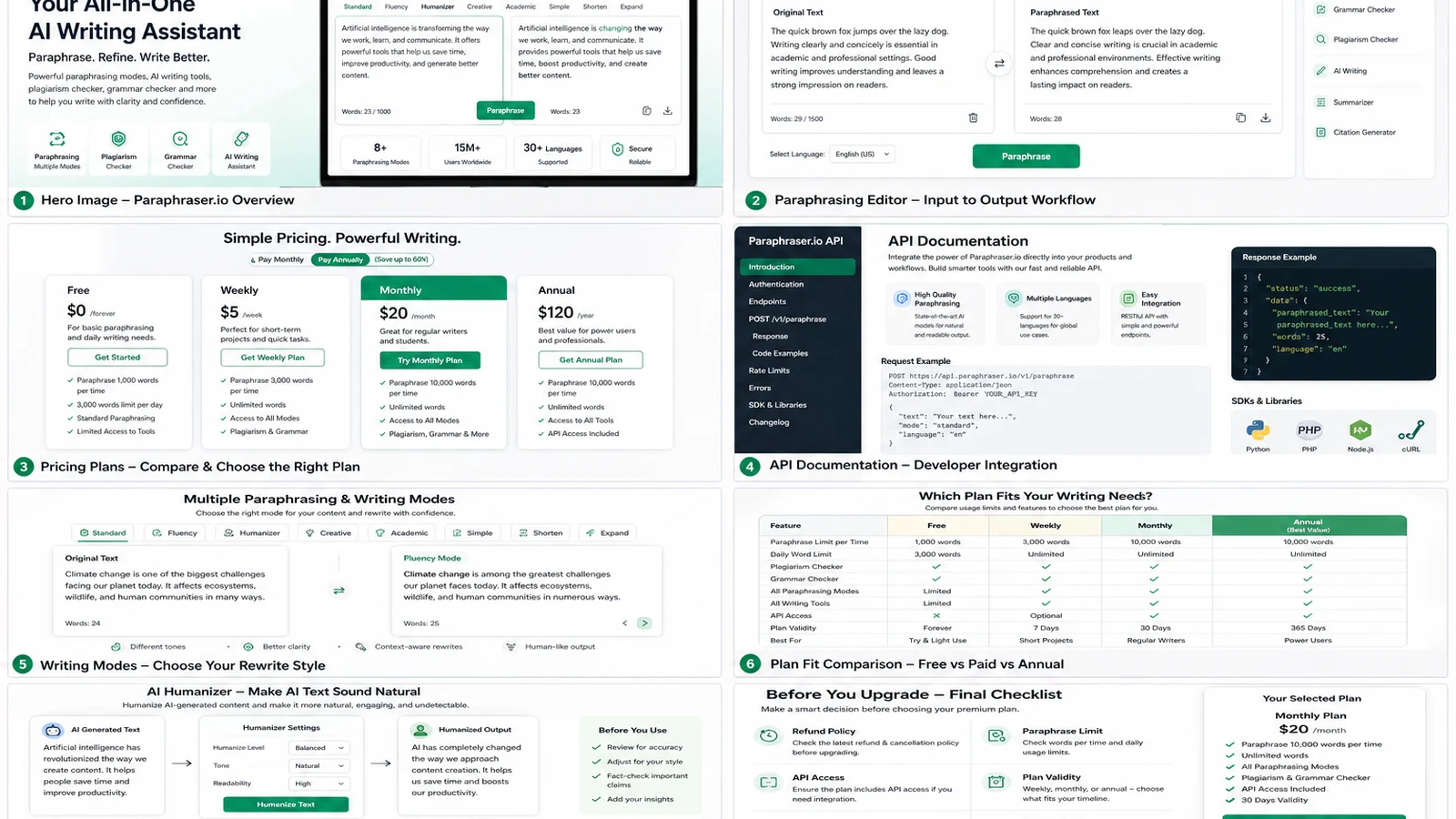
Paraphraser.io is an online paraphrasing and writing-support tool. Its main job is simple: you paste text, choose a mode, and get a rewritten version that tries to preserve the original meaning while changing wording and structure.
That sounds basic, but the buyer decision is not only about the rewrite button.
The product sits in a crowded category where people use paraphrasing tools for different reasons. A student may want to restate a paragraph more clearly. A blogger may want to reshape a rough section before editing. A marketer may want alternate wording for short copy. A developer or institution may care about API access rather than manual browser use. Those are different jobs, and they should not all be judged by the same standard.
Paraphraser.io also promotes adjacent tools such as plagiarism checking, grammar checking, summarizing, AI essay writing, AI content detection, AI humanizing, and paraphrasing API access. That broader toolset can be useful, but it also creates a common buyer mistake: assuming the suite solves the whole writing workflow.
It does not.
A paraphraser can help reshape draft text. It cannot confirm that a source is cited properly, that an argument is true, that a client brief has been followed, or that a sentence still says exactly what you meant. Our review approach compares public product pages, pricing details, refund language, API documentation, buyer workflow fit, and nearby alternatives. I would treat Paraphraser.io as a rewrite support layer, not as a final editor.
Who should use Paraphraser.io?
Paraphraser.io makes sense for buyers who already have text and need a cleaner second version.
Students and researchers are one obvious group. The tool can help restate rough explanations, simplify awkward phrasing, or create a new draft for review. The condition is important: academic users still need to cite sources, check meaning, and follow institution rules. A paraphrasing tool should not become a way to hide weak research or avoid attribution.
Bloggers and SEO editors may also find value here. If you work with outlines, rough drafts, notes, or source-inspired paragraphs, Paraphraser.io can help create alternative wording before the human edit. This is useful only when the editor still checks accuracy, search intent, readability, and originality afterward.
Freelance writers can use it as a revision helper when a paragraph sounds stiff or repetitive. The safer use is not to dump a client draft into the tool and submit the result. The safer use is to generate an alternate version, compare it with the original, then make a human decision.
Marketers may use it for short-form copy variation. Social captions, email snippets, product blurbs, and campaign angles often benefit from multiple versions. Paraphraser.io can help with that, but it is not a full campaign strategy tool.
Technical buyers should consider it only if API access is actually part of the use case. Browser paraphrasing and API-based paraphrasing are different buying decisions. If your product, LMS, internal writing tool, or content workflow needs automated rephrasing, confirm the current API plan gate and usage limits before paying.
Who should avoid Paraphraser.io?
I would avoid paying for Paraphraser.io if you only need one small rewrite. The free workflow may be enough, and a subscription can become unnecessary quickly when the task is occasional.
I would also be careful if you expect the tool to produce final academic or professional copy. Paraphrasing is not the same as verifying meaning. A rewritten sentence can look fluent and still be imprecise. That matters in research, education, legal-adjacent writing, medical-adjacent content, technical topics, and client work.
Teams that need approval workflows, role-based collaboration, brand governance, or institutional review should probably compare broader tools first. Paraphraser.io is closer to a writing utility than a full editorial platform.
Buyers focused mainly on plagiarism detection or AI detection should not treat Paraphraser.io as the direct replacement for a detection-first system. It has adjacent tools, but Originality.ai and Copyleaks are more natural comparison routes when the real job is originality checking, reporting, or institutional review.
I would also slow down if refund flexibility matters. The published refund language includes strict conditions and non-refundable situations. That does not mean nobody should buy it. It means you should test the free workflow, read the current refund policy, and avoid annual billing until the repeated use case is clear.
How Paraphraser.io fits into a real workflow
A careful Paraphraser.io workflow starts before you open the tool.
First, choose text that resembles your real work. Do not test it only with a short polished example. Use a messy academic paragraph, a blog section that needs reshaping, or a rough marketing passage that sounds repetitive.
Then run the text through the free paraphrasing workflow. Look at the output in three ways:
- Did the meaning stay intact?
- Did the wording improve, or did it only become different?
- Did the tool save editing time after you revised the result?
That last question is the buying question.
If the output is cleaner but still needs heavy editing, the tool may be useful only occasionally. If the output consistently gives you a better second draft, paid access becomes easier to justify. If you need API access, the workflow changes again: now you are not just buying a paraphrasing page, you are evaluating integration limits, supported languages, response format, and usage volume.
Workflow check: Run a real draft through the free tool first. Upgrade only if the revised output saves repeatable editing time.
Real-world buyer scenarios
A student working on a literature review may use Paraphraser.io to restate a dense paragraph in clearer wording. That can be helpful, but the student still needs to cite the source and confirm that the rewritten version does not distort the original idea. In this scenario, Paraphraser.io is a drafting aid. Scribbr may be the better adjacent route when citation discipline and academic writing support matter more than fast rephrasing.
A blogger updating old content may use the tool to reshape outdated paragraphs before adding new examples, statistics, or product details. This is a better fit because the editor already owns the page and understands the topic. The risk is becoming lazy with fact-checking. A rewritten paragraph is not automatically a refreshed paragraph.
A marketer may use Paraphraser.io to create alternate versions of short copy. This can work well for captions, intro lines, headlines, or ad-style variations. If the marketer needs campaign generation, workflow automation, or brand messaging at scale, Copy.ai may be a more relevant comparison.
A developer may care less about the browser tool and more about the API. That buyer should inspect the documentation, confirm plan access, and estimate usage before paying. API access can turn a simple paraphrasing utility into a workflow component, but it also makes limits and support more important.
Key features that actually matter
Paraphrasing modes
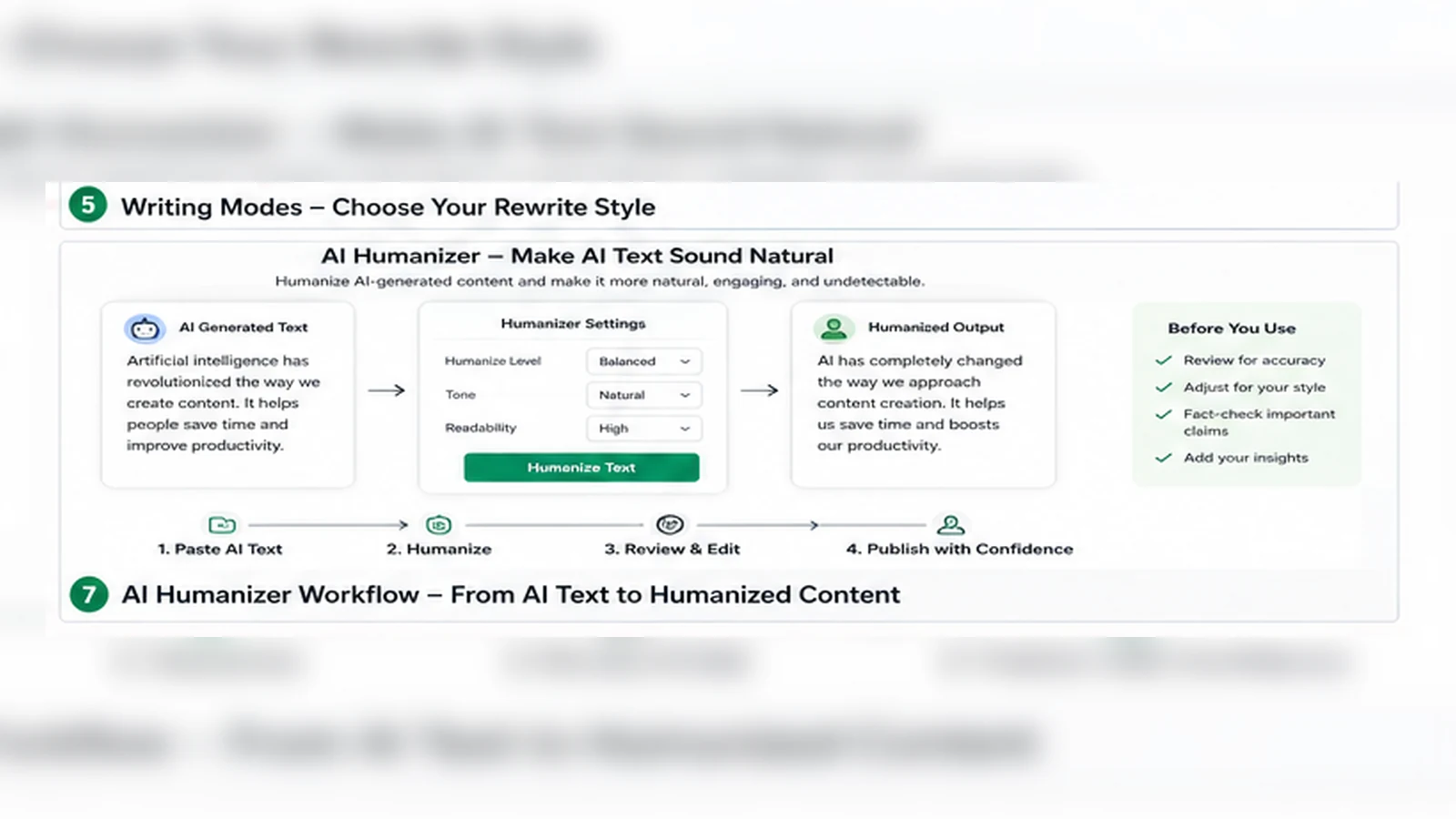
The modes are the core product experience. They help users choose how the text should be reshaped, whether the goal is fluency, creativity, readability, or a more standard rewrite.
Buyer note: modes are useful only if the output still keeps the original meaning. Do not choose the most dramatic rewrite just because it looks less similar.
Free web access
The free paraphrasing path is a real advantage because buyers can test the workflow before paying. That is especially important because refund flexibility is not the strongest part of the commercial story.
Buyer note: use the free path on real text. Generic demo paragraphs can make any rewriting tool look better than it feels in daily work.
Adjacent writing tools
Paraphraser.io includes or promotes related tools such as grammar checking, plagiarism checking, summarizing, essay writing, AI content detection, and AI humanizing. This can make it feel like a broader writing toolbox rather than a single-purpose rewriter.
Buyer note: adjacent tools are helpful only if you actually use them. Do not pay for a suite if your real job is one or two occasional paraphrases.
API documentation
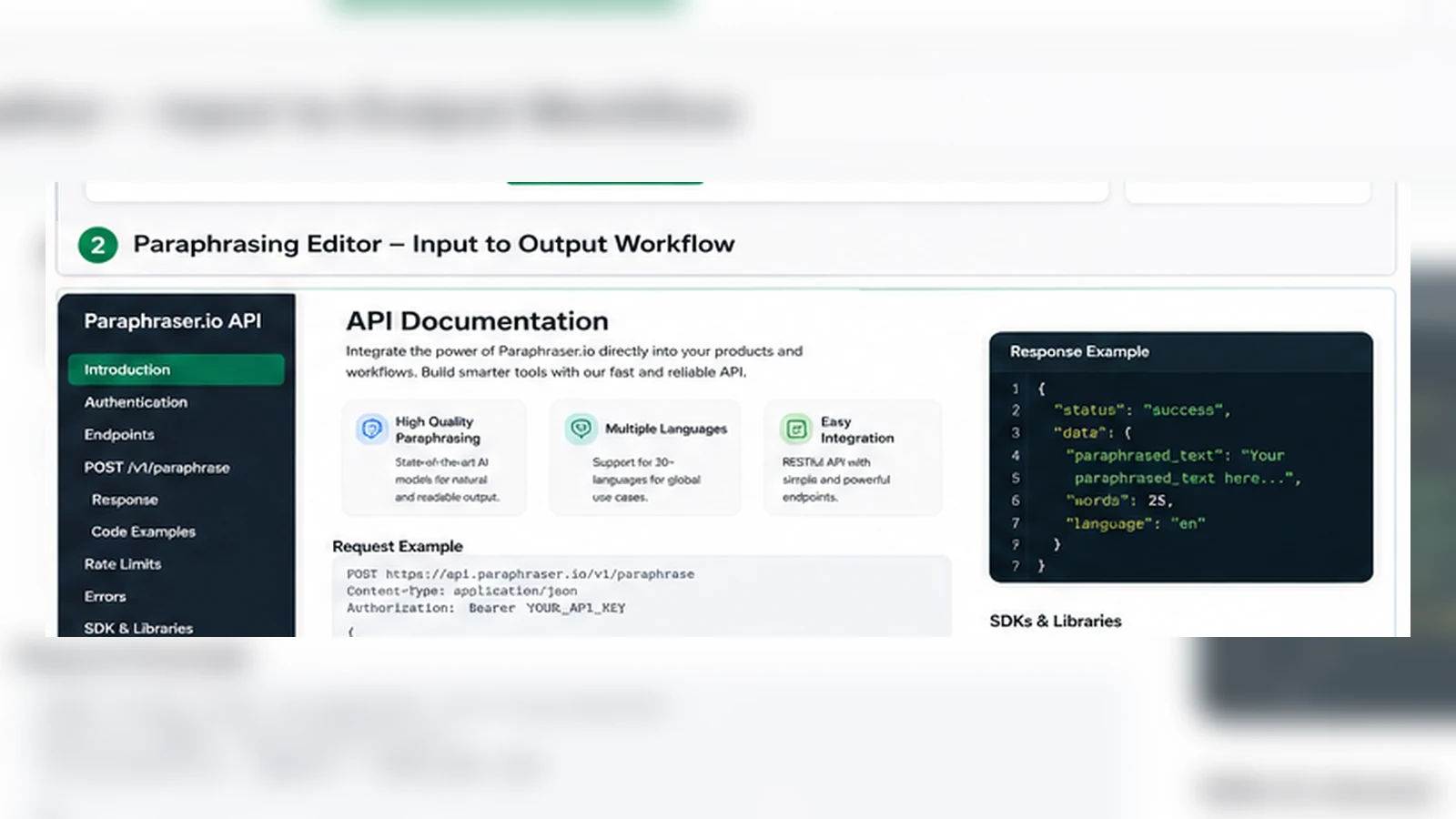
The API documentation matters for buyers who want paraphrasing inside another platform, app, learning system, or internal writing workflow. This is a stronger signal than tools that only offer a manual browser experience.
Buyer note: API access should be verified against the current plan table. Do not assume every paid plan includes the same technical access.
Plagiarism and originality-adjacent workflow
Paraphraser.io sits close to plagiarism checking and AI detection, but those jobs are not the same as paraphrasing. Rewriting text and verifying originality are different decision layers.
Buyer note: if your main concern is originality reporting, compare detection-first tools like Originality.ai or Copyleaks instead of buying a paraphraser for the wrong job.
Pricing and plan value
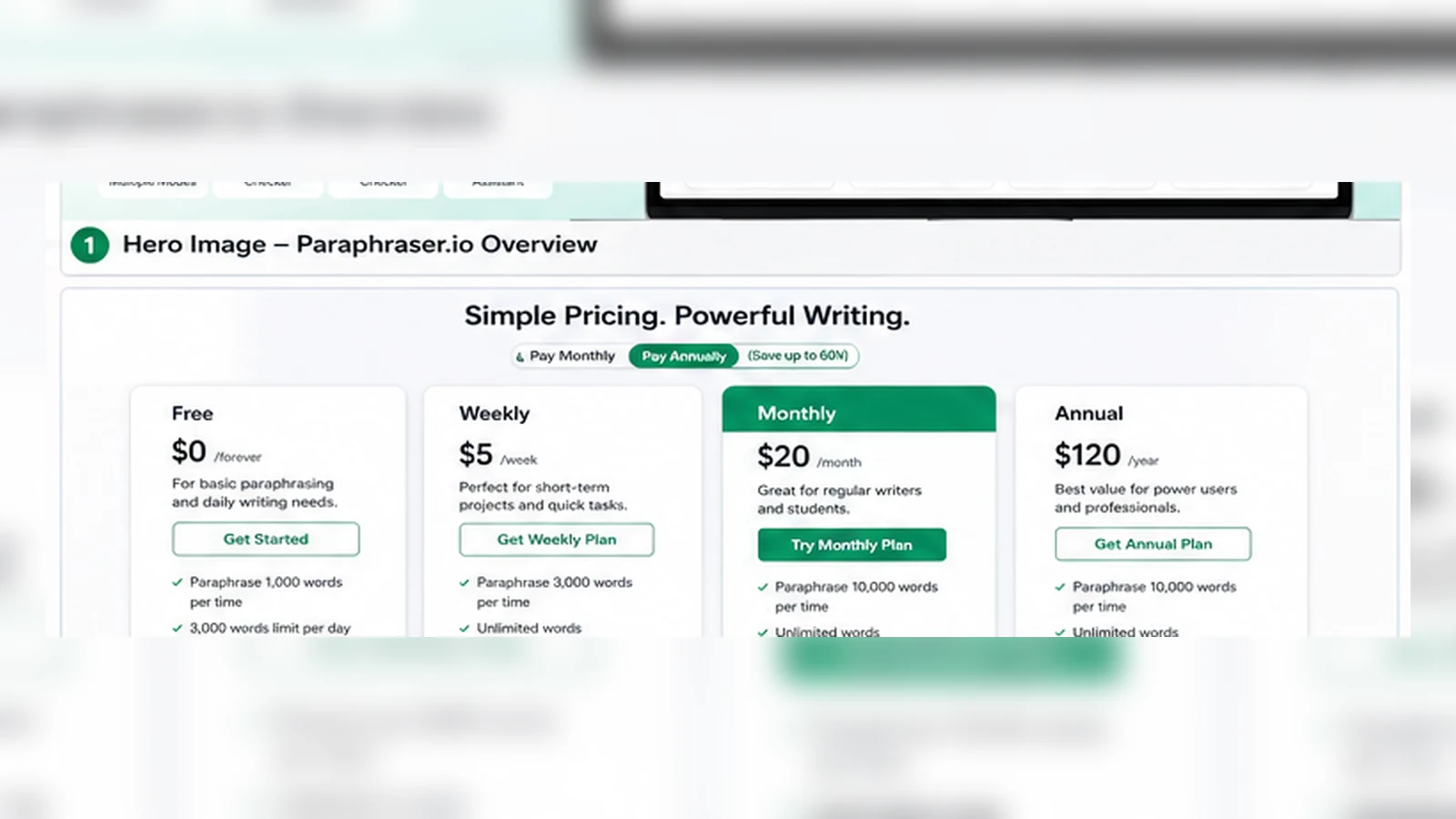
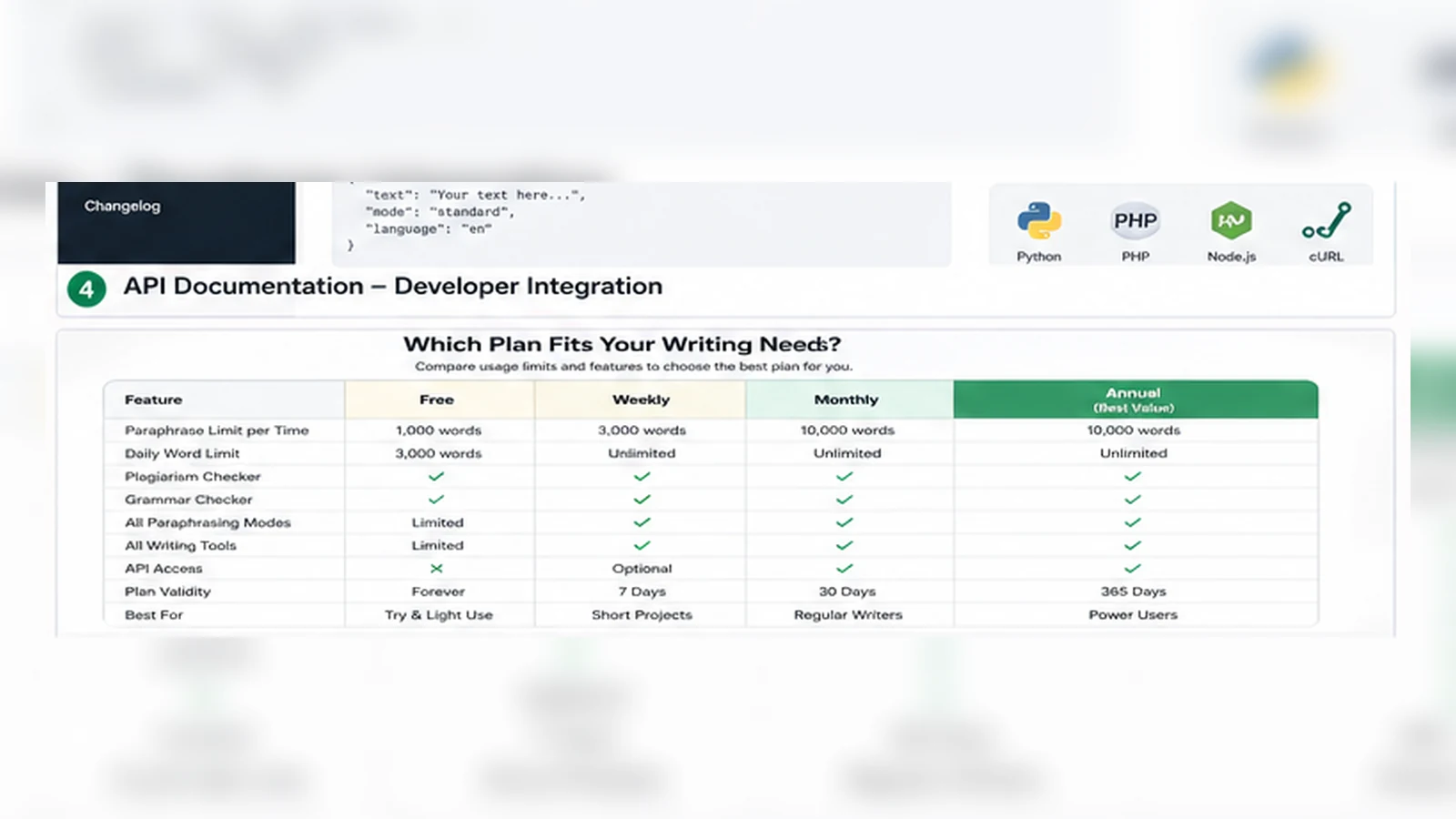
At the time of review, the official pricing page shows three main paraphrasing plans: Silver at $4.55 weekly, Gold at $9.55 monthly, and Diamond at $47.52 billed annually. The plan table also lists different validity periods, word allowances, paraphrase limits, plagiarism limits, API availability, and dedicated manager availability.
That structure matters more than the headline price.
Silver may make sense if you need short-term access or want to remove free-tool friction for a narrow project. Gold is easier to judge as a normal monthly writing utility. Diamond looks more economical on a weekly basis, but annual billing only makes sense when you know you will use the higher word allowance, paraphrase limit, and API access.
I would be careful with the annual plan until the workflow has proven itself. A low annual equivalent can look attractive, but a non-refundable or hard-to-refund purchase is still expensive if you stop using the tool after a few sessions.
Pricing check: If the free workflow is useful, compare the live plan table and current offer path before choosing weekly, monthly, or annual access.
Check Paraphraser.io pricing Check current offers Read store guide
Free plan, trial, coupon, and checkout notes
The free web paraphrasing workflow is the safest starting point. It lets you judge the main value before you pay.
I would not treat the coupon route as the first decision. With a tool like this, the better order is:
- Test the free paraphraser on real text.
- Check whether output quality actually reduces editing time.
- Compare plan limits against expected weekly or monthly volume.
- Read the current refund policy.
- Only then check active offers or the checkout path.
A coupon can improve the purchase, but it should not push you into a plan you have not tested. This is especially true when a product has weekly, monthly, and annual paths. Annual billing can be sensible for heavy users, but only after the repeated workflow is clear.
The refund policy deserves a direct read before purchase. Public refund language includes strict conditions, non-refundable situations, and plan-specific limits. That makes the free evaluation step more important than usual.
Offer path: Use the coupon page after workflow fit is clear, not as the reason to buy before testing the tool.
What I would check before buying Paraphraser.io
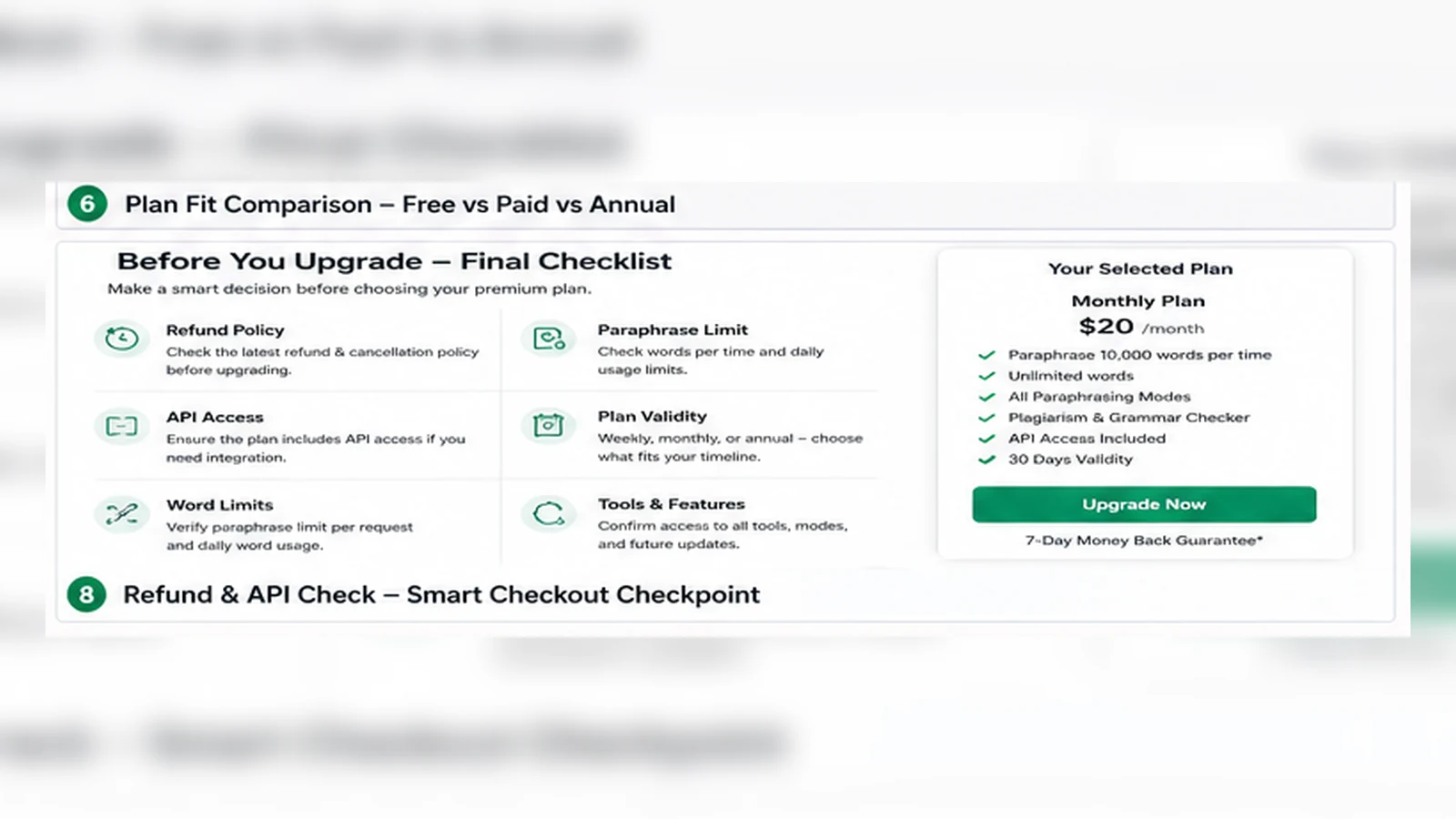
If I were buying Paraphraser.io for a real workflow, I would check these points first:
- Whether the free tool already handles my normal rewrite volume.
- Whether the paid plan limits match the number of words I rewrite each week or month.
- Whether the paraphrase limit and plagiarism-check limit are enough for my actual use case.
- Whether API access is included in the plan I am considering.
- Whether the refund policy applies to my plan type, billing period, and usage level.
- Whether annual billing is justified by repeated use, not only by the lower weekly equivalent.
- Whether an academic, originality-checking, or content-generation alternative fits my real job better.
A simple test before paying
Before paying, I would run a small test like this:
- Choose three real writing samples: one academic-style paragraph, one blog section, and one short marketing passage.
- Run each sample through the free paraphrasing workflow.
- Compare the rewritten text against the original for meaning, tone, clarity, and factual accuracy.
- Track how much editing time the output actually saves.
- Check whether the free limits create a real bottleneck.
- Review the paid plan table only after the tool has passed the workflow test.
- If you need API access, test the documentation and plan gate before annual billing.
This kind of test is not glamorous, but it protects you from the most common buyer mistake: paying because the tool works once, not because it fits repeated use.
Pros explained
The free starting point is the biggest practical advantage. Buyers can test the core rewrite workflow without making a payment decision first. That matters because paraphrasing quality is personal. A tool can work well for simple sentences and still struggle with technical, academic, or nuanced writing.
The second advantage is speed. Paraphraser.io can quickly produce alternate wording when you already have draft text. This is useful for bloggers, students, freelancers, and marketers who know how to edit the result afterward.
The broader writing-tool suite is also helpful. Grammar checking, plagiarism checking, summarizing, essay writing, AI detection, and AI humanizing can support a longer review workflow. The value depends on whether you actually use those tools together.
The API documentation gives Paraphraser.io more potential for technical buyers. A browser paraphraser is useful for individuals; API access can matter for platforms, education tools, internal writing systems, or content operations.
Pricing visibility is another plus. The main pricing page gives buyers enough structure to compare short-term, monthly, and annual access. I still would verify live checkout, but visible pricing is better than a vague “contact sales” path for this category.
Cons explained
The first drawback is that paraphrasing can create false confidence. Text that looks different is not automatically better, original, accurate, or properly cited. This matters most for students, researchers, and publishers.
The second drawback is refund risk. Public refund language is not something I would ignore. If a buyer wants flexibility, the free tool becomes the real safety net. Test first, then pay.
The third drawback is plan-fit complexity. Weekly, monthly, and annual pricing sounds simple at first, but word limits, paraphrase limits, API access, plagiarism limits, and validity periods change the decision. The cheapest visible option may not be the best value.
The fourth drawback is that Paraphraser.io is not a full writing operation platform. It does not replace editorial planning, collaboration, approval workflows, source verification, or brand governance.
The fifth drawback is category confusion. Because the suite touches plagiarism checking, AI detection, humanizing, summarizing, and essay writing, buyers can overestimate what the product solves. It is best judged by the main rewrite job first.
Green flags and red flags
Green flags:
- You rewrite draft text often enough that speed matters.
- The free tool saves editing time on real samples.
- You understand that paraphrasing still requires human review.
- Your paid plan choice is based on word volume and limits, not only price.
- You need API access and have confirmed the current technical path.
Red flags:
- You are buying mainly because of a discount.
- You expect paraphrasing to remove the need for citation or originality review.
- You have not tested the free workflow with your own writing.
- You need team governance, approval workflows, or institutional reporting.
- You are considering annual billing without reading the current refund policy.
Paraphraser.io vs alternatives
Paraphraser.io should not be compared only by feature count. The better comparison is by buyer job.
Scribbr vs Paraphraser.io
Scribbr is the cleaner route for academic writing support, citation discipline, and student-facing editorial tools. Paraphraser.io may be faster for simple rewording, but Scribbr is a stronger comparison when the buyer is worried about academic standards, references, and responsible writing habits.
Paraphraser.io still makes sense if the main job is quick rewrite support and the buyer already knows how to handle citation and final review.
Originality.ai vs Paraphraser.io
Originality.ai is not a direct paraphrasing replacement. It is a detection-first and originality-checking route for publishers and teams that care about AI detection, plagiarism review, and content integrity signals.
Paraphraser.io is more relevant when the buyer needs to rewrite draft text. Originality.ai is more relevant when the buyer needs to evaluate content risk after writing.
Copyleaks vs Paraphraser.io
Copyleaks is also an adjacent originality and institutional review route. It is more relevant for organizations, educators, or teams that need reporting, detection, and broader review workflows.
Paraphraser.io may feel simpler for individuals who only want to rewrite text. Copyleaks is the stronger comparison when review evidence matters more than rewrite speed.
Copy.ai vs Paraphraser.io
Copy.ai is a better comparison when the buyer wants marketing content generation, workflow automation, or campaign copy creation. It starts from the idea-generation and content-production side.
Paraphraser.io starts from existing text. That difference matters. If you already have a draft and want a cleaner version, Paraphraser.io is closer to the job. If you need new marketing copy from prompts and workflows, Copy.ai is the stronger route.
AI Writer vs Paraphraser.io
AI Writer is more relevant when the buyer wants long-form drafting or article generation. Paraphraser.io is better understood as a rewriting and rephrasing layer.
I would compare AI Writer if the problem is “I need help creating an article.” I would compare Paraphraser.io if the problem is “I already have text and need a better version.”
Trust, refund, and buyer-risk notes
Paraphraser.io has enough public information to evaluate the basics: free paraphrasing, paid plan structure, adjacent tools, refund policy, privacy policy, and API documentation. That is useful.
The risk is not that the product is impossible to understand. The risk is that buyers may move too quickly from “the free tool worked once” to “annual billing is safe.”
Before paying, check the current pricing page and checkout terms. Pricing pages can change, and the plan that looks cheapest may not match your actual word volume. If you need API access, confirm that the selected plan includes it and that the documented request limits fit your use case.
Refund language should also be read directly. Public wording includes strict conditions and non-refundable situations. For a tool with a free entry path, that pushes the sensible buyer behavior in one direction: test before purchase.
Privacy and data handling also matter. If you are paraphrasing sensitive client work, unpublished research, internal documentation, legal-adjacent copy, or confidential business material, read the current privacy policy and decide whether web-based processing is appropriate for that content.
Finally, be careful with academic use. Paraphrasing can help explain ideas in different wording, but it does not remove the responsibility to cite sources, preserve meaning, and follow school or publisher rules.
Final verdict
I would consider Paraphraser.io if you regularly rewrite draft text, need a fast paraphrasing workflow, and are willing to review the output carefully before using it.
I would start with the free tool, not the paid plan. If the free workflow saves time on real samples, then the pricing decision becomes more rational. If the output still needs heavy rewriting, a paid plan may only make a weak workflow faster.
I would skip Paraphraser.io if you need a full editorial platform, deep collaboration, institutional originality reporting, or flexible refund protection. I would compare Scribbr for academic writing support, Originality.ai or Copyleaks for detection-first workflows, and Copy.ai or AI Writer for broader content generation.
The safest next step is simple: test your own text first, compare plan limits second, read the refund policy third, and only then decide whether the paid route is worth it.