Before you click
The phrase openart coupon code sounds simple, but OpenArt is not a checkout decision I would treat as code-only. It is an AI creator studio for images, video, characters, editing and model-based creative work, so the real question is not just whether a code appears. The safer question is whether the plan, credit amount, billing cycle and output rights match the way you actually create.
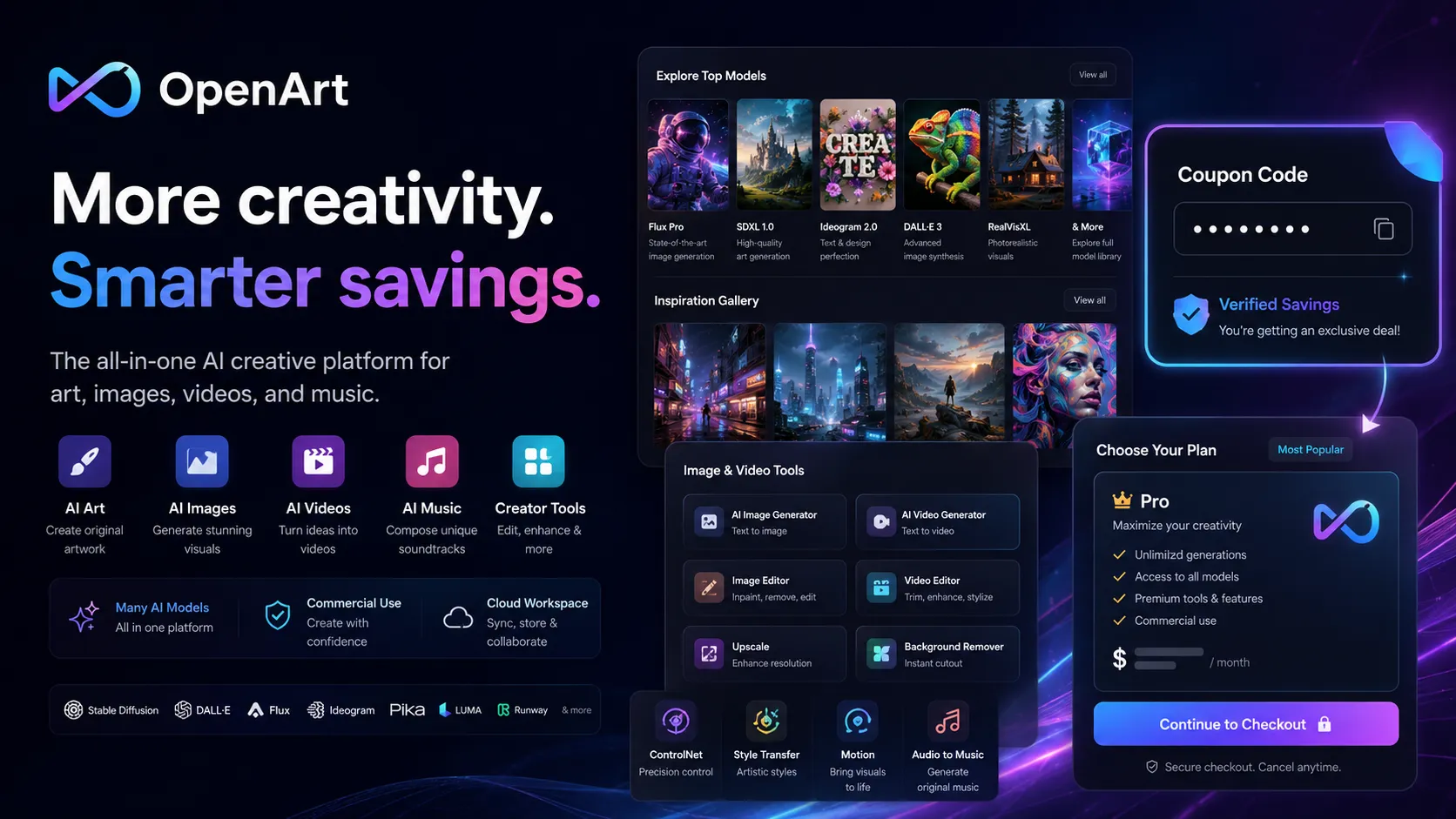
There is a current show-code route in the live offer cards, but the cleaner savings paths may be the free-credit route and the annual billing path. OpenArt’s public pricing currently presents a Free plan with one-time trial credits, paid tiers built around monthly credits, and a visible annual billing discount. That means the final checkout screen matters more than the headline. A coupon only helps if it applies to the plan you were already ready to buy.
What to check first
- Check whether the Free plan and trial credits are enough to test your usual image or video workflow.
- Compare monthly versus annual billing, especially if you are not sure OpenArt will become a regular tool.
- Review the credit amount on the selected plan, because videos, edits and repeated generations can use credits faster than casual image tests.
- Confirm whether you need commercial-use rights, priority support, advanced editing or team access before choosing a higher plan.
- Read the cancellation and refund language before paying, especially on annual billing.
Why this coupon page matters
Creative AI tools can look affordable at first because the entry path is often free or low-cost. The expensive part usually appears later, when you need more generations, more videos, more parallel work, better editing tools or more reliable output for client projects.
That is why I would not chase an OpenArt discount before testing the workflow. Generate a few assets first. Try the kind of prompt, image edit, character workflow or video idea you actually care about. If the results need too many retries, a cheaper subscription may still feel expensive. If the tool fits your workflow, then the annual savings or a working show-code path can make more sense.
How to use the live offers
Use the live offer cards as a decision filter, not as a reason to rush.
If you see a Show code button, reveal it only when you are ready to check the final payment screen. Do not assume the code will stack with annual pricing, add-on credits or any other live promotion. If the card is a no-code deal, follow the pricing or checkout path and confirm that the lower price is visible before you pay.
For OpenArt specifically, pay attention to credits. A plan that looks cheaper may be enough for light image experiments, but it may not be enough for heavier video, character or editing workflows. Also check whether add-on credits are a better short-term fix than jumping to a higher plan. That can be safer if your usage spikes occasionally instead of every month.
When to use the deal
Use the OpenArt deal when three things are true: you have already tested the output quality, you know roughly how many credits your workflow needs, and the final checkout clearly shows the expected saving.
The free-credit path is better when you are still exploring. Monthly billing is better when you are unsure about long-term usage. Annual billing can make sense when OpenArt is already part of your creative process and you are comfortable with the commitment. A show-code path is worth testing when you were already going to buy the selected plan, not when you are still unsure whether the tool fits.
When to read the review or store page first
Read the OpenArt store page first if you need a broader pricing and plan-fit view. Read the review first if you are trying to compare OpenArt against other AI image or creator tools, especially for workflow quality, credit pressure, commercial use and alternatives.
A discount is useful only after product fit is clear. If you are choosing between OpenArt and another visual AI tool, do not let a coupon decide the whole purchase. Start with output quality, credit economics and the kind of content you want to make. Then use the coupon or annual savings path as the final checkout step.
Common checkout issues
The most common issue is expecting every saving path to stack. A reported code may not work on every plan, while annual pricing may already include the best visible discount. Another issue is underestimating credit usage. If your workflow involves several rounds of generation, video tests or image edits, check whether the plan still feels affordable after real usage.
Finally, review cancellation and refund terms before paying. If you choose annual billing only because the monthly equivalent looks lower, make sure the longer commitment fits your budget and workflow.
 annual save Verified