
Marketsy Pricing, Plans & Storefront Fit
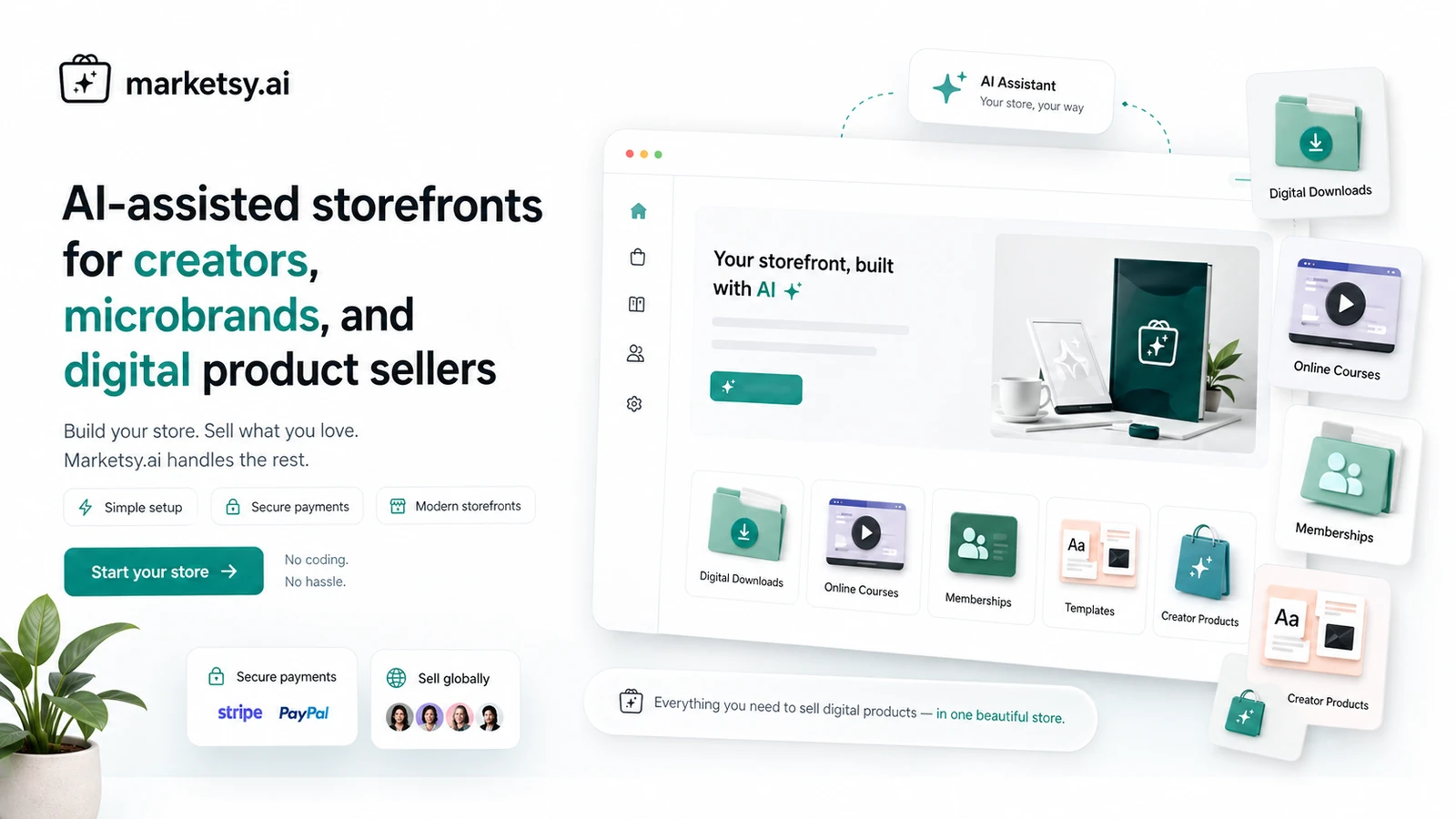
Marketsy is an AI-assisted storefront builder for creators, microbrands, and small businesses that want to sell digital products, courses, memberships, templates, downloads, and related offers without stitching together several separate selling tools. Its strongest buyer angle is not just store generation. It is the combination of storefront setup, payment handling, AI-assisted content, sales analytics, custom domains, embeds, recurring payments, promo codes, and course or digital product workflows in one platform.
Fit → price → checkout
Use these routes after the official-site check: coupon first, review for fit, compare if unsure.
Marketsy pricing snapshot
Fast commercial checks before pricing, coupons, or a deeper review.
Marketsy product tour
The useful visual check for Marketsy is whether a seller can understand the store launch flow, product listing workflow, checkout setup, and integration options before paying. The media plan focuses on buyer decisions instead of decorative ecommerce imagery.
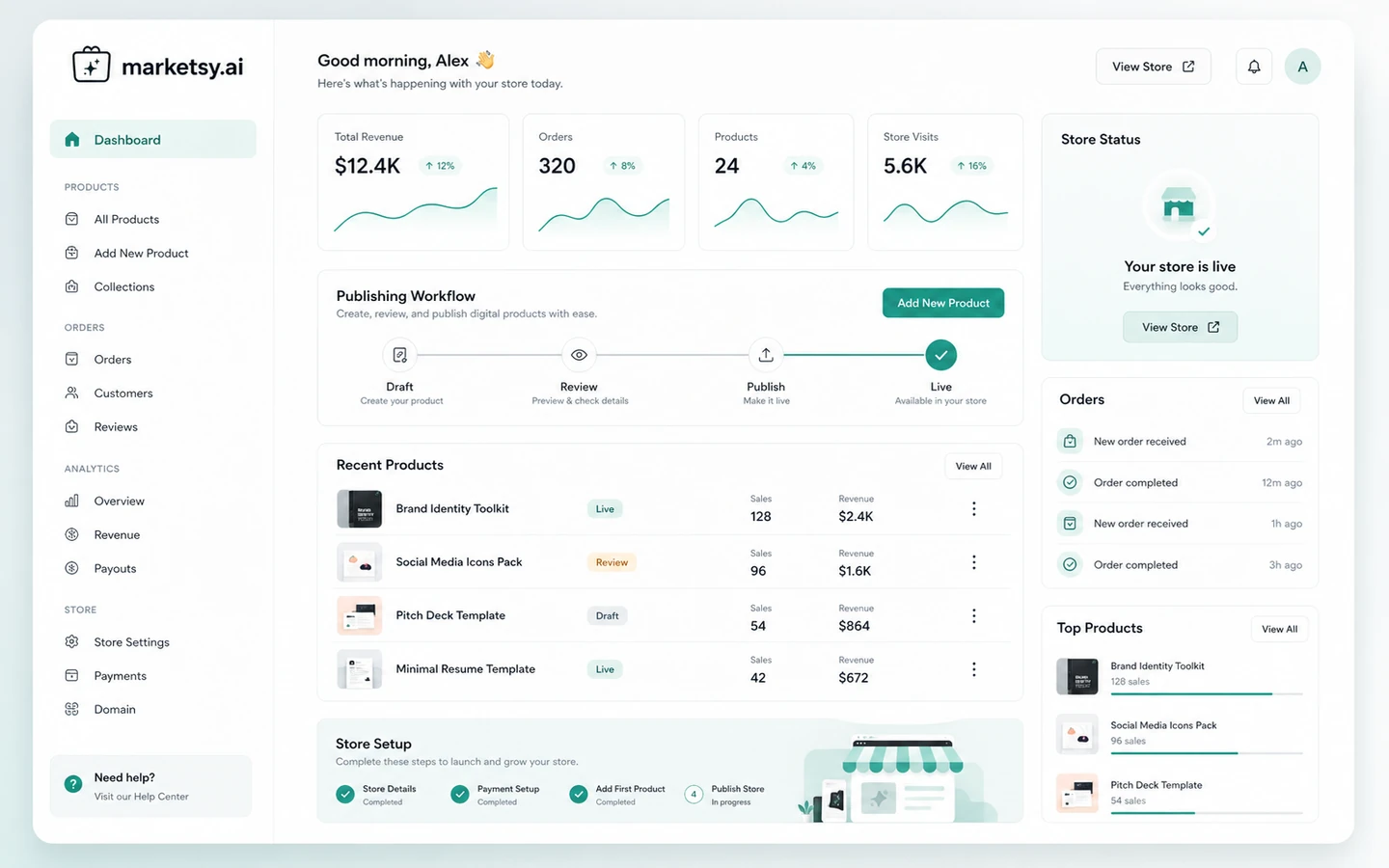
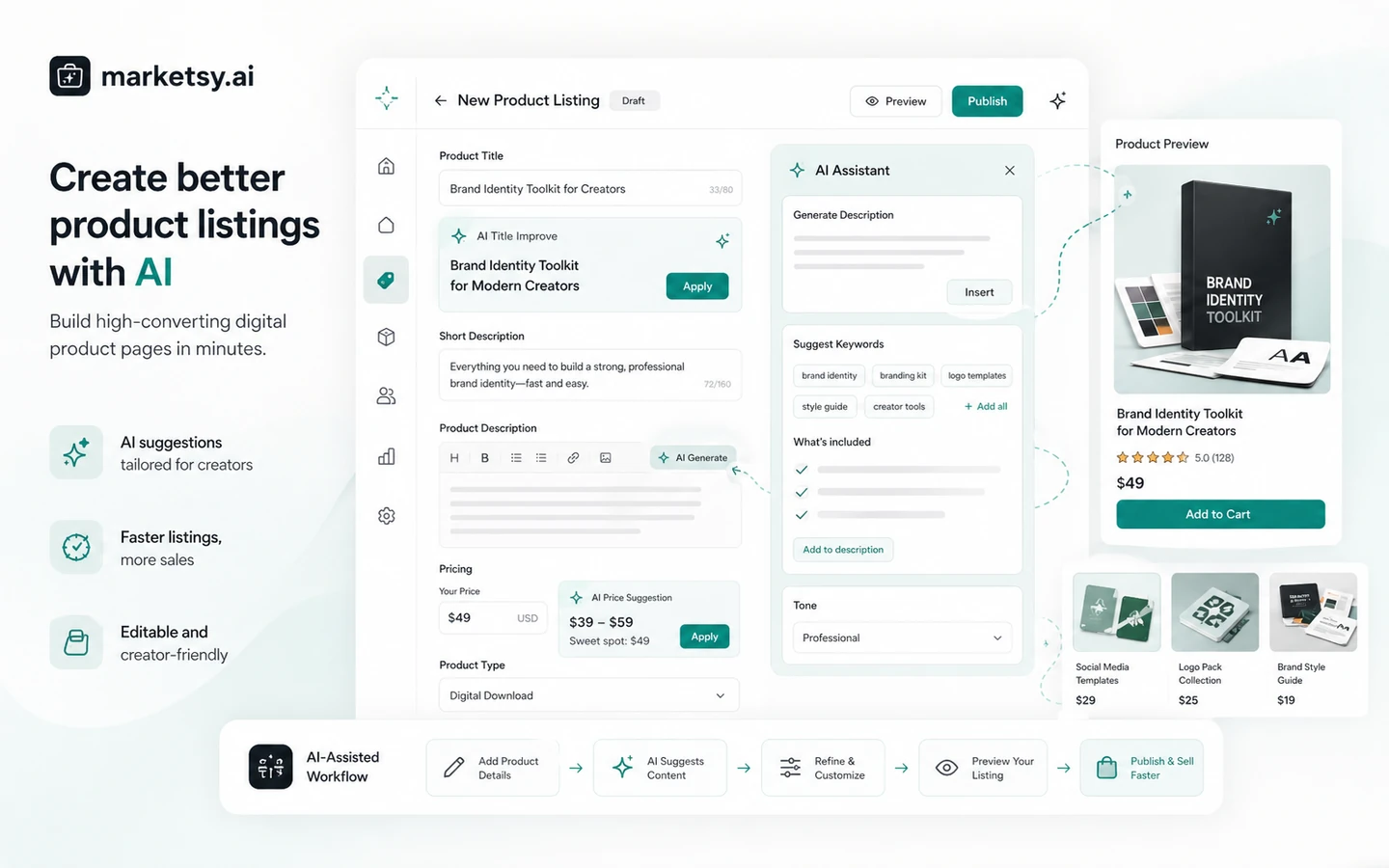
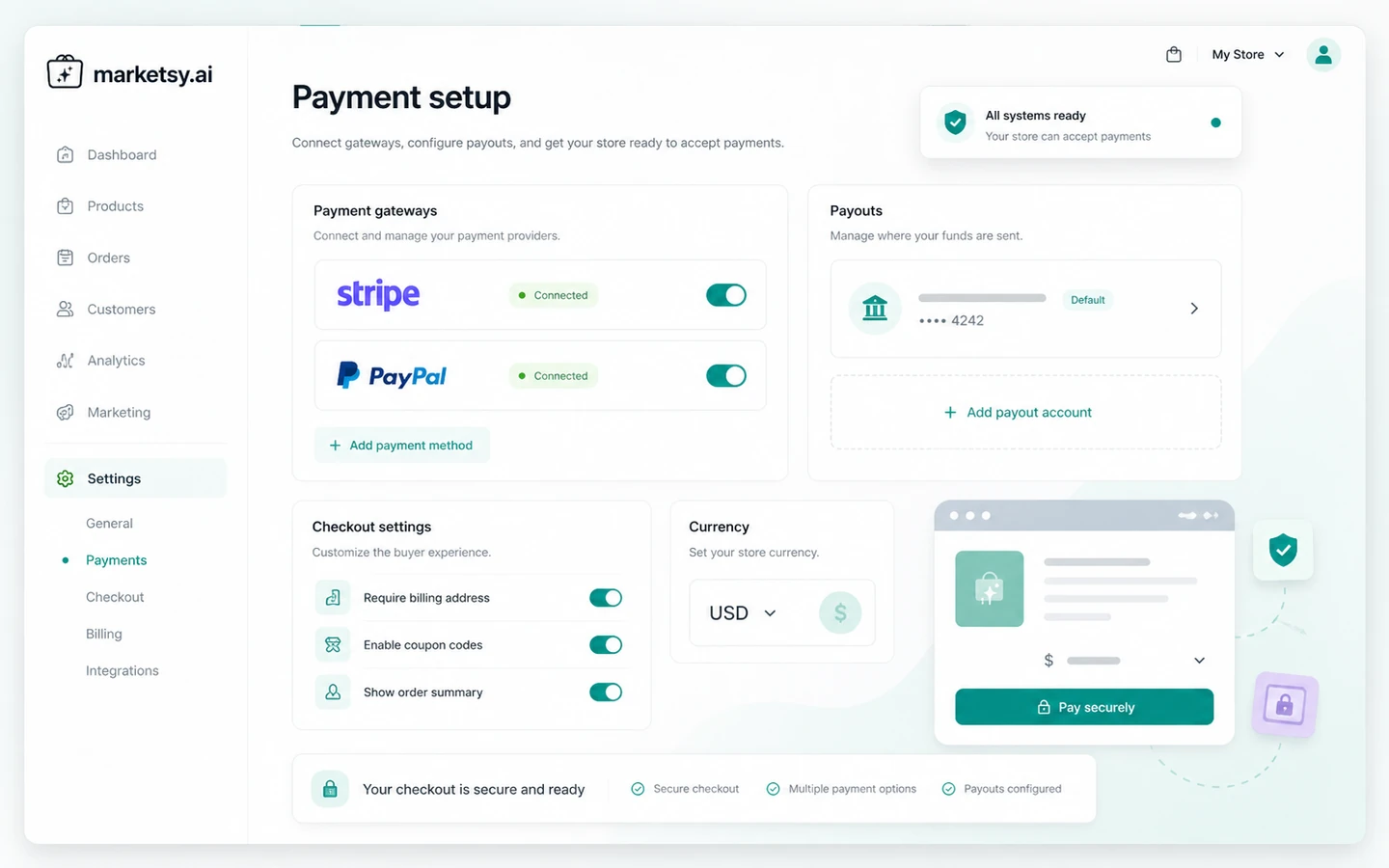
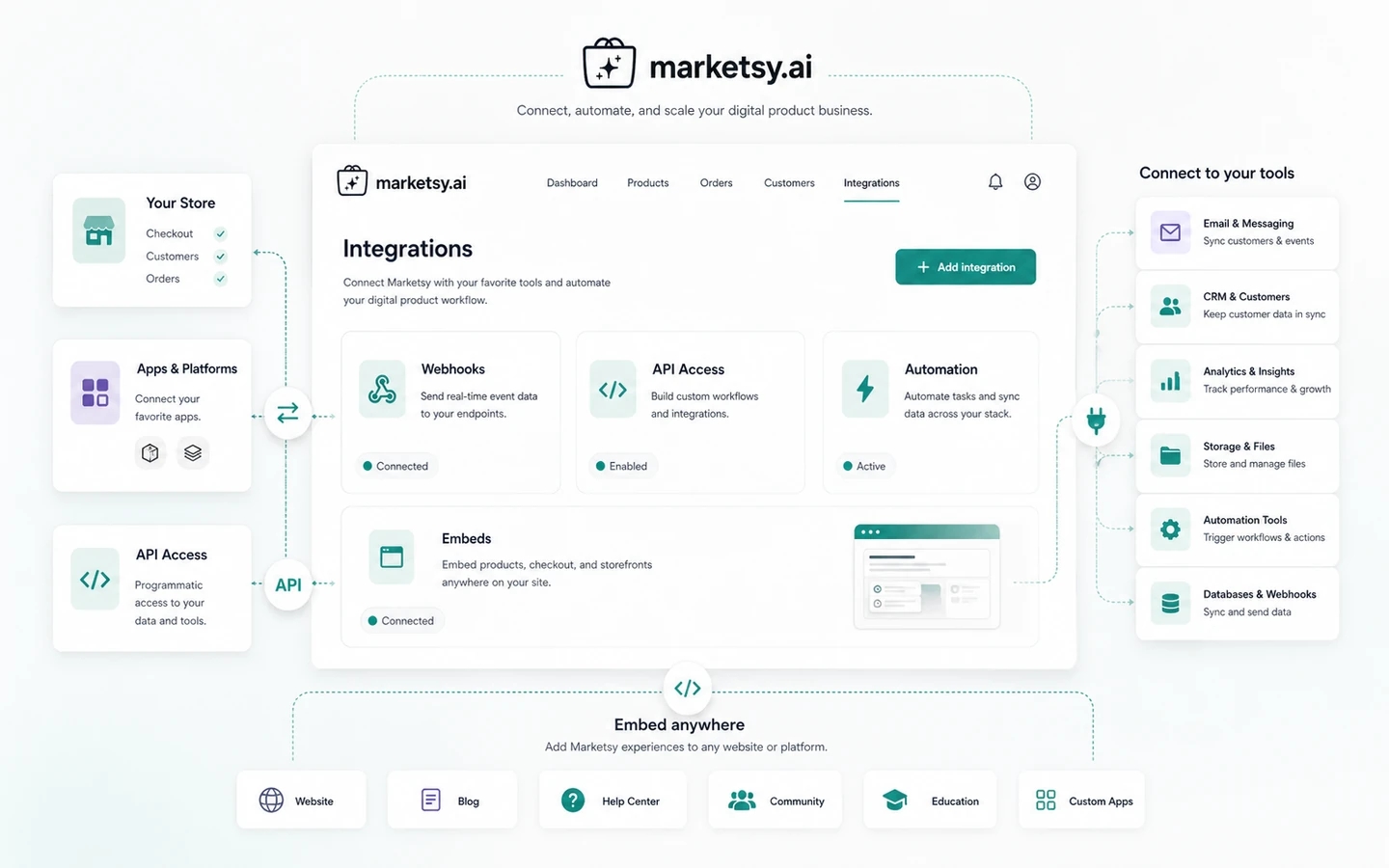
Marketsy is best understood as an AI-assisted storefront platform for people selling digital products. It can be attractive if you want a faster path to launch than building a full ecommerce site, but it still needs a real product, a traffic source, and a clear checkout plan. The store page should help buyers decide whether to check pricing, read the review, compare alternatives, or skip it for a heavier ecommerce stack.
What Marketsy actually does
Marketsy helps sellers create a storefront for digital downloads, courses, memberships, templates, software, guides, creative assets, and similar products. The official homepage emphasizes a simpler alternative to using several separate tools for hosting, selling, payments, analytics, custom pages, blogs, promo codes, and product delivery.
- Create and publish a digital product storefront
- Use AI assistance for content and store setup tasks
- Accept payments through Stripe and PayPal
- Sell downloads, courses, memberships, freemium products, and pay-what-you-want offers
Pricing and plan fit
The official pricing page says Marketsy starts at $1/month and highlights 0% revenue cut. That is a strong commercial message, but it should be checked against the current plan table and checkout. Buyers should confirm how many stores, users, AI credits, custom domain options, integrations, and payment features are included before treating the headline price as the final cost.
- Use the official pricing page as the final reference
- Confirm whether any seasonal or lifetime promotion is still active
- Check AI credits and store limits before choosing a plan
Product tour video for the launch flow
Marketsy has a public YouTube walkthrough titled "Launch Your Ecommerce Store in Seconds with Marketsy.ai." It is useful for understanding the basic pitch: generate or launch a storefront quickly, then manage products and selling workflows from inside the platform. Buyers should watch it for workflow clarity, not as proof that a store will automatically make sales.
Payment, integrations, and seller operations
Marketsy's public feature list includes Stripe and PayPal, sales analytics, custom domain support, widgets, embeds, recurring payments, promo codes, Zapier, webhooks, and API access. This makes it more relevant to sellers who need a working checkout and operational links, not only a pretty storefront. API access is a plus, but buyers should still verify which plan includes it and whether their current stack is supported.
- Payment gateway fit matters more than design alone
- Webhooks and API access can help sellers connect external tools
- Analytics and promo code support are useful only if the store has real traffic
A second video for manual setup context
A separate YouTube video titled "How to create and launch your digital products store from scratch on Marketsy.ai manual" is useful for buyers who want slower setup context after watching the shorter launch pitch. Use this video to check how much manual work remains after the AI-assisted setup and whether product edits, payments, and publishing steps are clear enough.
Refund, coupon, and checkout risk
The Terms page is unusually important for Marketsy because it states that payments made directly to the platform are no-refund. That does not necessarily govern refunds offered by individual sellers running their own Marketsy stores, but it does shape the risk of paying Marketsy itself. For coupons, the safer assumption is that public codes are not consistently available unless an active checkout offer or DealBestDaily route confirms one.
- Read the no-refund policy before direct platform payment
- Do not assume AppSumo refund terms apply to direct Marketsy purchases
- Check official pricing and checkout for any current promotional offer
Best next step
The safest next step depends on buyer confidence. If the product fit is still unclear, read the Marketsy review first. If the workflow makes sense, open pricing and verify the current plan details. If a promotion appears, check whether it is an official checkout offer, an old third-party marketplace deal, or a DealBestDaily coupon route that needs confirmation.
- Review page first when fit is uncertain
- Pricing page first when you already know what you need to sell
- Coupon route last, after confirming that Marketsy is the right storefront platform
Best savings path from this store page
This is the clearest savings route to check once the product already looks like a fit.
Marketsy official pricing says buyers can start at one dollar per month with 0% revenue cut, which is the safest first paid path before considering larger commitments.
$1 trial path
Reported 50% lifetime savings path
Use comparison routes when the category fit is still open
Use these comparison routes when the product still looks plausible, but the category fit is not fully settled.
Often a simpler direct alternative for digital products when the buyer wants a familiar storefront and checkout path.
Better known for creator monetization and audience-driven digital product sales, but fee structure and control should be compared carefully.
Stronger for mature ecommerce operations and app ecosystem depth, but usually heavier than Marketsy for a simple digital product launch.
More focused on courses, memberships, and creator education businesses when learning products are the main offer.
Verification points worth checking before you click out
Where this store usually fits best in the workflow
Marketsy fits creators selling templates, guides, workbooks, presets, design assets, music, stock files, or similar downloadable products.
It can make sense for sellers who want courses, memberships, recurring products, and simple pages in one system instead of assembling multiple tools.
The AI co-pilot and product listing features are useful when the seller wants faster copy, content, and setup, but final editing still matters.
Marketsy is attractive when 0% platform commission is the main commercial hook, as long as the exact plan and payment fees are verified.
Practical checkpoints before and after signup
- List the exact product types you plan to sell, such as downloads, courses, memberships, or templates.
- Decide whether you need custom domain, embeds, API, webhooks, recurring payments, or promo codes from day one.
- Compare the total cost against Payhip, Gumroad, Shopify, and Podia before looking at coupon routes.
- Confirm the current starting price, plan limits, AI credits, commission rules, and payment gateway requirements.
- Check whether any Black Friday, lifetime, or discounted subscription message is currently active at checkout.
- Read the no-refund wording in the Terms before paying directly for the platform.
- Track visits, checkout conversion, abandoned carts, and product sales rather than assuming AI setup equals revenue.
- Use promo codes and embeds only when you already have traffic sources that can send qualified buyers to the store.
Fast-read signals for workflow fit and buying friction
Questions readers usually ask before choosing this store
What does Marketsy actually do?
Marketsy helps sellers create and run storefronts for digital products such as downloads, courses, memberships, templates, guides, and creative assets. It combines AI-assisted setup with payments, analytics, promo codes, embeds, custom domains, and related seller tools.
Is Marketsy free to use?
The current public pricing page says Marketsy starts at $1/month. A clearly reliable free plan was not confirmed during this refresh, so buyers should verify the latest plan table and checkout details before assuming there is a free operating path.
Does Marketsy have coupon codes?
A verified public coupon code was not confirmed. The safer savings path is to check the official pricing page, current checkout promotions, and DealBestDaily routing instead of assuming a code will be available.
What should buyers verify before paying for Marketsy?
Buyers should verify plan limits, AI credits, store count, custom domain support, payment gateway availability, API or webhook access, commission rules, current promotions, and the no-refund policy for direct platform payments.
What are the closest Marketsy alternatives?
Payhip and Gumroad are natural alternatives for digital product sellers. Shopify is stronger for larger ecommerce operations, while Podia may fit course and membership sellers better. The best choice depends on product type, traffic source, feature depth, and total checkout cost.
Choose the next route that matches what you still need to decide
The strongest next click depends on whether you still need product judgment, a savings route, or a broader category comparison.