
ActiveCampaign Pricing, Plans & Team Fit
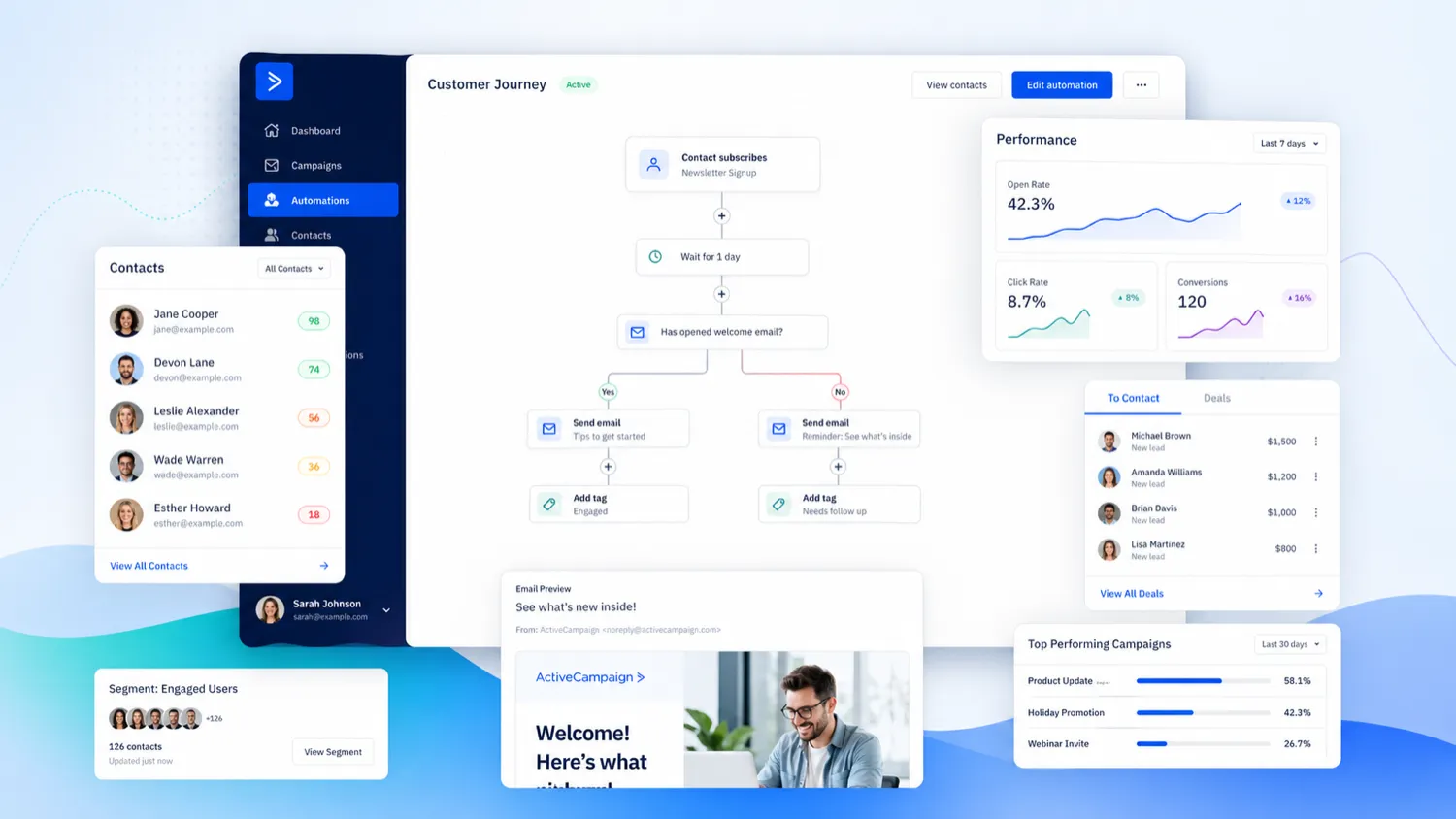
ActiveCampaign is a marketing automation platform built around email campaigns, customer journeys, segmentation, CRM-style contact management, landing pages, ecommerce integrations, reporting, and newer Active Intelligence features. It is best judged as a growth workflow platform, not as a simple newsletter sender. The product makes the most sense for small businesses, marketers, agencies, ecommerce teams, and service businesses that already have contacts, lifecycle stages, or follow-up sequences to manage. The main buying pressure is not whether ActiveCampaign has features. It clearly has depth. The real question is whether the buyer has enough marketing process to justify the setup work, contact-based pricing, and plan gates.
Fit → price → checkout
Use these routes after the official-site check: coupon first, review for fit, compare if unsure.
ActiveCampaign pricing snapshot
Fast commercial checks before pricing, coupons, or a deeper review.
ActiveCampaign product tour
ActiveCampaign's product tour should be read through a workflow lens: email campaign creation, automation building, segmentation, CRM handoff, integrations, and pricing. The buyer should look for evidence that the platform matches their actual marketing process, not just that the dashboard looks powerful.
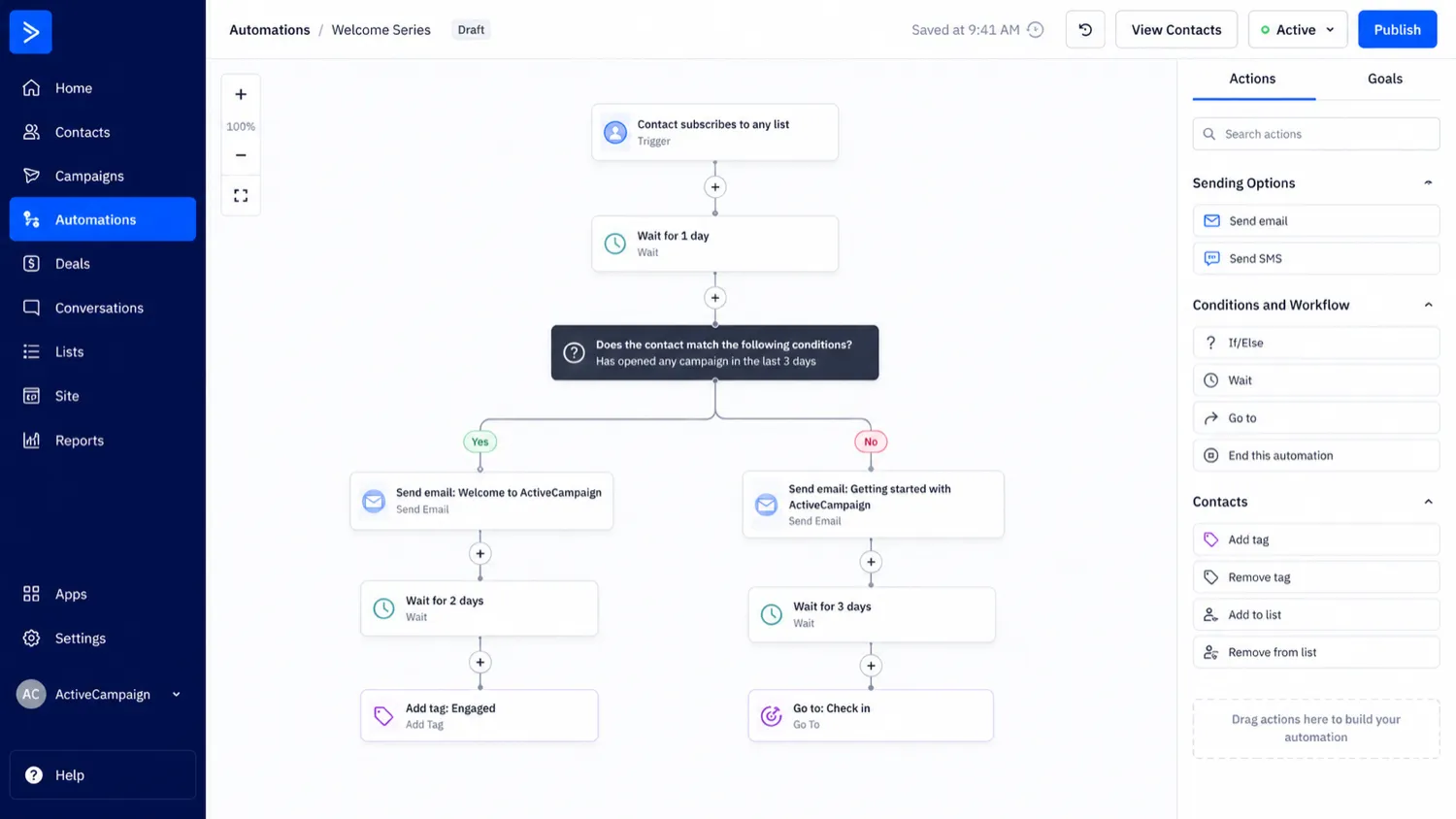
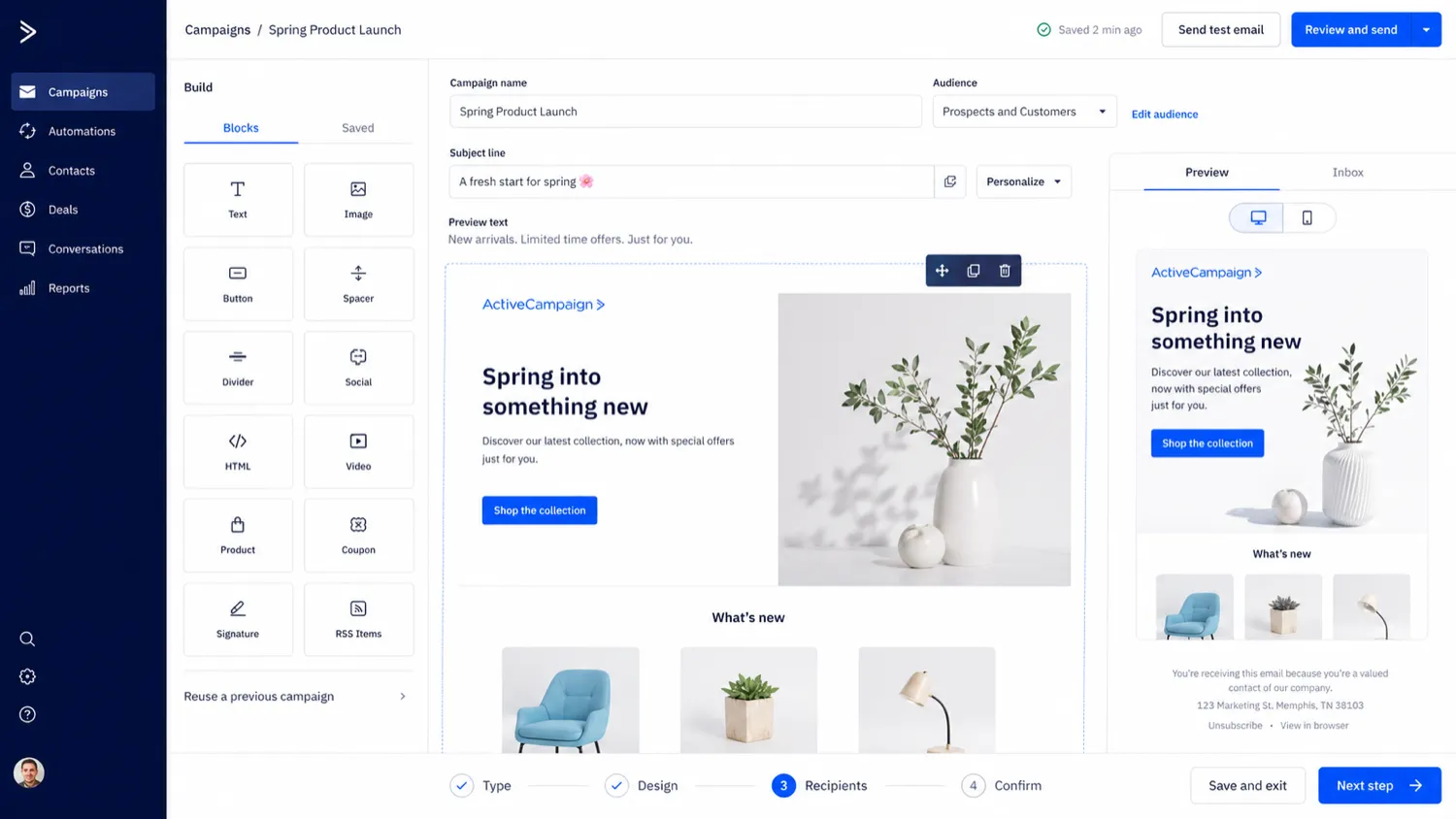
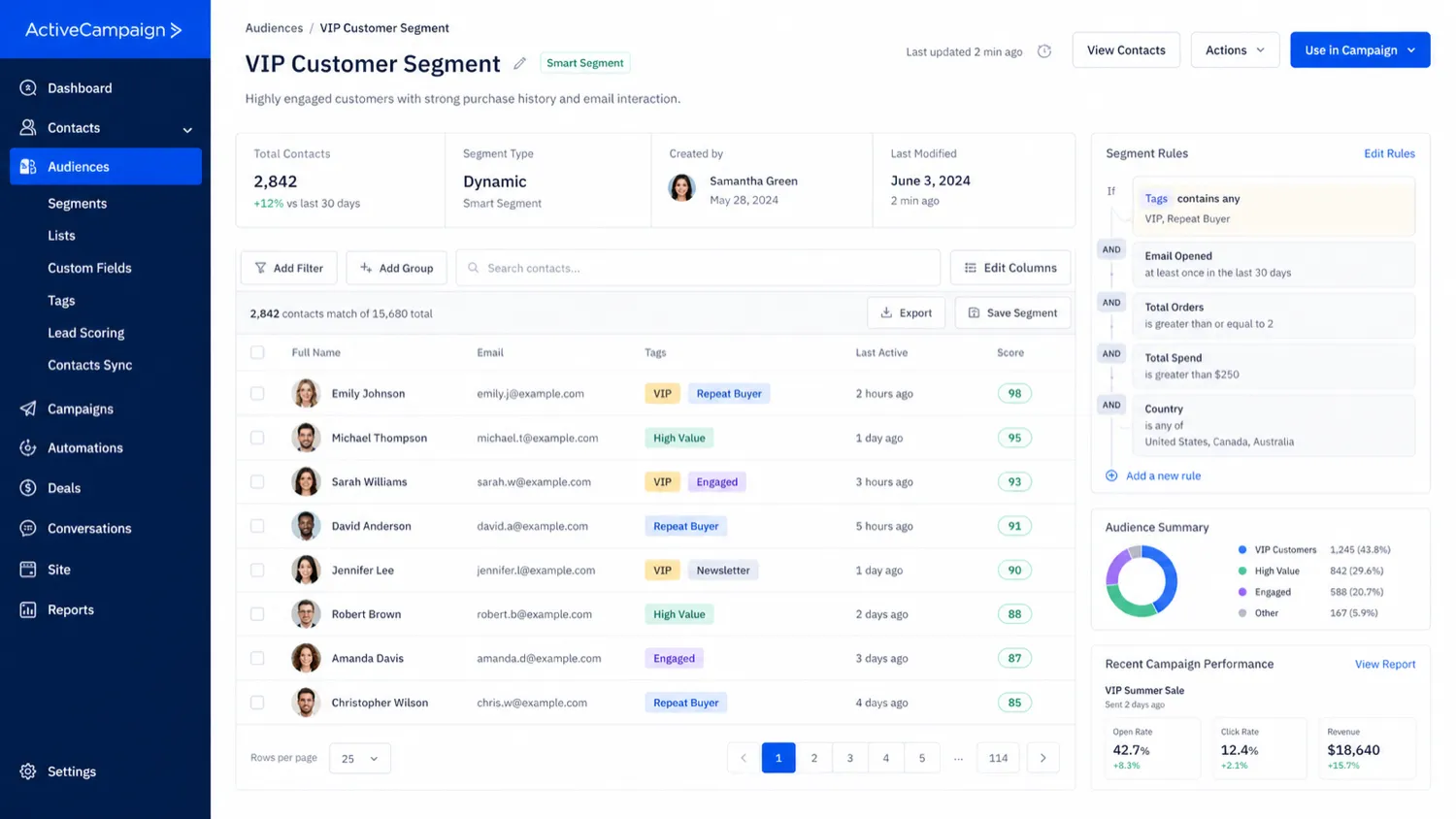
ActiveCampaign should be evaluated as an automation and lifecycle marketing system. The platform can handle email campaigns, customer journeys, segmentation, CRM-style follow-up, landing pages, ecommerce integrations, reporting, and API-connected workflows. That is useful depth, but it also means the buyer needs a real process to automate.
A buyer who only wants to send a monthly newsletter may find ActiveCampaign heavier than necessary. A buyer with leads, segments, ecommerce behavior, abandoned follow-up, sales handoffs, or repeat customer journeys is more likely to see why the platform exists.
What ActiveCampaign actually does
ActiveCampaign helps businesses create email campaigns, automate customer journeys, segment contacts, manage CRM-style follow-up, build landing pages, connect ecommerce data, and report on marketing activity. The platform is strongest when it becomes the center of a repeatable growth workflow rather than a place to send one-off emails.
The buyer should start by naming the workflow. For example, new lead nurture, abandoned cart follow-up, onboarding, webinar follow-up, reactivation, sales handoff, or post-purchase retention. If that workflow is clear, ActiveCampaign is easier to judge. If the workflow is vague, even a discounted plan can become shelfware.
- Use it for structured email and customer journey automation.
- Use it when segmentation and follow-up logic matter more than a simple broadcast.
- Avoid buying only because the feature list looks broad.
Pricing and plan fit
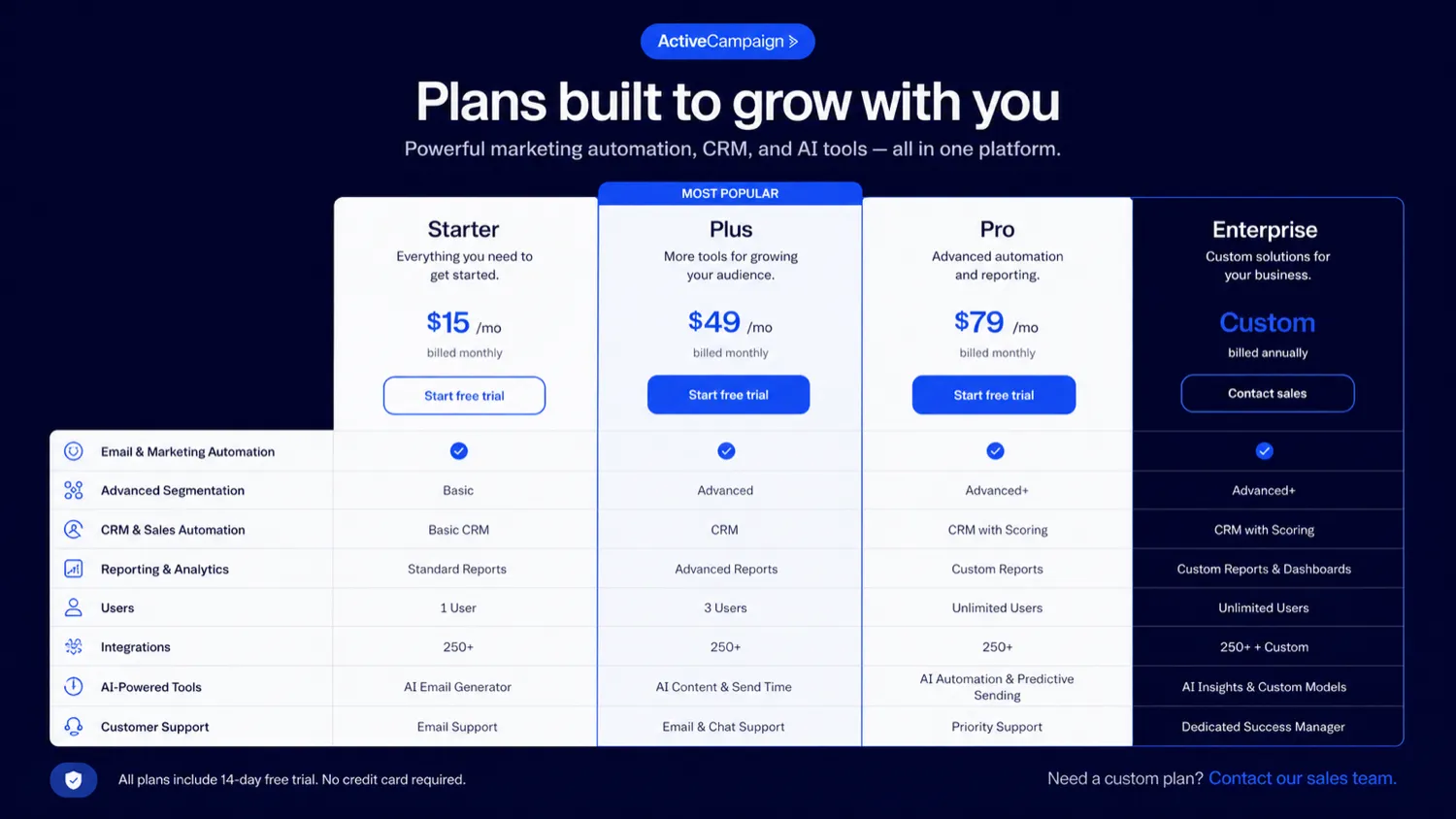
The official pricing path is not a single flat number. ActiveCampaign uses plan tiers and contact counts, with Starter, Plus, Pro, and Enterprise paths. The public pricing result shows an entry point from $15 per month, while the live pricing page asks buyers to customize by list size and plan needs.
This matters because the lowest entry price may not include the automation depth, user count, segmentation, reporting, or CRM-style features a growing team expects. The correct comparison is not only ActiveCampaign versus another tool. It is Starter versus Plus versus Pro at the contact count the buyer actually has.
- Check contact count before comparing prices.
- Compare annual and monthly billing before checkout.
- Verify whether the features you need sit in Starter, Plus, Pro, or Enterprise.
Trial, guarantee, and refund risk
ActiveCampaign gives buyers a useful first step through the 14-day free trial with no credit card required. That is the safest place to test campaign creation, automation logic, contact setup, and whether the interface matches the team's skill level.
Refund language needs more care. ActiveCampaign's general refund policy says it does not provide partial or full refunds. Separately, ActiveCampaign promotes a 30-day money-back guarantee with its own terms, cancellation steps, and refund request requirements. Buyers should treat the guarantee as conditional, not as a blanket refund promise.
- Start with the 14-day free trial.
- Read both the refund policy and the 30-day guarantee terms.
- Cancel and request any qualifying refund within the stated window if the promotion applies.
Where ActiveCampaign fits best
ActiveCampaign fits best when the buyer has a real marketing engine to run: lead capture, nurture sequences, sales handoff, ecommerce recovery, customer education, reactivation, or multi-step follow-up. The platform is especially relevant when email automation needs to connect with CRM data, website behavior, ecommerce events, integrations, or API-based systems.
It is not the cleanest fit for everyone. A very small creator list, a basic newsletter, or a one-time campaign may be easier to run in a lighter tool. ActiveCampaign earns its place when the extra automation depth reduces manual work or improves customer timing.
- Best for repeatable customer journeys and lifecycle marketing.
- Useful when contact data and automation logic need to work together.
- Less compelling for buyers who only need occasional newsletters.
Integrations, API, and team rollout
ActiveCampaign has a broad integration story. The pricing page points to more than 1,000 integrations, and the help center documents integrations across CRM, ecommerce, CMS, developer tools, Google Workspace, support tools, and more. API access is also documented for teams that need custom connections or developer-supported workflows.
That is useful for teams with existing systems, but it also creates a rollout question. Buyers should confirm who owns data hygiene, automation maintenance, integration credentials, and reporting. The platform can support a more serious stack, but only if the team is ready to manage it.
- Check whether your ecommerce, CRM, support, or analytics tools are supported.
- Confirm who owns API keys, developer settings, and integration maintenance.
- Plan a narrow rollout before expanding into every automation idea.
Best next step before checkout
The safest next step is simple: start the free trial, build one real automation, and compare the plan that supports that workflow at your actual contact count. After that, check the DealBestDaily offer route and the official pricing page side by side.
If ActiveCampaign still fits, move to the review page for deeper workflow tradeoffs or the coupon page for the current savings path. If the platform feels too heavy during trial, compare a lighter email tool or a funnel-first platform before committing.
- Trial first.
- Plan comparison second.
- Coupon or offer route only after fit is clear.
Best savings path from this store page
This is the clearest savings route to check once the product already looks like a fit.
The Starter annual path is the lower-cost entry plan for buyers who need core marketing automation but want to avoid paying for larger plan features too early.
Mid-tier annual path
Advanced annual path
Use comparison routes when the category fit is still open
Use these comparison routes when the product still looks plausible, but the category fit is not fully settled.
GoHighLevel is usually a closer fit for agencies that want CRM, funnels, client accounts, and marketing operations in one agency platform. ActiveCampaign is the cleaner first look when email automation and customer journeys are the main priority.
ClickFunnels deserves the next tab when funnel pages, offers, and checkout flow matter more than email lifecycle automation. ActiveCampaign is stronger when segmentation and follow-up logic drive the buying decision.
Agencywhiz is more agency-operations oriented, while ActiveCampaign is more focused on marketing automation, email campaigns, CRM-style follow-up, and lifecycle messaging.
Verification points worth checking before you click out
Where this store usually fits best in the workflow
ActiveCampaign is useful when a business captures leads from forms, landing pages, ads, or webinars and needs automated follow-up based on behavior, tags, or customer stage.
Ecommerce teams can use ActiveCampaign to support abandoned cart recovery, post-purchase education, win-back campaigns, segmentation, and connected customer messaging.
Small businesses can use ActiveCampaign when marketing follow-up needs to connect with CRM-style contact management, sales activity, or structured customer pipelines.
Agencies can evaluate ActiveCampaign for client automation builds, but they should confirm user limits, account structure, reporting depth, and handoff responsibilities before standardizing on it.
Practical checkpoints before and after signup
- Define the exact marketing journey before trialing the product.
- Check contact count, sending needs, and required integrations.
- Compare ActiveCampaign against one lighter email tool and one funnel or CRM-heavy alternative.
- Build one real automation rather than testing random features.
- Import a small clean contact segment and test tagging, fields, forms, and campaign creation.
- Confirm whether the team can maintain the workflow after setup.
- Compare Starter, Plus, Pro, and Enterprise at the actual contact tier.
- Check annual billing and current first-year promotion messaging.
- Read refund policy and guarantee terms before paying.
- Launch with one high-value automation before expanding.
- Assign ownership for list hygiene, integrations, API credentials, and reporting.
- Re-check plan fit when contacts, users, or sales workflows grow.
Fast-read signals for workflow fit and buying friction
Questions readers usually ask before choosing this store
What is ActiveCampaign best for?
ActiveCampaign is best for businesses that need email marketing, segmentation, automation, CRM-style follow-up, integrations, and lifecycle campaigns in one workflow. It is stronger for structured customer journeys than for very basic newsletters.
Does ActiveCampaign have a free plan or free trial?
ActiveCampaign promotes a 14-day free trial with email sign-up and no credit card required. A permanent free plan was not part of the verified official pricing path, so buyers should treat the free path as a trial rather than an ongoing free tier.
How should I think about ActiveCampaign pricing?
Treat the public starting price as only the entry point. The real price depends on contact count, plan tier, billing interval, add-ons, and whether Starter, Plus, Pro, or Enterprise includes the features your workflow needs.
Are there ActiveCampaign coupon codes?
A stable public coupon code was not confirmed from official sources. The safer savings check is the official pricing page, annual billing, any current first-year promotional message, and the DealBestDaily offer route before checkout.
What should I verify before paying for ActiveCampaign?
Verify your contact tier, required automation depth, segmentation needs, user count, integrations, CRM requirements, annual billing terms, refund policy, and whether any 30-day guarantee applies to your checkout path.
Choose the next route that matches what you still need to decide
The strongest next click depends on whether you still need product judgment, a savings route, or a broader category comparison.