Quick verdict
Rank Math is worth considering if your SEO work happens inside WordPress and you want more control without stacking a separate plugin for every job.
That is the real buyer tension here. Rank Math looks attractive because the free plugin is generous and the paid pricing can look modest on a monthly basis. But the better question is not “Is Rank Math cheap?” It is “Will this plugin become the SEO control layer I actually maintain?”
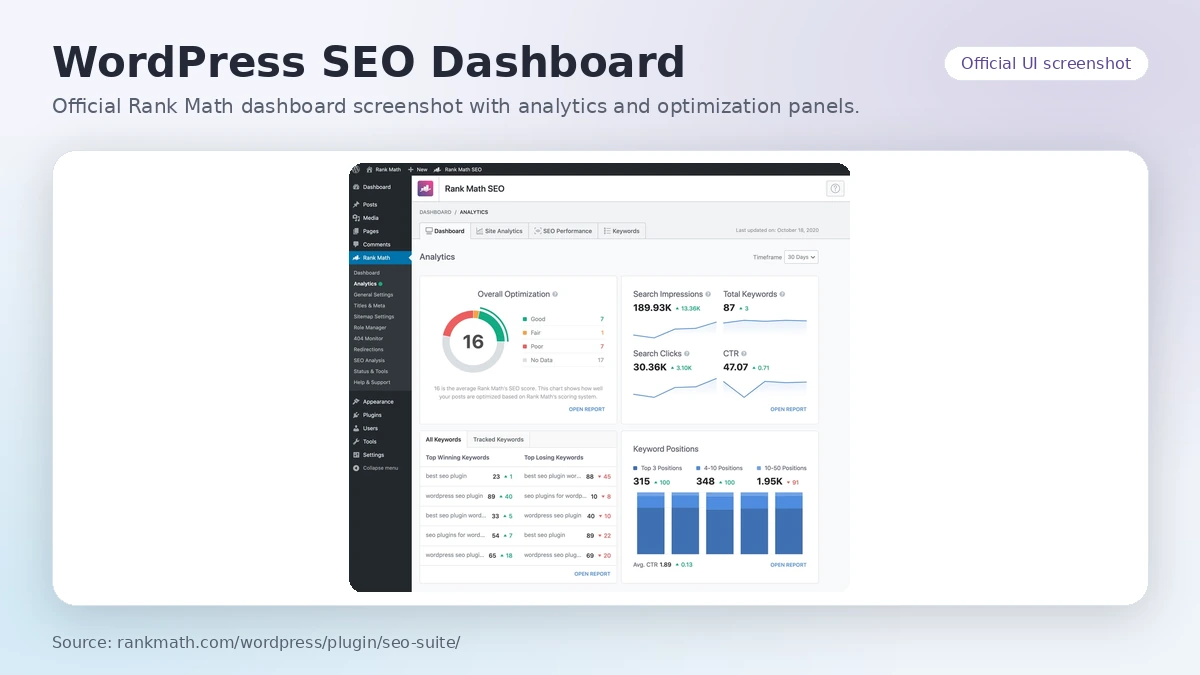
For many WordPress site owners, the answer can be yes. Rank Math covers setup, titles and meta, indexability, sitemaps, schema markup, content analysis, redirects, 404 monitoring, analytics, rank tracking, WooCommerce and local SEO modules, and newer AI-assisted SEO features. That is a lot of useful functionality in one WordPress workflow.
I would be more careful if you are buying only because the paid plan looks inexpensive, or because a promotional offer makes the upgrade feel urgent. A lower first-year price does not solve the harder problems: choosing the right plan, understanding renewal pricing, checking client-site licensing, and making sure Content AI’s current usage model fits your content volume.
For my money, Rank Math makes the most sense when you start free, prove the workflow fit, and upgrade only when a paid feature has a clear job. If you manage client sites, compare Business or Agency. If you only need keyword research outside WordPress, use a dedicated SEO suite instead.
Next step: If Rank Math fits your WordPress workflow, verify the current plan route before treating any promotion as the main reason to upgrade.
Review snapshot
| Review point | Practical take |
|---|---|
| Best for | WordPress site owners who want SEO controls, schema, sitemaps, redirects, and content checks inside the dashboard |
| Not ideal for | Non-WordPress sites, teams needing a platform-neutral SEO suite, or buyers who only need external rank tracking |
| Main use case | Managing WordPress SEO settings and publishing checks from one plugin workflow |
| Free path | Strong free WordPress plugin for basic setup, metadata, content checks, schema, and site SEO controls |
| Paid path | Paid plans make more sense for advanced schema, analytics, rank tracking, client websites, WooCommerce, local SEO, and AI-assisted workflows |
| Main strength | Feature depth inside WordPress without forcing every buyer into paid use immediately |
| Main concern | Plan selection, renewal pricing, client-site rights, and Content AI usage rules require live verification |
| Direct alternatives | Yoast SEO, AIOSEO, SEOPress, Squirrly SEO |
| Best next step | Install or evaluate the free plugin first, then upgrade only when a missing paid feature is clearly needed |
What is Rank Math?
Rank Math is best understood as a WordPress SEO control layer. It is not a general SEO suite like Semrush or Ahrefs, and it is not mainly an AI writing tool. Its core job is narrower and more practical: help WordPress users configure and manage SEO settings directly inside the site where content is published.
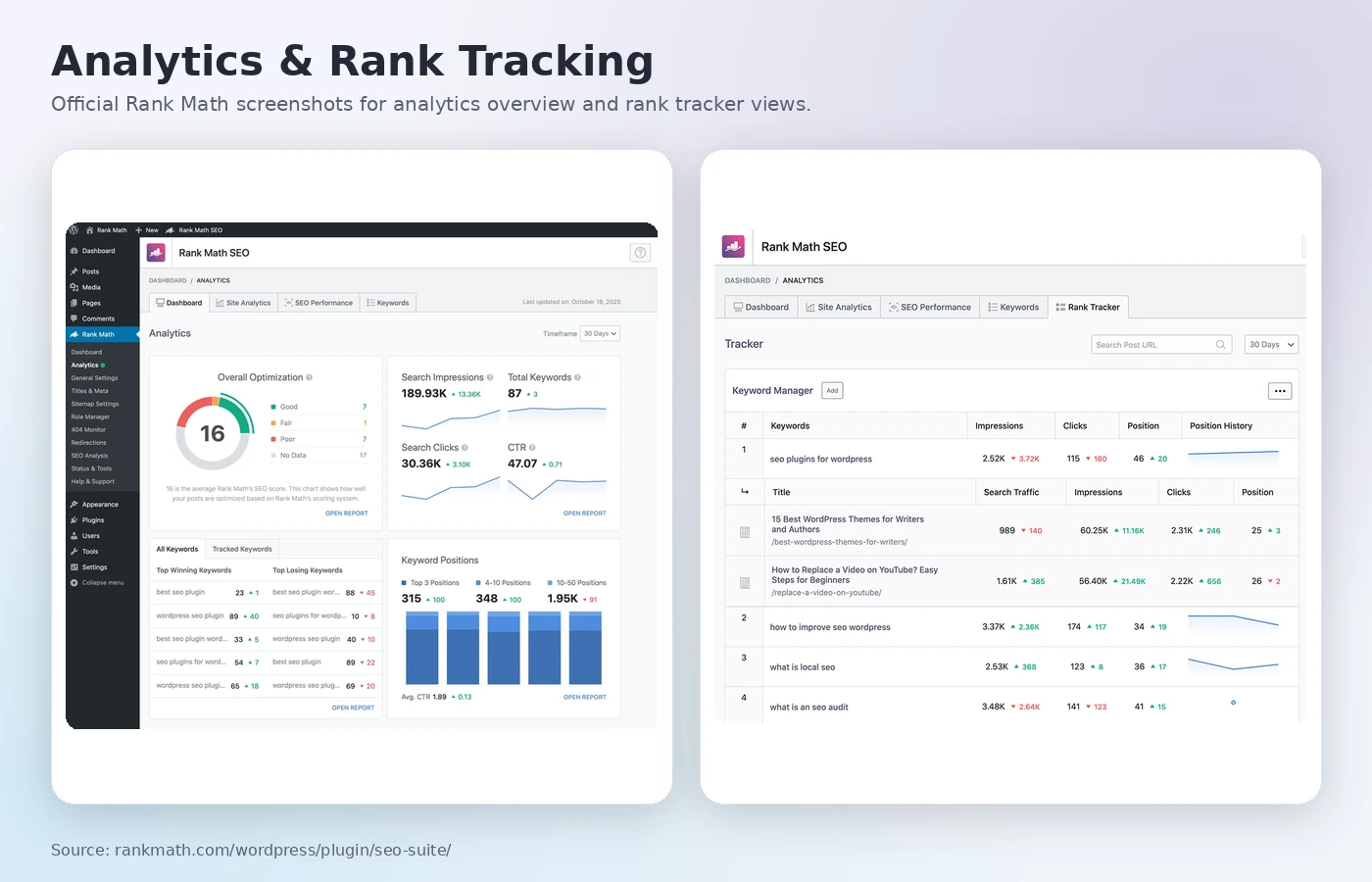
That includes titles and meta descriptions, indexability controls, XML sitemaps, schema markup, content analysis, redirects, 404 monitoring, search performance integrations, analytics, rank tracking, and modules for WooCommerce, local SEO, and richer structured data workflows.
The common wrong expectation is thinking Rank Math will “do SEO” for the site. It will not. It can make SEO settings easier to manage, reduce the need for several smaller plugins, and guide content optimization while you write. But it still needs a site owner who understands what should be indexed, what schema is appropriate, which redirects are safe, and how to interpret search performance.
Our review approach compares public product pages, pricing details, documentation, deal terms, WordPress workflow fit, and nearby alternatives. I would not treat a free plugin, promotional offer, or AI feature as proof that Rank Math fits the buyer. The real question is whether it improves the work you already repeat inside WordPress.
That makes Rank Math a serious option for WordPress publishers and a poor fit for anyone whose site is not on WordPress.
Who should use Rank Math?
Rank Math is a good fit for solo WordPress publishers who want a strong SEO plugin without paying immediately. A blogger, niche site owner, or affiliate publisher can start with the free plugin, configure core settings, use post-level content checks, add schema, manage sitemaps, and see whether the workflow feels useful before upgrading.
It also fits WooCommerce and local business sites that need more than basic meta fields. Product schema, local SEO settings, redirects, image SEO, and sitemap controls can matter more when pages directly affect sales or local visibility. The condition is that someone must configure the plugin carefully. Advanced settings are only helpful if the site owner knows why they are enabling them.
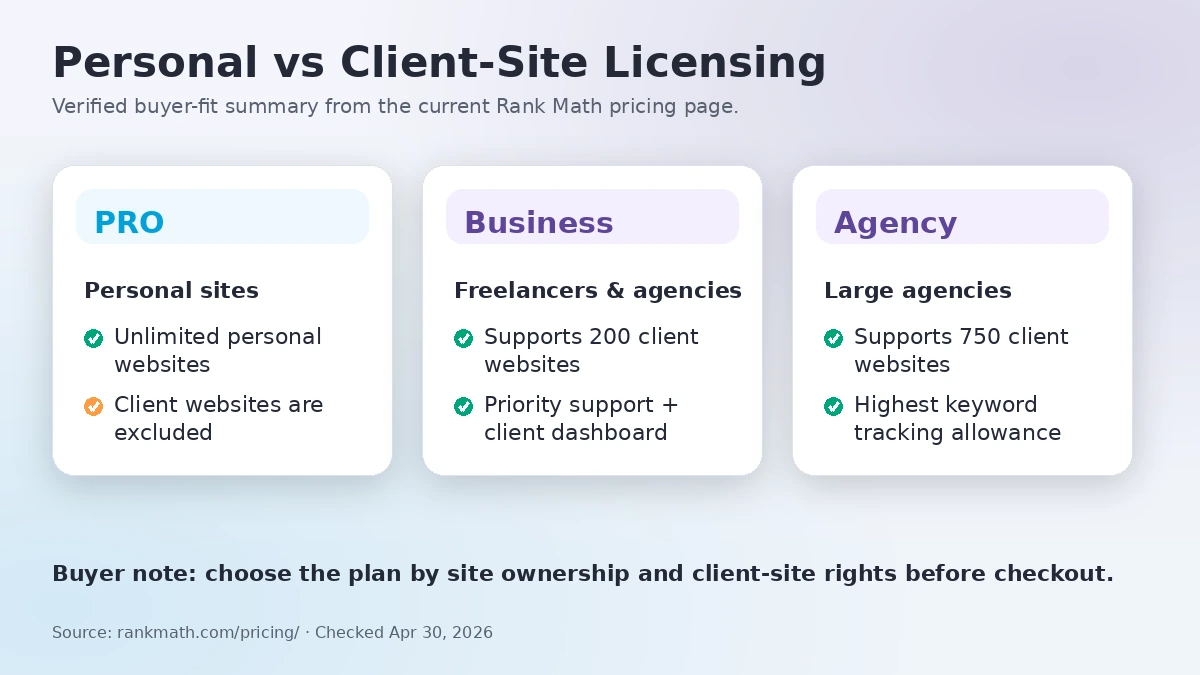
Freelancers and agencies should consider Rank Math when they manage multiple WordPress sites and want a repeatable SEO setup. But this is where plan choice becomes important. PRO is not the plan I would casually assume for client work. Business or Agency is the safer comparison when client-site licensing, reports, and higher keyword tracking limits matter.
Content teams may also benefit if the publishing process already lives inside WordPress. Rank Math can make SEO checks more visible before a post is published. The buyer should still separate ordinary SEO plugin value from Content AI value, because AI-assisted features have their own usage rules and should not be treated as unlimited writing capacity.
Who should avoid Rank Math?
Avoid Rank Math if your website is not on WordPress. That sounds obvious, but it matters because Rank Math is often discussed alongside broader SEO tools. If you need keyword research, competitive analysis, backlink data, technical crawling, or rank tracking across non-WordPress assets, a platform-neutral SEO suite is the better category.
I would also be careful if you only want a simple meta title and description field. Rank Math may still work, but the feature depth can become noise if you will never use schema, redirects, analytics, sitemaps, local SEO, WooCommerce SEO, or rank tracking. In that case, the free version may be enough, and paid use may be unnecessary.
Agencies should avoid choosing a plan based only on the PRO price. If client websites are involved, plan rights matter. A small monthly-looking price can lead to the wrong purchase if the license does not match the business model.
Beginners who are likely to enable every module without understanding the consequences should slow down. SEO plugins can help, but they can also create indexability mistakes, duplicate schema, incorrect redirects, or confusing analytics if configured casually.
Finally, skip the paid plan if the main attraction is a coupon or temporary offer. A discount can improve a purchase that already makes sense. It should not be the reason you buy a plugin you have not tested.
How Rank Math fits into a real workflow
A sensible Rank Math workflow starts before installation.
First, list what your WordPress site actually needs. A small blog may need titles, meta descriptions, basic schema, sitemaps, and content checks. A WooCommerce site may need product schema, redirects, image SEO, and ecommerce-specific controls. An agency may need repeatable setup, client-site support, reporting, and keyword tracking.
Then install or test Rank Math with a controlled setup. If the site already uses another SEO plugin, the migration path matters. You do not want to casually run multiple SEO plugins at once or import settings without checking how titles, schema, sitemaps, and redirects will behave.
After setup, the useful workflow is simple: configure core settings, optimize a few important pages, inspect schema output, test sitemap behavior, connect analytics or Search Console if needed, and watch whether the plugin improves publishing decisions. Rank Math is strongest when it becomes part of the normal editing process rather than a dashboard you ignore after setup.
Paid evaluation should come later. Upgrade only when you can name the missing feature: advanced schema, WooCommerce depth, local SEO, rank tracking, client-site rights, Content AI usage, or reporting. Without that missing feature, free may be the better plan.
Workflow check: If you are unsure, test Rank Math with one real WordPress post, one schema use case, and one redirect or sitemap check before choosing a paid plan.
Real-world buyer scenarios
Solo blogger moving from basic SEO setup
A solo blogger may get strong value from the free plugin alone. The setup wizard, content analysis, schema options, sitemap controls, and search appearance settings can cover the first serious pass of WordPress SEO.
Where it may fail is overconfiguration. If the blogger keeps changing settings without understanding indexability, schema, or redirects, the plugin can create more anxiety than clarity. I would start free and upgrade only after a paid feature is needed repeatedly.
Affiliate publisher managing many posts
An affiliate publisher may like Rank Math because SEO decisions happen close to the content. Content scoring, schema, internal linking suggestions, image SEO, redirects, and analytics can all support a publishing workflow.
The risk is treating the content score as the whole SEO strategy. A higher plugin score does not guarantee ranking. The better use is to combine Rank Math with real keyword research, internal linking, helpful content, page speed, and ongoing SERP review.
WooCommerce or local business site
Rank Math becomes more useful when structured data and local visibility matter. Product pages, service pages, business information, schema, and redirects are not just nice extras for these sites. They can affect how search engines understand the business.
Before paying, I would verify which WooCommerce, local SEO, and schema controls are available on the plan being considered. The setup effort is part of the cost.
Freelancer or agency managing client websites
For agencies, the decision is not only features. It is licensing, client-site coverage, reporting, keyword tracking, renewal pricing, support expectations, and repeatable deployment.
A freelancer managing client sites should not treat PRO as the default just because it looks cheaper. Business or Agency may be the correct route, depending on current plan rules and client volume.
Key features that actually matter
Setup wizard and module system
Rank Math’s setup wizard and modular structure matter because SEO plugins can become messy fast. The buyer benefit is control: enable the SEO modules tied to real work and leave the rest alone.
Buyer note: start with the modules tied to titles, meta, sitemaps, schema, redirects, or analytics. Do not enable every module just because it exists.
Titles, meta, indexability, and sitemaps
These are the unglamorous features that usually matter most. Rank Math helps control how pages appear in search, which pages should be indexed, and how XML sitemaps communicate site structure.
Buyer note: check indexability settings carefully, especially for archives, thin pages, staging pages, and duplicate content areas.
Schema and rich result support
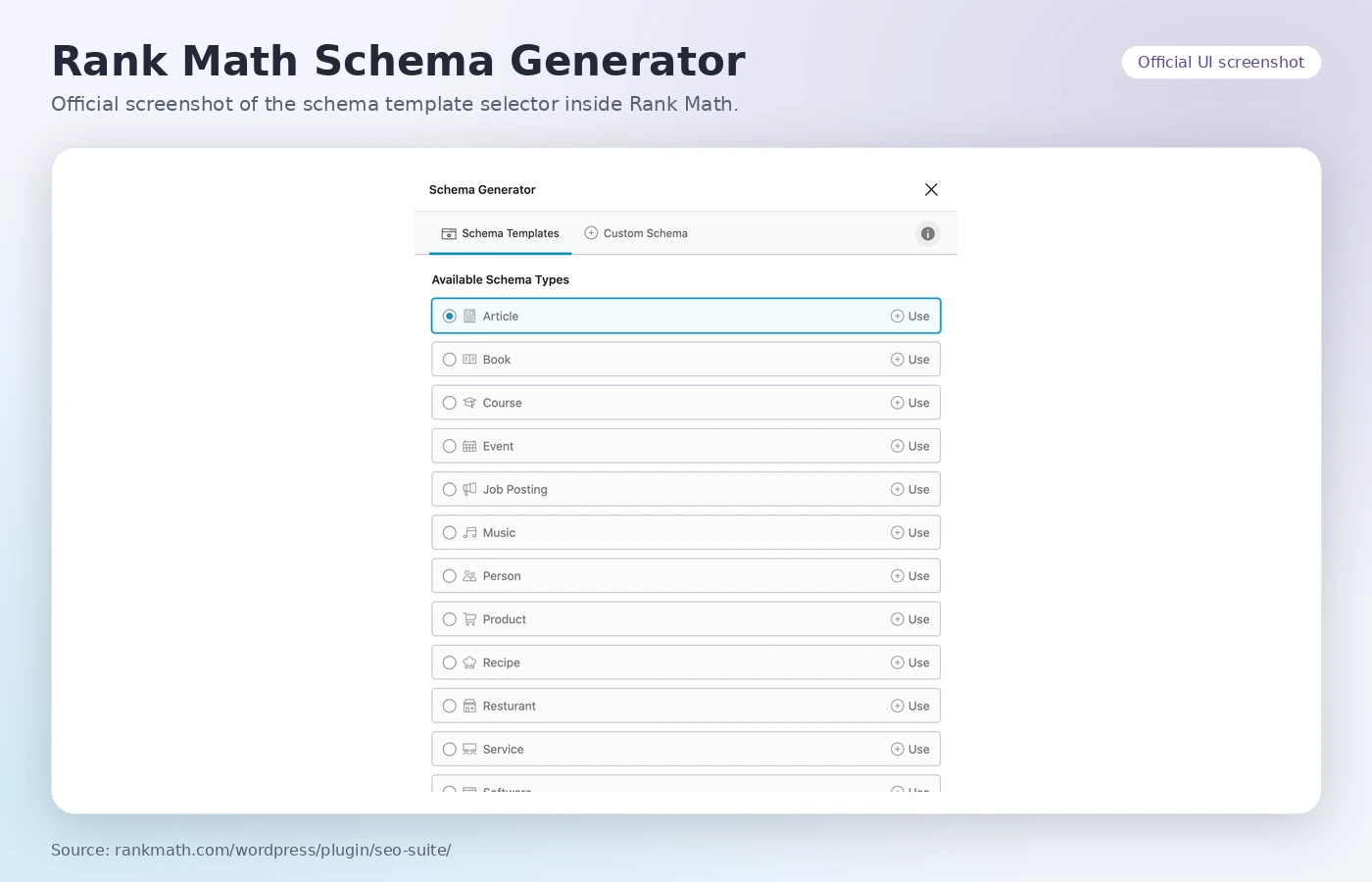
Schema is one of the main reasons buyers compare Rank Math seriously with other SEO plugins. Article, product, FAQ, local business, and WooCommerce schema can be valuable when implemented correctly.
Buyer note: more schema is not automatically better. Use schema that accurately represents the page and test important templates after setup.
Redirects, 404 monitoring, and analytics
Built-in redirects, 404 monitoring, Search Console, analytics, and rank tracking can reduce plugin sprawl and keep SEO review closer to WordPress. This is useful for publishers that update content often.
Buyer note: verify keyword tracking limits and reporting expectations before assuming Rank Math can replace a dedicated rank tracker.
Content AI and AI Link Genius
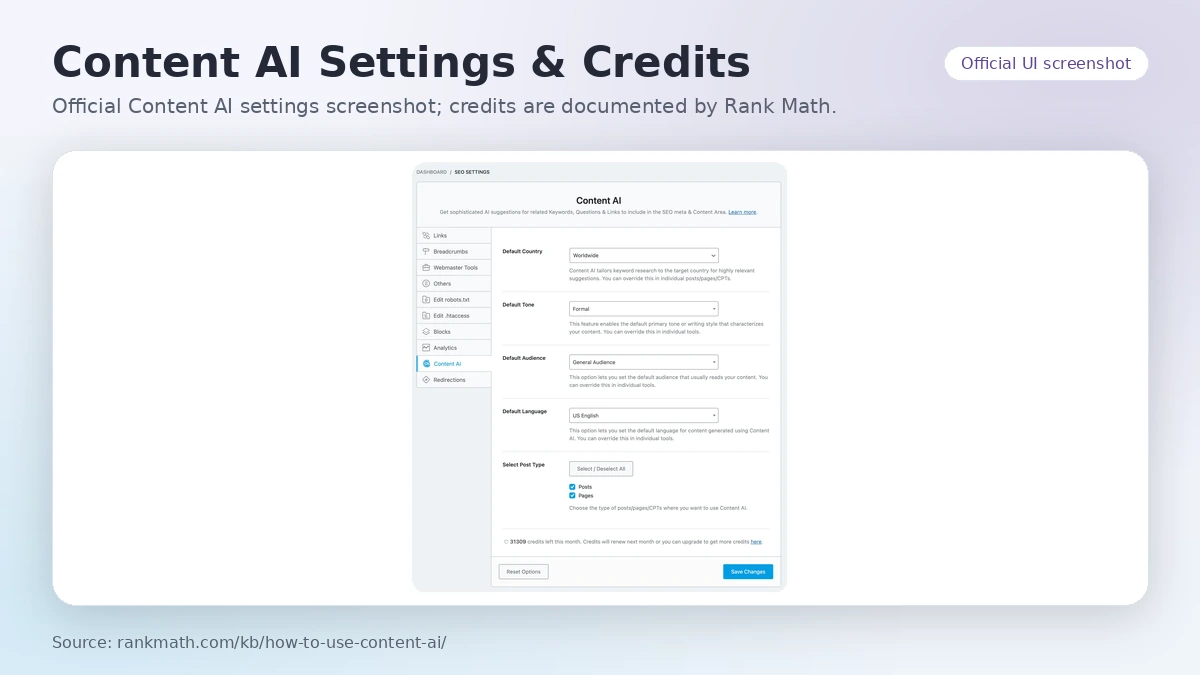
Content AI is useful to evaluate separately from the core SEO plugin. Older materials and third-party reviews may still mention credits, while current Rank Math documentation describes a move toward feature-based monthly usage limits for AI-powered features.
Buyer note: treat Content AI as a current-plan and current-documentation decision, not as an unlimited writing bonus.
Pricing and plan value
Rank Math pricing is attractive, but it needs to be read slowly.
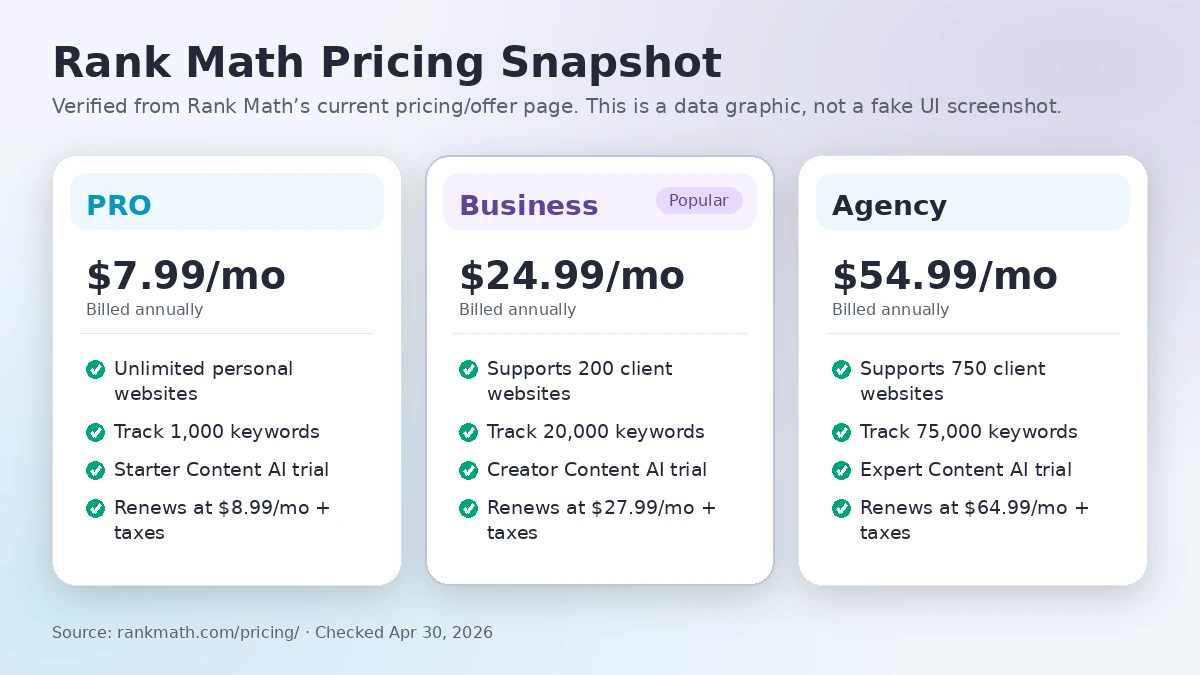
At the time of review, Rank Math’s public offer and plan pages show a free plugin and paid annual plans. The visible promotional path shows PRO at $7.99 per month billed annually, Business at $24.99 per month billed annually, Agency at $54.99 per month billed annually, and a Rank Math plus WP Rocket bundle at $11.99 per month billed annually, before VAT. The same pages also show renewal pricing language, so buyers should compare the first-year price with the renewal path before paying.
The free plugin is not a weak teaser. For many small WordPress sites, it may be enough. PRO is more natural for personally owned websites that need paid features. Business and Agency are the more relevant plans when client-site rights, higher keyword limits, reports, or agency workflows matter. The bundle only makes sense if you were already going to pay for both SEO and speed optimization tools.
My pricing take is straightforward: start free if your SEO workflow is still forming, choose PRO only for personally owned sites with clear paid-feature needs, and compare Business or Agency when client websites are involved. Do not move to annual billing until you know the plugin will be maintained and used.
Pricing check: Before paying for Rank Math, compare the live plan page, renewal language, client-site rights, and current offer route.
Check Rank Math pricing Check current offers Read store guide
Free plan, trial, coupon, and checkout notes
The free plugin is the safest first step for most buyers. It lets you check whether Rank Math fits your WordPress admin habits, content workflow, schema needs, and setup tolerance before you pay.
The Content AI trial and AI usage model need more caution. Rank Math documentation has recently shifted away from older credit-only language toward feature-based monthly limits for AI-powered features. That means buyers should not rely on old pricing screenshots or older reviews when deciding whether Content AI is enough. Check the current Content AI rules before treating it as part of your production plan.
The coupon path should come after product fit. If the site already needs a paid Rank Math plan, checking current offers makes sense. If the free plugin already solves the problem, a coupon does not create a need.
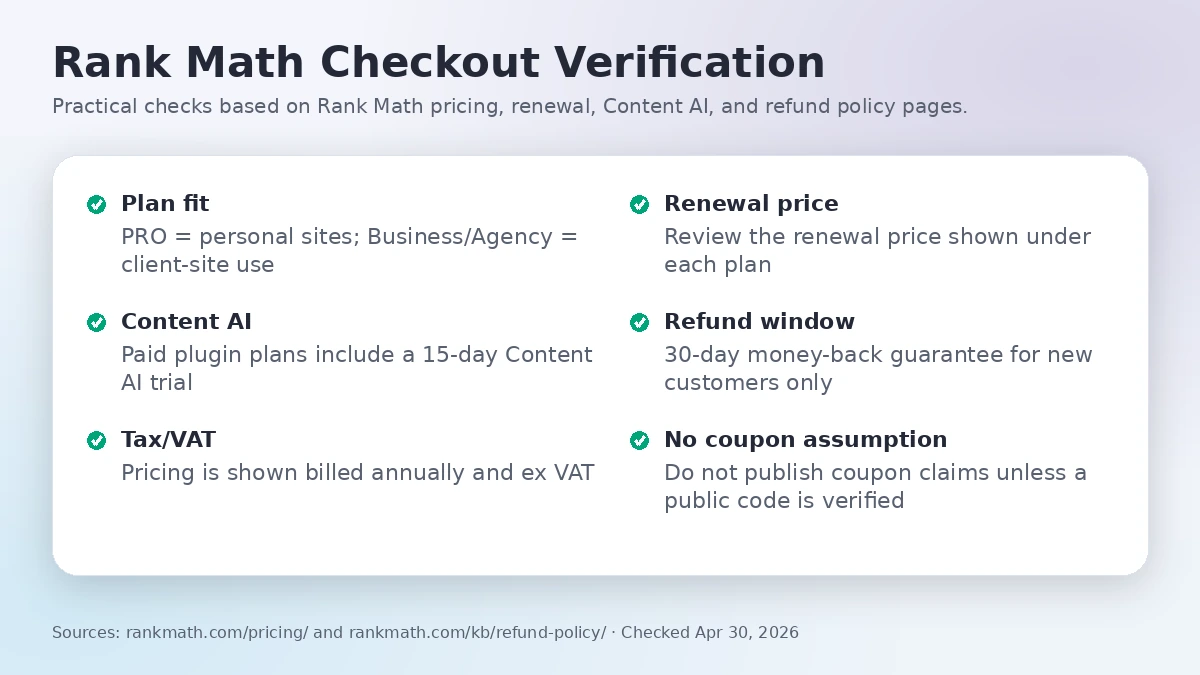
I would also check VAT, renewal price, bundle terms, and refund eligibility before checkout. Rank Math publicly describes a 30-day money-back path for new customers, while also making clear that renewals are different. That distinction matters if you are considering annual billing.
What I would check before buying Rank Math
If I were buying Rank Math for a real site, I would check these points before paying:
- Whether the free plugin already covers the site’s current titles, meta, schema, sitemap, redirect, and content-check needs.
- Whether the websites are personally owned or client-managed, because that changes the plan logic.
- The current PRO, Business, Agency, and bundle pricing at checkout, including VAT and renewal terms.
- Current Content AI usage rules, especially because older credit-based language may not reflect the latest feature-based monthly limits.
- Keyword tracking limits and whether Rank Math is enough or a dedicated rank tracker is still needed.
- Refund eligibility, cancellation flow, and whether the purchase is a new subscription or a renewal.
- Which alternative plugin should be compared before migrating an existing site.
A simple test before paying
Before paying, I would run a small test like this:
- Install or evaluate Rank Math on a non-critical WordPress site or a carefully backed-up live site.
- Configure only the modules needed for the current SEO workflow.
- Optimize one important post and one important page.
- Check the generated title, meta description, sitemap, and schema output.
- Test one redirect or 404 workflow if that feature matters to the site.
- Compare the free plugin experience with the exact paid feature you think you need.
- Decide whether the missing feature justifies annual billing.
That test is not glamorous, but it is practical. If Rank Math does not improve a real page, real schema setup, real sitemap behavior, or a real reporting workflow, the paid plan can wait.
Pros explained
The first real advantage is free-plugin depth. Rank Math gives many WordPress users enough functionality to start serious SEO setup without buying immediately. That matters for beginners and small publishers who need time to understand their workflow.
The second advantage is consolidation. Titles, meta, schema, sitemaps, redirects, 404 monitoring, analytics, rank tracking, and content checks can live closer together. This can reduce plugin sprawl, although it does not remove the need for careful setup.
The third advantage is schema depth. For publishers, WooCommerce stores, and local sites, structured data can become a serious workflow requirement. Rank Math gives buyers a reason to compare it beyond ordinary meta fields.
The fourth advantage is upgrade flexibility. Solo site owners, business users, and agencies have different plan routes. That is useful when the buyer understands the difference between personal sites and client sites.
The fifth advantage is migration support. WordPress users switching from another SEO plugin usually want less friction, and Rank Math’s import positioning reduces one of the biggest reasons people avoid changing SEO plugins.
Cons explained
The first drawback is category fit. Rank Math is not a full SEO research platform. If you need backlink analysis, deep competitor research, broad keyword databases, or technical crawling outside WordPress, this is not the whole stack.
The second drawback is plan complexity. PRO, Business, Agency, bundles, renewal prices, client-site rights, keyword limits, and AI usage rules create more decision points than the headline price suggests. Buyers should not treat the pricing table as simple until they read the plan details.
The third drawback is configuration risk. SEO plugins touch important site behavior. Indexing, schema, redirects, and sitemaps can help or hurt depending on setup quality.
The fourth drawback is AI-feature uncertainty. Content AI has had older credit-based explanations and newer feature-based monthly limit language. That does not make it bad. It does mean buyers should verify the current usage model before valuing the AI layer.
The fifth drawback is support variance in public feedback. Many users praise Rank Math’s setup and feature depth, while some third-party feedback mentions support, billing, or connection frustrations. I would not overreact to a few reviews, but I would treat them as a reminder to understand cancellation and renewal terms before annual billing.
Green flags and red flags
Green flags are clear with Rank Math.
It is a good sign if your site is on WordPress, you are already maintaining SEO settings regularly, and the free plugin clearly improves your publishing process. It is also a good sign if you can name the exact paid feature you need before opening the pricing page.
Another green flag is a real schema or WooCommerce requirement. Buyers with product pages, local pages, FAQ content, and structured data needs may get more value than someone who only wants a simple SEO score.
The red flags are mostly decision-making problems.
Slow down if you are buying only because of a discount. Slow down if you do not know whether your sites are personal or client sites. Slow down if you expect Content AI to replace content strategy. Slow down if you are migrating a live site without checking existing SEO plugin settings first.
The easy mistake is thinking the plugin’s feature list is the buying argument. The better way to judge Rank Math is to ask which feature changes your next SEO action.
Rank Math vs alternatives
Rank Math’s direct alternatives are other WordPress SEO plugins, not broad SEO suites. A keyword database or backlink platform may sit beside Rank Math, but it does not replace the same job inside WordPress.
Yoast SEO vs Rank Math
Yoast SEO is the obvious comparison if you want a long-established WordPress SEO plugin with a familiar interface and a large ecosystem. Rank Math may make more sense if you want more free functionality, deeper schema options, and a more aggressive all-in-one WordPress SEO control layer.
AIOSEO vs Rank Math
AIOSEO is worth comparing if you want a broad WordPress SEO suite with business-facing positioning and a different interface style. Rank Math may feel stronger if you prefer its free depth, advanced schema positioning, and dashboard-centered workflow.
SEOPress vs Rank Math
SEOPress deserves a look when pricing simplicity, white-label agency use, and a less crowded interface matter. Rank Math may be better for buyers who want a larger integrated feature set, Content AI options, and a more guided WordPress SEO plugin experience.
Squirrly SEO vs Rank Math
Squirrly SEO is a closer comparison for users who want guided SEO coaching and assistant-style recommendations. Rank Math is more compelling when the buyer wants a configurable SEO control panel and is comfortable making decisions about schema, modules, sitemaps, redirects, and analytics.
Trust, refund, and buyer-risk notes
The main trust signal for Rank Math is that the product is public, established, widely used in the WordPress ecosystem, and documented across official pages, WordPress.org, and support resources. That does not remove the need for buyer caution.
The first risk is pricing interpretation. Promotional pricing, annual billing, VAT, bundle language, and renewal terms should be checked at live checkout. Do not rely on older screenshots or third-party pricing summaries.
The second risk is refund expectations. Rank Math’s public refund materials describe a 30-day money-back path for new customers, while renewals are treated differently. If refund comfort matters, read the current refund and cancellation terms before buying.
The third risk is migration. Moving from Yoast, AIOSEO, or another SEO plugin should be planned. Check titles, meta, schema, sitemaps, redirects, and index settings after import.
The fourth risk is AI usage. Content AI should be treated as a current-plan and current-documentation decision. If your buying reason is AI-assisted SEO content, verify the latest monthly limits or usage model before assuming it can support your workflow.
The fifth risk is false simplicity. Rank Math can make SEO settings easier to access, but it does not make SEO automatic. Someone still needs to make editorial, technical, and strategic decisions.
Final verdict
I would consider Rank Math if your site runs on WordPress and you want a serious SEO plugin that can handle more than basic metadata. It is especially compelling if you value a strong free plugin, schema controls, sitemaps, redirects, content analysis, WooCommerce or local SEO support, and a path toward paid rank tracking or agency features.
I would skip Rank Math if you are not on WordPress, if you need a broader SEO research suite, or if your current site only needs very basic SEO fields. I would also pause before buying if the plan choice is unclear, if client-site rights matter, or if Content AI is the main reason for upgrading and you have not checked the current usage terms.
I would compare it with Yoast SEO if you want the safer familiar choice, AIOSEO if you want a broad business-facing WordPress SEO suite, SEOPress if pricing simplicity or white-label agency use matters, and Squirrly SEO if you want more guided SEO coaching.
The safest path is not complicated. Start free, configure carefully, test Rank Math on real WordPress pages, and upgrade only when the missing paid feature has a clear job in your SEO workflow. A coupon or promotional offer can make the right plan cheaper, but it should not decide the purchase for you.