Quick verdict
PLR Funnels is worth a serious look if your main problem is speed, not if your main problem is not knowing what business to build.
That distinction matters more than the sales page makes it feel.
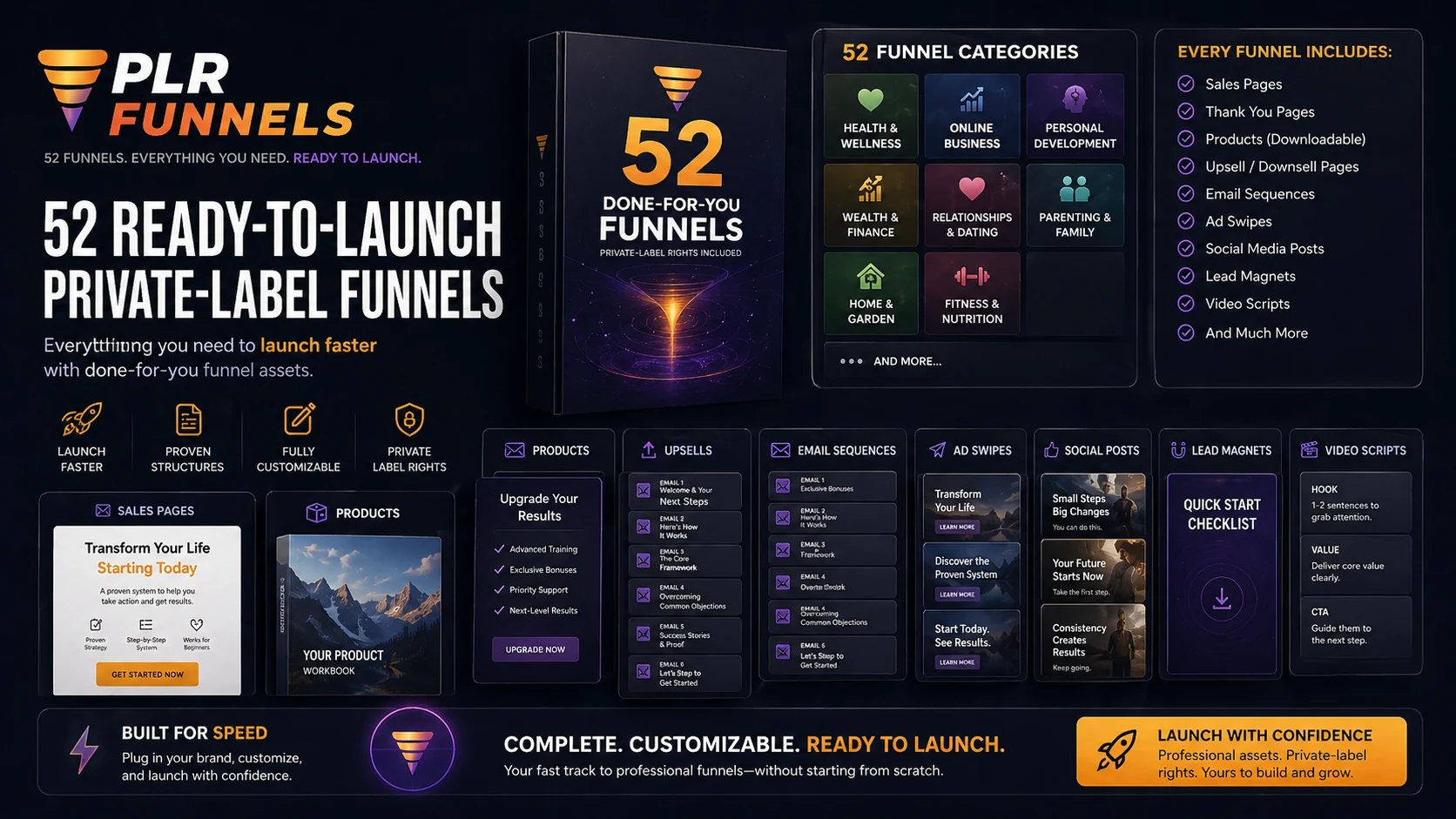
The public promise is attractive: a free masterclass around 52 ready-to-launch private-label funnels, with finished products, sales letters, upsells, email sequences, ads, and related launch assets. For a buyer who already knows the niche, understands the offer, and wants to move faster inside the ClickFunnels ecosystem, that can be useful. It compresses a lot of blank-page work into a starting package.
But I would be careful here. PLR Funnels is not a normal SaaS tool with a clean pricing grid, a free forever plan, and a dashboard you can judge in five minutes. The visible public entry point is the masterclass. The paid offer, payment terms, refund language, and any current checkout path need live verification before you treat the purchase as low-risk.
The bigger risk is not only price. It is buying a shortcut before you have a real launch plan. Pre-built assets can save time, but they cannot choose your audience, validate demand, rewrite generic copy into a credible offer, or send traffic to the funnel.
For my money, PLR Funnels makes sense only if you already want a funnel-based digital product launch and you are comfortable customizing private-label assets. If you want cheap software first, compare ClickFunnels, Systeme.io, or GoHighLevel before paying for a larger asset bundle.
Next step: If PLR Funnels still fits your launch plan, verify the current masterclass and checkout route before treating the bundle as a shortcut.
Review snapshot
| Review point | Practical take |
|---|---|
| Best for | Marketers who want ready-made funnel assets and are willing to customize before launch |
| Not ideal for | Buyers with no niche, no audience plan, no traffic strategy, or no budget for ClickFunnels |
| Main use case | Starting from private-label products, funnel pages, sales copy, emails, upsells, and promo assets |
| Public free path | Free masterclass registration, not full free access to the paid bundle |
| Pricing note | Paid checkout should be verified live because the public page does not show a simple static plan table |
| Main strength | Saves build time when the buyer already has a real offer direction |
| Main concern | Total cost can include the paid bundle plus separate ClickFunnels software |
| Direct comparisons | ClickFunnels for software, Systeme.io for budget funnels, GoHighLevel for agency workflows |
| Best next step | Watch the masterclass, then calculate bundle cost, software cost, refund terms, and launch readiness |
What is PLR Funnels?
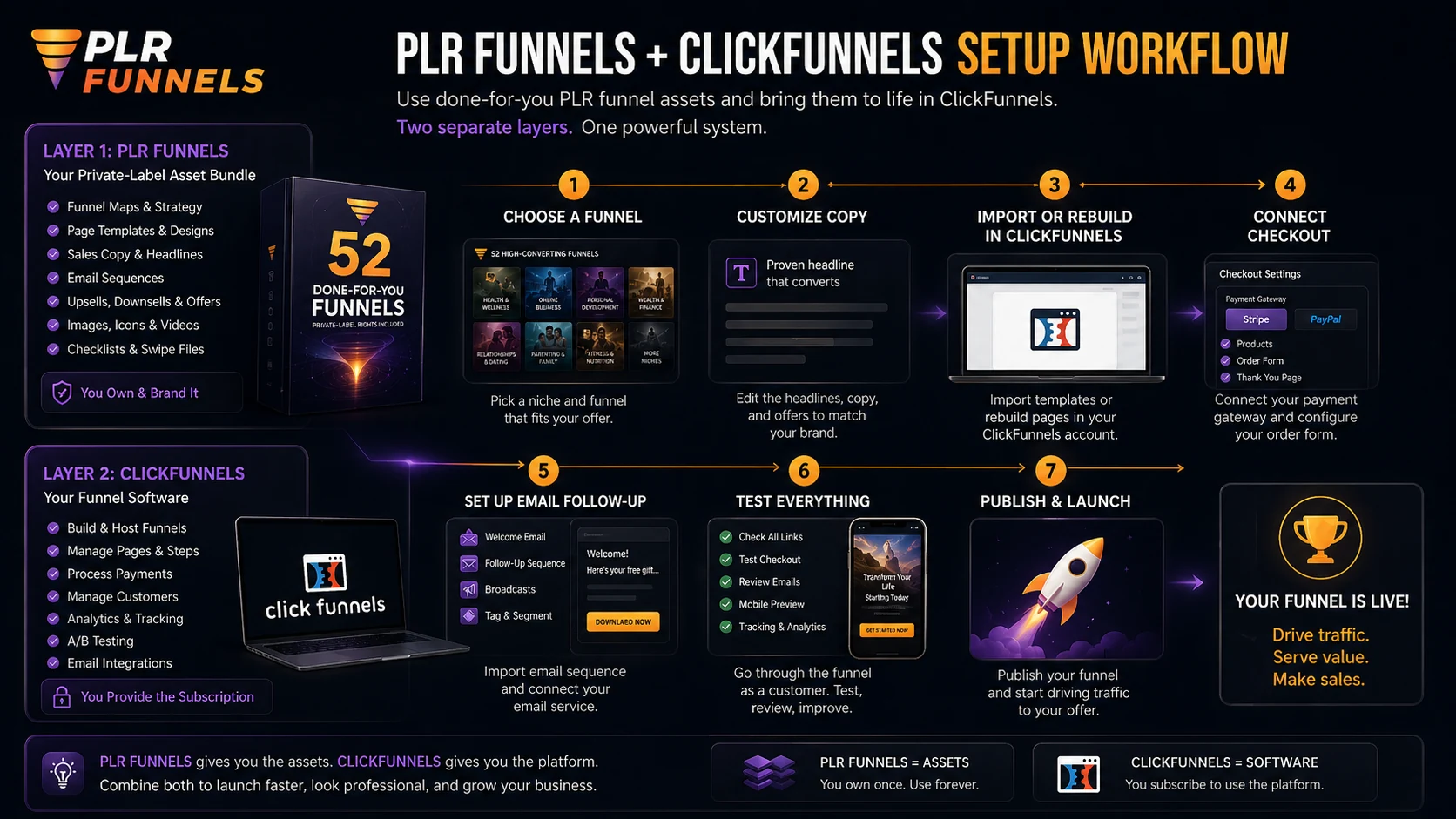
PLR Funnels is best understood as a private-label funnel asset bundle connected to the ClickFunnels ecosystem.
It is not a regular funnel builder by itself. It is not a broad PLR marketplace where you browse thousands of random ebooks. It is also not a magic business system that removes the need for positioning, traffic, list-building, or offer testing.
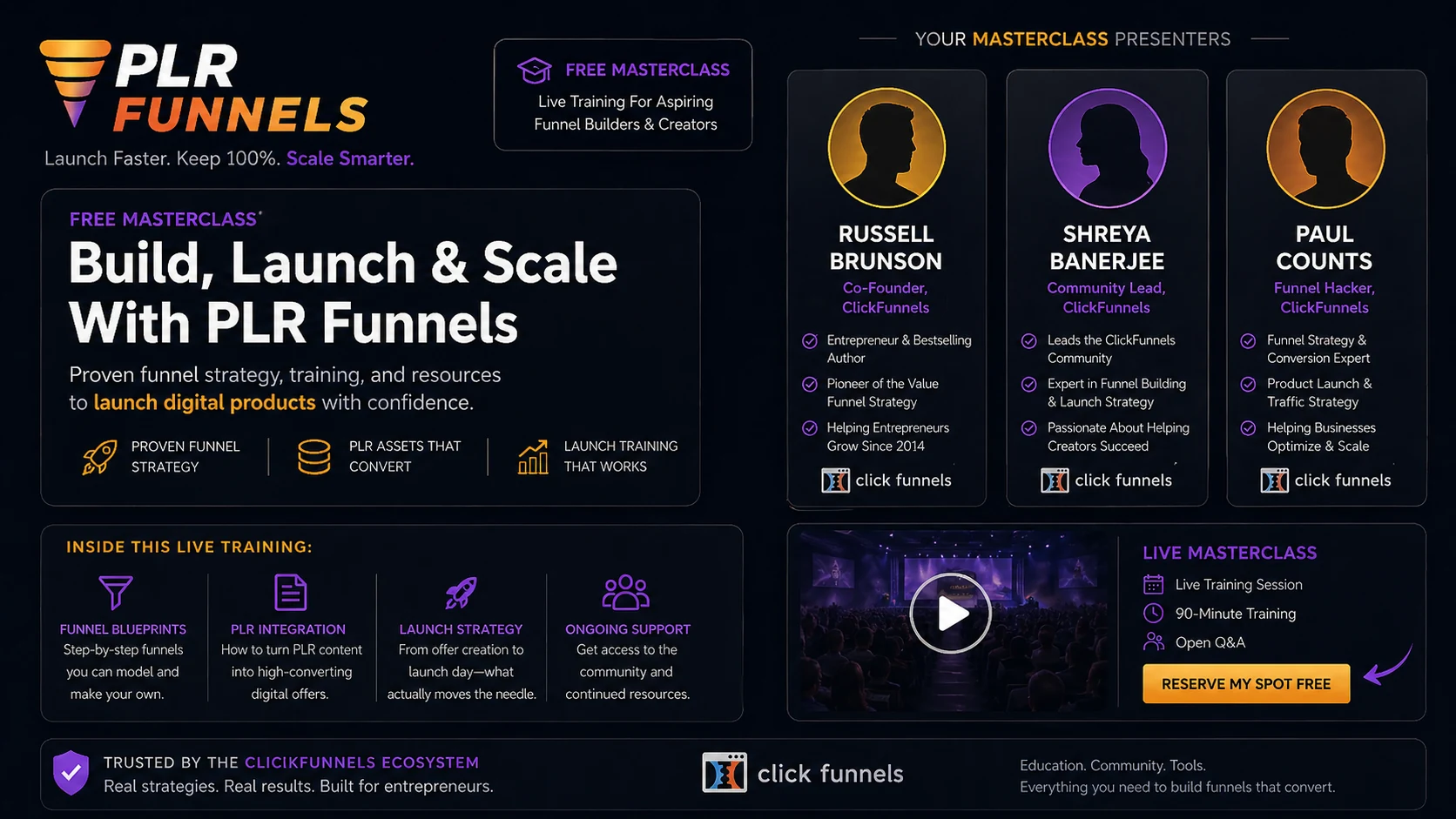
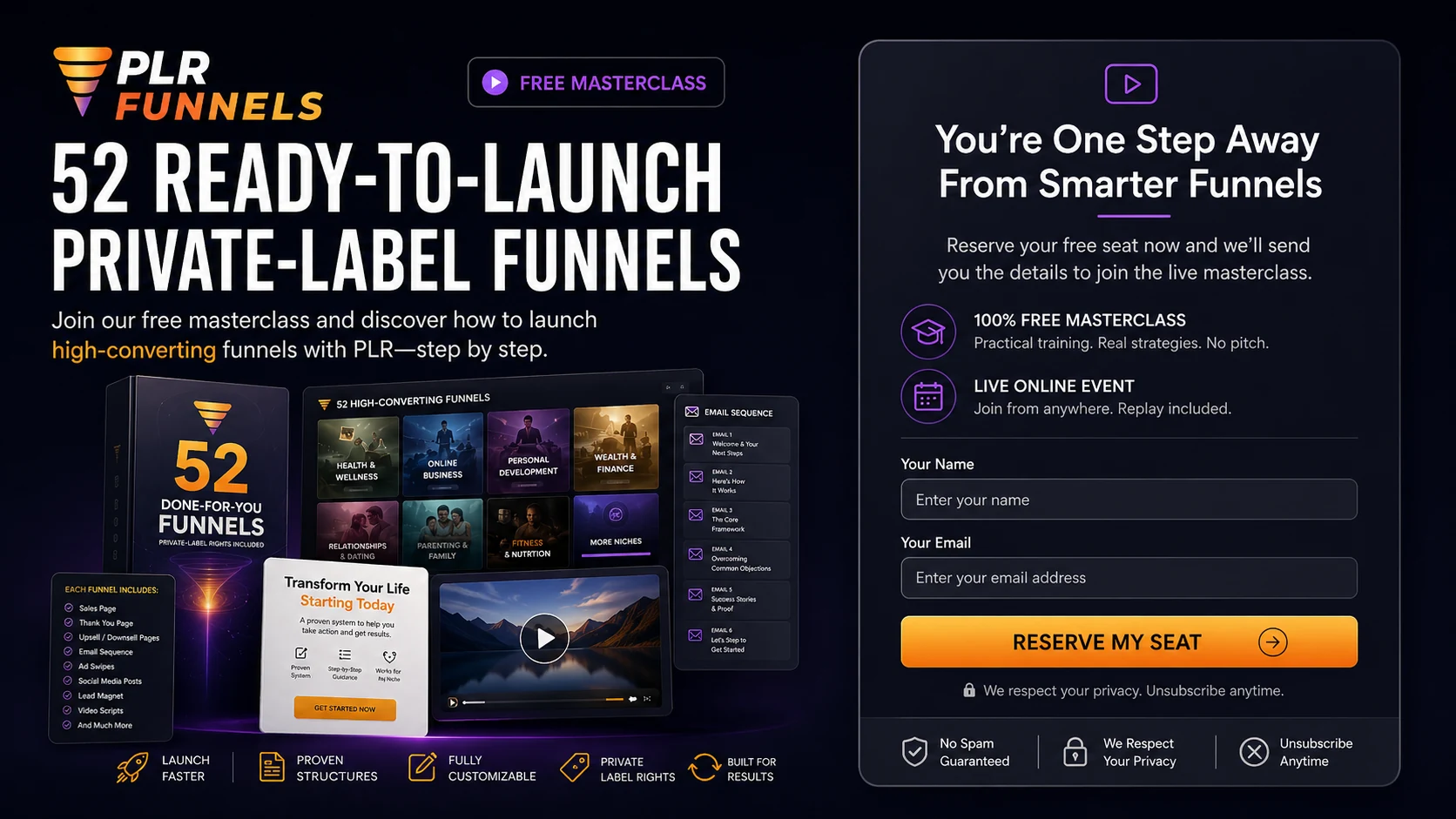
The public offer centers on a free masterclass with Russell Brunson, Paul Counts, and Shreya Banerjee. The official PLR Funnels page presents the idea as 52 ready-to-launch private-label funnels, including finished products, sales letters, upsells, email sequences, ads, and more. The public page also says the funnels can be plugged into a ClickFunnels account, where buyers mainly need to change the order button and adapt the setup.
That is the headline. The practical buyer decision is more grounded.
PLR means private label rights. In plain language, you are buying licensed assets that you can edit, rebrand, and sell under your own offer, subject to the specific rights and rules of the product. That can be powerful when the assets are good and the buyer knows how to adapt them. It can also be wasteful when the buyer treats the files as a substitute for real marketing judgment.
Our review approach compares the public offer page, current ClickFunnels pricing, checkout-risk signals, buyer workflow fit, and nearby alternatives. I do not treat the free masterclass, a reported payment plan, or a refund claim as proof that the product fits every buyer.
The better way to judge PLR Funnels is simple: does it reduce the exact bottleneck that is keeping you from launching, or does it just give you more material to procrastinate with?
Who should use PLR Funnels?
PLR Funnels fits a narrower buyer than the sales angle might suggest.
First, it can fit marketers who already know they want to sell a digital product or information-style offer through funnels. If you have the niche, audience, and offer direction, the bundle may save time by giving you product assets, funnel pages, emails, and promotional copy to customize instead of creating every piece from scratch.
Second, it can fit ClickFunnels users who like the software but keep getting stuck at the asset-building stage. If your account is ready and your real problem is product creation, sales copy, email follow-up, and upsell structure, PLR Funnels is more relevant than buying another blank funnel template.
Third, it can fit side-hustle buyers who are serious enough to edit. That matters. Private-label material usually needs rewriting, repositioning, design cleanup, offer framing, and trust-building. The buyer who edits thoughtfully may get leverage. The buyer who copies everything as-is may look generic.
Fourth, it can fit creators or small marketers who want a launchable starting point more than a theory course. The free masterclass may be useful as an orientation path because it shows the model before the paid checkout decision.
The common thread is not beginner or advanced. The common thread is readiness. PLR Funnels is easier to justify when you already know what you want to launch and mainly need a faster asset base.
Who should avoid PLR Funnels?
You should probably avoid PLR Funnels if you are still trying to choose a niche.
A pre-built funnel does not solve market confusion. If you do not know who you want to serve, what pain you are solving, or why someone should buy from you instead of another seller, the bundle may create the illusion of progress while leaving the hardest decision untouched.
You should also be careful if your budget is tight. PLR Funnels is not just an asset purchase decision. The real budget may include the paid bundle, the separate ClickFunnels plan needed to run the funnels as intended, possible email/domain/payment setup, and traffic or promotion costs. If those numbers already feel uncomfortable, a cheaper learning path may be safer.
I would also avoid it if you want a business-in-a-box that sells without editing. The official page uses speed-heavy language, but even its own disclaimers make clear that results are not typical and depend on effort, business model, education, management, and market forces. That is the part a careful buyer should take seriously.
PLR Funnels is also a weak fit for teams that need enterprise-style software governance, CRM depth, client management, or a normal SaaS buying flow. In that case, GoHighLevel or ClickFunnels software itself may be the more relevant route.
The final group that should slow down is coupon-first buyers. A discount or payment plan can improve the purchase, but it should not be the reason you buy. The better question is whether you can turn these assets into a credible offer.
How PLR Funnels fits into a real workflow
A realistic PLR Funnels workflow does not start at checkout. It starts before the masterclass.
The first step is deciding what niche or market you actually want to test. If that is blank, the funnel bundle may not help much. You need a buyer, a problem, and a reason your offer should exist.
Then the masterclass becomes a filter. You watch it to understand the asset model, the ClickFunnels connection, the private-label rights angle, and the current paid offer. The goal is not to get excited. The goal is to decide whether the bundle matches a real launch you can execute.
If you buy, the real work begins after purchase:
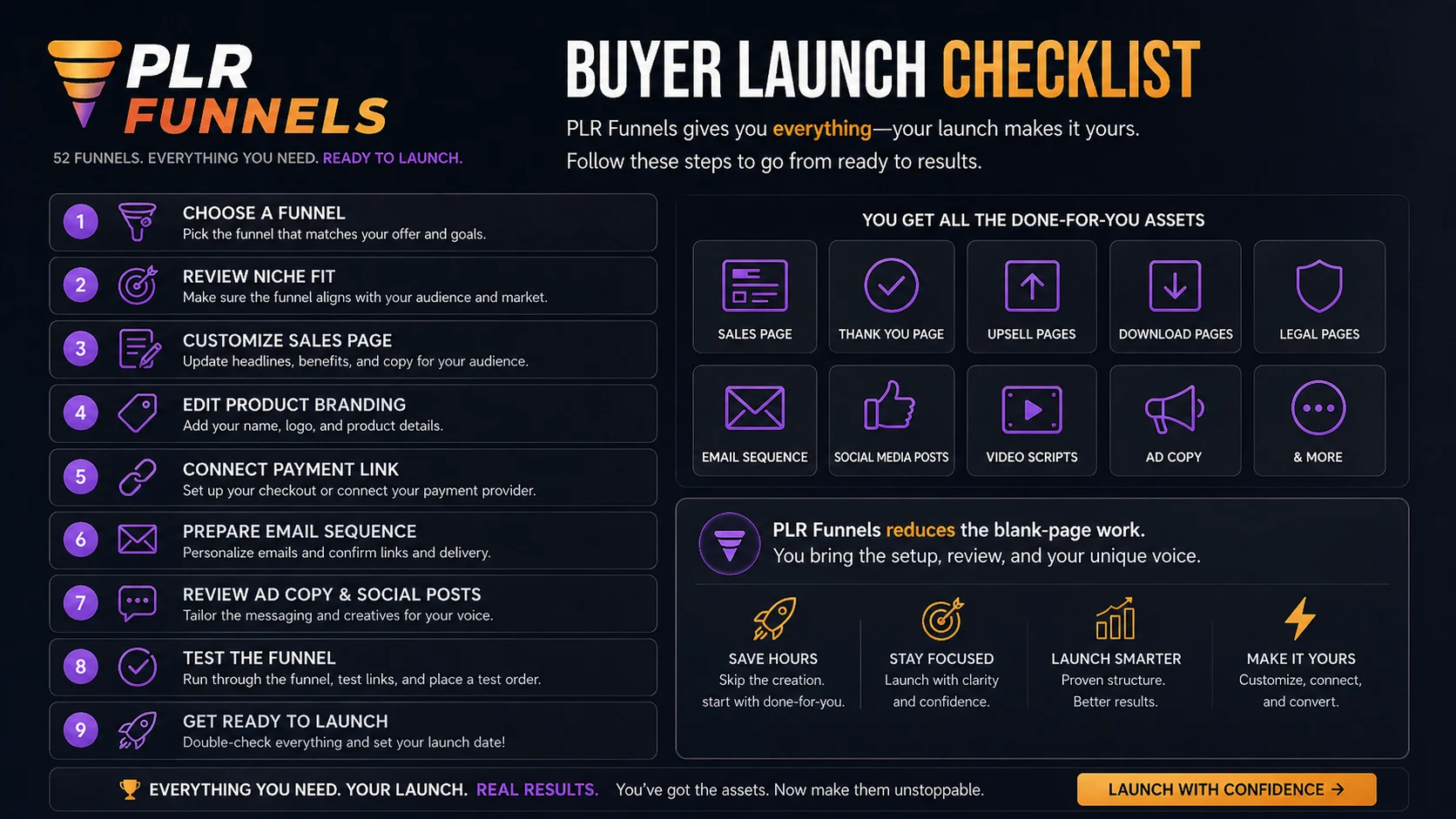
- Choose the funnel that best matches your market.
- Review the product, sales letter, upsell, emails, ads, and social content.
- Rewrite the positioning so it does not feel like generic PLR.
- Confirm the ClickFunnels setup and payment links.
- Test the order flow, emails, domains, and delivery path.
- Build a traffic plan before calling the funnel “ready.”
- Track results and improve the offer rather than blaming the template too quickly.
That workflow is where PLR Funnels can be useful. It reduces creation time. It does not remove editorial judgment, funnel testing, or traffic work.
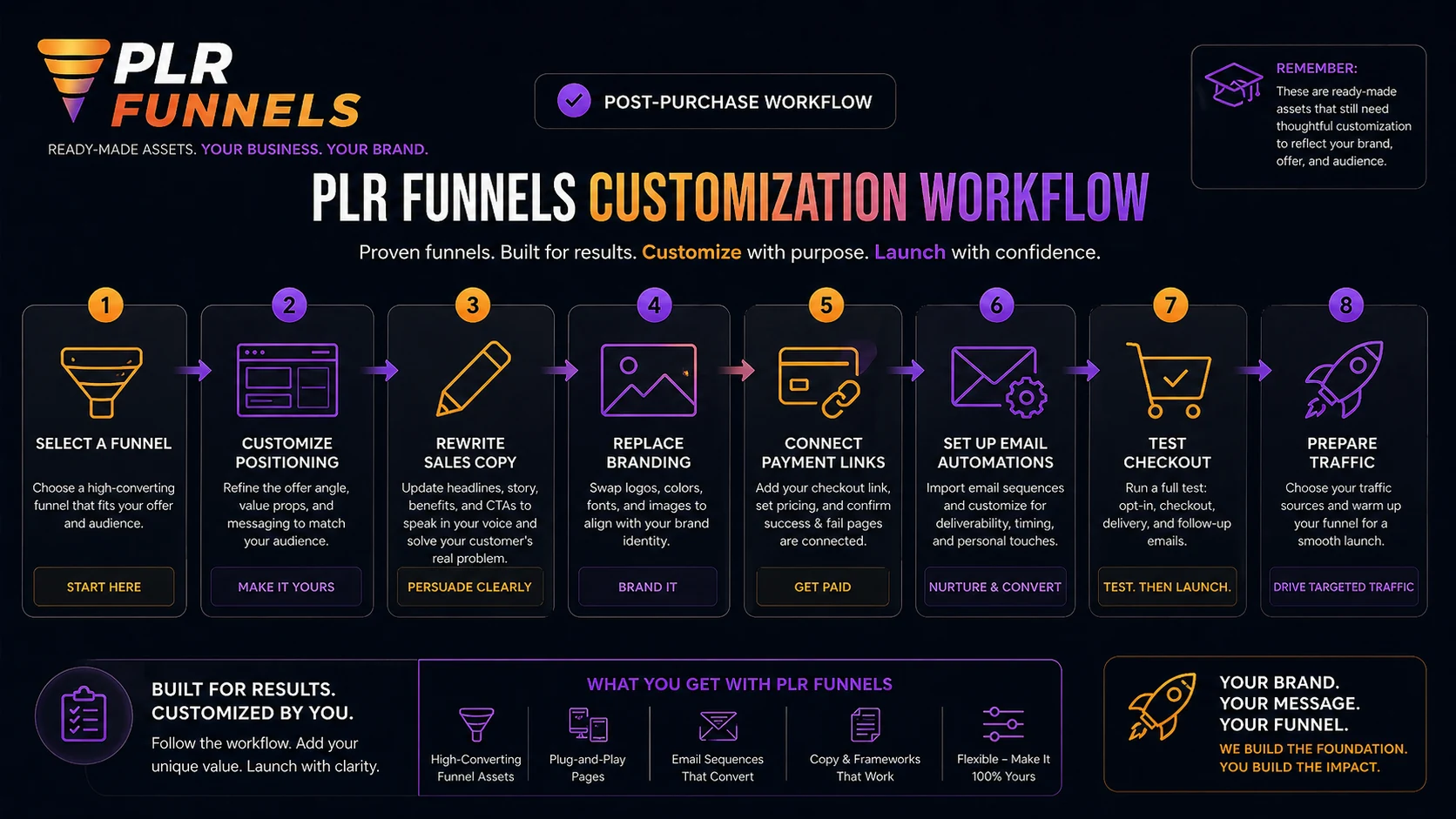
Workflow check: If the bottleneck is assets, PLR Funnels may be relevant. If the bottleneck is software or budget, compare the safer platform route first.
Real-world buyer scenarios
A digital product seller with a clear niche is the cleanest scenario. Maybe you already know the market and want to launch a simple training, ebook, workshop, or coaching-style offer. In that case, PLR Funnels may reduce the time spent creating the product, sales page, upsell, email sequence, and ads. The risk is publishing generic material without enough editing.
A ClickFunnels user with an inactive account is another likely buyer. You may already pay for the software but keep delaying because starting from a blank page feels heavy. PLR Funnels can help if the assets match your market. It will disappoint if you expected the templates to replace offer strategy.
A beginner with no audience is more complicated. The sales pitch can feel beginner-friendly, but beginner-friendly does not mean beginner-proof. If you have no email list, no content channel, no paid traffic plan, and no market clarity, the bundle may be too much too soon. A lower-cost platform like Systeme.io may be better while you learn.
An agency or service provider should think differently. If your goal is to create funnels for clients, the assets could be useful as inspiration or starting points, but you still need to verify the rights, support expectations, and client-use boundaries. If client management is the core need, GoHighLevel may be a stronger comparison than PLR Funnels.
Key features that actually matter
52 ready-to-launch funnel assets
The headline feature is the bundle itself. The public page presents 52 private-label, pre-built funnels with finished products, sales letters, upsells, email sequences, ads, and related launch material.
That matters because most buyers underestimate how much work sits behind a basic funnel. The product is one piece. The sales page is another. Upsells, emails, ads, and social content add more work. A bundle can reduce that load.
Buyer note: do not judge this only by the number 52. The better question is how many of those funnels fit your market and how much editing each one needs.
Private-label rights and rebranding
The private-label angle is the reason this product is different from a normal funnel template. You are not simply buying page layouts. You are buying assets intended to be edited, rebranded, and used as part of your own offer, subject to the rights attached to the product.
This can be valuable when you customize deeply. It is weaker when you only change surface details and publish the same generic angle everyone else can use.
Buyer note: verify the current rights, commercial-use rules, and any restrictions before using the material for clients or paid products.
ClickFunnels implementation path
The public PLR Funnels page says the funnels can be plugged into a ClickFunnels account. This is convenient if you already like ClickFunnels and want a stack that can handle pages, checkout, courses, email, and related funnel workflows.
The catch is cost and fit. ClickFunnels is powerful, but it is not the cheapest way to experiment with funnels. If you only need a low-cost test, the software layer can change the economics quickly.
Buyer note: check the current ClickFunnels-style store route if you mainly need the software layer before buying a larger asset bundle.
Free masterclass entry point
The free masterclass is useful because it gives buyers a way to inspect the model before reaching the paid offer. That is not the same as a free product trial, but it is still a lower-friction filter.
Use it carefully. Watch for what is actually included, what happens at checkout, what support is offered, and what ClickFunnels plan may be needed.
Buyer note: treat the masterclass as orientation, not proof that the paid bundle fits your business.
Asset speed, not automatic results
The strongest feature is speed. PLR Funnels can reduce blank-page work. It can help you move from “I need to build everything” to “I need to customize and test this.”
That is a real advantage for some buyers.
It also creates a real risk. The faster the asset is, the easier it is to skip the hard thinking. A funnel that launches quickly still needs a believable offer, a relevant audience, and traffic that can convert.
Buyer note: speed is valuable only when it moves a good plan forward.
Pricing and plan value
Pricing is the part I would slow down on.
The public PLR Funnels registration page does not behave like a normal SaaS pricing page. It shows the free masterclass entry point and explains the 52-funnel asset promise, but the final paid bundle and checkout terms should be verified live before purchase.
Public third-party pricing references in 2026 have reported the paid PLR Funnels offer around $797 upfront or 3 payments of $297, with a 30-day money-back guarantee. That is useful orientation, but I would not treat it as final unless the current checkout confirms it.
The second cost is ClickFunnels. The official ClickFunnels pricing page currently lists Launch at $97/month monthly, with lower annualized pricing shown when billed annually, plus higher Scale, Optimize, and Dominate tiers. The point is not only the starting price. The point is whether the plan you choose includes the workspaces, contacts, emails, courses, domains, support, API/webhooks, and other features your funnel actually needs.
For PLR Funnels, the real pricing question is not “is the bundle cheap?” It is:
- How many of the included funnels can you realistically use?
- How much time will the bundle save compared with building from scratch?
- What ClickFunnels plan do you need to run the assets properly?
- Are you willing to pay for software while you customize and test?
- Does the refund language apply to the current checkout?
- Would a cheaper tool let you learn with less pressure?
The entry plan may be enough if you only need a simple launch. A higher plan may matter if you need more workspaces, team members, emails, courses, domains, automations, API/webhooks, or account scale.
I would not move forward on price alone. I would calculate the bundle plus software plus traffic plus time.
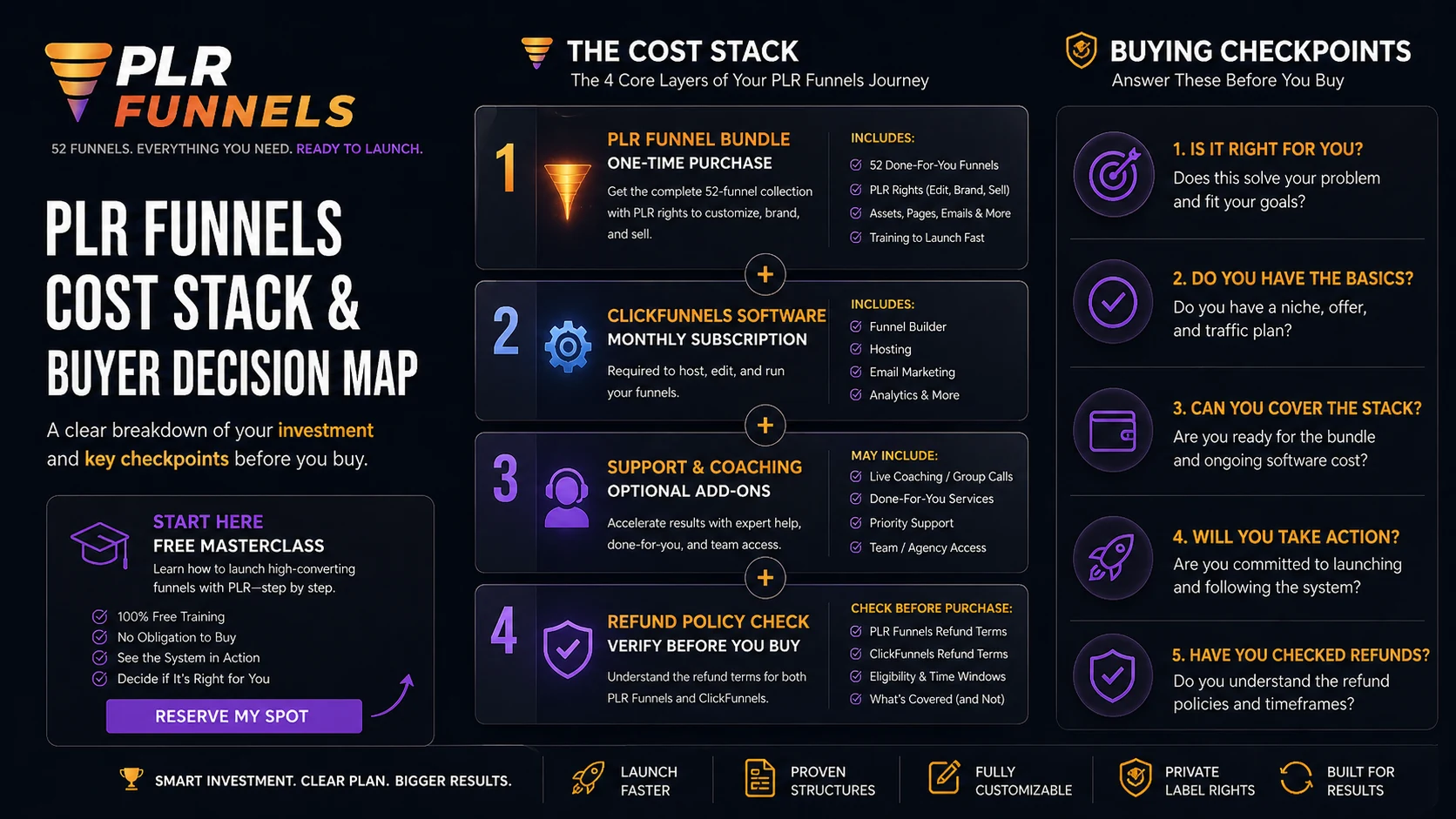
Pricing check: Before paying, compare the PLR bundle, the current ClickFunnels plan, and any active offer route as one total launch budget.
Free plan, trial, coupon, and checkout notes
PLR Funnels does not appear to have a normal free plan. The public free path is the masterclass.
That is still useful, but it changes the expectation. You are not testing the full 52-funnel bundle like a SaaS free trial. You are reviewing the offer, the model, the presenters, the ClickFunnels connection, and the sales terms before deciding whether the paid bundle is worth it.
The coupon path should come last. If PLR Funnels clears the fit check, it is reasonable to check the PLR Funnels coupon page or current offer route before checkout. But the offer page should not be the reason you buy. A reduced price does not fix a weak niche, a missing traffic plan, or a funnel you will never customize.
The refund language also needs care. Some public coverage reports a 30-day guarantee, but the buyer should verify the current paid checkout and eligibility rules. If the current checkout or support terms differ from older references, the live terms matter more.
The safest checkout order is:
- Watch the free masterclass.
- Decide whether the assets match a real launch.
- Verify the current paid price and payment plan.
- Add the ClickFunnels software cost.
- Read refund and cancellation terms.
- Check current offers only after the fit makes sense.
What I would check before buying PLR Funnels
If I were buying this for a real workflow, I would check seven things before entering payment details.
- Current bundle price: confirm the live checkout, not only older reviews or third-party pricing snippets.
- Payment-plan math: check whether installments cost more than paying upfront and whether failed-payment terms matter.
- ClickFunnels plan: confirm which plan is needed for the funnels, email, domains, courses, checkout, and automations you expect to use.
- Refund guarantee: verify the refund window, eligibility rules, support process, and whether the guarantee applies to the current offer.
- Commercial-use rights: confirm what you can edit, sell, rebrand, and use for clients.
- Support and implementation help: check whether there is onboarding, coaching, templates-only access, or community support.
- Your launch readiness: write down your niche, audience, traffic path, and first offer before buying.
The easy mistake is thinking the purchase itself creates the business. It does not. The purchase gives you a starting stack. The business still depends on the market, the positioning, and the traffic.
A simple test before paying
Before paying, I would run a small decision test like this:
- Pick one niche you would actually launch in.
- Write the buyer problem in one sentence.
- Decide what kind of digital product or offer you would sell.
- Watch the masterclass and ask whether the funnel assets match that niche.
- Estimate how much rewriting and repositioning each asset would need.
- Add the current ClickFunnels software cost to the bundle cost.
- Decide whether the time saved is worth more than the money spent.
If you cannot complete steps one through three, wait. The product may be interesting, but you are not ready to judge it properly.
If the asset model clearly matches your launch and the cost does not strain the budget, then PLR Funnels becomes a more reasonable buying decision.
Pros explained
The first real pro is time savings. Creating a product, sales page, upsell, email sequence, and promotion assets from scratch can take weeks. PLR Funnels is trying to compress that into a reusable starting point.
The second pro is asset completeness. A simple page template is not the same as a funnel bundle with products, copy, upsells, ads, emails, and social content. If the pieces are relevant to your market, that completeness can make implementation easier.
The third pro is the ClickFunnels connection. Buyers already using ClickFunnels may like that the funnel assets are presented around a platform built for pages, checkout, courses, email, and funnel workflows.
The fourth pro is the free masterclass entry. It gives buyers a way to understand the model before seeing the paid checkout. That is better than paying blind.
But each pro has a condition. The time savings matter only if you launch. The assets matter only if they fit your niche. The ClickFunnels connection helps only if that stack fits your budget. The masterclass helps only if you use it to evaluate, not to get swept up in urgency.
Cons explained
The first con is pricing transparency. The public page does not show a simple plan table for the paid bundle. That does not make the offer bad, but it does mean buyers need to slow down at checkout.
The second con is software dependency. If the funnels are meant to run inside ClickFunnels, the asset bundle is not the full cost. A buyer who forgets the software layer may underestimate the real budget.
The third con is generic-asset risk. PLR can be useful, but private-label material is not exclusive by nature unless the offer says otherwise. If many buyers can use similar assets, your version needs better positioning, copy edits, examples, proof, and audience fit.
The fourth con is beginner overconfidence. The pitch can make the process sound simple, and the assets can reduce friction. But sales still require demand, credibility, traffic, and follow-up. A beginner who buys before understanding those pieces may feel disappointed.
The fifth con is refund uncertainty. Public references may mention a guarantee, but current checkout terms and eligibility rules matter more than summary claims. I would verify this before relying on the refund as a safety net.
Green flags and red flags
Green flags are easy to spot when the buyer is honest.
A green flag is that you already have a niche and need assets faster. Another green flag is that you already understand ClickFunnels and want a structured launch base. A third green flag is that you can edit aggressively, not just swap a logo and hope.
A red flag is buying because the phrase “ready-to-launch” sounds like “ready-to-profit.” Those are not the same thing.
Another red flag is not knowing whether you can afford the ClickFunnels plan after buying the bundle. If the software cost creates pressure, the whole setup may become stressful before you even test the funnel.
The biggest red flag is wanting to avoid marketing. PLR Funnels can give you marketing assets. It cannot make you comfortable with selling, testing, traffic, or audience building.
PLR Funnels vs alternatives
PLR Funnels should be compared against two different types of products: asset shortcuts and funnel software.
ClickFunnels vs PLR Funnels
ClickFunnels is the software layer. PLR Funnels is the asset shortcut.
If you already have a product and copy, ClickFunnels may be the cleaner purchase because you need the builder, checkout, pages, email, courses, and funnel workflow. If you have software but no offer assets, PLR Funnels may be more relevant.
The tradeoff is clear: ClickFunnels gives you control; PLR Funnels gives you a faster starting package.
Systeme.io vs PLR Funnels
Systeme.io is usually the more budget-conscious comparison. It is a better first step for buyers who want to learn funnels, email, and basic selling without taking on a larger bundle cost.
PLR Funnels may still make sense if the bottleneck is product and copy creation, not platform cost.
The tradeoff is speed versus financial pressure. Systeme.io is softer for learning. PLR Funnels may be faster if you are ready to customize and launch.
GoHighLevel vs PLR Funnels
GoHighLevel is not a direct PLR asset replacement. It is an agency-style CRM, automation, funnel, booking, and client-management platform.
It is better when the buyer is managing clients, pipelines, local business leads, or recurring service workflows. PLR Funnels is better when the buyer wants ready-made private-label funnel assets for a launch.
The tradeoff is business system depth versus launch-asset speed.
ClickFunnels entry offers vs PLR Funnels
A ClickFunnels entry promotion, such as 3 months of ClickFunnels for $99, may be a safer first move if you are not sure whether the software stack fits you.
That route helps you test the builder before buying a larger asset bundle. It will not give you the 52 private-label funnels, but it may reduce the risk of paying for assets before knowing whether you like the platform.
Trust, refund, and buyer-risk notes
The trust picture is mixed in a normal way for this category.
On the positive side, the offer is tied to recognizable ClickFunnels names and the public page clearly frames the masterclass, presenters, and 52-funnel concept. ClickFunnels has also published background on Paul Counts and Shreya Banerjee, including their OPA method and the PLR Funnels partnership.
On the caution side, the public page uses strong speed and opportunity language. It also includes important disclaimers: ClickFunnels says it makes no earnings or money-back claims from using ClickFunnels, that results are not typical, and that business results vary based on effort, education, business model, and market forces.
That disclaimer is not just legal text. It is good buyer advice.
Refund and cancellation need extra attention. ClickFunnels terms include specific trial, automatic enrollment, subscription cancellation, and non-refund language for software subscriptions. Separately, third-party references report a 30-day PLR Funnels guarantee, but buyers should verify the current checkout terms directly before relying on that.
Data and privacy are less central here than with an AI tool, but account setup, payment details, funnel content, domains, and email lists still matter. If you connect a real business funnel, use the same care you would use with any marketing platform.
The safest posture is simple: treat PLR Funnels as a paid launch shortcut, not a guaranteed outcome.
Final verdict
I would consider PLR Funnels if you already know the niche you want to serve, you want a funnel-based digital product launch, and your real bottleneck is creating the product, sales copy, upsells, emails, and promotional assets from scratch.
I would skip it if you are still searching for a niche, still unsure whether you want to run funnels, or already feel stretched by the software cost. In that case, start with a cheaper funnel tool or the ClickFunnels software path first.
I would compare it with ClickFunnels if you mainly need the platform, with Systeme.io if budget matters most, and with GoHighLevel if your business is more agency or CRM-driven than PLR asset-driven.
The safest next step is to watch the free masterclass, pause before the paid checkout, and calculate the total stack: bundle price, ClickFunnels plan, refund terms, support, rights, and your own launch readiness. If those pieces line up, PLR Funnels can be a useful shortcut. If they do not, waiting is not hesitation. It is good buying discipline.