Quick verdict
ListingBott is worth considering if you have a real product to launch and the manual work of submitting it to directories is more expensive than the one-time fee.
That is the clean version.
The more careful version is this: ListingBott is not a normal SEO dashboard, a keyword research tool, or a content optimizer. It is closer to a done-for-you directory submission service for founders who want one website placed across relevant directories, startup lists, software directories, AI tool directories, and similar discovery surfaces.
The strongest reason to consider it is time savings. Finding directories, preparing descriptions, filling forms, handling approvals, tracking progress, and checking final listings can become tedious fast. If you are launching a SaaS product, AI tool, no-code product, agency site, marketplace, course, newsletter, or similar online project, ListingBott may compress that operational work into a more structured campaign.
The main caution is expectation control. Directory backlinks can help visibility, discovery, and early authority signals, but they are not a magic ranking shortcut. A $499 directory submission campaign will not rescue weak positioning, thin content, poor technical SEO, or a product nobody understands.
For my money, ListingBott makes the most sense when your site is already launch-ready and you want a paced backlink and awareness push. I would be much more cautious if you are buying only because you want a quick Domain Rating jump.
Next step: If ListingBott still matches your launch workflow, verify the live pricing and offer route before checkout.
Review snapshot
| Review point | Practical take |
|---|---|
| Best for | SaaS founders, AI tool makers, indie makers, and agencies that need directory visibility without manual submission work |
| Not ideal for | Buyers expecting guaranteed traffic, revenue, rankings, or a risk-free DR shortcut |
| Main use case | Submitting one prepared website to relevant directories over a paced delivery window |
| Pricing model | One-time purchase per website launch, with the public page showing a $499 checkout path during this review pass |
| Free plan or trial | No clear free plan or free trial was found |
| Main strength | Saves founder time by combining directory research, submissions, reporting, and handoff |
| Main concern | Directory quality, indexing, relevance, and actual SEO value need review before approval |
| Best alternatives to compare | AISEO, Balzac AI, and SEO Bot if the buyer actually needs content SEO instead of directory submissions |
| Best next step | Prepare the website first, then check the live price, directory-selection process, and refund language |
What is ListingBott?
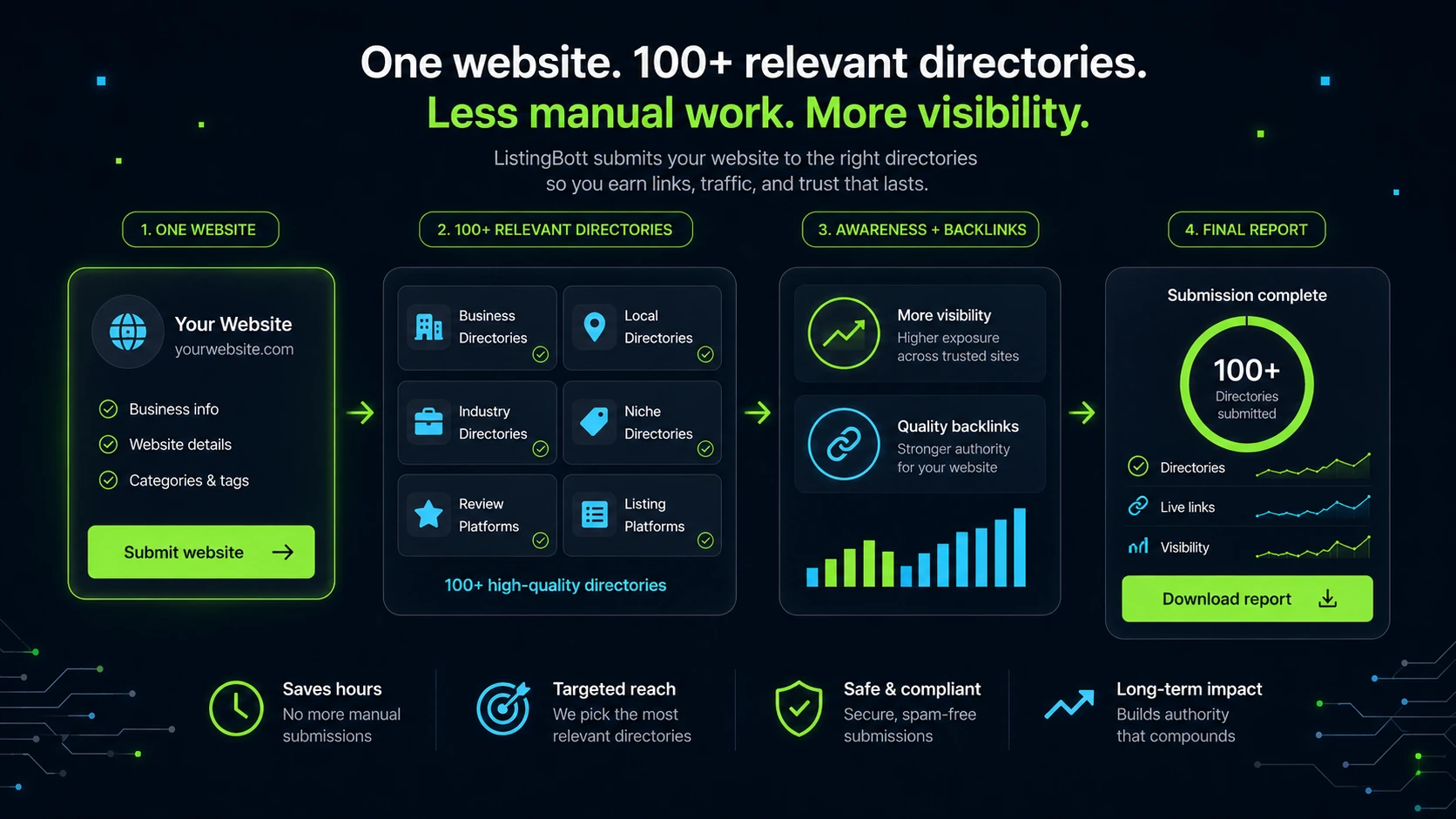
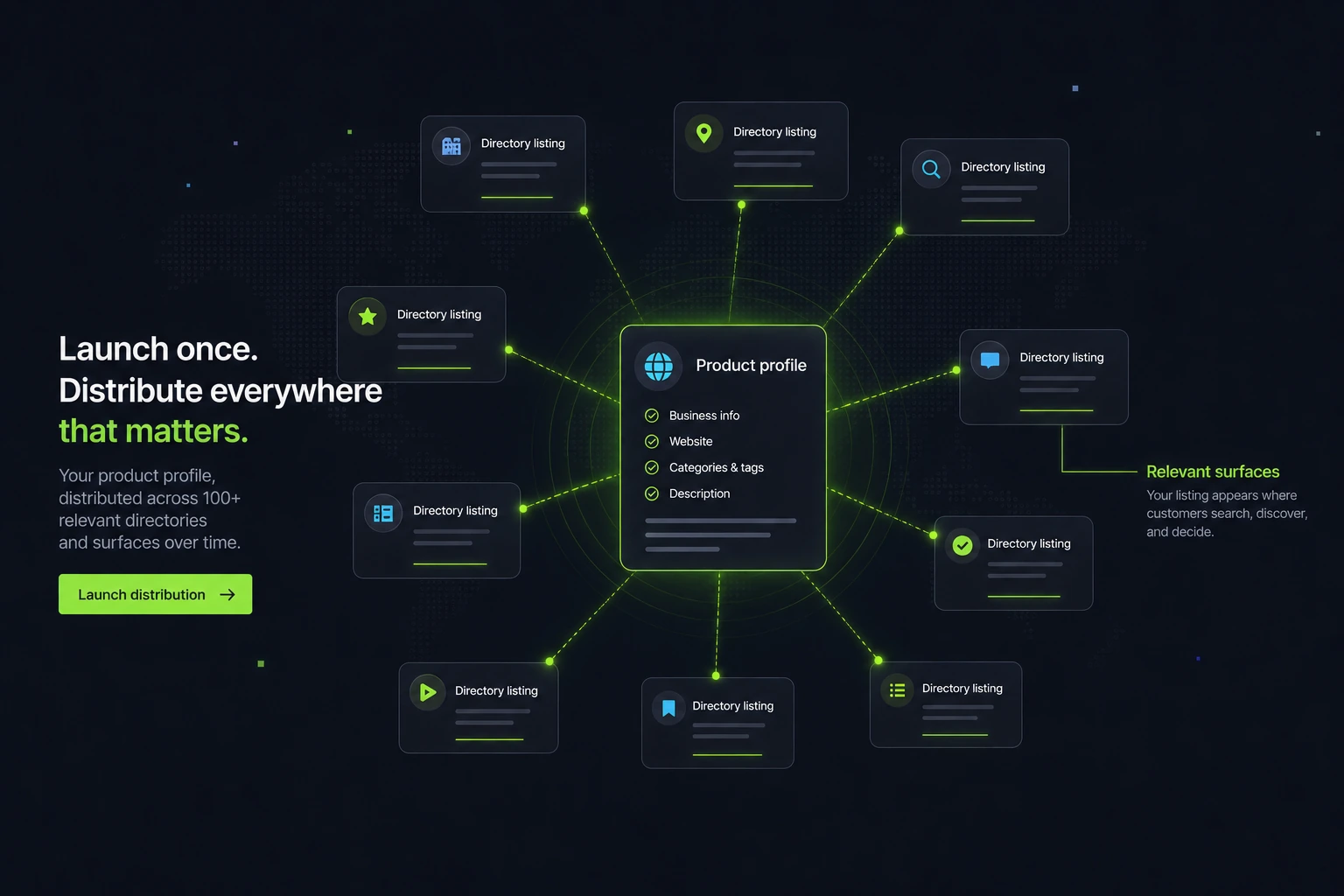
ListingBott is best understood as a directory-submission service for founders and teams that want one website listed across relevant online directories and websites without doing the repetitive work manually.
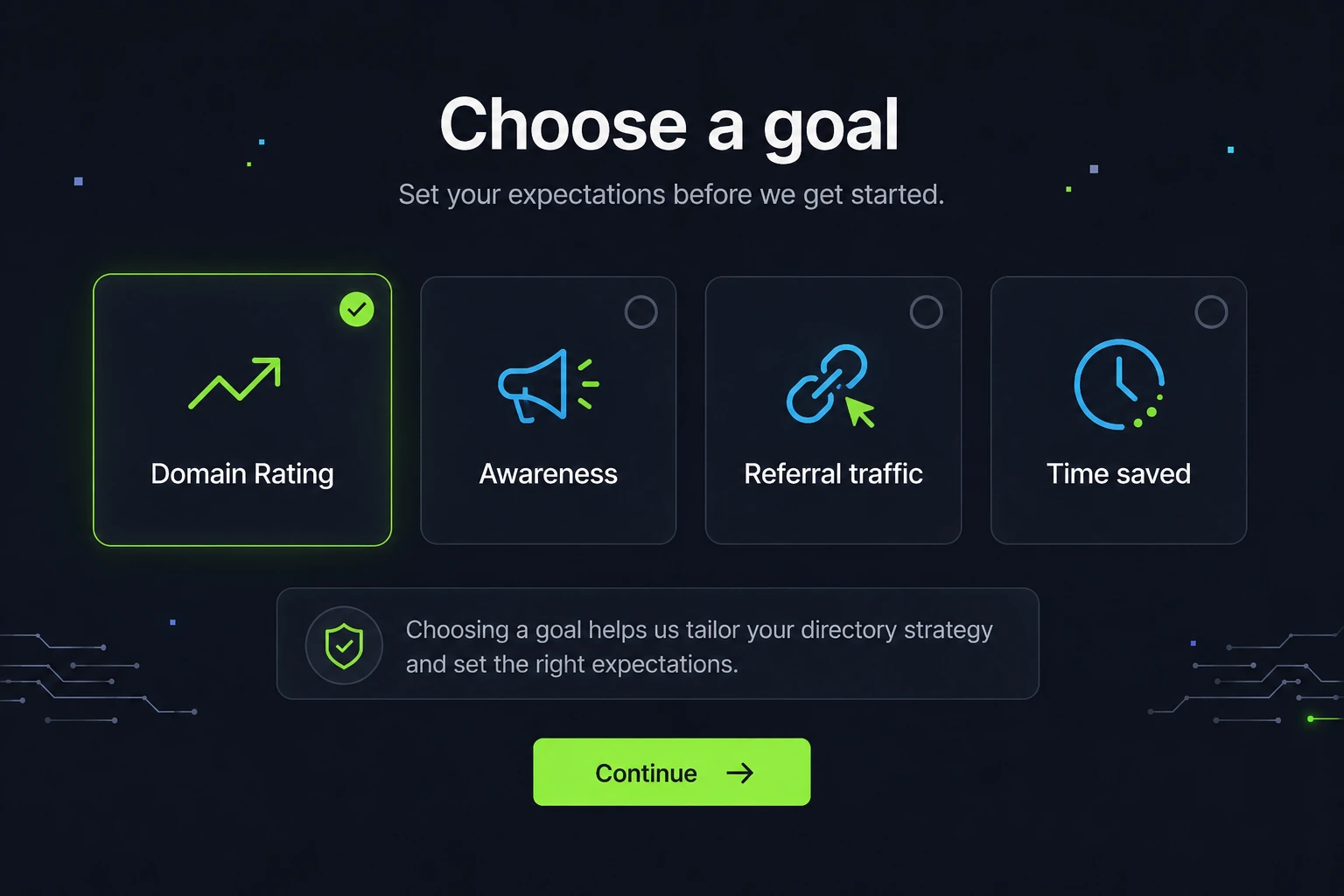
The official positioning is direct: your SaaS, tool, product, newsletter, or blog gets listed on 100+ directories in one click. The current page also frames the service around 100 hand-picked listings, a growing database of more than 10,000 directories and websites, a goal choice such as Domain Rating or awareness, buyer approval of listings, a one-month delivery flow, a final report, and listing ownership after delivery.
That makes ListingBott different from most AI SEO tools.
It is not primarily for writing blog posts. It is not primarily for keyword clustering. It is not a rank tracker. It is not a full link-building agency either. The narrow job is directory visibility: find relevant directories, prepare submissions, spread the work over time, report what happened, and hand over enough control that the buyer can manage listings later.
My review approach here is buyer-side and evidence cautious: I compare the public product page, pricing details, FAQ, category claims, directory-submission best practices, public third-party listings, community criticism, and nearby SEO alternatives. I do not treat a checkout offer, DR promise, or backlink count as proof that the product fits every buyer.
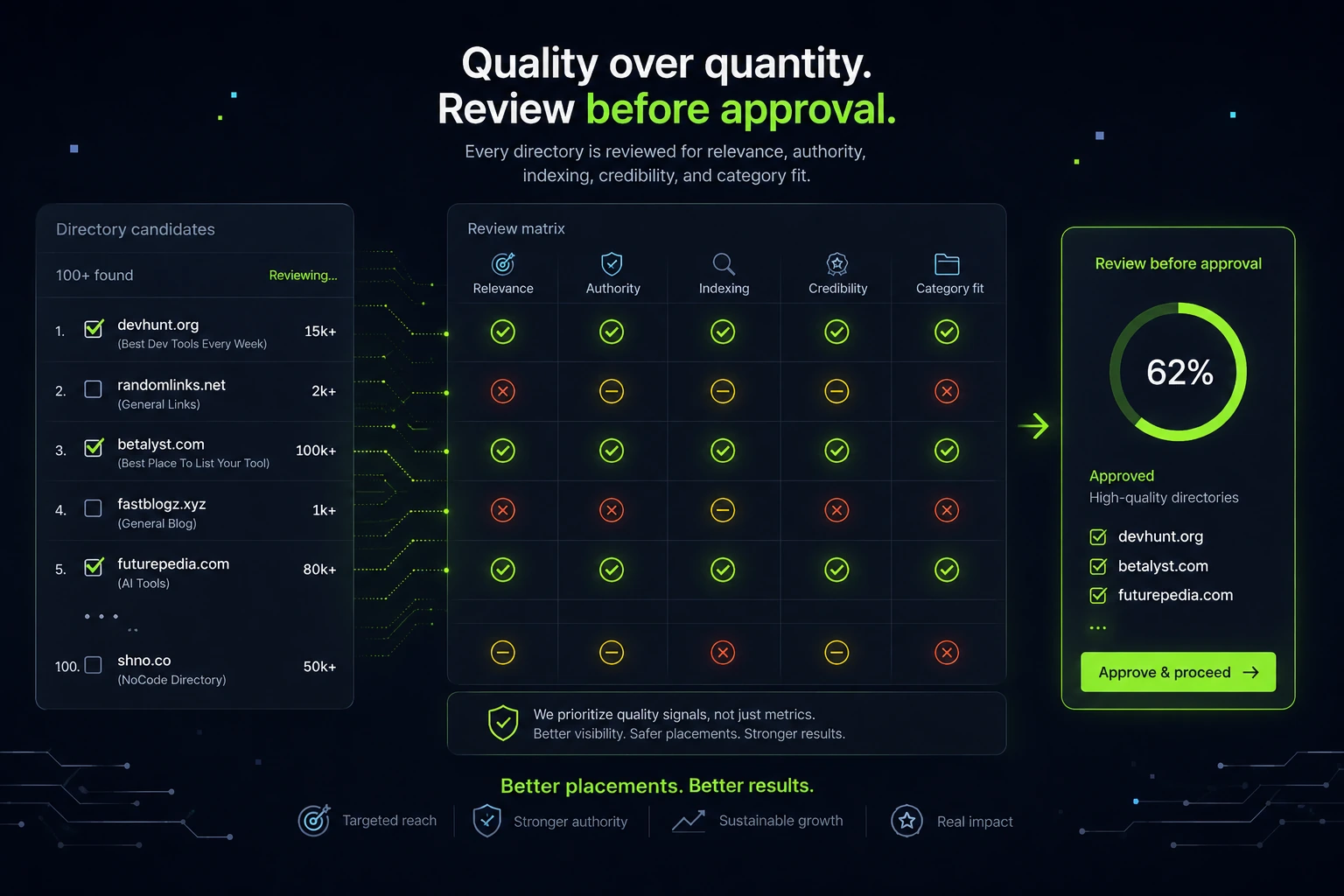
The common mistake is judging ListingBott by the number “100” alone. A list of 100 directories is only valuable if the directories are relevant, live, indexable, credible, and matched to the buyer’s product category.
Who should use ListingBott?
SaaS and AI tool founders with a ready product page
ListingBott fits founders who already have a clear product page, logo, screenshots, short description, target category, and value proposition. In that situation, directory submissions can support launch discovery because the product is ready to be shown in more places.
The condition is important. If the homepage is vague, submitting it to more directories only spreads the confusion.
Indie makers who value time savings
A solo maker can manually submit to directories. Sometimes that is the better path because it gives more control.
But if the founder is already handling product, support, content, SEO, partnerships, and launches, the time cost can become real. ListingBott makes more sense when the buyer would rather pay for execution than spend hours researching forms and tracking submissions.
Agencies handling startup or software client launches
Agencies may find ListingBott useful when they need a repeatable launch-support step for clients. The value is not just backlinks. It is process: prepare assets, approve a list, receive progress updates, and keep a final report.
The agency still needs to explain expectations carefully. Directory listings can be part of launch distribution, but they should not be sold to clients as a guaranteed SEO transformation.
Low-authority sites that need an initial visibility footprint
ListingBott is more interesting for sites starting from very low authority than for mature domains that already have a strong backlink profile. The official FAQ discusses a DR guarantee from 0 to 15 under specific conditions, while also acknowledging that outcomes are harder to predict for sites already above that level.
That does not mean every new domain should buy it. It means the buyer should compare the price against the value of building an early backlink and directory footprint faster.
Who should avoid ListingBott?
Buyers who expect directories to create demand by themselves
A directory listing can put your product in more places. It cannot make weak positioning compelling.
If your website does not explain the product clearly, if the category is not obvious, or if the offer is not ready, ListingBott may only distribute an unfinished message. I would fix the product page first.
Mature sites expecting dramatic authority movement
If your domain already has meaningful authority, the standard 100-listing campaign may not create the kind of movement you hope for. The public FAQ itself is more cautious about higher-DR websites than brand-new domains.
A mature site should ask for specific fit: which directories, which categories, what percentage may already contain existing listings, and how reporting will handle duplicates.
Buyers who need full control over every submission
ListingBott does offer an approval step, which is useful. But it is still a done-for-you service.
If you want to write every description yourself, choose every directory manually, check every guideline before submission, and personalize every listing, a manual workflow or internal VA process may fit better.
Projects outside the directory-friendly software/startup zone
The product page names areas like SaaS, AI, no-code, dev tools, agencies, ecommerce, courses, marketplaces, directories, and similar fields. A local service business, regulated industry, offline brand, or niche with few relevant software directories should be more careful.
The first question is not “can it submit my site?” The better question is “are there enough relevant, credible places where my site belongs?”
How ListingBott fits into a real workflow
A good ListingBott workflow starts before payment.
The buyer should prepare the product page, not treat the campaign as a substitute for positioning. That means a clear homepage, simple title, concise description, category, logo, screenshots, pricing context, target audience, and a few benefit statements that can be adapted across listings.
Then the process becomes more practical:
- Decide whether the campaign goal is Domain Rating, awareness, referral traffic, or time savings.
- Check the live checkout price and current package terms.
- Complete onboarding with accurate product details.
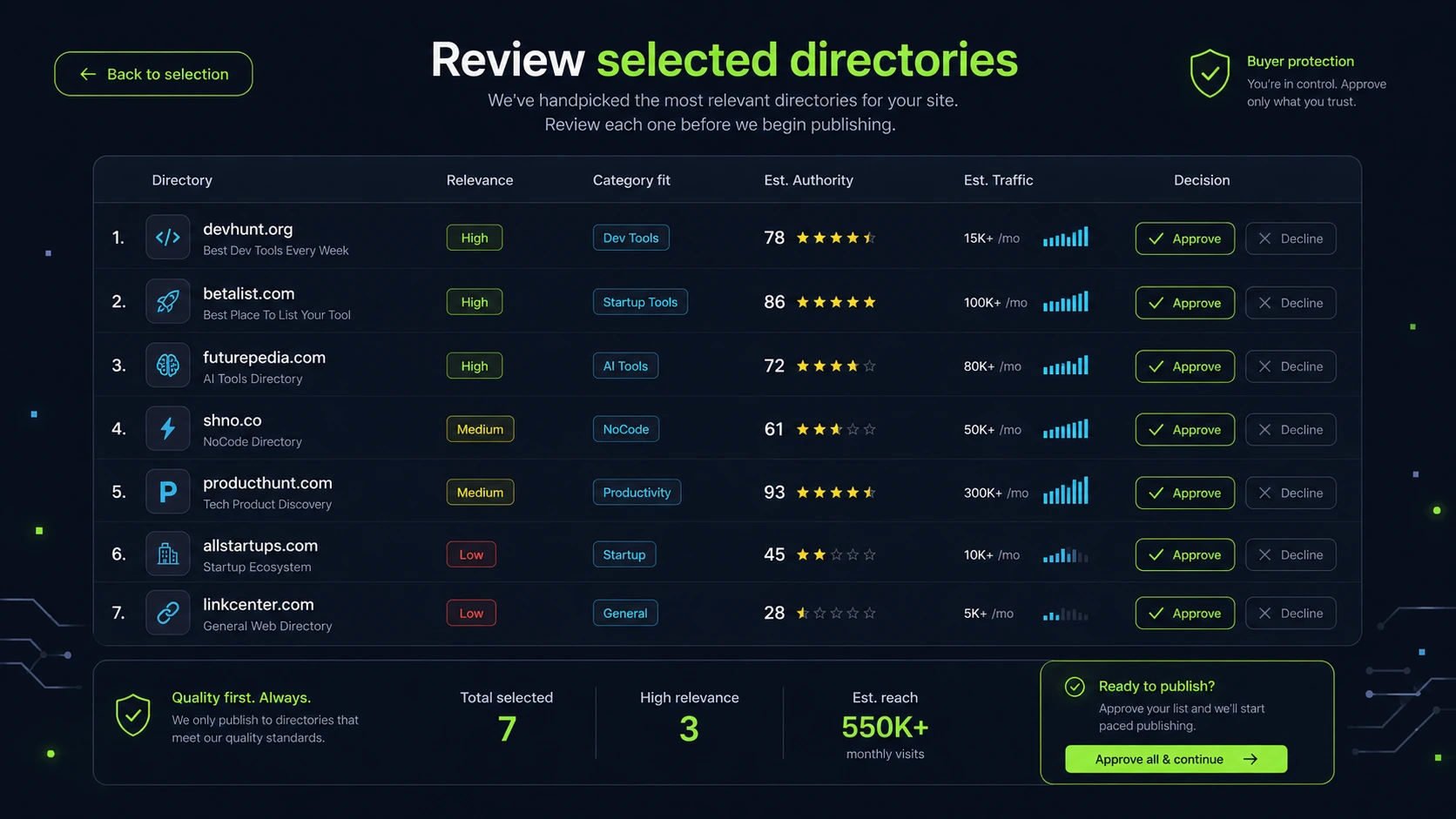
- Review the proposed directory list before approval.
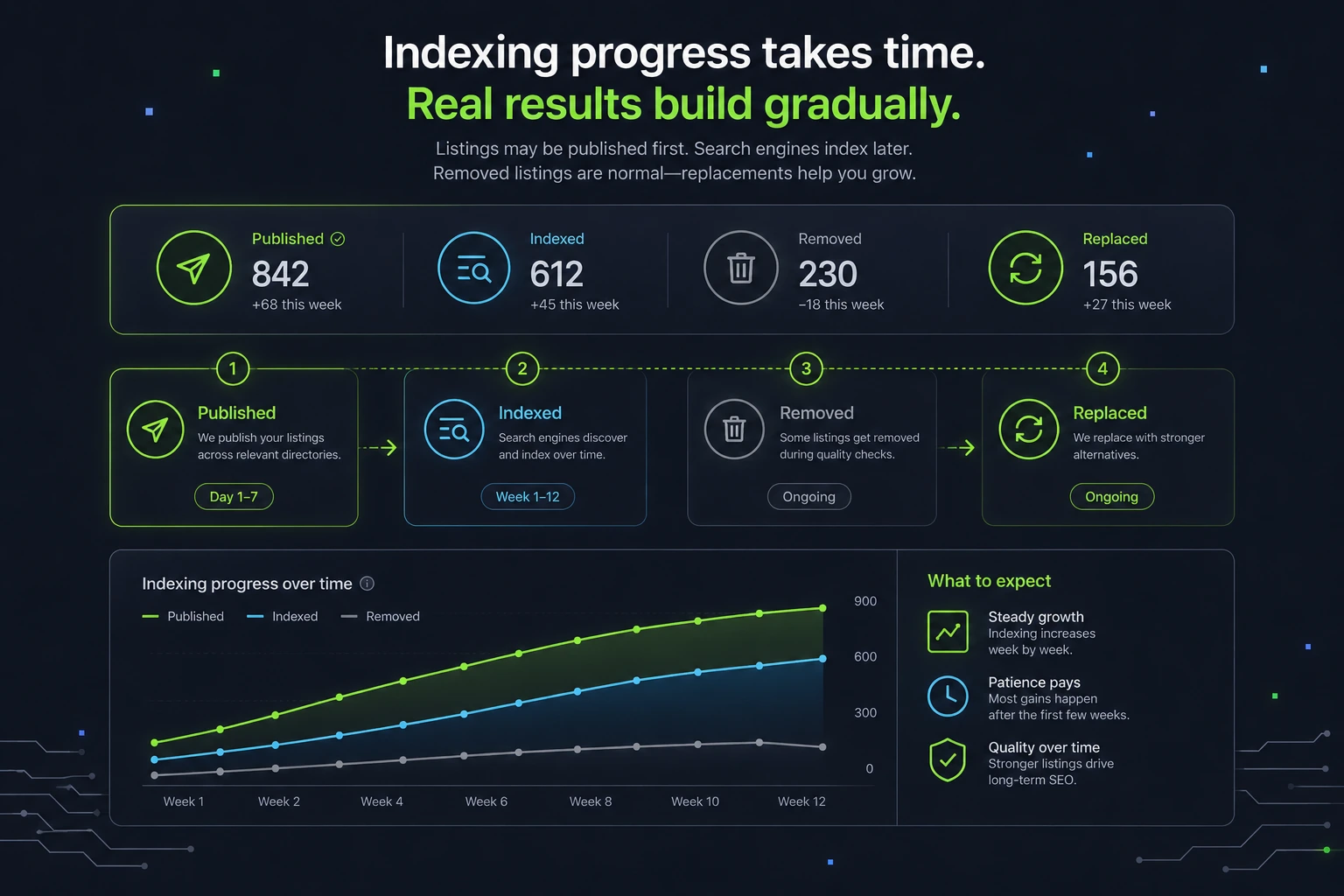
- Watch for weekly updates during the publishing window.
- Review the final report after delivery.
- Track indexing, backlinks, referral traffic, and listing accuracy later.
- Save ownership or login handoff details so important listings can be edited in the future.
The part I like is the paced delivery logic. Submissions spread over time are more believable than a sudden blast to every form on the internet. The part I would still inspect carefully is list quality. A slow campaign to weak directories is still weak.
Workflow check: If your site is already ready for directory exposure, the next useful step is to compare the live package against the manual time you would save.
Real-world buyer scenarios
A new AI tool launch
A founder has a polished AI tool site, a working product, a few screenshots, and a clear category. They want early discovery, backlinks, and listings in AI tool directories.
ListingBott may fit because the buyer has something worth submitting and the target ecosystem is directory-friendly. The risk is assuming directory placement means active users will arrive automatically. I would still pair it with content, outreach, founder-led distribution, and search indexing checks.
A small agency doing client launch support
An agency helps a SaaS client go live and wants a repeatable “listing footprint” package after the website is published. ListingBott could reduce manual work and provide a report the agency can hand back to the client.
The weak point is expectation management. The agency should not promise leads from every directory. The better framing is operational visibility: more credible places where the client can be discovered, plus some backlink and authority signals.
A founder with an existing DR 30+ site
This buyer may still benefit from relevant listings, but the DR-growth story becomes less clean. At that stage, the question is not only how many links are added. It is whether the links are from relevant sites, whether they index, whether they drive referral traffic, and whether they support the site’s broader SEO plan.
If the buyer is already investing in content and technical SEO, ListingBott may be a side campaign. If the buyer expects it to become the whole SEO strategy, I would slow down.
A product with unclear positioning
This is the buyer I would warn first.
Directory submissions are not a positioning tool. If your homepage still has vague wording, no clear category, weak screenshots, and unclear pricing, getting listed faster may simply expose the weak parts faster. Fix the page first, then think about directory distribution.
Key features that actually matter
100 hand-picked listings
The core feature is the promise of 100 relevant listings from a large directory database. That can save time, but the quality of the selected directories matters more than the raw count.
Buyer note: ask how relevance is determined for your niche, and review the proposed list before approval.
Goal-based campaign setup
The public page says buyers can choose a goal such as Domain Rating or awareness. This is useful because those are not identical goals.
A DR-focused campaign may prioritize different directories than an awareness-focused campaign. I would decide this before onboarding, not halfway through the process.
Buyer approval and moderation
The ability to approve or decline listings matters. It gives the buyer a chance to avoid irrelevant or weak-fit directories before work starts.
Buyer note: do not skip this step. This is where the campaign becomes either focused or sloppy.
Paced publishing and reporting
ListingBott presents the delivery as a paced process, with submissions spread across a month and a final report afterward. That is more sensible than a blast-style approach.
Buyer note: a report is only useful if it includes enough detail to check live listings, status, indexing, and future ownership.
Listing ownership and handoff
The FAQ says buyers own the listings and can later edit or remove them, using their email or a dedicated email handed over after the job. This reduces some long-term risk because product details change.
Buyer note: save the handoff information. A directory campaign loses value if you cannot update important listings later.
Pricing and plan value
ListingBott is not priced like a low-cost monthly SEO widget. During this review pass, the official page showed a $499 buy-now path for one website launch, older beta-style price steps on the page, and an optional $999 Stripe path for extra backlinks from the founder’s blogs.
That makes the pricing decision pretty simple, but not easy.
A one-time $499 purchase can make sense when the founder values saved time, wants a structured launch visibility push, and would otherwise spend many hours finding, checking, submitting, and tracking directories manually. It is much harder to justify if the site is not ready, the category is weak, or the buyer only wants a shortcut to a DR number.
No clear free plan or free trial was found. This increases the importance of checking the store guide, reading the current checkout terms, and asking questions before payment if anything is unclear.
The standard package also appears to be per website per launch. Multi-site buyers should not assume the same checkout applies to all projects. The public FAQ says teams planning three or more websites can contact the company for bulk discounts.
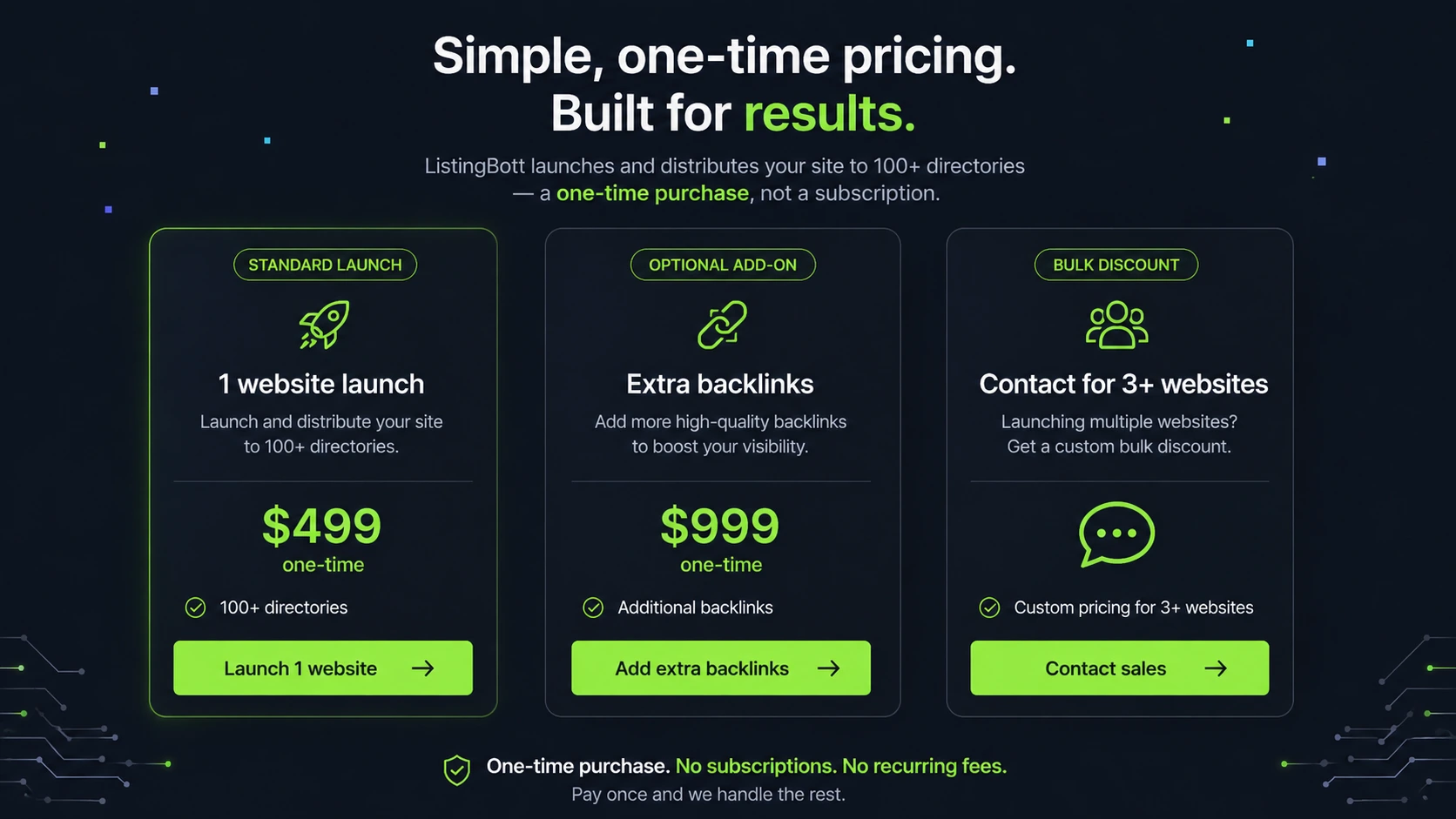
Pricing check: Do not rely on old price mentions. Confirm the current checkout amount, package scope, and whether the standard plan is enough for your launch.
Free plan, trial, coupon, and checkout notes
I did not find a clear permanent free plan or free trial for ListingBott. The buyer path appears to be a paid one-time campaign, with live checkout verification needed before relying on any price or offer claim.
That changes how I would approach the coupon page.
A coupon can improve the purchase, but it should not drive the decision. The order should be:
- Check whether your product is ready for directory exposure.
- Decide whether the goal is DR, awareness, referral traffic, or time savings.
- Review the current package and live checkout.
- Ask about bulk pricing if you have multiple websites.
- Use the coupon or offer route only after the service fit is clear.
I would also be careful with the optional extra-backlink path. It may be useful for some buyers, but it should not be added automatically. The standard question is enough for most buyers first: will 100 relevant listings support this launch better than manual submission or another SEO investment?
Offer note: Treat savings as the last step. First confirm that ListingBott fits the launch, then check whether an active offer changes the final checkout decision.
What I would check before buying ListingBott
If I were buying ListingBott for a real launch, I would not start with the checkout button. I would start with the campaign assumptions.
Here is the checklist I would use:
- Is the product page clear enough to submit to 100 places without confusing people?
- Which exact category does the product belong to, and are there enough relevant directories for that category?
- Will the proposed directory list be shown before publishing starts?
- How will ListingBott handle directories where the product is already listed?
- Does the final report include live URLs, status, and enough context to audit results later?
- If the goal is DR growth, does the current domain level make the guarantee meaningful?
- Are premium directories, paid third-party listing fees, or extra backlinks included or separate?
- Who owns the accounts after delivery, and how will login handoff work?
- Is the live checkout price still the same as the public page or store guide?
A simple test before paying
Before paying for ListingBott, I would run a small readiness test like this:
- Write a one-sentence product description without using hype words.
- Pick three categories where the product honestly belongs.
- Manually find ten directories that look relevant.
- Check whether those directories are live, indexed, active, and credible.
- Submit to two or three yourself and measure how long it takes.
- Estimate the cost of doing 100 carefully versus paying ListingBott.
- Decide whether your main goal is saved time, DR movement, referral traffic, or awareness.
This test is not meant to replace ListingBott. It is meant to reveal whether the service solves a real operational problem for you.
If the manual test feels easy, you may not need to pay. If it becomes tedious quickly and your product is ready, ListingBott becomes more interesting.
Pros explained
It solves a narrow, real founder problem
Directory submission is boring work, but it can still matter. Many founders do not avoid directories because directories are useless. They avoid them because the work is repetitive.
ListingBott’s biggest strength is that it packages that messy job into a cleaner workflow.
The one-time model is easy to understand
I like that this is not another recurring subscription by default. A one-time campaign is easier to judge: does the saved time and directory footprint justify the price for this specific launch?
That said, simple pricing does not automatically mean good value. The website still has to be ready.
The approval step gives buyers a control point
The buyer approval step matters because not every directory will be equally relevant. This gives the buyer a place to catch weak-fit listings before the campaign starts.
The value of this depends on whether the buyer actually reviews the list. If you approve everything blindly, you lose one of the safer parts of the workflow.
Ownership and reporting reduce long-term friction
A final report and listing ownership are practical. Founders need to know where the product was listed, what is live, what may need updating, and how to edit important profiles later.
This matters more than it sounds. Product descriptions, screenshots, pricing, and positioning change. If you cannot update listings later, the campaign ages badly.
Cons explained
Directory quality is the whole game
The biggest weakness is not that ListingBott submits to directories. The weakness is that directory submissions vary wildly in value.
Some directories are useful. Some are ignored. Some are irrelevant. Some may not index well. Some may exist mainly to collect submissions.
That means the buyer should judge the proposed list, not only the package count.
The price is not small for early-stage founders
A $499 one-time fee can be rational for a funded startup or agency workflow. For a bootstrapped founder, it is still real money.
The safer question is not “is $499 expensive?” The better question is “what else could this same $499 do for my launch?” Content, outreach, design cleanup, analytics, paid distribution, or manual VA work may sometimes be a better use of the budget.
SEO outcomes are not fully controllable
Directory listings can support authority, discovery, and backlinks, but rankings depend on much more than directory placement. Domain history, technical SEO, content quality, relevance, indexing, competition, and search demand all matter.
I would be especially cautious about treating DR movement as the only success measure. Referral traffic, branded discovery, quality of live listings, and future edit access may be just as important.
Public criticism makes list review more important
There is public criticism around directory-submission services in this market, including complaints about price, directory quality, indexing, and personalization. One Reddit critique is not a final verdict on ListingBott, but it is a useful reminder to inspect the offer carefully.
The right response is not panic. The right response is verification: ask what will be submitted, review relevance, and check the final report against live listings.
Green flags and red flags
Green flags
- Your product page is clear, polished, and ready to be listed.
- You sell a SaaS, AI tool, no-code product, dev tool, agency service, ecommerce product, course, marketplace, newsletter, or similar directory-friendly offer.
- You can define the campaign goal before payment.
- You value saved time more than doing submissions manually.
- You are willing to review the directory list before approval.
- You will track results after delivery rather than expecting instant ranking movement.
Red flags
- You expect directory submissions alone to generate customers.
- You are buying mainly because you want a quick DR number.
- Your homepage is still vague or unfinished.
- You cannot tell whether the proposed directories are relevant.
- You already have a mature backlink profile and expect dramatic movement from one campaign.
- You need full control over every description, account, and listing detail.
ListingBott vs alternatives
ListingBott’s closest internal comparisons are not direct copies of the same service. They are adjacent SEO workflow tools. That distinction matters.
If the buyer needs directory submission, ListingBott is the more direct fit. If the buyer needs content production, rewriting, or ongoing SEO publishing, the alternatives become more relevant.
AISEO vs ListingBott
AISEO is the better route if your main problem is AI writing, rewriting, content optimization, or making existing copy more publishable. It is not trying to solve the same directory-submission problem.
ListingBott makes more sense when the product page is already ready and the missing piece is external listing exposure.
The tradeoff is simple: AISEO helps with content; ListingBott helps with distribution surfaces.
Balzac AI vs ListingBott
Balzac AI is more relevant if the buyer wants agent-style SEO content operations, CMS workflow support, or a broader SEO production system.
ListingBott is narrower. That can be a strength if the buyer only wants directories and backlinks, but it is not the same as building an ongoing SEO content engine.
I would compare Balzac AI if the real bottleneck is publishing content at scale. I would compare ListingBott if the real bottleneck is getting a finished product listed in more places.
SEO Bot vs ListingBott
SEO Bot is closer to ongoing programmatic SEO and automated content publishing. It fits buyers who need a longer-term content growth workflow.
ListingBott is more like a launch-support campaign. It may happen once per website or per launch, then the buyer monitors the results.
If you need compounding pages and ongoing content, SEO Bot may deserve more attention. If you need a directory footprint for one product, ListingBott is the more direct comparison.
Trust, refund, and buyer-risk notes
The trust picture is mixed in a practical way.
On the positive side, ListingBott has a clear founder-led public presence, a specific offer, a visible pricing route, a directory-selection process, a paced publishing claim, a final report promise, and ownership language. The FAQ also explains what happens with existing listings and how buyers can edit or remove profiles later.
The refund and DR guarantee need more careful reading.
The public page says ListingBott guarantees a Domain Rating increase from 0 to 15 within two months after the report, and that if the initial effort does not bring DR to at least 15, the team will continue working on listings or can issue a refund. That is useful, but it is not the same as a blanket “everyone gets results” promise. The page is more cautious for sites that already have DR 15+ or DR 40+.
I would also pay attention to premium directory wording. Premium directories or paid options on third-party directories are not included in the standard plan, according to the public FAQ. If your strategy depends on a specific premium placement, confirm the cost first.
The external evidence is not perfectly clean. Third-party directories describe ListingBott as an AI-driven directory submission service, which supports the category fit. Public criticism from competitors or community threads raises concerns around price, directory quality, indexing, and personalization. I would not treat those complaints as automatic proof against the product, but I would treat them as a reason to review the directory list and final report carefully.
The safest buyer stance is balanced: ListingBott may be useful, but the quality of the campaign matters more than the convenience of the checkout.
Final verdict
I would consider ListingBott if I had a polished SaaS, AI tool, no-code product, agency site, marketplace, course, newsletter, or similar project that was ready for more discovery surfaces.
I would also consider it if manual directory submission was genuinely blocking progress. The value is not only backlinks. It is time saved, structured delivery, a relevant directory list, a final report, and a cleaner handoff than doing everything loosely by yourself.
I would skip it if the product page is not ready, if the niche is not directory-friendly, if the budget is tight, or if the buyer expects directory submissions alone to create rankings, leads, or revenue.
I would compare it with AISEO, Balzac AI, or SEO Bot only if the real problem is content SEO rather than directory listings. Those tools solve different jobs. Do not compare feature lists when the buying jobs are not the same.
The safest next step is to read the ListingBott store guide, check the current offer route, inspect the live checkout, and ask about directory relevance before paying. If the proposed campaign matches your launch strategy, ListingBott can be a useful shortcut. If the fit is fuzzy, save the money and fix the website, category, and distribution plan first.