
Balzac AI Pricing, Plans & SEO Agent Fit
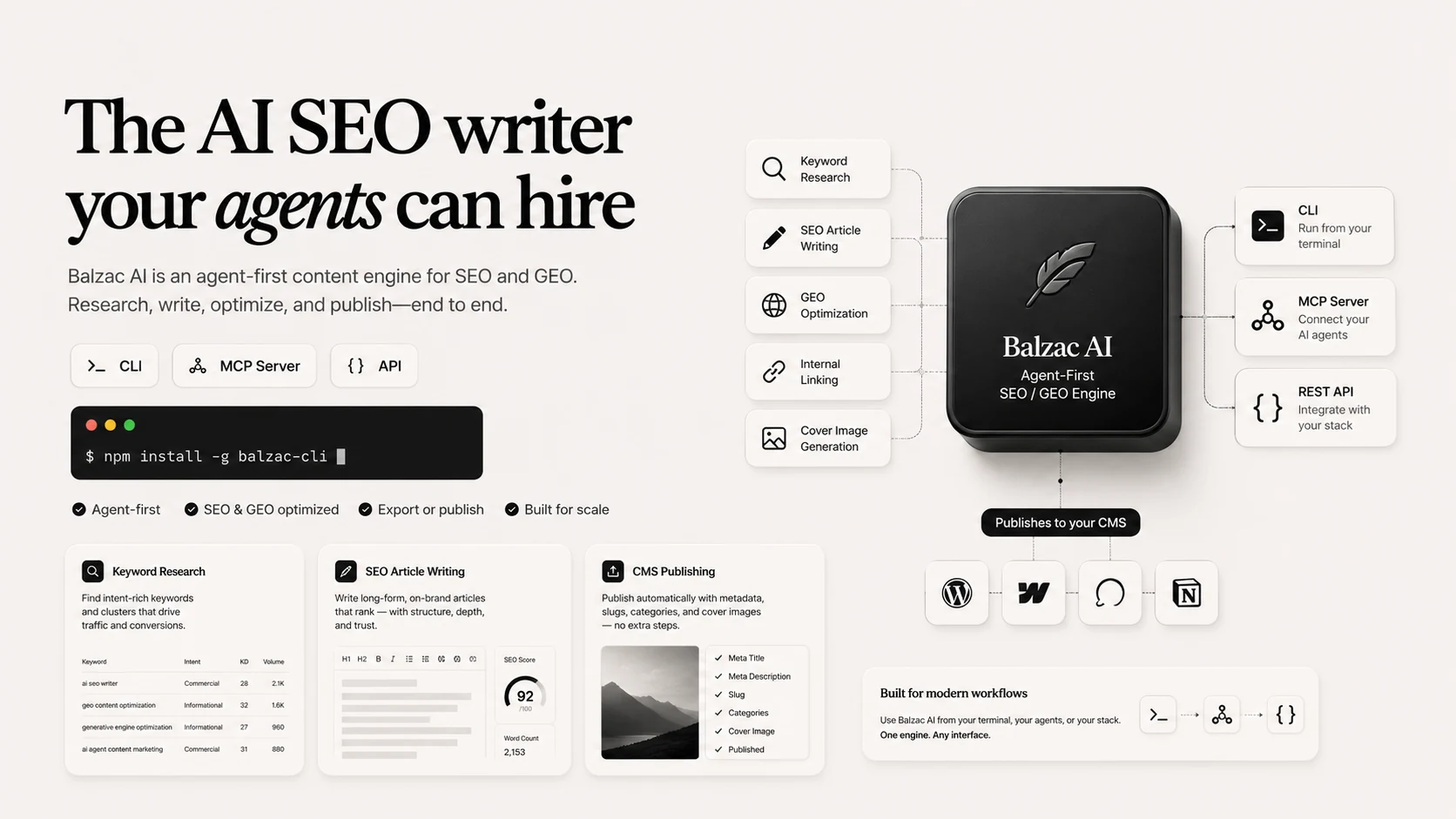
Balzac AI is an AI-powered SEO and GEO content engine built for agents, developers, marketers, and content teams that want keyword research, article writing, internal linking, cover images, and CMS publishing handled through a CLI, MCP Server, REST API, or web dashboard. It is closer to an autonomous SEO content pipeline than a normal AI writing assistant.
Fit → price → checkout
Use these routes after the official-site check: coupon first, review for fit, compare if unsure.
Balzac AI pricing snapshot
Fast commercial checks before pricing, coupons, or a deeper review.
Balzac AI product tour
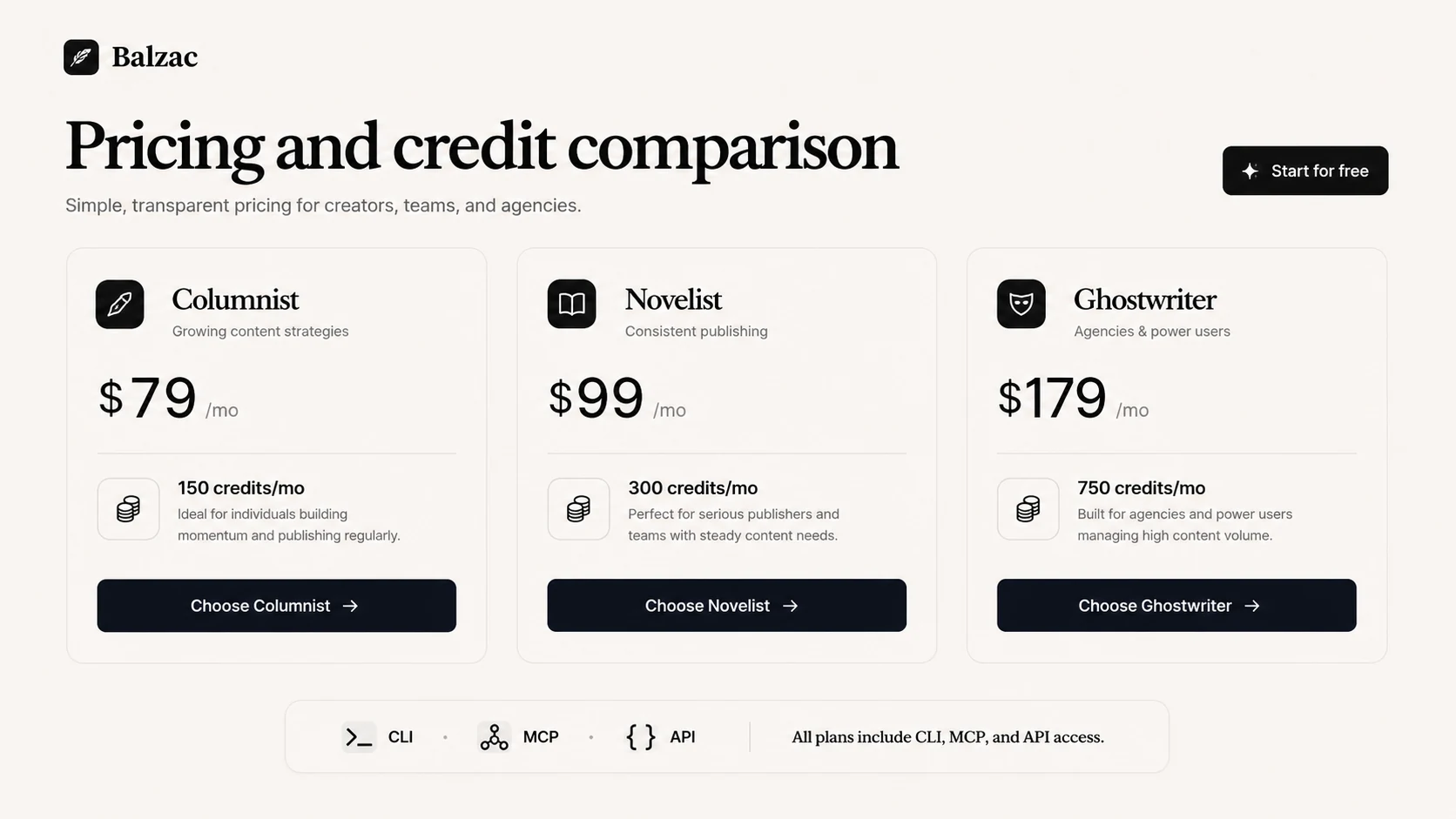
These visuals should show Balzac as an agent-ready SEO content engine, not just a writing editor. The most important buyer screens are keyword research, article generation, internal linking, CMS publishing, and pricing or credit comparison.
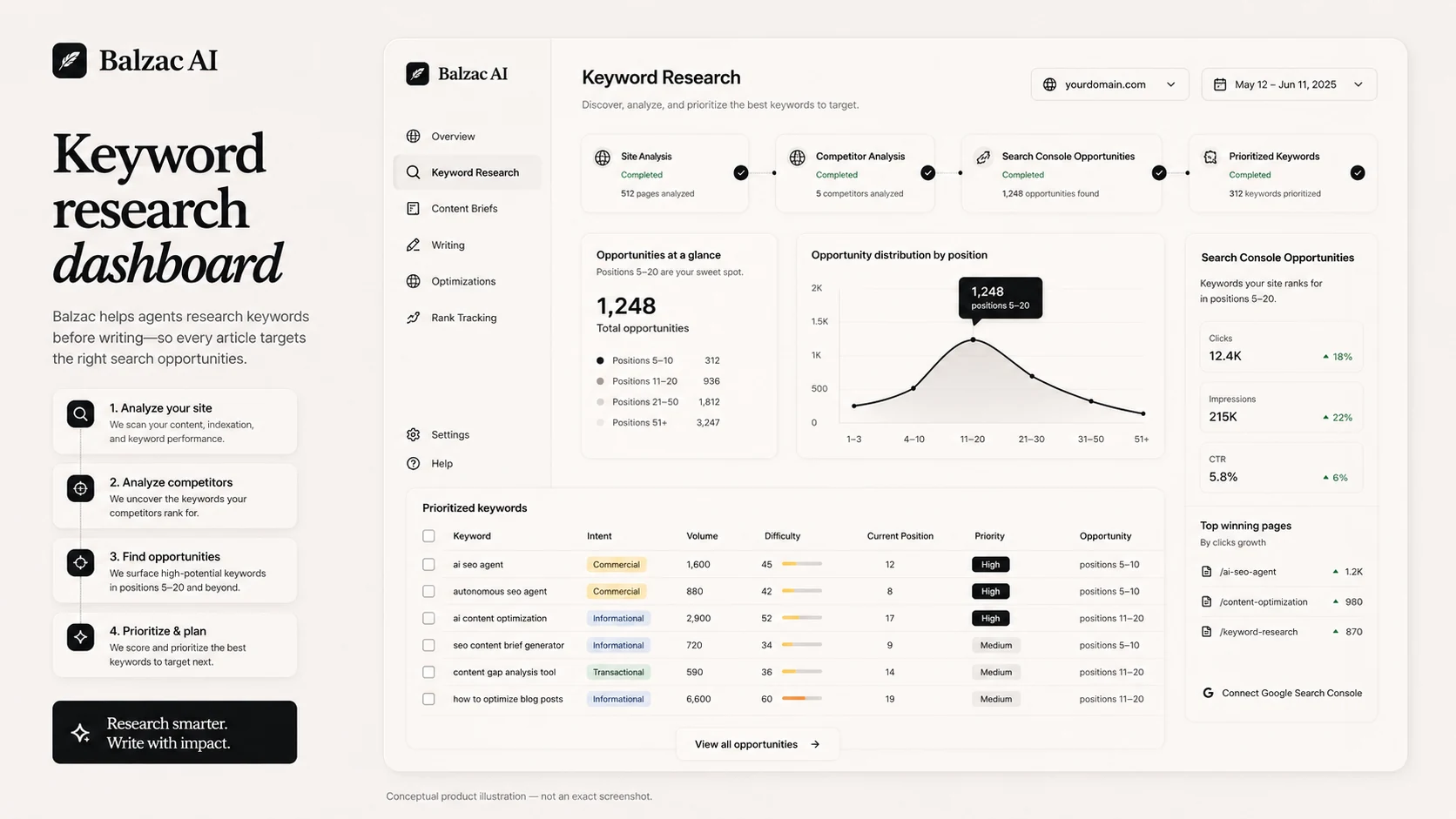
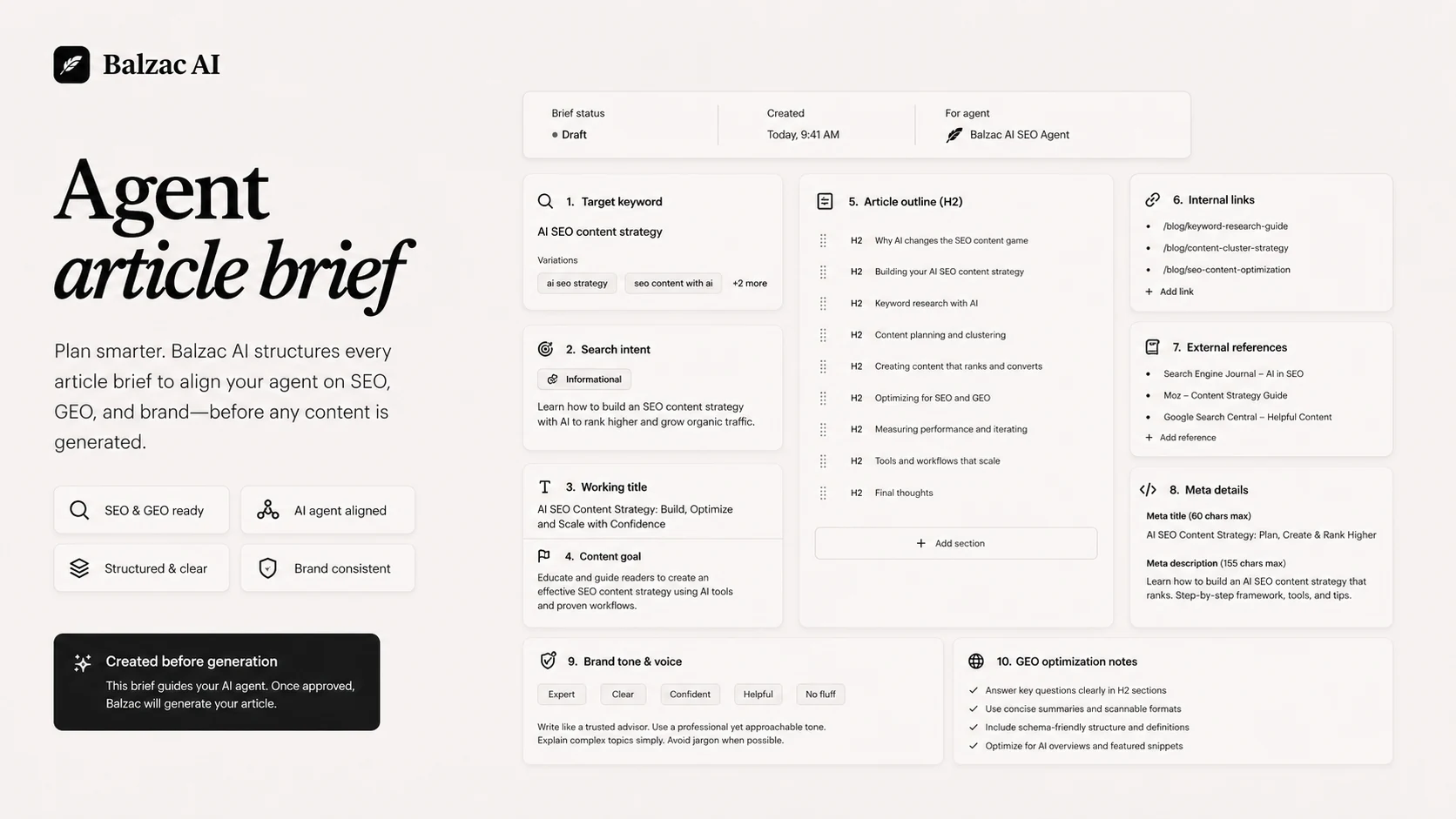
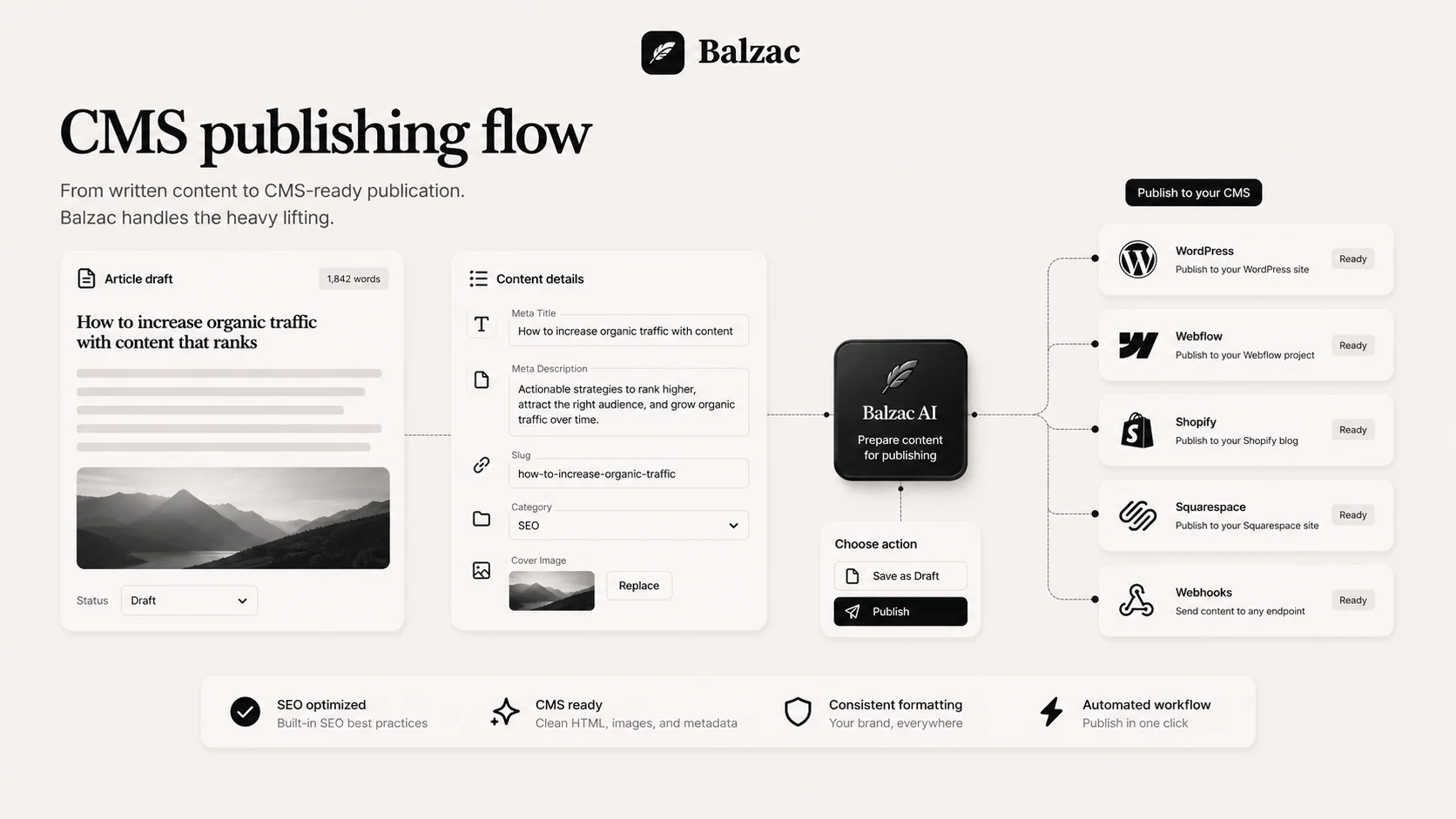
Balzac AI should be evaluated as an AI SEO content pipeline, not as a lightweight writing assistant. The product is built for agents and automation-minded teams that want keyword research, long-form content, GEO optimization, internal links, cover images, and CMS publishing handled from one connected workflow.
Balzac AI is built for agent-led SEO workflows
Balzac's positioning is unusually specific: it is not just another AI blog writer with a prompt box. The official site describes a CLI, MCP Server, REST API, and web dashboard designed for AI agents. That makes it more relevant for technical marketers, agencies, and operators who want repeatable content systems than for casual users who only need a few drafts.
- Best judged as an SEO and GEO content automation engine
- Relevant for Claude Code, Cursor, OpenClaw, and MCP-compatible agent workflows
- Useful when the buyer wants research, writing, internal links, and publishing connected
Pricing is really a credit-volume decision
Balzac's listed plans are straightforward, but the buying decision is not just the monthly price. Columnist gives 150 credits per month, Novelist gives 300 credits, and Ghostwriter gives 750 credits. Buyers should estimate how many keywords, briefings, articles, images, links, and publishing actions they expect to run before choosing a plan.
- Use Columnist for a smaller content strategy or careful testing
- Use Novelist when consistent publishing needs more monthly credits
- Use Ghostwriter when agency or power-user workflows consume credits faster
The CMS publishing layer is a major differentiator
Balzac publishes to WordPress, Webflow, Shopify, Squarespace, and webhook destinations. That matters because many AI writing tools still leave the buyer copying drafts, formatting posts, adding meta tags, creating cover images, and inserting internal links manually. Balzac is more interesting when it removes those handoffs.
- Check whether your CMS is supported before upgrading
- Test draft publishing before allowing live publishing
- Review formatting, meta tags, internal links, and cover images before scaling
GEO optimization is part of the pitch
Balzac frames itself around SEO and GEO, meaning it is trying to help content appear in traditional search and in generative answer environments. That is useful positioning for buyers thinking beyond blue-link rankings, but it should not be treated as a guaranteed traffic promise. Content still needs strong topics, credible sources, helpful structure, and editorial review.
- Use GEO as a content-structure advantage, not a traffic guarantee
- Keep original expertise and source quality inside the article workflow
- Review whether generated articles actually satisfy search intent
Privacy and integrations deserve a careful check
Balzac can connect to Google Search Console, CMS platforms, APIs, and webhooks. That is powerful, but it also means buyers should review data handling before connecting production accounts. The privacy policy says Balzac collects workspace and content data, CMS credentials, Google Search Console data when connected, and shares certain generation context with AI providers such as OpenAI and Anthropic.
- Review Google Search Console and CMS permission handling before connecting accounts
- Avoid connecting production publishing until draft workflow is tested
- Check whether your company is comfortable with AI provider processing for content generation
Watch a second Balzac AI workflow video
A second video is useful because Balzac's workflow changed from a simple AI copywriter pitch into a more agent-ready SEO engine. Buyers who care about Claude Code, CLI workflows, or MCP-style automation should watch a newer Balzac v2 video before choosing a plan.
Best next step before checkout
The cleanest path is to test Balzac with one real site, one real keyword opportunity, and one CMS draft workflow. Read the review first if you are still unsure whether Balzac fits your SEO process. Then check live pricing, promo code status, credit limits, refund terms, and integration requirements before choosing a plan.
- Start with one real site and one target keyword cluster
- Publish as draft before letting the agent publish live
- Check live pricing and the Product Hunt code before using coupon language
- Review credits, CMS access, Google Search Console access, and refund discretion before paying
Best savings path from this store page
This is the clearest savings route to check once the product already looks like a fit.
The Columnist plan is the entry route for buyers who want Balzac content generation without starting at the agency-level tier.
Best as the primary route because no public coupon code was verified during research.
Popular plan path
High-volume plan path
Use comparison routes when the category fit is still open
Use these comparison routes when the product still looks plausible, but the category fit is not fully settled.
Taskade is stronger for general AI workspaces, agents, projects, and automations, while Balzac AI is more focused on SEO content research, writing, and CMS publishing.
NeuronWriter is better for human-led content optimization and SERP guidance, while Balzac AI is closer to an autonomous agent workflow for content production.
Frase is useful for briefs and content optimization, while Balzac AI pushes further into agent-driven writing, internal linking, and publishing.
Verification points worth checking before you click out
Where this store usually fits best in the workflow
SEO operators can use Balzac to move from keyword opportunity to generated article, internal links, cover image, and CMS-ready draft with less manual handoff.
Agencies can use Balzac when they need repeatable long-form content workflows across client sites, as long as editorial review remains part of the process.
Developers can use the CLI, MCP Server, and REST API to wire Balzac into agent workflows, CI-style content pipelines, or custom internal tools.
Content teams can use Balzac to create articles structured for both traditional search and AI answer environments, while still reviewing sources and usefulness.
Practical checkpoints before and after signup
- Pick one real website connected to Google Search Console or one keyword cluster you already care about.
- Test whether Balzac's keyword research and article suggestions match your actual content strategy.
- Use draft publishing before sending anything live to a CMS.
- Compare Columnist, Novelist, and Ghostwriter by monthly credit volume, not only monthly sticker price.
- Verify whether PRODUCTHUNT50 or any visible checkout offer still works before publishing a coupon claim.
- Ask about refund expectations because subscription refunds are discretionary.
- Review CMS permissions, Google Search Console access, API keys, webhooks, and AI provider processing before connecting production assets.
- Confirm whether WordPress, Webflow, Shopify, Squarespace, or webhook publishing matches your site stack.
- Check whether the CLI, MCP Server, or REST API is the right interface for your team.
- Review generated articles for intent fit, factual accuracy, internal links, formatting, and brand voice.
- Track search performance after publishing instead of assuming automation alone will grow traffic.
- Revisit credit usage after several articles to see whether the current plan still makes sense.
Fast-read signals for workflow fit and buying friction
Questions readers usually ask before choosing this store
What is Balzac AI best for?
Balzac AI is best for SEO teams, agencies, developers, and content operators who want an agent-ready system for keyword research, long-form SEO writing, GEO optimization, internal linking, cover images, and CMS publishing.
Does Balzac AI have a free plan?
Balzac's official site shows a start-for-free path, but the main public pricing section lists paid monthly plans. Buyers should test the free path and verify current limits before assuming it is enough for real publishing.
How much does Balzac AI cost?
During this editorial pass, Balzac listed Columnist at $79 per month with 150 credits, Novelist at $99 per month with 300 credits, and Ghostwriter at $179 per month with 750 credits. Buyers should verify live checkout before paying.
Does Balzac AI support API or MCP workflows?
Yes. Balzac is built around CLI, MCP Server, and REST API access, with a web dashboard also available. This makes it more relevant for agent-driven SEO workflows than many standard AI writing tools.
Is Balzac AI refundable?
Balzac's Terms of Service say certain subscription refund requests may be considered case by case and granted at the company's sole discretion. Buyers should not assume a fixed refund window.
Choose the next route that matches what you still need to decide
The strongest next click depends on whether you still need product judgment, a savings route, or a broader category comparison.